

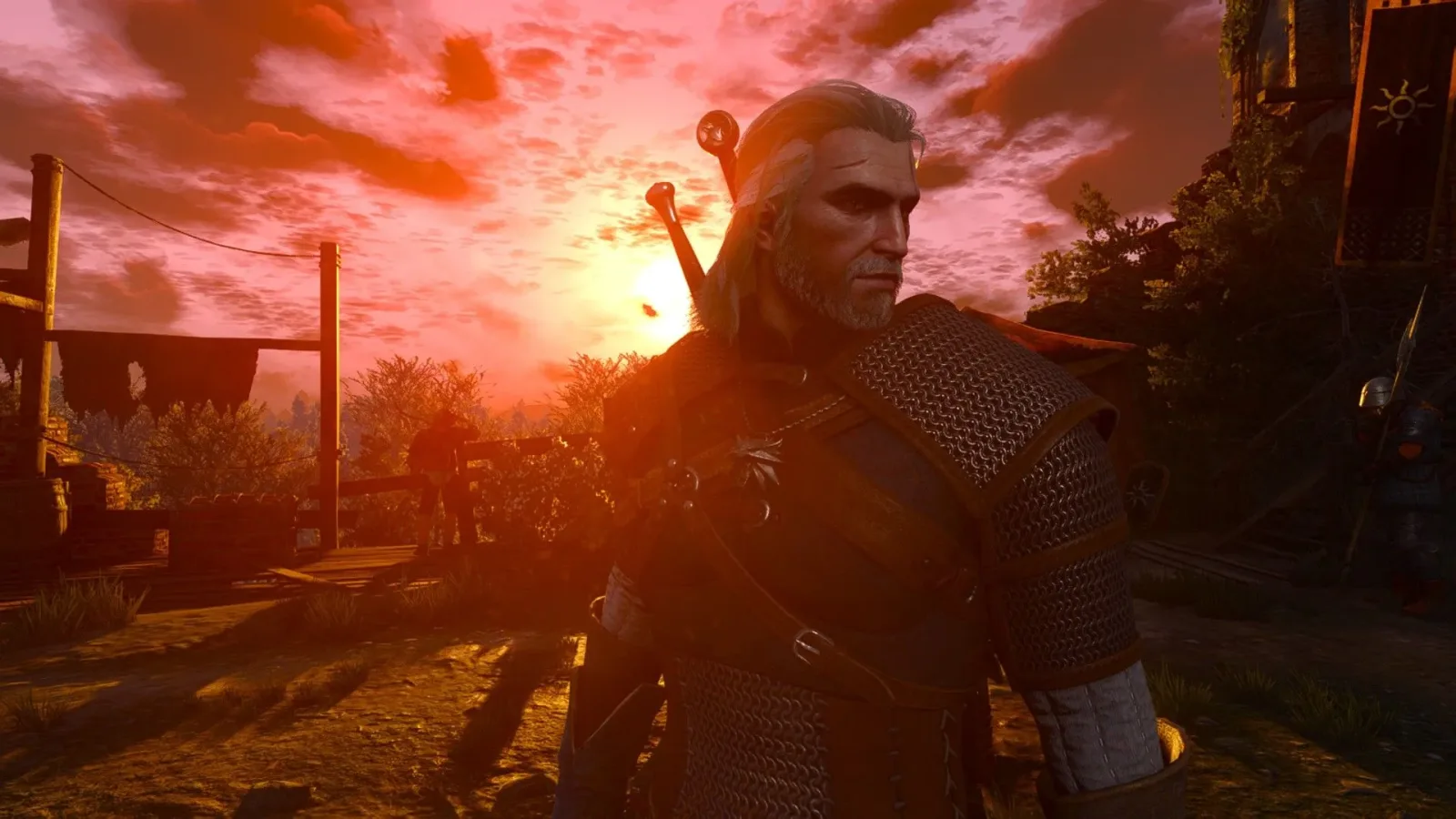
The Witcher 3: Wild Hunt - Remastered may have plenty of large-scale changes to evaluate over a full adventure, but its most immediate achievement appears to be much simpler: it makes stopping to look around feel essential. Returning to White Orchard, the compact opening region that usually serves as a brisk tutorial before the wider Continent opens up, can now become an extended detour through fields, forests, ruined homes, and sunset-lit roads.
For a player who previously spent roughly 140 hours with Geralt's story while focusing on contracts, major quest lines, and Gwent, the scenery was not necessarily the main event. The Bloody Baron storyline, monster work, political tensions, and the constant temptation of another card game understandably leave little time to consider where the sun is sitting in the sky. The remastered version changes that balance. An attempt to revisit White Orchard's central griffin contract and examine its revised combat and progression systems instead turned into nearly five hours of taking screenshots.
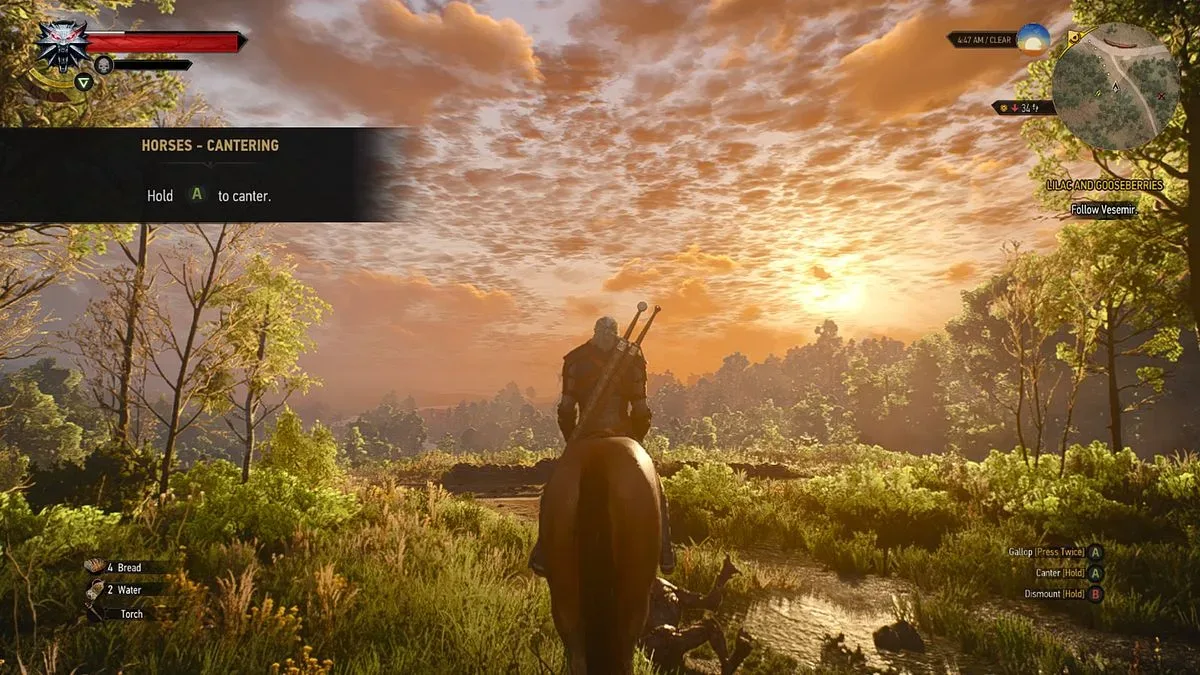
That is a telling response to a visual upgrade. A remaster does not only need to make an old game look technically sharper; it has to give familiar spaces a different emotional texture. White Orchard has always established the mood of The Witcher 3, introducing a world scarred by war and filled with small human problems amid dangerous wilderness. With more vivid colors, stronger shadows, and bolder contrast, it seems to have gained a new ability to hold attention even between quests.
A brighter first impression at Kaer Morhen
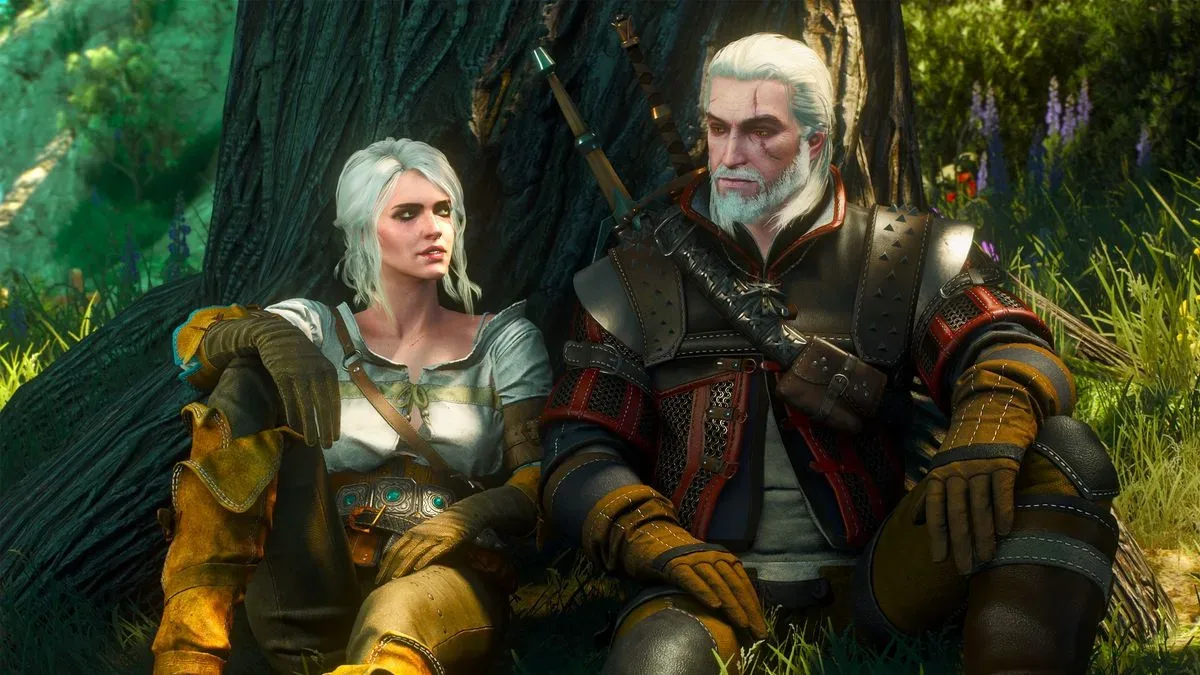
The opening dream sequence at Kaer Morhen is a memorable place to notice the remaster's changes. Beyond the scene's longstanding nudity and fantasy melodrama, the surroundings now stand out: sunlight washes across the keep and its furniture, while the wilderness beyond appears especially lush. Greens that might once have blended into a general woodland palette are described as richer and more varied, from emerald tones to softer sage hues.
For useful background on this topic, read Survive a Million Monkeys codes: Claim 2,000 Free Gems.
What makes that early reaction notable is the hardware involved. The game was played on a gaming laptop around six years old, with graphics drivers updated beforehand but without expectations of accessing every premium lighting feature. Ray tracing and ambient occlusion enhancements were not in use, yet the result was still considered the most magical the game has ever looked. That suggests the broader art-direction adjustments, rather than just the most demanding rendering options, may be doing considerable work.
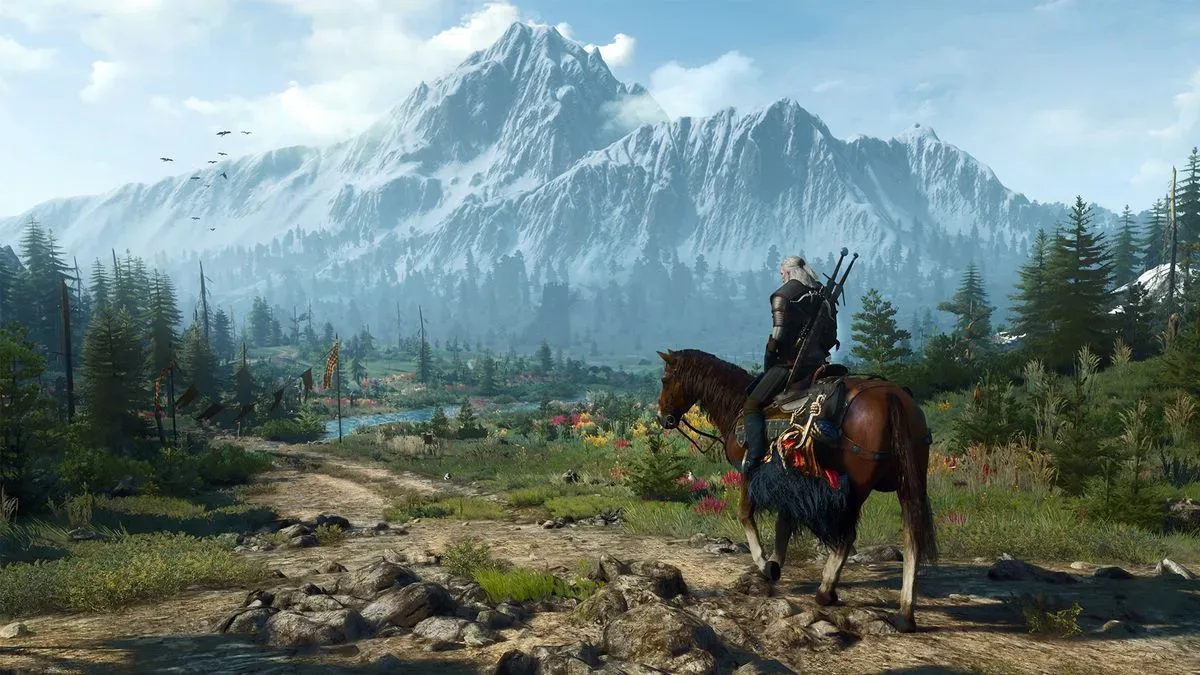
For a game that has remained visually admired for years, this is likely the right approach. The Witcher 3's strongest environments have never relied purely on technological spectacle. Their impact comes from the mix of weather, architecture, mud, vegetation, distant mountains, and the suggestion that every roadside settlement has endured a dozen tragedies before Geralt arrives. A more dramatic color palette can heighten those qualities without changing what makes the world recognizably The Witcher.
White Orchard still teaches the game's essentials
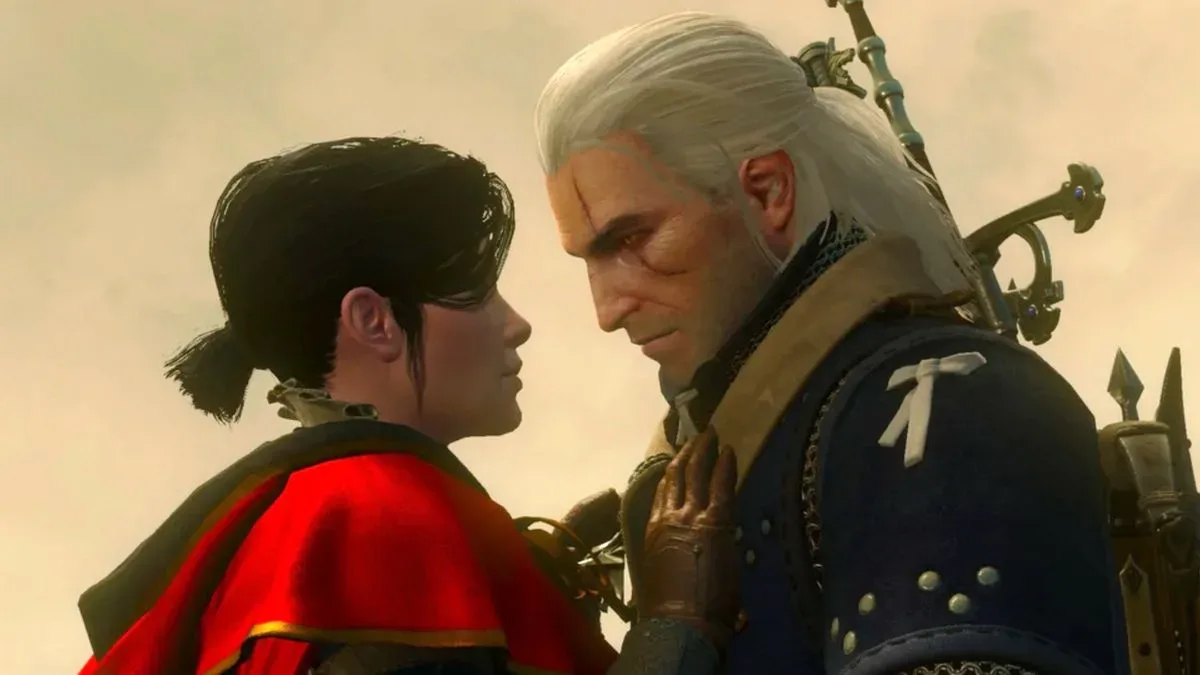
Once Geralt and Vesemir reach White Orchard, the usual opening structure remains valuable. The region is a small-scale sampler of what lies ahead, containing monster hunts, local conflicts, investigation work, gathering, crafting, and choices with uncomfortable context. Geralt is ostensibly searching for Yennefer, but the path there immediately fills with reasons to help--or at least become involved with--people he meets.
Wraith in the Well remains an effective introduction to the preparation behind a witcher contract. It asks players to investigate, identify the threat, and use the right tools instead of simply rushing into combat. Twisted Firestarter, meanwhile, introduces the political reality of the Northern Kingdoms through an arson case connected to a blacksmith and Nilfgaardian occupation. Then there is the smaller, stranger work: helping an elderly woman reclaim her frying pan from the house of a dead man. The tonal range is classic Witcher, moving from grim consequences to dry absurdity without much warning.
Those quests can still be completed efficiently, but the remastered presentation seems to encourage less efficient play. A road trip to a quest marker becomes a chance to wait for different lighting. A hunt for herbs becomes an excuse to frame a hill, a tree line, or Geralt beside an abandoned building. Photo Mode is especially suited to this version of the game, offering a way to turn routine travel into an ongoing record of a fresh playthrough.
That enthusiasm has a cost, of course. The desire to document every striking view can leave practical concerns behind. When it is time to fight the griffin, receiving a crossbow from Vesemir can feel less like a useful tactical step and more like a panic-inducing reminder of controls that have been forgotten.
Reworked skills offer a cleaner start
White Orchard also provides an early opportunity to explore the updated skill tree. By completing nearby side content before taking on the griffin, Geralt reached Level 3 and had room to begin shaping a build. That may not sound dramatic in a game that spans a massive base campaign and two expansions, with a third expansion, Songs of the Past, due next year, but it matters for returning players.
The original skill system could be easy to mishandle, particularly for anyone learning through experimentation. Random mutagen placement, abilities that did not match their assigned colors, and upgrades left unfinished could produce a character build that felt unfocused. The remastered approach is described as more visually legible and more natural in how it branches. Rather than feeling compelled to spend heavily in one category simply to reach later options, players can move through connected paths with more flexibility.
An early Igni-focused build demonstrates the appeal. Fire is useful against many initial threats, and the revised layout apparently allows that direction to connect smoothly toward Aard abilities while bypassing some lower-level investment. It is a more inviting route for players who want to experiment without feeling that every point must be planned with a guide open beside them.
This type of change can be more meaningful than it first appears. The Witcher 3 has always supported a broad toolkit--Signs, alchemy, sword techniques, oils, bombs, mutagens, and gear--but not every player naturally understands how those elements fit together. A better-presented skill tree does not make character building shallow. It makes the game's options easier to read, which may help more players discover a playstyle that fits them.
Some old frustrations remain on the road
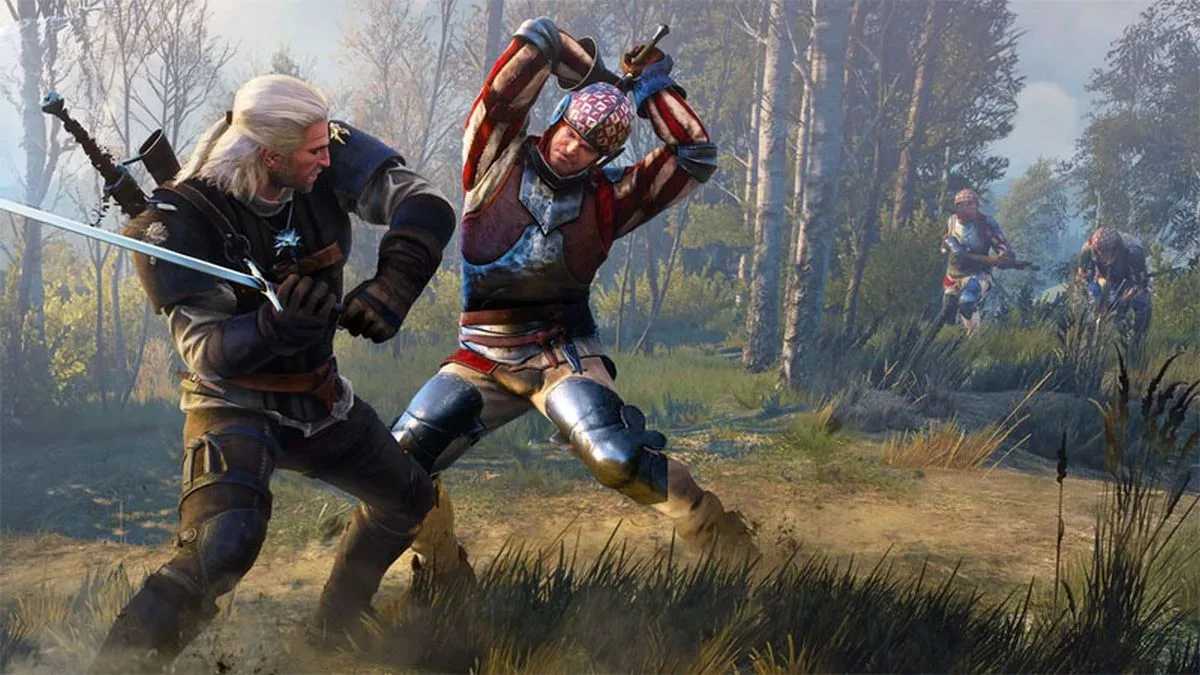
The return is not completely smooth. Familiarity can make combat improvements difficult to judge, especially after time away from the game, and there are still technical problems along the way. During one attempt to collect herbs underwater, Geralt refused to dive, forcing a reload. In another moment, dodging did not behave as expected during a tavern brawl, with predictably embarrassing results.
These are small incidents in the scale of a long RPG, but they are worth noting because a remaster naturally raises expectations. Visual brilliance and revised systems do not erase the importance of consistent character controls and quest interactions. When a game invites players to become absorbed in its world, an unresponsive dive command or an errant dodge can abruptly pull them back out.
Still, the larger mood remains positive. The griffin itself is manageable with some preparation, even if every major Witcher encounter retains an air of uncertainty. The game has always had a knack for making Geralt feel prepared right up until a monster proves otherwise. Correct oils can make a powerful enemy collapse surprisingly quickly, while certain later foes can become lasting sources of stress.
Against the White Orchard griffin, the crossbow is ultimately less useful than a sustained Igni attack. Continuous fire can reach farther than expected, stun the creature, and bring it to the ground for melee follow-ups. Getting there may involve accidentally drinking several potions and setting Roach alight with an ill-timed Sign, but that too feels very much in keeping with the messy joy of returning to a huge RPG after a long absence.
An excellent excuse to slow down
After the griffin falls, the story points Geralt toward Vizima and his long-awaited meeting with Yennefer. Yet the real takeaway from this early section is not the familiar milestone. It is that The Witcher 3 Remastered appears capable of making even its best-known opening hours feel newly expansive.
The next-generation additions and new quests still await beyond White Orchard, and there will be much more to assess as Geralt travels into Velen and farther across the Continent. For now, the visual overhaul is doing exactly what a return visit needs: making an old road feel worth walking slowly. Every sunset becomes an opportunity to stop, adjust the camera, and catch the light before it changes. Even Geralt's occasionally strange blue or blond-looking hair under certain conditions becomes part of the photographic experiment.
White Orchard was always meant to be left behind. In the remastered edition, it may be harder than ever to do so.

Community
Discussion
Start the conversation.
No comments have been posted yet.