

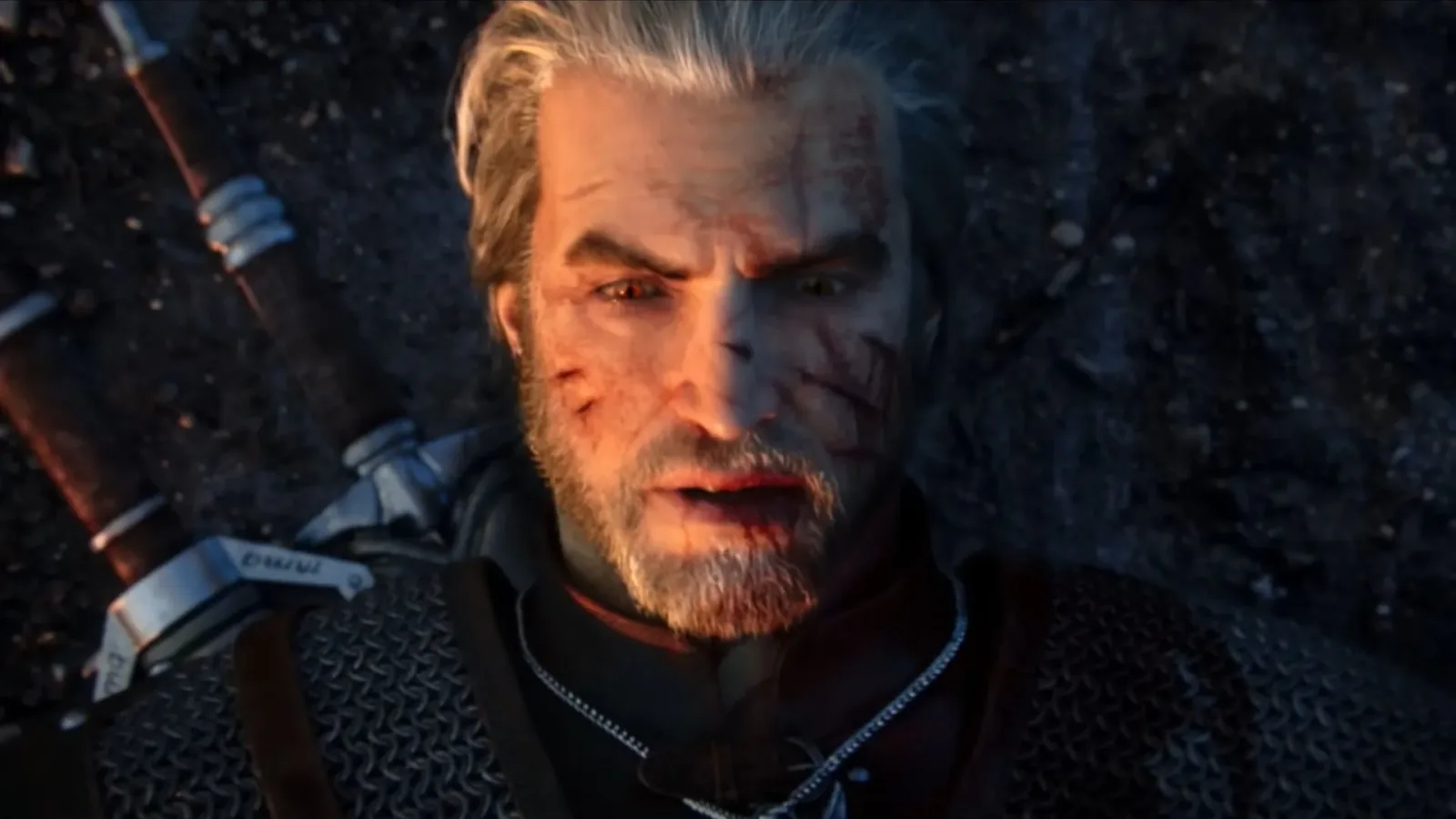
The Witcher 3: Songs of the Past, the newly revealed expansion for CD Projekt Red's landmark role-playing game, includes AI-retouched dialogue for Geralt's original Polish voice actor, Jacek Rozenek. The work was undertaken with Rozenek's explicit approval after a stroke in 2019 and the recovery that followed changed the sound of his voice.
The situation places the use of synthetic voice technology in a highly specific context: rather than replacing an available performer or generating a performance without an actor's involvement, CD Projekt Red brought Rozenek back to record new material and used technology to better align those recordings with his performance in the original game. The studio worked with Ukrainian voice technology company Respeecher to train a model using Rozenek's earlier Witcher 3 recordings, with consent built into the arrangement.
It is a notable decision in an industry where generative AI, and especially AI voices, remains intensely contested. The details matter. Rozenek is not simply a name attached to an artificial recreation; he recorded the new dialogue, approved the work, and had a personal reason for needing technical assistance to make the new performance fit alongside audio created more than a decade earlier.
A return for Geralt's Polish actor
Rozenek is the Polish voice of Geralt in The Witcher 3: Wild Hunt. CD Projekt Red wanted to involve him in Songs of the Past, but the studio faced a continuity challenge. His post-recovery voice did not naturally match the older dialogue already heard throughout the game.
For useful background on this topic, read The Witcher 3 Extends Its Golden Joystick Lead With a 2026 Remaster Win.
Localization producer Mikolaj Szwed explained that the new recordings were noticeably different from Rozenek's original Geralt work, describing the base audio as lower and rougher. That may not sound like a major issue in isolation, but voice consistency is central to a returning character in a story-focused RPG. Geralt's speech is heard across lengthy conversations, emotional scenes, combat barks, and player-driven story paths. A sudden shift in the lead character's timbre can pull players out of the experience, particularly when a new quest sends them back and forth between decade-old recordings and freshly recorded lines.
To address that gap, CD Projekt Red provided Respeecher with the full collection of Rozenek's original dialogue from The Witcher 3. The intended result was not an unrelated imitation, but a version of the actor's newly recorded performance that sounded closer to his younger voice in the 2015 game.
Respeecher synthetic speech artist Dmytry Vasylets summarized the creative objective as making Rozenek's voice feel alive, full, and youthful in the way it did in the original release. Rozenek also expressed confidence in the developers and in the process, saying the goal was to get as close as possible to how he sounded 12 years earlier.
That distinction is central to how CD Projekt Red is presenting the decision. The technology was used to preserve continuity for an actor who could still participate, rather than to avoid working with him. English-language Geralt actor Doug Cockle did not need comparable retouching for his Songs of the Past dialogue.
Consent is the defining issue
AI voice work raises concerns that go well beyond whether an audio result sounds convincing. Actors have warned that voice models could be used without permission, without appropriate payment, or in ways that undermine future work. There are also questions about control: once a voice is recorded and transformed into a model, performers need to know precisely what can be created with it, where it can be used, and what happens to that material later.
CD Projekt Red says its contracts require consent for AI-related work. In Rozenek's case, the actor approved the use of his voice for the model and the project was framed as an exception driven by his health circumstances.
Respeecher similarly states that explicit permission is required for voice replications and that agreements should ensure participants understand and consent to the arrangement. Such commitments do not settle the broader debate around AI in games, but they are especially important in a case involving a recognizable performance from one of the medium's most prominent RPG protagonists.
Szwed acknowledged that AI is a major concern for voice actors and for people working with performers internationally. He nevertheless characterized this instance as a potentially ethical use: it was consented to, tied to an individual performer's needs, and intended to help that actor remain part of a role he originated. He also stressed that it was a special case rather than a general production strategy.
Why audio continuity matters in a legacy expansion
The Witcher 3 is unusual in scale even among major RPGs. The game has accumulated years of player memories, multiple editions, and a massive amount of localized dialogue. Its Polish version carries particular significance, given the series' roots in the work of Polish author Andrzej Sapkowski and CD Projekt Red's own place in Polish game development.
For players using the Polish localization, hearing Rozenek return as Geralt may matter as much as the addition of new quests, characters, or story decisions. Yet returning to a role after serious illness can create technical realities that neither the actor nor the studio can ignore. If a performer's natural voice has changed, a project must decide whether to accept the audible difference, recast the role, avoid bringing the actor back, or look for a carefully controlled method of bridging the old and new work.
CD Projekt Red chose the final option. Briefings on the before-and-after material indicated that the difference was substantial, with the processed dialogue reportedly sounding smoother and younger than the unaltered recordings. That is likely to make the transition between the base game and the expansion less distracting for players, while allowing Rozenek's performance to remain the foundation of the new lines.
It also demonstrates why broad arguments about "AI voice acting" often leave out important practical distinctions. There is a meaningful difference between using technology to simulate performers who have not agreed to participate and using it as post-production support for a living actor who has recorded the role, understands the use, and has granted permission. Both may involve similar underlying tools, but the labor, authority, and ethical stakes are not the same.
A debate that is not going away
Even with the details surrounding Rozenek's participation, AI's place in game development will remain a contentious subject. Studios have been criticized for using generated voices, artwork, writing, and other assets in situations where artists and actors argue human workers should have been hired. Voice work has proven particularly sensitive because it touches a person's identity as well as their employment.
Recent debates around AI dialogue in games have shown how quickly backlash can escalate when players believe technology has been used to substitute for performers at scale. Some projects that initially used AI-generated character voices have faced renewed scrutiny, and in certain cases dialogue has later been rerecorded by human actors. Those disputes have made transparency, consent, and the specific scope of AI involvement much more important to audiences.
For Songs of the Past, CD Projekt Red's explanation is likely to be examined through that wider lens. The studio has made clear that the Polish Geralt work was motivated by Rozenek's changed voice following his stroke, that he agreed to the approach, and that the company did not need to make the same adjustment for Cockle's English performance.
Whether players are comfortable with the result may still depend on their own views of synthetic media. Some will see it as a respectful way to support a performer's return after a health crisis. Others may remain wary of any use of voice-model technology, even when permission is documented. What is difficult to dispute is that this is not being presented as a shortcut around performance: Rozenek's involvement, original recordings, and approval are the basis of the process.
What it means for Songs of the Past
The Witcher 3: Songs of the Past is described as a surprise expansion for the celebrated RPG. Its story can unfold differently for players who have completed the game's second expansion, though completing that content is not described as a requirement to engage with the new material.
The Polish Geralt voice work is therefore one piece of a larger return to a game that has remained enormously important to CD Projekt Red and its audience. For the expansion, the studio's choice suggests a priority on continuity without excluding the actor who helped define Geralt for Polish-speaking players.
The larger AI debate will continue long after this expansion's individual production circumstances are forgotten. But the Rozenek case offers a useful reminder that the technology's ethics are shaped by more than the final sound file. Consent, performer participation, health, transparency, contractual protections, and the purpose of the work all change the conversation. In this instance, CD Projekt Red's stated aim was to help an original actor return to Geralt, not to create a Geralt without him.
Community
Discussion
Start the conversation.
No comments have been posted yet.