

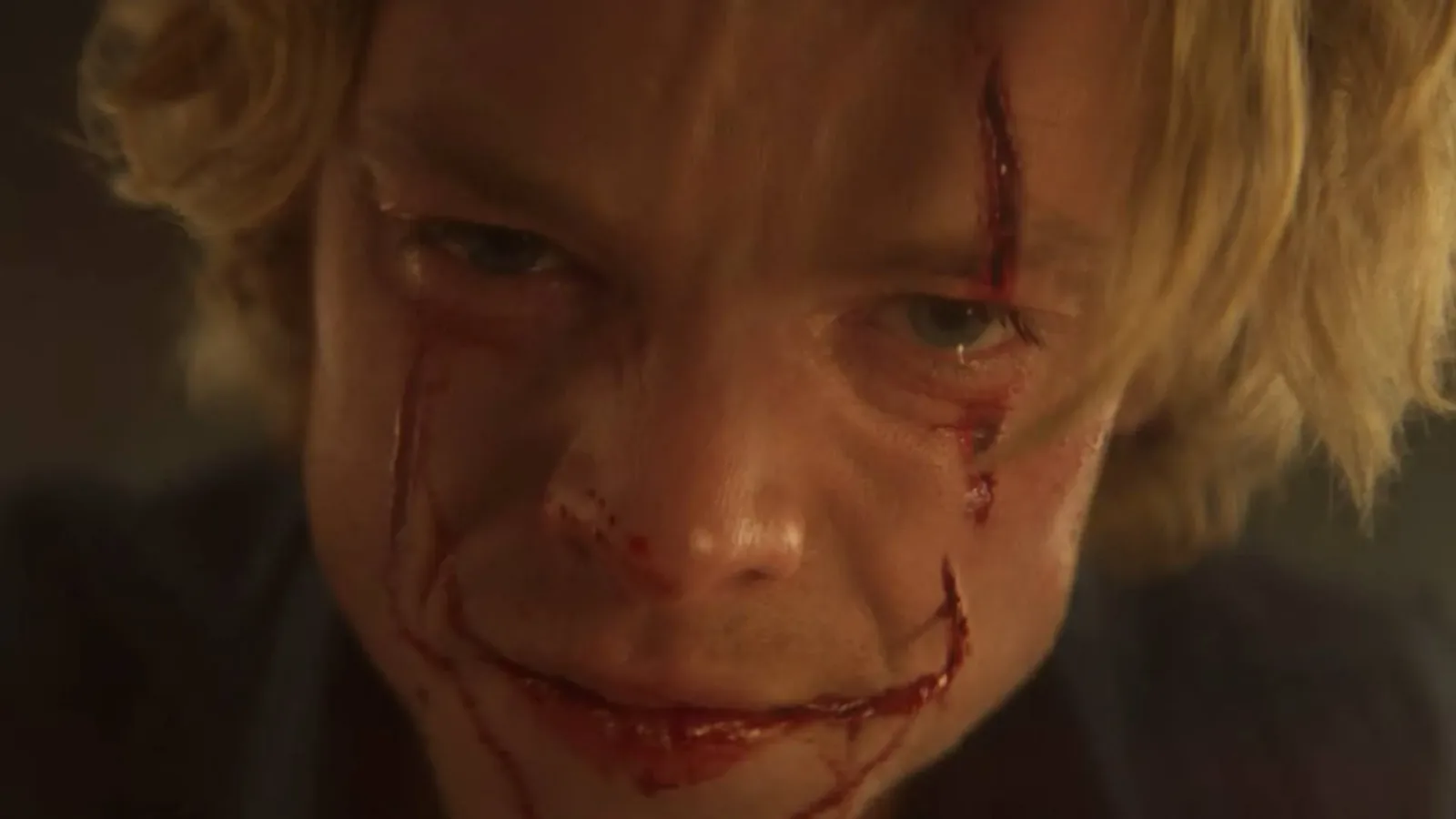
For many players, Elden Ring is a demanding escape: a vast and hostile fantasy world filled with punishing bosses, obscure secrets, and the constant possibility of losing a hard-earned pile of runes. For actor Tom Rhys Harries, it was also a way to quiet his mind during an especially anxious stretch of his professional life.
Rhys Harries, who will play Matt Hagen in the forthcoming DC film Clayface, has said that he turned to FromSoftware's open-world epic throughout a three-month period of screen testing for the role. Speaking with Kit Connor, the actor cast as the lead in the upcoming Elden Ring movie, Rhys Harries explained that playing the game gave him a way to "switch" his brain off while dealing with the pressure of the auditions.
"I played Elden Ring to switch my brain off during the three months I was screen testing for Clayface," Rhys Harries said. "It probably talks to my level of anxiety throughout that period."
It is a revealing anecdote not only because of the intensity of a lengthy screen-testing process, but because it captures something familiar to people who have spent time in the Lands Between. Elden Ring can be exhausting, frustrating, and frequently intimidating, yet its focus on exploration and incremental mastery can make it unusually absorbing. There is always another cave to investigate, another weapon to try, another character build to rethink, or another formidable enemy to study one attempt at a time.
For useful background on this topic, read Xbox CEO Says Battle.net Will Expand Carefully, Not Become Another Steam.
That loop can make the game an effective distraction from the noise outside it. A difficult encounter may demand concentration, but its rules are legible: learn the attacks, consider a different approach, improve the character, and return. For a performer waiting on a career-defining decision, that clarity may offer a welcome contrast with an audition process where the outcome is ultimately not entirely in the actor's control.
An Elden Ring connection between two major films
The conversation brings together two performers attached to prominent projects that sit at the intersection of fantasy, horror, comics, and games. Rhys Harries is preparing for a radical DC character whose identity is rooted in transformation, while Connor is set to take on the central role in a cinematic adaptation of one of gaming's biggest modern successes.
Connor offered a small update on his own preparation for the Elden Ring film, saying that he physically bulked up and "got big" for the lead part. The project is being directed and written by Alex Garland, a filmmaker and writer known both for his prolific screen work and his enthusiasm for games. Garland's involvement has been a major point of interest for fans wondering how a film could approach the deliberately cryptic narrative and immense lore of FromSoftware's game.
The movie's cast also includes Cailee Spaeny, Ben Whishaw, and Nick Offerman. Filming wrapped in July, and the current release date is March 3, 2028. Those details establish the scale of the production, though many of the biggest questions surrounding it remain unanswered. There is still no detailed public explanation of which characters, eras, regions, or story threads from the game's universe will form the heart of the film.
That uncertainty is especially notable because Elden Ring does not follow the conventional structure of a character-led blockbuster. Players create their own Tarnished and move through a world whose history is delivered in fragments, including item descriptions, damaged architecture, optional conversations, enemy designs, and encounters with demigods. The path can differ greatly from player to player, even if the broad destination is similar.
Connor's casting as the lead suggests the adaptation will have a more defined central protagonist than the game's player-created hero. His mention of physical preparation also indicates that the film's version of the journey could emphasize the bodily demands of surviving the Lands Between. That would fit the game's world, where combat is intimate, harsh, and often tied to the physical deterioration or transformation of its inhabitants.
Why the Lands Between can be a compelling place to unwind
At first glance, it may sound contradictory to call Elden Ring a calming game. Its major bosses are notorious, death comes quickly, and its open world is full of creatures designed to unsettle players. But the appeal of difficult games as a means of managing stress is not necessarily about comfort in the traditional sense. It can come from attention.
When a player is navigating a dangerous castle or facing a boss whose timing they have not yet understood, the experience pulls focus toward immediate decisions. The next dodge, spell, parry, heal, or retreat matters more than whatever else may be occupying the mind. Even failure supplies information. Progress can be slow, but it is tangible.
Elden Ring also gives players a remarkable degree of freedom in how they confront that challenge. A player can lean into melee weapons, magic, ranged attacks, summons, stealth, cooperative multiplayer, or simply leave an obstacle behind and explore somewhere else. Its scale means that getting stuck does not always mean stopping. There is often another direction to take.
For Rhys Harries, the game appears to have provided that kind of mental space during the uncertainty of screen tests. His story is not an endorsement of games as a universal answer to anxiety, and he did not present it that way. Instead, it is a personal account of finding a temporary outlet in a familiar form of focused play during a high-pressure period.
Clayface heads toward a horror-driven DC story
Rhys Harries ultimately secured the part of Matt Hagen, one of DC's most recognisable shape-shifting villains. Clayface is scheduled to reach cinemas on October 23. The film has already generated attention for positioning the character through a body-horror lens, a direction that could distinguish it sharply from more conventional superhero releases.
Rhys Harries has praised the screenplay by Mike Flanagan and Hossein Amini, describing its structure as three strong acts and comparing its tragic qualities to a Greek tragedy. He also highlighted the depth available in the material, suggesting that the script provides room to explore expansive human concerns through a character whose physical form is unstable.
That sense of tragedy is a natural fit for Clayface. Across DC stories, the name has been associated with several characters, but the Matt Hagen version is especially linked with metamorphosis and the loss of a stable human identity. A body-horror treatment can bring the horror of that condition to the foreground: not simply what a person can become, but what they can no longer remain.
Trailers have already teased aspects of the character's transformations, although Rhys Harries has indicated that audiences will need to see the finished film in cinemas to understand the full extent of its horror. His blunt reaction to the final effect was simple: "It's fucking sick!"
There is an interesting thematic overlap between that promise and the role-playing worlds that make Elden Ring so memorable. FromSoftware's game is full of bodies changed by ambition, grief, rot, cosmic influence, power, and the pursuit of immortality. Its bosses often communicate story through monstrous anatomy as much as dialogue. A film about Clayface is operating in a different fictional universe, but it too can use transformation to examine character, fear, and desire.
A busy road ahead for game adaptations
The Elden Ring movie remains a long way from release, with March 2028 still its stated destination. Yet the combination of Garland, Connor, Spaeny, Whishaw, Offerman, and the immense popularity of the game makes it one of the most closely watched video game adaptations in development.
Its eventual challenge will be preserving what makes Elden Ring distinct without merely reproducing familiar fantasy imagery. The game's power comes from mystery as much as spectacle. It invites players to make connections, miss important details, and build their own sense of what the world means. A film will need to make firmer choices, but it can still leave room for ambiguity, discovery, and dread.
For now, Rhys Harries' account is a smaller, more human reminder of the game's reach. In the middle of a demanding audition process that led to a major DC role, he found time to become a Tarnished. Whether he was wandering Limgrave, challenging its demigods, or repeatedly returning to a difficult fight, Elden Ring gave him somewhere else to put his attention until the uncertainty passed.
Community
Discussion
Start the conversation.
No comments have been posted yet.