

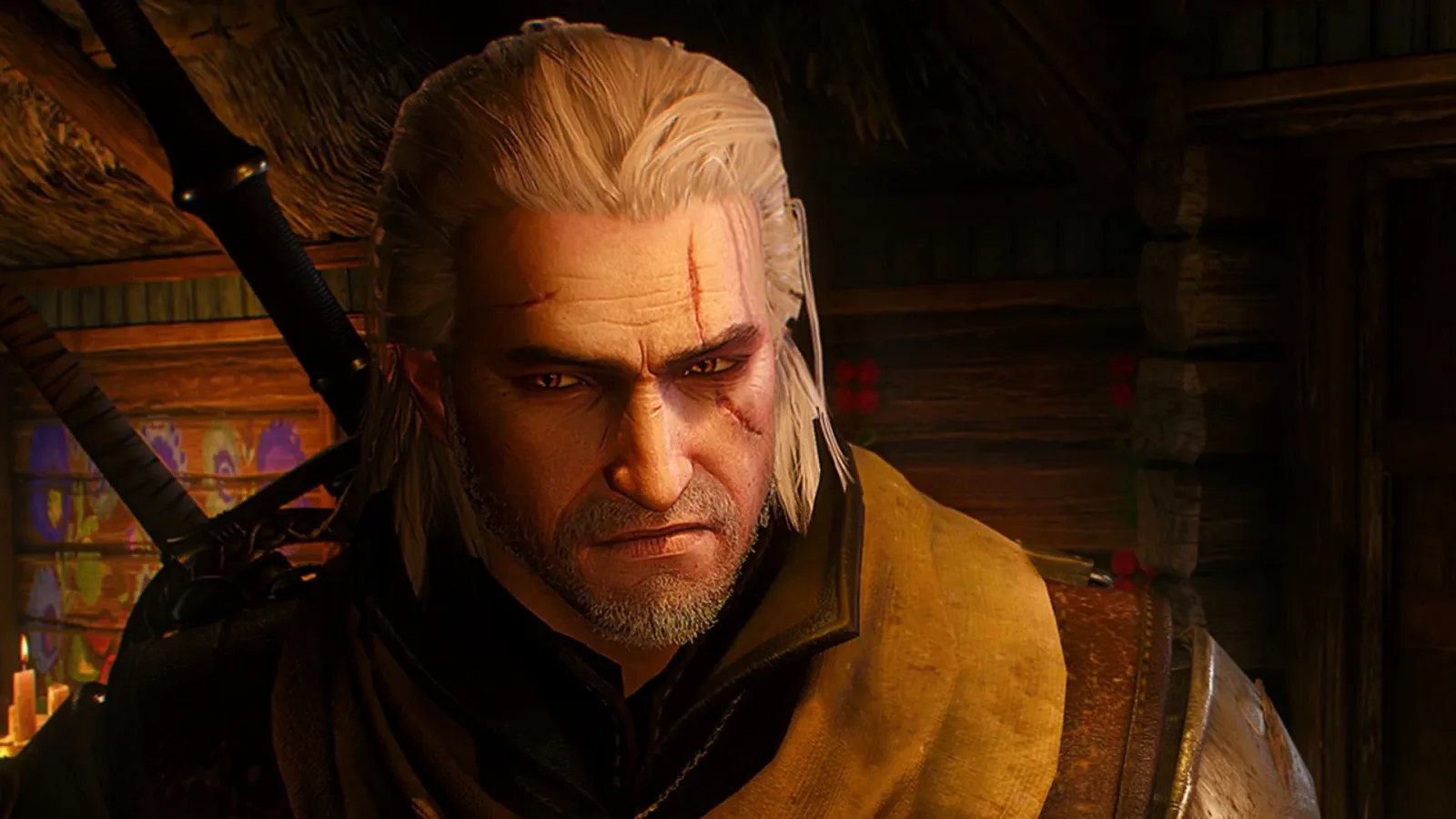
Battle.net may be adding major games beyond Blizzard's own catalog, but Xbox leadership is drawing a firm line between expanding the service and attempting to recreate Steam. Following the announcement that The Witcher 3: Wild Hunt is coming to Blizzard's PC storefront through a partnership with CD Projekt Red, Xbox CEO and executive vice president Asha Sharma has said Battle.net's future will be defined by selectivity rather than an open-ended race to stock every popular PC release.
Speaking during an internal Xbox town hall, Sharma said Battle.net will continue to grow, while stressing that it is not intended to become Steam. Her remarks reinforce Blizzard's recently stated approach: the platform is looking for games that fit its existing audience and communities, not simply titles that can increase the size of the catalog.
"We will do it the right way for those communities," Sharma said when discussing the expanding relationship with CD Projekt Red and the possibility of further games arriving through that partnership.
The comments arrive at an important moment for Battle.net. The service has long been the dedicated home of Blizzard games, including World of Warcraft, Diablo 4, Overwatch, and Hearthstone. In recent years, though, it has also become a place for selected releases connected to the broader Xbox business, from Call of Duty entries to Xbox Game Studios titles such as Avowed and Sea of Thieves. The arrival of CD Projekt Red's hugely influential role-playing game is another notable step beyond the platform's traditional identity.
For useful background on this topic, read Amiko Legends demo Opens Its Extraction RPG World on Steam.
Battle.net's expansion has a deliberately narrower goal
Steam is the dominant all-purpose storefront in PC gaming, with a catalog that spans everything from blockbuster releases and long-running live-service games to tiny experimental projects. Epic Games Store, GOG, the Microsoft Store, and other PC platforms each have their own strategies, but Steam's broad availability and scale remain the comparison point whenever a company speaks about building a PC ecosystem.
Sharma's message is that Battle.net should not be assessed by whether it can duplicate that model. Rather than becoming a marketplace designed to accommodate practically any publisher or genre, Blizzard appears to see the service as an extension of a particular audience: players already invested in Blizzard games and in the kinds of large-scale, polished experiences that may overlap with those communities.
That strategy had already been outlined by Andrew Guerrero, Blizzard's vice president of product management and global insight. Guerrero said last month that Blizzard was not trying to pursue the same path as Steam or Epic Games Store. He described the company's audience as a passionate core made up of Blizzard players and people interested in games that feel compatible with Blizzard's catalog. Under that framework, outside titles are not meant to be random additions. They need a reason to be there.
The Witcher 3 is an understandable example of that thinking. CD Projekt Red's fantasy RPG is one of the best-known single-player games of its generation, but it also shares several qualities that could appeal to Battle.net's audience: a large fantasy setting, extensive role-playing progression, a lengthy campaign, and a strong reputation among players who enjoy story-rich worlds. It is not a Blizzard game, nor is it a live-service product, but it is a recognizable fit beside series such as Diablo and World of Warcraft in a way that a completely unrelated catalog expansion might not be.
The CD Projekt Red relationship could continue
Sharma's comments suggest the agreement surrounding The Witcher 3 may be more than a one-off experiment. She indicated that the CD Projekt Red partnership will grow, although she did not identify which additional games could be involved or provide any timing. There is therefore no confirmation of a specific future title for Battle.net.
Still, the language around careful growth is meaningful. Blizzard and Xbox are not presenting Battle.net as a storefront that will suddenly begin announcing a flood of third-party releases. The emphasis remains on a gradual process, with each title evaluated against the expectations of the communities that already use the launcher.
That caution makes sense for a platform whose identity has been unusually consistent for decades. Players launch Battle.net expecting Blizzard services, Blizzard social features, Blizzard account integration, and a relatively compact list of games. A rapid shift toward a conventional digital storefront could make the launcher feel less distinctive while also creating a difficult comparison with far larger competitors.
A more curated strategy gives the company another option. Battle.net can remain recognizable as Blizzard's platform while becoming a useful distribution channel for selected Xbox and partner releases. This potentially benefits publishers that want to reach an established PC audience without needing to position their game as merely one more product in a massive marketplace.
A large audience, but a different kind of platform
Sharma also said Battle.net is retaining nearly as many users as Steam. That is a striking claim given Steam's massive role across PC gaming, but it should not be read as a statement that the two services operate in the same way. Steam's reach comes from its enormous variety of games and publishers, while Battle.net's player base is built around a smaller collection of major franchises with deeply engaged communities.
Those are fundamentally different strengths. A player may use Steam for dozens or even hundreds of games across multiple genres, while a Battle.net user may return consistently for one or two games such as World of Warcraft, Overwatch, or Diablo 4. Retention can be especially significant for services anchored by long-running online games, expansions, seasonal content, and social groups that keep players engaged over years.
The difference also helps explain why a selective catalog may be more practical than a broad one. Battle.net does not necessarily need to persuade every PC player to make it their central library. It can instead aim to offer additional value to people who already spend time in Blizzard's ecosystem, while using carefully chosen releases to make that ecosystem more attractive.
- Blizzard's core games remain central: Battle.net is still primarily associated with franchises such as World of Warcraft and Diablo.
- Xbox-connected titles have broadened the lineup: Games including Avowed and Sea of Thieves demonstrate that the service already reaches beyond Blizzard publishing.
- Third-party additions will be curated: Leadership has repeatedly said the objective is not to accept games indiscriminately.
- CD Projekt Red could play a larger role: Sharma indicated the partnership behind The Witcher 3 is expected to grow, without confirming specific games.
What this means for PC players
For players, the immediate takeaway is straightforward: Battle.net is likely to become broader, but not broader in the same way as Steam. The service may occasionally gain a major game that feels surprising at first glance, especially from Xbox partners or studios with audiences that overlap with Blizzard's. However, there is little indication that Battle.net will attempt to become an exhaustive PC games store with a constantly expanding list of unrelated releases.
That could make its future catalog easier to understand. Instead of requiring users to browse a vast storefront, Battle.net could become a more tightly managed destination for Blizzard games, selected Xbox releases, and partner titles chosen for a clear community fit. Whether that approach proves attractive will depend on the quality of those additions and on how well the platform supports players who use it for games outside Blizzard's own lineup.
There are still unanswered questions. It is not yet clear how frequently third-party games will be added, whether other major publishers will follow CD Projekt Red, or how much overlap Battle.net's future catalog will have with Xbox's own PC offering. Nor is there any guarantee that every carefully chosen partnership will translate into strong player interest on the launcher.
What is clear is that Xbox and Blizzard are framing Battle.net's next stage as an evolution rather than a reinvention. The Witcher 3 represents a meaningful expansion of the service's catalog, but Sharma's comments make it clear that the company does not see this as the first step toward mimicking Steam's everything-for-everyone model. Battle.net is set to grow on its own terms, with the goal of protecting the identity and expectations of the communities that made it valuable in the first place.
Community
Discussion
Start the conversation.
No comments have been posted yet.