

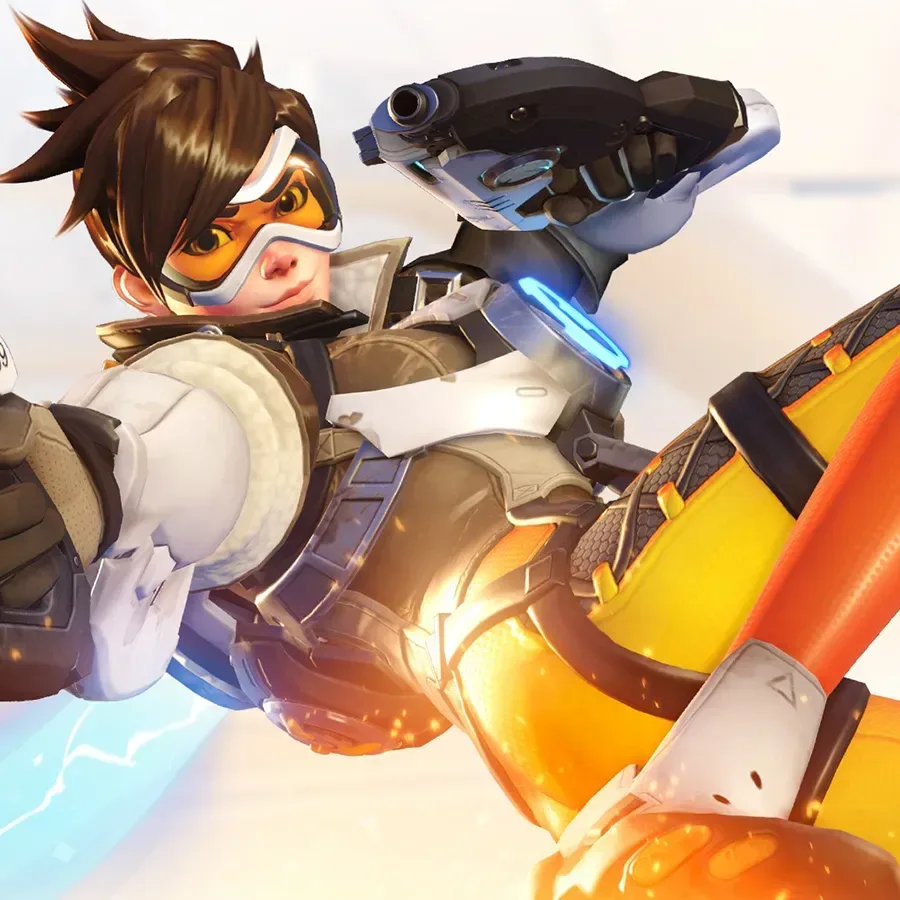
Tracer is still the unmistakable face of Overwatch. That was the emphatic message from the game's leadership during BlizzCon 2026, where Lead Hero Producer Kenny Hudson and Art Director Dion Rogers addressed a question that has become increasingly understandable in recent years: has the speedy British damage hero quietly stopped being the series mascot?
For longtime players, the question may sound surprising at first. Tracer's silhouette, chronal accelerator, orange goggles, finger guns, and endlessly energetic personality were foundational to the original game's public identity. When Overwatch arrived in 2016, she was everywhere: trailers, box art, ads, merchandise, animated shorts, and promotional campaigns all leaned heavily on the hero who famously announced that "the cavalry's here."
But a live-service hero shooter changes constantly. Its roster grows, seasonal stories shift focus, crossover campaigns favor different characters, and fresh heroes naturally take center stage when they launch. Tracer has not appeared as consistently in some of the biggest collaborations and recent promotional pushes, leading some fans to wonder whether another character had inherited the job of representing the franchise.
Hudson and Rogers left little room for ambiguity. Tracer remains the mascot, and in their view, she has always occupied that position.
For useful background on this topic, read Rescue on Fractalus! Lands on Amiga in New Version 1.0 Port.
"Tracer is still the mascot for Overwatch. Very much," Rogers said during BlizzCon 2026. "Tracer orange" remains an expression used within the team, he added, pointing to the orange visual detail on top of the game's sigil as one small indication of the character's continuing influence.
The clarification is less about declaring one hero more important than the rest of the ensemble and more about recognizing the role Tracer plays in the larger brand. Overwatch was built around a wide cast, and its appeal has always included the possibility that one player's favorite is another player's rival, support, tank partner, or story counterpart. Yet every major character-driven game often has a figure who provides an immediate visual shorthand for the entire experience. For Overwatch, that figure is still Tracer.
That status makes sense even as the game looks increasingly different from the version that debuted a decade earlier. The roster has expanded dramatically, gameplay systems have evolved, and the development team is presenting 2026 as a major content year. The newest addition is Doctrine, a support hero whose design reflects a willingness to chase more unusual genre fantasies without losing the technological and character-focused identity of Overwatch.
Doctrine Brings a Vampire Fantasy to Overwatch
Doctrine is the newest support hero and is described as vampire-inspired, though players should not expect a literal supernatural vampire to enter the cast. The development team instead used the concept as a starting point for the hero's abilities, visuals, and overall fantasy, then adapted it to fit the world's science-fiction framework.
Rogers explained that the initial question came from lead narrative designer Miranda Moyer: what would a vampire look like in the Overwatch universe? That prompt gave the team a strong thematic foundation to explore. Rather than beginning solely from a gameplay role or a familiar character type, the developers could build around a concept with clear imagery and emotional associations: mystery, predation, elegance, darkness, and transformation.
The team has found that bold themes can help unify the many disciplines involved in creating a hero. A compelling core idea can inform a kit, visual concept, personality, animation, sound design, and narrative history at the same time. In Doctrine's case, the vampire inspiration became the spark that helped the character take shape.
Rogers said the concept got the team thinking across "everything from kit, to concept, to art," while Hudson noted that the roster has already covered archetypes such as cowboys, knights, and ninjas. The vampire idea, he said, was a chance to lean into a different fantasy and see whether it could become a full hero.
Doctrine's final design still retains a grounded professional identity. Hudson described him as a scientist or mechanical engineer, with a cape that carries some of the visual impression of a lab coat. That detail is important because it links the character's more dramatic visual motif to the technological tone of the setting. The goal was not to simply place a vampire into Overwatch, but to find an interpretation that could plausibly exist alongside cybernetic soldiers, advanced robotics, genetically engineered fighters, and globe-spanning organizations.
Early versions of the hero appear to have been more conventional. Hudson said Doctrine began as a typical scientist figure with a lab coat and glasses, but the character had not yet reached the point where the team could immediately recognize him as a complete Overwatch hero. The vampire concept helped provide that missing clarity. Once it was applied, Doctrine had a more defined fantasy, stronger silhouette, and a clearer archetype for players to connect with.
A Link to Doomfist and Zimbabwe
Doctrine also arrives with direct ties to an established character: Doomfist. He hails from Zimbabwe and has a history with Doomfist's family, giving his introduction an immediate place within the game's existing lore rather than making him feel detached from the wider cast.
That history involves mechanical work. Doctrine previously worked for Doomfist's family and helped build arms for Doomfist. The connection explains why Doctrine would turn to him in an effort to recover his own arm. It also creates an interesting point of tension for future storytelling, since Doomfist is one of the franchise's most consequential and dangerous figures.
The relationship shows how new additions can deepen old characters at the same time. Doomfist has long been associated with power, conflict, Talon, and his iconic gauntlet. Doctrine's background provides another perspective on the machinery, people, and personal history surrounding him. Whether their shared past becomes a major narrative thread or remains flavor for hero interactions, it gives Doctrine a more substantial entrance than a character arriving with no connection to the existing world.
For players, the major question will ultimately be how Doctrine performs as a support. His vampire-inspired direction suggests a hero designed around an immediately readable fantasy, but the specific balance of healing, utility, survivability, and combat pressure will determine how he settles into team compositions. Support heroes are often central to the rhythm of a match, and a new one can reshape both casual play and competitive strategy even before the wider community settles on the strongest combinations.
Ten New Characters and More Still Coming
Doctrine is nearly the last of 10 characters introduced to Overwatch during 2026, an unusually substantial amount of roster growth for a single year. That pace speaks to a team focused on keeping the game's hero pool in motion while continuing to find new fantasies that do not simply repeat what has already been done.
Rogers made clear that the team does not see the current roster as close to a final endpoint. There is, in his words, always room for more heroes, and the developers have more in development. Hudson similarly framed the studio's ambitions around setting fresh goals rather than merely revisiting milestones already achieved.
That approach matters for a game as dependent on its cast as Overwatch. New maps, modes, cosmetics, and events all contribute to a live-service game's lifespan, but heroes are the content that can most directly change how every match feels. A new tank may alter the shape of a front line. A damage hero can introduce a new threat pattern. A support like Doctrine can change how teams sustain themselves, engage, or respond to pressure.
The next addition is already beginning to draw attention. Hero 55 was teased at BlizzCon 2026 and is described as a stylish, suave-looking Omnic. Specific details about the character have not yet been fully revealed, but the tease has already given players another reason to speculate about the direction of the roster.
Omnics have always been among the most important groups in Overwatch lore, representing both the promise of artificial life and the conflict at the heart of the setting's history. A new Omnic hero could potentially explore a wide range of visual and narrative territory, though the team has not yet confirmed the character's role, kit, launch timing, or wider story significance. For now, the tease is simply a signal that the 2026 hero push will not end with Doctrine.
Tracer's Place in a Growing Ensemble
The renewed confirmation around Tracer comes at a useful moment. The game is adding heroes rapidly, experimenting with new archetypes, and making room for characters who might become the focus of the next major season, short, collaboration, or competitive conversation. In that environment, the face of the franchise does not need to be the newest hero or the one currently dominating every piece of marketing.
Tracer's mascot role is instead tied to continuity. She represents the original energy of Overwatch: colorful, accessible, fast-moving, optimistic, and character-driven, even when the world around her becomes more complicated. Her absence from a particular crossover or promotional asset does not mean that identity has been reassigned.
As Doctrine enters the support lineup and Hero 55 waits in the wings, Overwatch is emphasizing expansion without losing sight of the character who helped introduce the world to millions of players. The roster may keep changing, but the developers' answer is definitive: Tracer is still that hero.
Community
Discussion
Start the conversation.
No comments have been posted yet.