

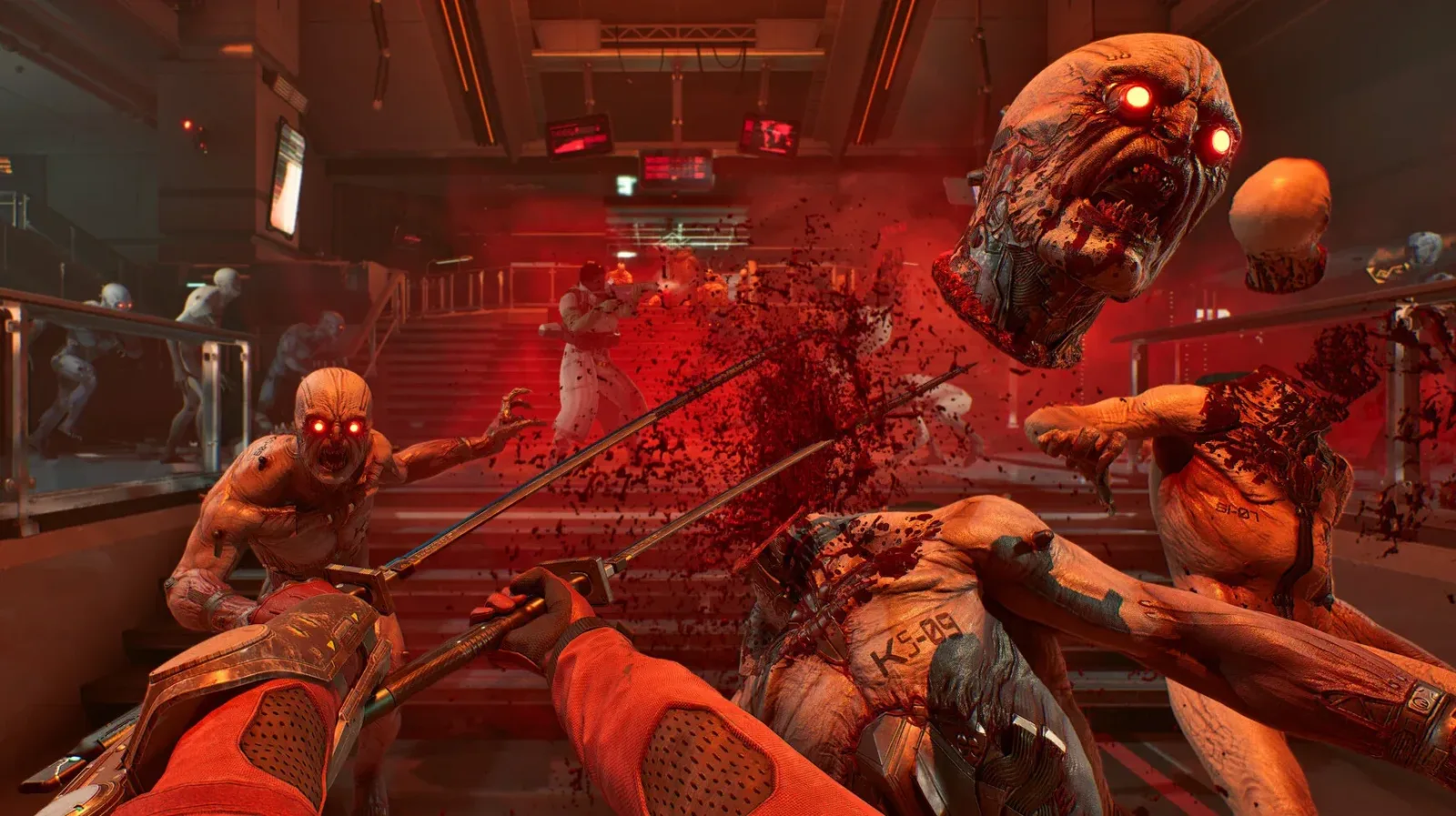
Tripwire Interactive has announced another round of layoffs, with 36 developers affected at the Georgia-based studio behind Killing Floor and Maneater. The cuts follow a restructuring earlier this year and arrive amid continuing attention on the performance and player reception of Killing Floor 3.
The news has also prompted a public argument over what led the company to this point. Tripwire cofounder and former CEO John Gibson, who left the company in 2021 after backlash to his support for a Texas abortion ban, has argued that his exit was the defining cause of the studio's decline. In posts on X, Gibson claimed that "woke leftists" forced out the company's founder and key creative leader, harming its culture and ultimately its business.
His comments put a political lens on a situation with several business and development factors behind it: a major new release that has received a mixed response on Steam, repeated organizational changes, and the studio's shifting place within Embracer Group's broader corporate structure.
Embedded X/Twitter post
Tripwire confirms a new round of cuts
Tripwire said 36 developers are losing their jobs in its latest restructuring. The company had already undergone a separate round of restructuring in March, making this a difficult year for the studio's staff as it adjusts its development and publishing plans.
For useful background on this topic, read Australian Student Game Challenge to End as Generative AI Complicates Judging.
Alongside the announcement, the company emphasized that it intends to continue supporting its current games and projects. Its stated priorities include active work on Maneater 2, ongoing development of Killing Floor 3, and publishing efforts through the Tripwire Presents label.
"Our team is focused on our internal projects, including active development of Maneater 2, ongoing work on Killing Floor 3, and publishing efforts under the Tripwire Presents label," Tripwire said. "We are continuing to give the best support possible to all of our games and remain committed to our awesome community."
The confirmation that Maneater 2 remains in active development is notable, though Tripwire did not provide further details about the game, its release timing, or which platforms it will reach. Likewise, the company did not specify how the layoffs will affect individual teams or the scope of its future publishing slate.
Killing Floor 3's Steam numbers fuel the debate
Discussion around the layoffs quickly focused on Killing Floor 3, the latest installment in Tripwire's cooperative zombie-shooter series. Gaming consultant Iain Garner highlighted a sharp contrast between the Steam performance and user-review averages of the new game and its predecessor.
Garner wrote that the 2016 release Killing Floor 2 averaged roughly 6,000 daily Steam players last month, while Killing Floor 3 averaged around 460. He also pointed to Steam user-review figures: 88 percent positive for Killing Floor 2, compared with 44 percent for Killing Floor 3.
Those figures do not by themselves explain why Tripwire is reducing its workforce. Steam represents only one platform and player-count snapshots do not reveal a game's full sales, costs, console activity, long-term update plans, or internal business targets. Still, the disparity illustrates the challenge facing the newer title. A sequel to a long-running multiplayer game is expected to retain players, win back veterans, and create a foundation for ongoing support, and the Steam response cited in the discussion suggests Killing Floor 3 has had difficulty meeting that moment.
For studios dependent on live communities, reception is not merely a matter of public perception. Player sentiment can influence future engagement, word of mouth, sales of additional content, and the scale of resources a publisher is willing to maintain around a game. Tripwire has said it is continuing work on Killing Floor 3, meaning the team still has an opportunity to respond through updates and support. However, the layoffs add uncertainty around how that continued work will be staffed.
Gibson says his departure changed the company
Gibson responded directly to Garner's comparison and rejected the idea that the newer game's reception was the central explanation for Tripwire's circumstances. He instead attributed the company's problems to the loss of its former leadership, particularly himself.
"This wasn't the issue," Gibson wrote, arguing that he had been pushed out as CEO and that the company was subsequently sold. He said the team that developed Killing Floor 3 was largely the same team that made Killing Floor 2, but without its former leader. In another post, he compared his removal to Apple forcing out Steve Jobs, presenting himself as the essential figure whose departure caused the organization to lose its direction.
Gibson also said that he did not believe he was the only talented person at Tripwire and acknowledged that mistakes may have been made after he left. Even so, he described his former role as that of a "linchpin," claiming that removing him caused the larger machine to break down.
In a follow-up comment, Gibson clarified that he believed only he, rather than the broader "old guard," had been forced out. He further alleged that the company's culture had been damaged and said that many employees were caught in the resulting crossfire.
These are Gibson's personal interpretations of events, not an explanation offered by Tripwire for the layoffs. The company's statement focused on its continuing projects, support plans, and commitment to its community rather than assigning blame for the reduction in staff.
The events behind Gibson's 2021 resignation
Gibson cofounded Tripwire Interactive with Alan Wilson in 2005. He stepped down as CEO in 2021 after widespread criticism of a social-media post in which he praised a U.S. Supreme Court decision involving Texas legislation banning abortions once a fetal heartbeat is detected.
At the time, Gibson said he was speaking as a pro-life game developer and that he felt it was important to publicly state his position despite the political nature of the subject. The response was immediate. Development partners publicly distanced themselves from his remarks, and Tripwire issued its own statement stressing that Gibson's view did not represent the company.
"The comments given by John Gibson are of his own opinion, and do not reflect those of Tripwire Interactive as a company," Tripwire said at the time. The studio added that the comments did not reflect the values of its team, partners, and much of its wider community.
Tripwire's leadership said it would take swift action and work toward a more positive environment. Gibson resigned days later. Wilson took over as CEO, while Gibson moved on from the company he had helped establish.
The episode occurred before the U.S. Supreme Court later overturned Roe v. Wade, but it had already become a major flashpoint for the studio. It also remains central to Gibson's current argument: he characterizes his resignation and the reaction around it as an ideologically motivated removal, while the studio's 2021 response centered on the effect of his comments on employees, partners, and the community.
A studio shaped by wider ownership upheaval
Tripwire's recent history also includes substantial changes beyond the 2021 leadership transition. The studio was sold to Embracer Group in 2022 and placed under Saber Interactive. Embracer later began a far-reaching period of cuts, closures, cancellations, and sales across its holdings. Saber itself was sold off, while Tripwire remained with Embracer.
That shifting ownership landscape is important context for any attempt to reduce the studio's present situation to a single cause. The game industry has seen layoffs across publishers and independent studios alike, often alongside consolidation, canceled projects, rising development costs, and changing expectations around multiplayer games. Tripwire's latest cuts occur within that broader climate, as well as during Embracer's prolonged efforts to reshape its operations.
Tripwire is now led by CEO Matthew LoPilato, previously the company's CFO. Wilson, who succeeded Gibson as CEO, remains at the company as a vice president. The leadership lineup reflects an organization that has changed significantly since the period when Gibson and Wilson jointly represented the studio's founding leadership.
What comes next for Tripwire
For the employees affected by the layoffs, the immediate issue is the loss of jobs during another punishing period for game-development workers. For players, the pressing questions concern the future of Killing Floor 3, the development of Maneater 2, and whether Tripwire Presents can maintain its role as a publishing label while the parent company continues to reorganize.
Tripwire has made clear that it plans to keep working on its announced projects. That commitment will be closely watched, particularly by the Killing Floor community as the third game attempts to improve its standing with players. But the company has not laid out a detailed roadmap following the cuts, and it remains unclear how the reduced workforce will affect the pace and scale of its plans.
Gibson's public intervention ensures that the layoffs will be discussed not only as a business and development story, but as the latest chapter in a long-running dispute over his exit. His claims are likely to remain contentious. What is certain is that Tripwire now faces the practical task of supporting a troubled new release, developing its next projects, and rebuilding stability after another round of job losses.
Community
Discussion
Start the conversation.
No comments have been posted yet.