

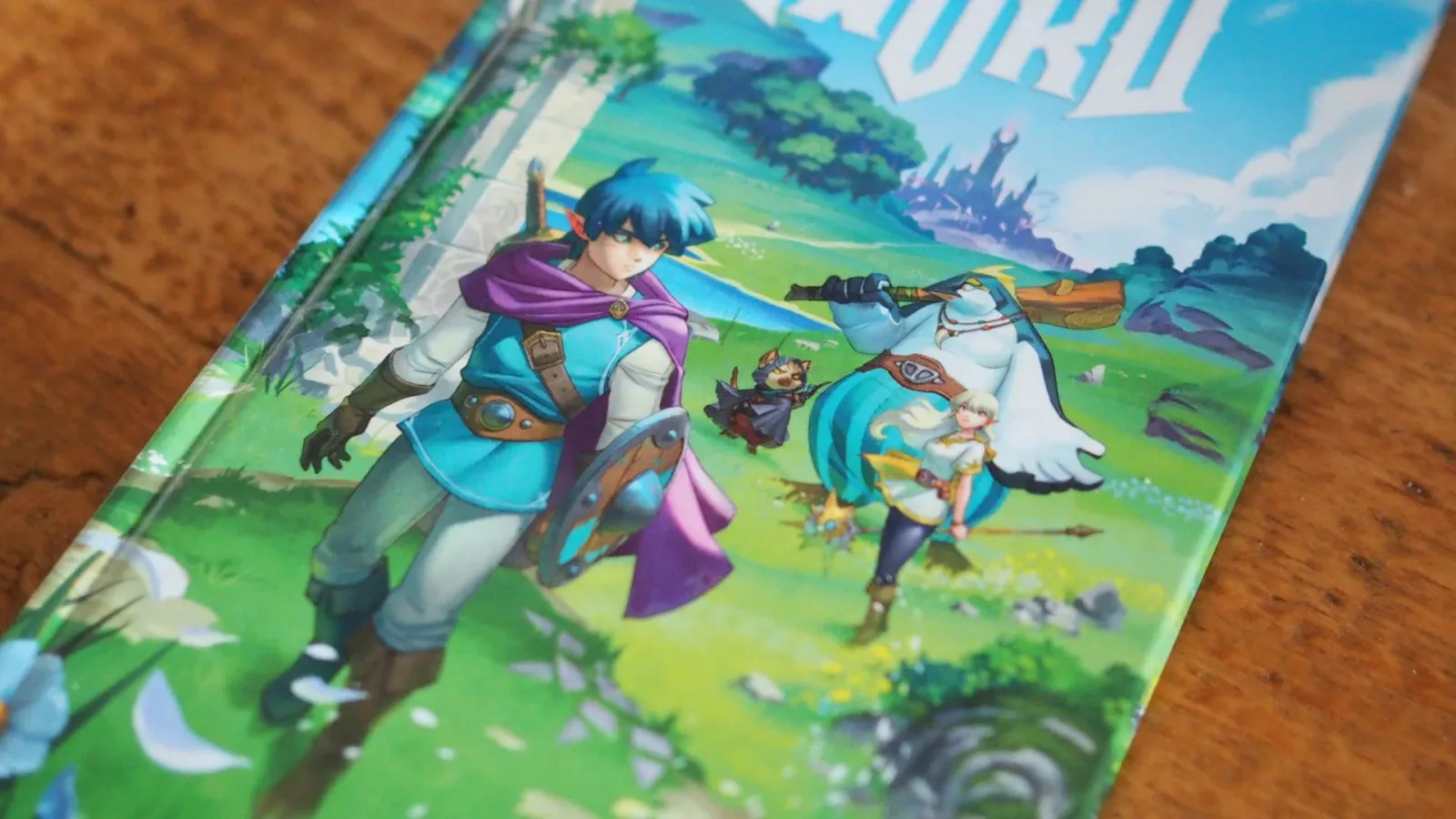
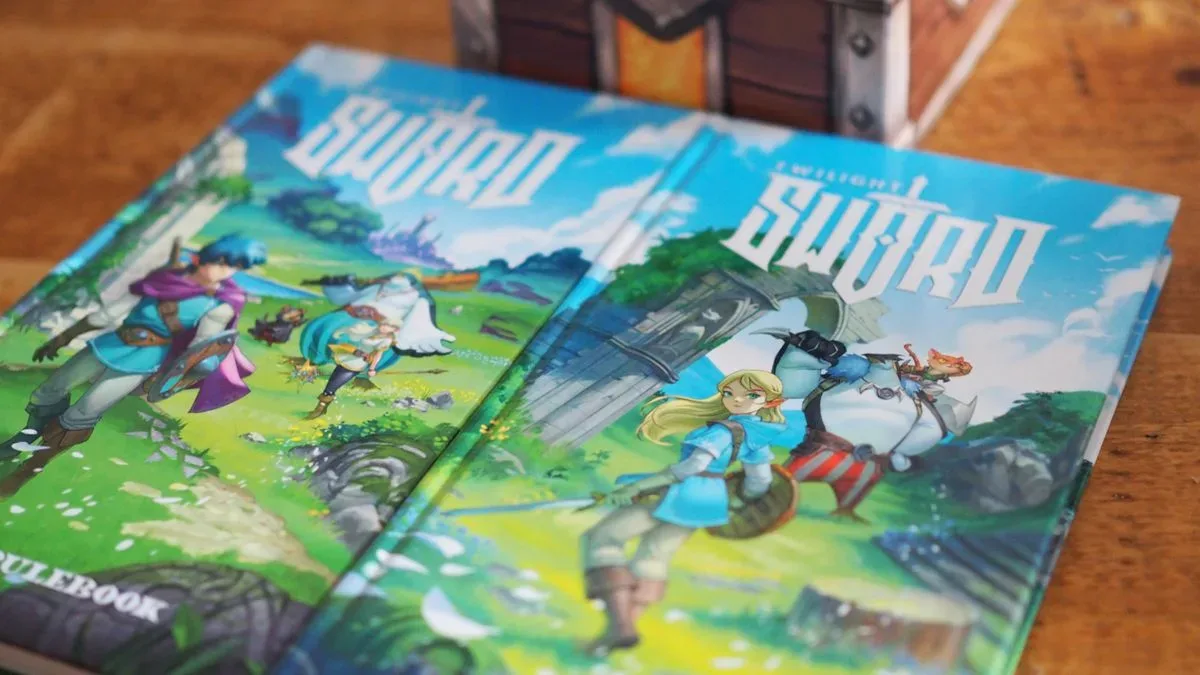
Twilight Sword has arrived as a tabletop fantasy RPG with an inspiration that is impossible to miss: the bright, strange, perilous style of adventure associated with The Legend of Zelda. Developed by Two Little Mice, the game aims to translate that particular kind of journey into a format built for a group around a table. Its setting, Radia, is an original world rather than an official Nintendo crossover, but it clearly embraces the genre staples that have made Zelda adventures memorable for decades: fallen realms, distant castles, eccentric forest creatures, recognisable monster archetypes, exploration, and a constant sense that something intriguing waits just beyond the next hill.
The result is not merely a fantasy role-playing game with a few visual nods to video games. Twilight Sword appears designed around the feeling of a classic action-adventure quest. Players venture through a land that is unfamiliar in its specifics but comfortingly familiar in its structure, uncovering secrets while confronting threats that feel suited to a colorful fantasy world. For players who have long wondered what a campaign inspired by the travel, dungeons, puzzles, and heroic momentum of Zelda might feel like, this is a very direct answer.
A New World Built Around Familiar Adventure DNA
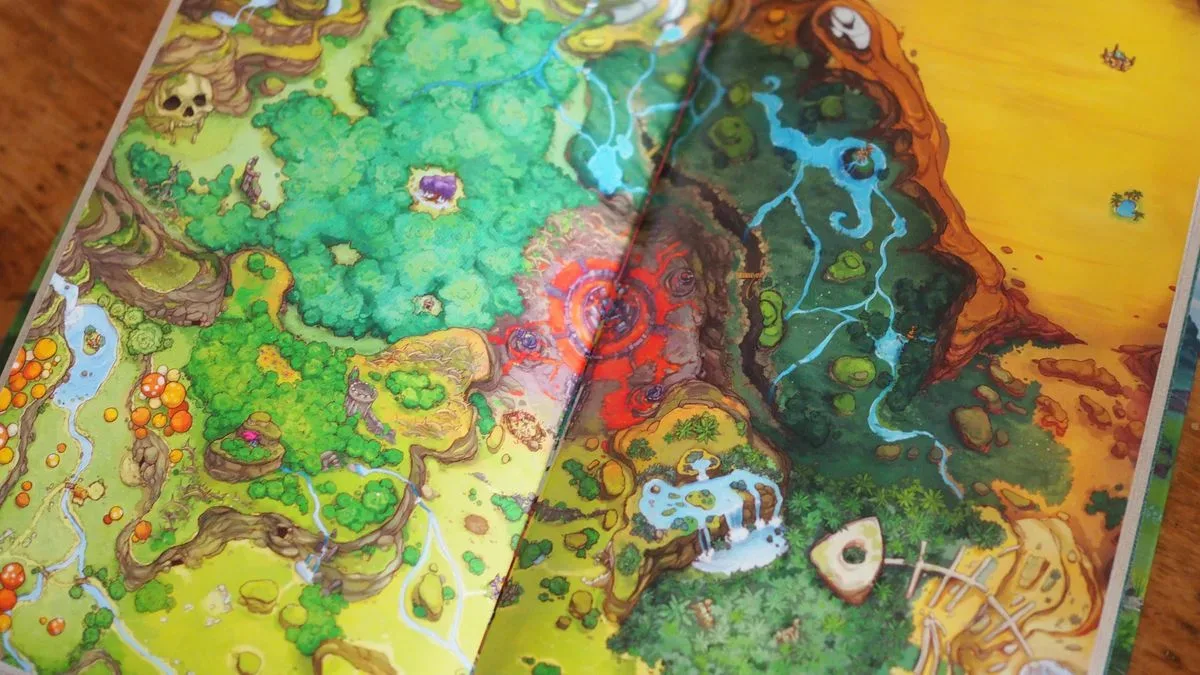
Radia is central to what makes Twilight Sword more than a simple conversion exercise. It has its own locations, mysteries, and identity, giving a group room to discover a setting together instead of retracing a map they already know by heart. That distinction matters in tabletop role-playing, where surprise and shared improvisation are a major part of the appeal. A licensed Hyrule campaign might provide immediate recognition, but Radia offers the freedom to be genuinely unknown territory.
At the same time, the game does not hide the kind of fantasy it wants to evoke. Its overall presentation recalls the open-air, hand-painted sensibility associated with more recent Zelda games, while the world layout uses a hub-and-spoke approach reminiscent of classic adventures. There is a darkened castle at the center of the setting, marked by an ominous red corruption. That kind of landmark gives the campaign an immediate focal point: a destination that players can see as the ultimate source of danger, even while the route toward it is likely to lead through many detours, discoveries, and escalating challenges.
For useful background on this topic, read World of Warcraft: Forever Boosts High-Level Quest Gold but Won't Restore XP Conversion.
Twilight Sword also leans into a bestiary and visual language that will feel recognizable to genre fans. Some adversaries deliberately occupy the same broad design space as familiar Zelda-style creatures, including foes that resemble Moblins and Lizalfos. Such comparisons are unavoidable because those monster concepts are deeply tied to the style of fantasy Twilight Sword is celebrating. Rather than removing every trace of that tradition, the game uses those touchstones to establish the tone of its world quickly.
That balancing act is one of the game's most appealing qualities. It is open about its influences, but Radia's original places and opportunities for exploration give it a reason to exist beyond nostalgia. A party can meet whimsical woodland beings, investigate the ruins of a noble kingdom, and battle through hostile territory without being constrained by a pre-established canon. The experience can feel like entering a lost adventure from a beloved era of fantasy gaming while still allowing the group to make the tale its own.
Dungeons & Dragons Concepts, Streamlined for Fast Play
Mechanically, Twilight Sword shares some common ground with Dungeons & Dragons and other traditional tabletop RPGs. Characters have numerical abilities including Strength and Charisma, and those values represent how capable a hero is in different situations. Players choose distinct character paths, called Ways, which function in a role similar to a class. These Ways provide the defining talents and identity that help a party of adventurers feel varied.
But the game's central resolution system takes a noticeably different route from the familiar "roll high" approach used by many RPGs. When making a check in Twilight Sword, a player rolls a twelve-sided die and wants to roll under the relevant score. A result of 1 is the ideal outcome. It is a simple inversion, yet it creates a distinct rhythm at the table. Players can quickly look at their statistic, roll a d12, and know whether they have succeeded, while low numbers become immediately exciting.
The game is also designed with a lighter, more arcade-like flavor than some expansive tabletop systems. Health is tracked in hearts, an obvious but fitting choice for a game in this mold. Instead of presenting survival only through conventional hit point totals, the heart system gives combat and danger an instantly readable, video game-adjacent feel. It supports the impression that heroes are moving through a fantasy quest with clear stakes, recoverable momentum, and tangible progress.
Stamina is another important resource. It can be spent to activate certain special abilities, including Feats associated with a character's Way. This puts meaningful choices into the hands of players during tense moments. Do they conserve stamina for a looming confrontation, spend it to overcome an obstacle, or use it now to help the group press deeper into a dangerous location? Resource management is a natural fit for a game inspired by action-adventure design, where the timing of a tool, technique, or burst of effort can change the shape of an encounter.
The combined effect is a ruleset that remains recognizably tabletop while seeking a more immediate and accessible cadence. It has stats, character options, and tactical resources, but its heart meter and under-score d12 checks give it a personality of its own. That could make it attractive both to established RPG groups looking for a less cumbersome campaign system and to newcomers who want an experience that resembles the flow of a fantasy video game.
Why the Zelda Comparison Fits So Well
There have been plenty of tabletop fantasy games influenced by games, animation, and classic adventure fiction. Twilight Sword stands apart because its inspirations are not simply decorative. The themes associated with Zelda are embedded in how the game seems to frame its world and its heroes.
- Exploration matters: Radia is built to invite travel into the unknown rather than simply moving players between combat scenes.
- A looming evil provides direction: The corrupted central castle creates a clear long-term threat without eliminating the potential for side stories and personal discoveries.
- Whimsy sits beside danger: Cheerful, oddball fantasy elements coexist with ruins, corruption, and monsters.
- Heroes feel game-like in the best sense: Hearts, stamina, and signature abilities help communicate an energetic action-adventure tone.
- The setting is not borrowed wholesale: Radia can surprise players in ways an established licensed world may not.
These ingredients make Twilight Sword potentially useful for game masters who want to run an adventure about wonder as much as warfare. Traditional fantasy campaigns can sometimes become dominated by political intrigue, grim survival, or dense mechanical optimization. There is room for all of that in the hobby, but Twilight Sword is reaching for a different mood: a heroic journey where a mysterious cave, a troubled village, an unusual artifact, or an overlooked path can become the start of the next memorable session.
It also offers an alternative for groups that have tried to recreate Zelda in systems not specifically designed for it. Dungeons & Dragons can certainly handle an exploration-focused campaign, but it brings expectations and mechanical weight of its own. Twilight Sword's premise, terminology, and resource systems appear aligned from the outset with the fantasy of heading into a strange land equipped with courage, a few useful tools, and the determination to see what is hidden beyond the horizon.
Monster Book Campaign Surges Past Its Goal
Twilight Sword has just reached shelves, but Two Little Mice is already expanding the game through a crowdfunding campaign for a Monster Book on Backerkit. The campaign moved rapidly after its launch, reaching EUR306,254 in funding within a few hours. That figure is far beyond its EUR30,000 goal, signaling substantial early interest in further material for the game.
A dedicated monster supplement makes sense for a setting where strange foes, dungeon threats, and memorable creatures are a major part of the experience. The campaign's strong opening also suggests that Twilight Sword has found an audience eager for a tabletop interpretation of this style of fantasy. Whether that enthusiasm continues over the long term will depend on the support surrounding the core release, but the immediate response gives the line a promising start.
An Adventure for the Table, Not Just a Familiar Reference
Twilight Sword's strongest idea may be its willingness to celebrate a very specific fantasy tradition while making space for new stories. Its debt to Zelda is evident in everything from its broad atmosphere to its game-like health and stamina concepts. Yet the choice to set the action in Radia allows it to offer something more productive than imitation. Players can recognize the emotional shape of the journey without knowing every destination ahead of time.
For tabletop fans, that is an enticing combination. The game provides an approachable structure rooted in recognizable RPG fundamentals, then reshapes those fundamentals with d12 checks, heart-based health, stamina spending, and Ways. For action-adventure fans who may be curious about tabletop play, it offers a vocabulary and sense of pacing that should feel immediately welcoming.
Twilight Sword will naturally draw comparisons to both Zelda and Dungeons & Dragons, and it appears comfortable with that position. It is a colorful, adventurous RPG that wants players to travel, investigate, fight, and uncover secrets in a world shaped by wonder and corruption. If it can sustain that promise through memorable adventures and continued support, Radia may become a compelling destination for groups seeking a fresh heroic quest.
Community
Discussion
Start the conversation.
No comments have been posted yet.