

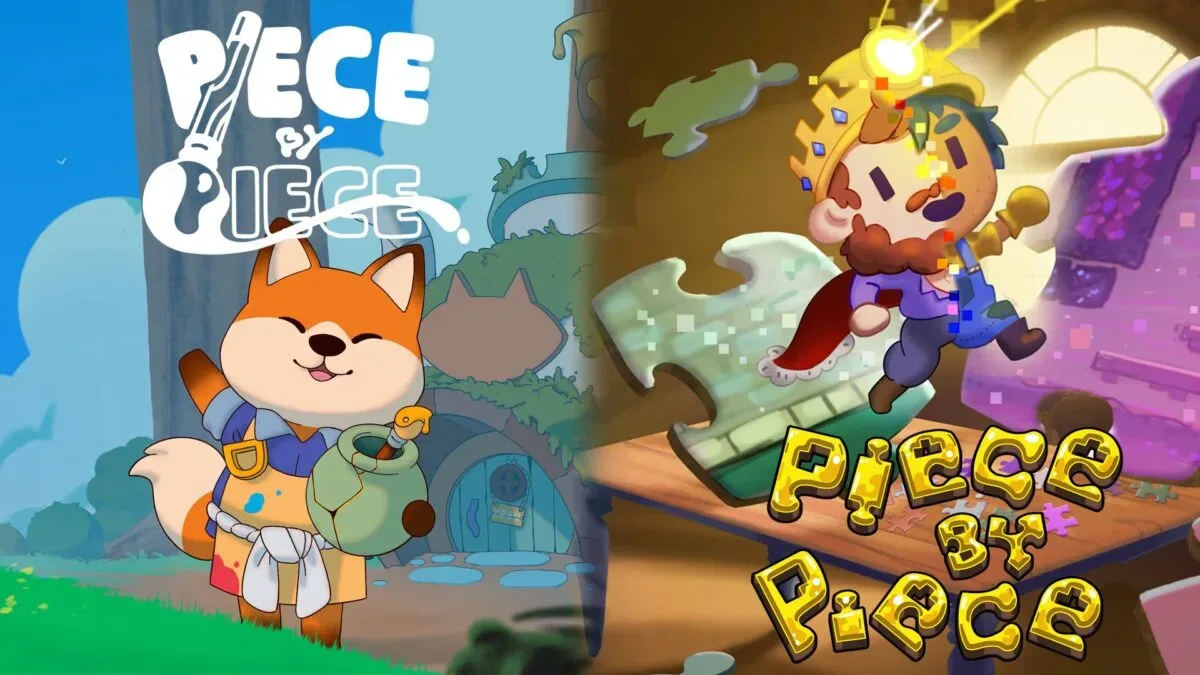
Nintendo Switch players will soon be able to buy Piece by Piece--and then, potentially, buy a completely different Piece by Piece right beside it. Two unrelated games carrying the exact same title are scheduled to arrive on the Nintendo Switch eShop on November 25, in an unusual release arrangement born from collaboration rather than a naming dispute.
The shared title is not a case of one game replacing the other, a renamed port, or two editions of the same project. These are separate games from separate developers, with very different ideas at their core. One is a gentle life simulation about restoring a community's damaged belongings. The other turns platforming into a literal jigsaw construction challenge. Their common name initially created understandable concern between the teams, but it has ultimately led to a Steam bundle, publishing help for a Switch port, and what may be one of the stranger same-day storefront listings the console has seen.
One Name, Two Very Different Games
The first Piece by Piece was developed by Gamekat and is published by No More Robots. It is a cozy life sim starring a fox tinkerer who helps neighbors by repairing their broken treasures. Its central appeal is rooted in the familiar pleasures of a low-pressure community game: meeting residents, taking on restoration work, and putting treasured objects back together.
The other Piece by Piece comes from Neon Polygons, which both developed and originally published the game. Rather than following the relaxed rhythms of a repair-focused simulation, this project approaches puzzle platforming through the visual and mechanical language of jigsaws. Players assemble the level itself piece by piece, creating a markedly different kind of game despite the identical title.
For useful background on this topic, read Dandy's World 1.0 update Set to Bring New Mode, Floors and Major Lore Drop.
Both games had previously launched on Steam earlier in 2026. That alone made them an oddity for PC storefront visitors, but their planned Switch launches take the coincidence further. They will now be released simultaneously on the same console storefront and under the No More Robots publishing label.
For consumers, the distinction will matter. Anyone searching the eShop for one of these games will need to pay close attention to the developer, the art, and the descriptions rather than relying on the title alone. In most situations, two games with the same name would be seen as a commercial problem, especially in digital stores where discoverability is already difficult. Here, the developers have instead made the overlap part of the story.
An Anxious Email Turned Into a Partnership
No More Robots co-founder Mike Rose explained that the two teams first became aware of each other around their Steam launch announcements. No More Robots announced its Steam date for Gamekat's Piece by Piece in March. One day later, Neon Polygons announced a date for its own game of the same name, scheduled for two days after the first.
Neon Polygons contacted No More Robots with concerns that the shared name could prompt a legal or business conflict. That reaction is not difficult to understand. Naming is a major part of a game's identity, and smaller teams can be particularly vulnerable when a title is easily confused with another product. A publisher with greater resources might be expected to object, seek a rename, or otherwise distance its release from a similarly named game.
Rose's answer took the situation in a much friendlier direction. Rather than treating Neon Polygons as competition, he proposed that the two games be bundled together on Steam. The idea reframed a potential point of friction into a novelty that could introduce players of either game to the other.
"Well, that's just hilarious. Do you wanna bundle up on Steam?"
That response established the tone for what followed. The games remain distinct, but the coincidence became a shared joke and a practical opportunity. The arrangement is especially striking because independent developers commonly face an intense fight for visibility. New releases arrive in huge numbers, marketing budgets are limited, and even an appealing game can struggle to reach the audience most likely to enjoy it.
From Steam Bundle to Switch Port
The collaboration did not stop at the bundle. Neon Polygons wanted to bring its jigsaw-platforming Piece by Piece to Nintendo Switch, but lacked the necessary time and financial resources to make the port happen. No More Robots stepped in to help, extending the unusual partnership from promotion into publishing support.
That decision means the games will make their Switch debut together under the same label. For Gamekat's cozy fox adventure, No More Robots is already the publisher. For Neon Polygons' puzzle platformer, the Switch release represents an assisted path to a platform the developer had hoped to reach.
Rose said the motivation was partly generosity and partly amusement at the absurdity of the situation. The result is an arrangement that makes the games easier to discuss as a pair while preserving their own creative identities. Neither developer has been presented as folding into the other; instead, the publishing assistance has enabled two similarly named projects to coexist more visibly.
It is a notable contrast with the defensive behavior that can emerge in a crowded marketplace. Developers have legitimate reasons to worry about confusion, imitation, and their work being buried beneath a constant stream of releases. Some teams have become increasingly cautious about demos and public materials amid concerns over AI-generated clones and other forms of imitation. In that environment, an accidental title collision might normally bring apprehension rather than cooperation.
In this case, both sides found a way to turn that collision into a feature. A person who comes to the eShop seeking a cozy repair game could discover an inventive platformer. Someone drawn to the idea of building stages like a jigsaw puzzle may also find a character-driven life sim they would not otherwise have noticed. The identical names could create a moment of confusion, but the developers are clearly leaning into it rather than hiding from it.
Explaining the Joke to Nintendo
The plan still had to pass through the processes required for a Nintendo Switch release, and this is where the chaos became more administrative. Nintendo's regional organizations understandably needed clarification: two different games, bearing the same name, arriving on the same day, connected through the same publisher, can look like a duplicate submission or an error in a release database.
Rose said the teams had to repeatedly explain the arrangement to Nintendo's operations in Europe, Japan, and America. The explanation was straightforward in theory but unusual enough to require repetition: they were not duplicate products; they were two separate games; yes, the titles match; and yes, the launch dates also match.
"No, sorry but those are two separate games. Yes, they have the same name. Yes, they have the same release date. Yes, we are very sorry. We promise we won't do this again."
The situation highlights how platform certification and publishing systems are designed around ordinary commercial expectations. A shared title might be workable when games release years apart, belong to unrelated historical properties, or are clearly separated by subtitle and platform. Two fresh games with no distinguishing subtitle, launching on the same day in the same store, naturally demand extra checks.
Yet the process has not prevented the releases from moving forward. Nintendo Switch owners are set to receive both versions of Piece by Piece on November 25. Anyone interested should examine the listings carefully: Gamekat's title is the cozy fox tinkerer life sim, while Neon Polygons' title is the jigsaw-style puzzle platformer.
A Small but Welcome Kind of Industry Chaos
There is no indication that the unusual arrangement will become a regular publishing strategy, and Rose's comments suggest the teams have no intention of making duplicate same-name launches a habit. Still, the story offers a refreshing example of developers responding to an awkward business issue with humor and support.
There is room for both Piece by Piece games because they are not trying to deliver the same experience. One asks players to repair objects and strengthen a neighborhood through a fox protagonist's craftsmanship. The other asks players to think spatially, manipulate jigsaw-like pieces, and make a path through platforming challenges. Their shared name is the whole reason they became linked, but their design differences are what make the pairing more than a punchline.
On November 25, Switch storefront visitors may briefly wonder whether they have found the same listing twice. The answer will be no--and that is exactly the point. Two separate Piece by Piece games are coming to Nintendo's console together, with an unlikely publishing partnership ensuring that a naming coincidence ends as a celebration of two distinct indie projects.
Community
Discussion
Start the conversation.
No comments have been posted yet.