

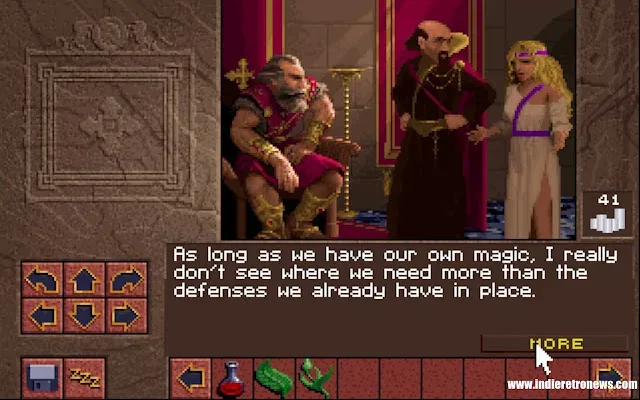
Lands of Lore: The Throne of Chaos, Westwood Studios' beloved first-person dungeon crawler, may be headed back to 1990s hardware in a remarkable fashion. Not one but two separate Amiga efforts are currently attempting to adapt the PC role-playing classic for Commodore's AGA-equipped machines. Both projects have already demonstrated meaningful progress, but they differ dramatically in their technology, development history, and philosophy.
The first is Lands of Lore AGA, a native Amiga conversion being developed by Vairn. It has reportedly been in development for more than six years and is being created in C using the Amiga C Engine, commonly known as ACE. The second comes from veteran Amiga programmer CFou!, whose own version has roots stretching back to a goal first set in 2006. CFou!'s build uses a newly made assembly engine and has involved AI tools in parts of its reverse-engineering and asset-processing workflow.
Neither undertaking should be mistaken for an official re-release or a confirmed commercial product. They are ambitious fan-driven technical projects built around a classic that was originally designed for PC hardware. Still, the work shown so far suggests that Amiga fans could eventually have multiple ways to experience the world of Gladstone, King Richard, Scotia, and the Dark Army on period-appropriate machines.
Vairn's Lands of Lore AGA Is Built Around Native Amiga Technology
Vairn's project is particularly notable for its attempt to make the game feel at home on the Amiga rather than merely forcing PC data through a basic compatibility layer. The port uses hand-written C code and deliberately avoids both AI-assisted coding and chunky-to-planar, or C2P, conversion routines. That latter choice is significant for Amiga enthusiasts: PC games of the era generally target chunky-pixel graphics, while classic Amiga graphics are built around planar display formats. Bridging those approaches efficiently is one of the central technical challenges of adapting a PC game to the platform.
For useful background on this topic, read Call of Duty Daily Players Reportedly Fell 42% After GTA 6 Launch.
Instead of relying on C2P processing during play, the project converts the game's resources into formats suited to the Amiga's Blitter hardware. Original graphics are transformed into Blitter-friendly assets, while the PC release's MT-32 music and other sound data are adapted into MOD music and 8SVX audio files. Much of that conversion work currently happens outside the Amiga, using Python scripts that can run on PC, Mac, or Linux. This is a practical necessity: the external tools can process the extensive game data at roughly 10,000 times the speed of native Amiga hardware.
A standalone Amiga-side conversion tool is planned later, but it is not presently the main workflow. For now, the focus is on bringing the game itself to a polished, playable state.
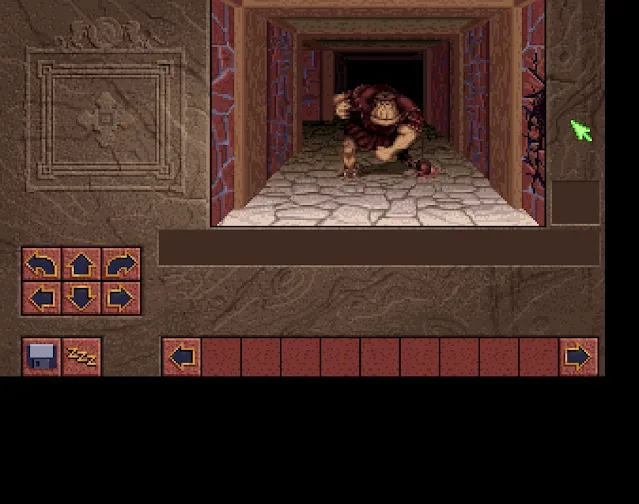
ACE's own AGA chipset support was added specifically in response to this project, underlining how demanding the conversion has been. Lands of Lore contains a much heavier asset load than many dungeon crawlers associated with the Amiga. Its monster animation sets, varied wall textures, additional colours, and visual effects exceed the requirements of games such as Eye of the Beholder. Vairn initially succeeded in getting a reduced version running on a standard machine without Fast RAM, but the complete experience now has a clearer target specification.
For another perspective on this story, read Two Lands of Lore Amiga Ports Are Taking Different Paths.
The intended requirement is an Amiga 1200 with a 68020 processor and 4MB of Fast RAM. That is a meaningful hardware threshold, but it is also an understandable one for a game attempting to preserve the visual richness and breadth of a comparatively advanced PC RPG on AGA hardware.
Playable, But Not Yet Finished
Vairn's Lands of Lore AGA is already playable, though it remains unfinished. Remaining work includes correcting graphical issues, improving the music, and completing the spell system. Those sound like final-stage tasks, but in a game with party management, exploration, combat, environmental puzzles, scripted encounters, and numerous audiovisual assets, each category can involve a substantial amount of testing.
The project's underlying approach is encouraging because it is focused on the complete package rather than simply recreating a technical demo. Lands of Lore's atmosphere relies heavily on its presentation: animated creatures and faces, richly textured corridors, expressive sounds, and musical cues all support its fantasy-adventure tone. An Amiga version that handles those elements convincingly would be much more than a proof of concept.
It is also a reminder of the continued vitality of the retro-development scene. Decades after the original Amiga era, enthusiasts are still extending tools, engines, and production techniques to tackle software that once seemed beyond the platform's likely reach. The fact that the engine gained relevant AGA capabilities during development makes this conversion an example of a project improving the ecosystem around it as well.
CFou!'s Version Takes a Separate, AI-Assisted Route
Running in parallel is CFou!'s distinct Lands of Lore port. CFou! will be familiar to many Amiga players through previous AGA adaptations of Eye of the Beholder, Eye of the Beholder II, and Dune II. His Lands of Lore ambition began many years ago, but the game's complex EMC2 scripts created a major obstacle.
To overcome that wall, CFou! experimented with AI tools including Claude and Fable 5.2. The tools were used to assist in reverse-engineering internal logic, creating documentation for game formats, adapting music, and developing extraction utilities. The effort ultimately resulted in a new assembly-language engine built from scratch.
This version has already reached an impressive technical level. Its reported capabilities include the game's introduction, ending, and historical animations, with English, German, and French versions supported. It also handles exploration, fog, shadows, maps, sound effects, music, and CD voice data when relevant .TLK files are available. The build supports save and load functionality, a spell book, compass use, money, items, poisoning, and party-member facial animations during speech.
Its level-testing functionality is extensive as well. The project can work with several of the original game's file formats, including CPS, WSA, SHP, VCM, VMP, INI, and partial support for INF and TIM data. It supports map viewing, door interactions, cursor and mouse movement controls, and multiple level maps. Other implemented systems include traders, currency, lanterns and oil, changing brightness levels, keys, switches, fake walls, item-throwing animations, and simultaneous animated doors.
The script implementation is said to be around 70 percent complete. Existing support covers mazes, walls, dialogue, fog, shadows, level transitions, early quests involving Roland and Thimothy, and assorted interactive objects. That is a substantial foundation, although the remaining portion of scripting will likely determine how close the finished experience can come to the original game's full quest flow.
A Fascinating Debate About Tools and Craft
CFou! has been candid about mixed feelings surrounding AI's role in the project. On one hand, the results have enabled progress on a difficult technical challenge and helped generate tools that might otherwise have taken far longer to create. On the other, he has described feeling less like the sole author of the code and more like a tester overseeing generated output. He has suggested this may be his final Amiga project.
That tension is likely to resonate well beyond this one conversion. Retro development is often admired precisely because it rewards deep knowledge of constrained hardware, old file structures, assembly language, and highly specific optimization techniques. AI-assisted workflows can accelerate analysis and implementation, but they also raise questions about authorship, satisfaction, reliability, and the personal value of solving the problem manually.
Vairn's and CFou!'s projects make that contrast unusually visible. One conversion is being shaped through hand-rolled C and a conversion pipeline built around classic Amiga strengths. The other has turned to AI assistance while building a fresh assembly engine capable of interpreting and reproducing complicated game behavior. Both are pursuing the same destination, but the roads are very different.
Why Lands of Lore Remains Worth Revisiting
Originally released for PC, Lands of Lore: The Throne of Chaos earned its reputation through a polished blend of grid-based dungeon exploration, accessible role-playing systems, puzzle solving, memorable characters, and strong audiovisual presentation. It arrived during an era crowded with first-person fantasy crawlers, yet it stood apart through its production values and its approachable structure.
That legacy makes it a fitting target for Amiga enthusiasts. The platform already has a deep association with fantasy adventures, dungeon crawlers, and technically daring conversions. A successful AGA adaptation would not only give players another way to revisit Westwood's game; it would also demonstrate how much room there still is for new work on vintage systems.
For now, the key point is that these are two independent works in progress, each with unfinished elements and no stated release date. Vairn's project needs further polish in areas including graphics, music, and spells. CFou!'s build still has scripting work ahead despite its expansive feature list. Yet the scale of what has already been achieved makes both projects worth watching for Amiga and retro RPG fans alike.
Community
Discussion
Start the conversation.
No comments have been posted yet.