

Ultima VII: The Black Gate arrived in 1992, but its reputation has only become more imposing with time. The Origin Systems role-playing game is frequently celebrated among the greatest PC RPGs ever made, not merely because it offers a huge fantasy adventure, but because it presents Britannia as a place that appears to exist beyond the player's immediate needs.
That achievement remains striking. Players can travel across towns, wilderness, and dungeons without the transition screens that divided so many games of its era. They can rummage through the world's objects, eat and sleep, listen to gossip, read books, help strangers, and follow a central conspiracy at their own pace. The Black Gate's world does not simply act as a backdrop for a quest. It feels inhabited, troubled, funny, cruel, and surprisingly responsive.
Its influence has been acknowledged by prominent RPG creators, including Bethesda's Todd Howard and Larian Studios' Swen Vincke. Yet the game's legacy also belongs to the writers, artists, programmers, preservation volunteers, and dedicated fans who kept a difficult-to-run DOS game accessible long after the hardware it was designed for had disappeared from everyday use.
A return to a changed Britannia
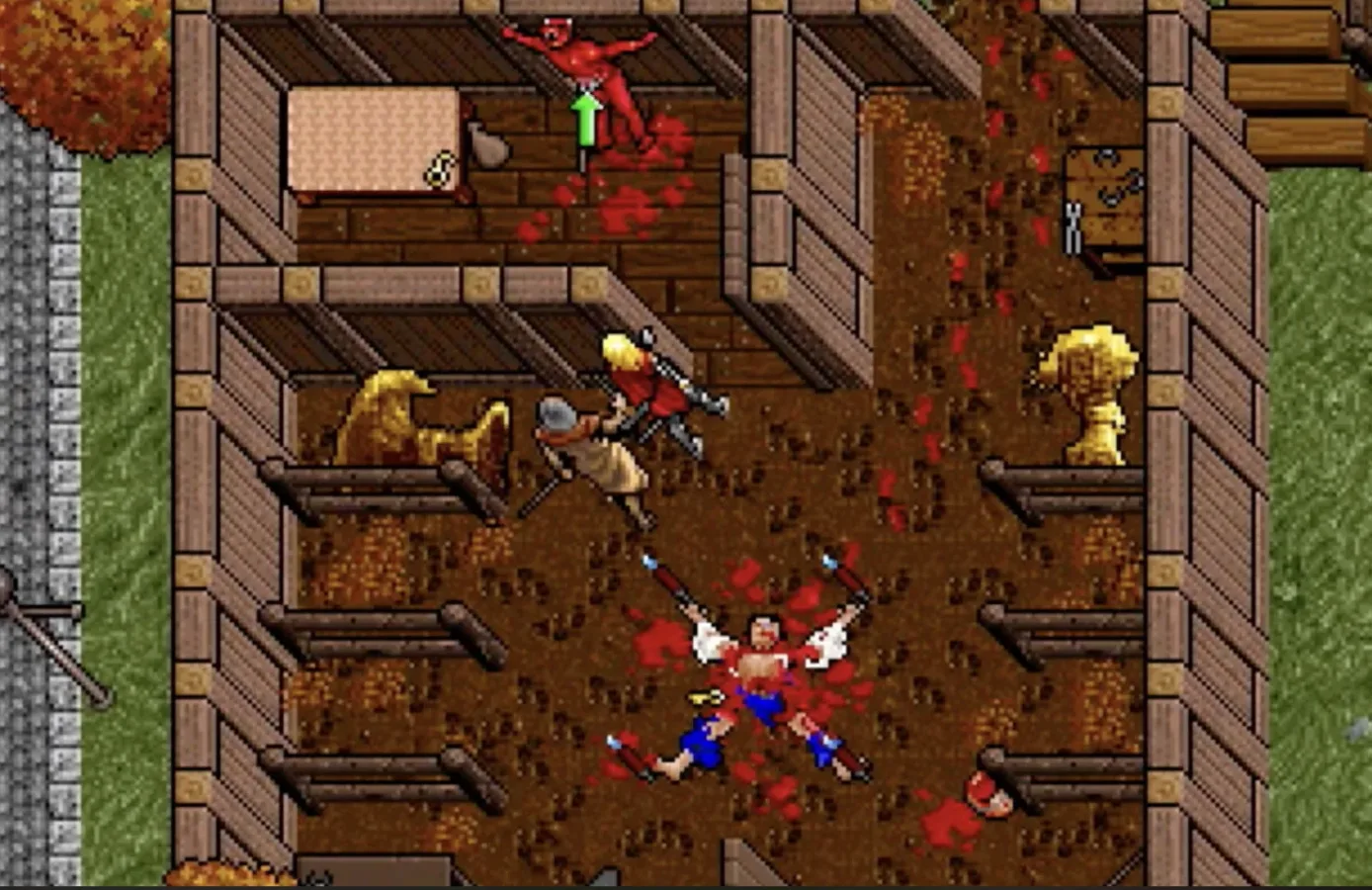
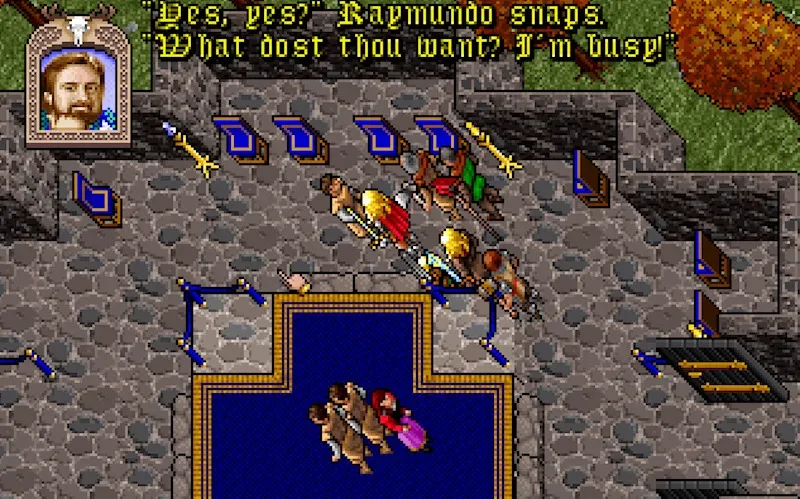
Most Ultima games begin with the Avatar meeting Lord British and receiving an enormous task. The Black Gate takes a sharper, more unsettling route. The Avatar is confronted by the Guardian, a hostile red figure who taunts them before they are sent to Trinsic. Two centuries have passed since the Avatar's previous visit to Britannia, and their return begins at a gruesome murder scene.
For useful background on this topic, read Replaying The Wind Waker With a Child Reveals Why Its Great Sea Still Matters.
A man has been killed and dismembered. A gargoyle has also been murdered without an obvious reason. The streets are marked by shock and blood, and the immediate question is not simply which monster must be defeated. It is what has happened to a world the Avatar once helped save.
That opening lets The Black Gate blend high fantasy with the structure of a mystery thriller. The player can inspect the crime, interrogate residents, and pull at clues that eventually expose a much wider scheme. But they can also leave Trinsic, wander Britannia, and discover its many local problems before pursuing the main case. That freedom is fundamental to the game's effect: the central plot is urgent, but the world is too large and too human to feel like a corridor leading straight to a final boss.
Richard Garriott, Ultima's creator and director, has described the series from Ultima IV onward as a vehicle for addressing contemporary social concerns. Ultima IV focused on the personal struggle to become virtuous, while Ultima V dealt with moral absolutism, fundamentalism, and authoritarian misuse of virtue. Ultima VI explored racism, xenophobia, and competing perspectives of reality.
For Ultima VII, Garriott wanted to bring back unmistakable evil--but not the kind of distant villain who waits passively at the end of the game. The Guardian needed to become personally resented by the player, while his ideas and followers had to carry an appealing surface. That thinking shaped the Fellowship, an organization whose welcoming language masks its role in a much darker plan.
A fantasy mystery with Bond-style villains
Raymond Benson joined Origin Systems after a career that included theatre work, game writing, and books about James Bond. Following an initial dialogue-editing assignment on Worlds of Ultima: Martian Dreams, he became head writer of The Black Gate.
Benson brought a fascination with mysteries and thrillers to Britannia. Garriott had already established the premise: the Guardian seeks to rule the realm, and the Fellowship is gathering what is needed to let him enter it. Benson built the main narrative around a murder that functions as the first visible sign of that larger danger.
The result draws on Hitchcock and Bond-style storytelling as much as medieval-fantasy adventure. Batlin, the Fellowship's charismatic leader, is the Guardian's human representative in Britannia. He presents himself as pious and helpful, while concealing the rot beneath that persona. Benson has characterized him as a Bond-style antagonist placed in a fantasy setting: charming in public, monstrous underneath.
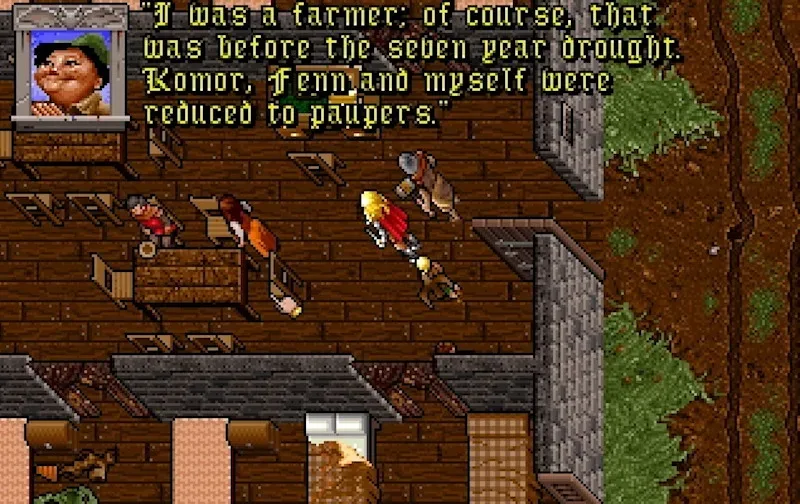
The Fellowship is not the game's only social concern. Britannia has suffered in the Avatar's long absence. Paws has been hit hard by drought and deprivation, while the relative prosperity around Lord British's seat of power has helped drive up prices. The contrast quietly challenges the comforting assumption that the Avatar's earlier victories permanently solved Britannia's problems.
The game also tackles subjects that were unusually harsh for its time, including human trafficking in New Magincia and escalating human-gargoyle tensions in Vesper. Its darkest moments are not decoration. They make Britannia feel like a society with systems of prejudice, exploitation, neglect, and fear--problems that cannot be fixed simply by killing monsters.
The Writers Block and the people of Britannia
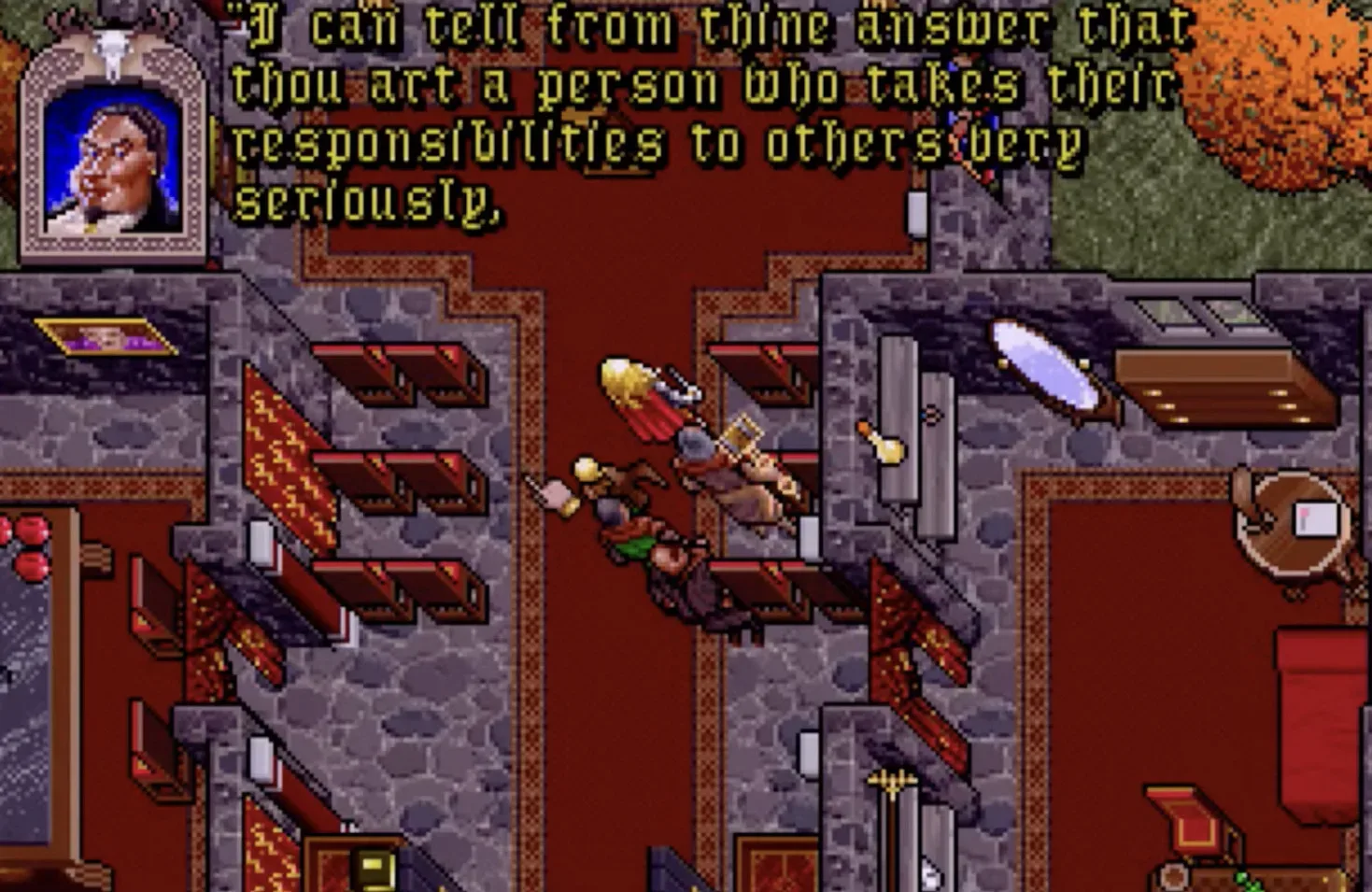
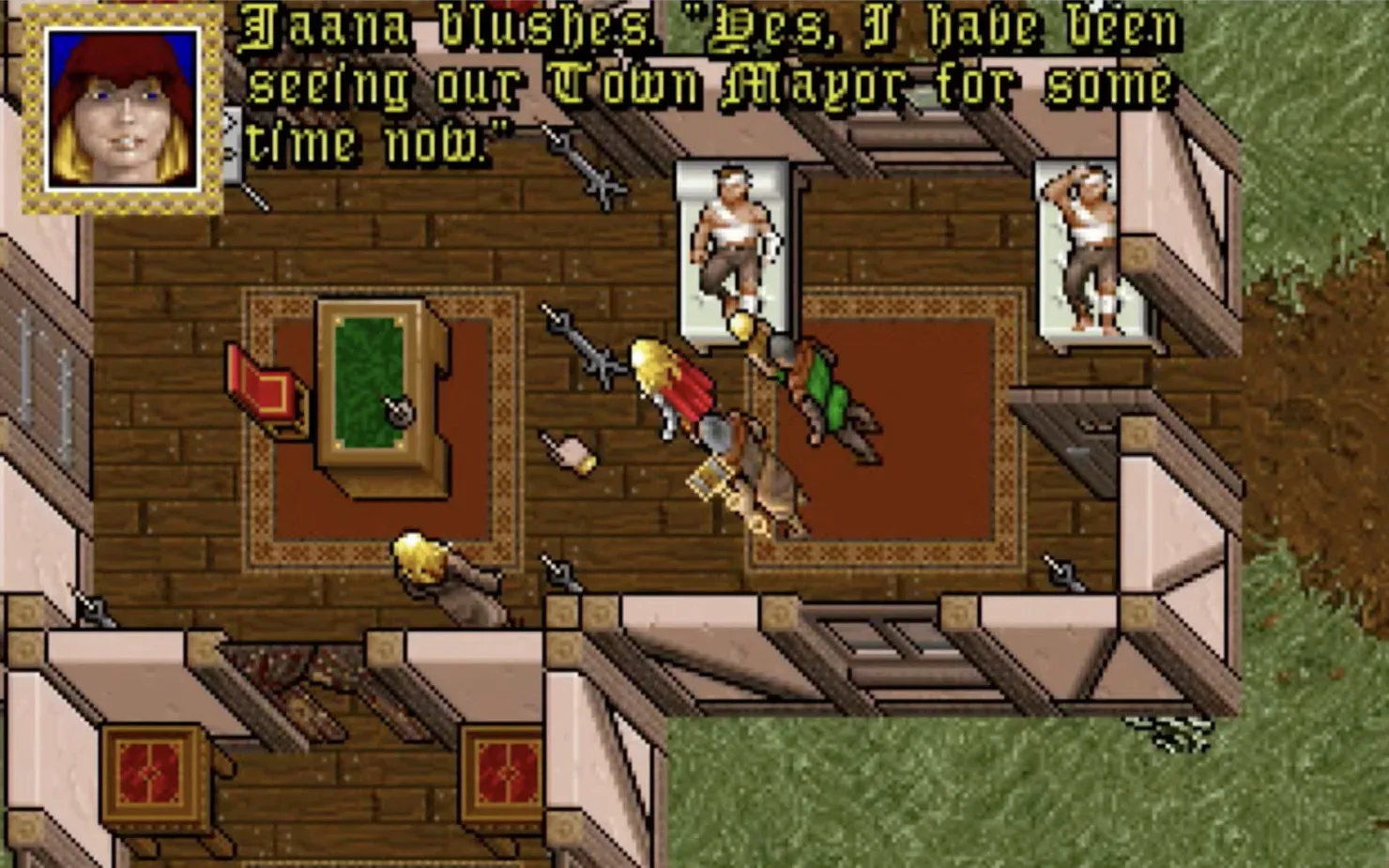
The Black Gate's most enduring strength may be the density of its people. NPCs have relationships, grudges, ambitions, romances, secrets, and opinions about their neighbors. A seemingly minor visit can reveal a local political conflict, an unspoken love story, or a small act of grief that the Avatar can acknowledge.
Andrew Morris, one of the game's writers, came to Origin through what Warren Spector summarized as persistence. After applying for a writing job, Morris repeatedly called about an interview for months. Eventually, he stopped at Origin's office with a resume in hand and secured a conversation that led to his hiring as a Technical Design Assistant.
After helping with documentation and learning the series through Ultima VI and Martian Dreams, Morris joined Benson, Beth Loubet, and Jack Herman on The Black Gate's writing team. The team created a character bible to avoid repetitive character types while encouraging deeper backgrounds and personalities.
Morris focused heavily on NPCs and on using the expanded conversation tools to make Britannia feel lived in. In Yew, for example, players can express sympathy to a grieving healer. That small gesture can result in lower healing costs later in the game. It is a modest consequence, but exactly the kind that makes role-playing feel more personal than a simple quest checklist.
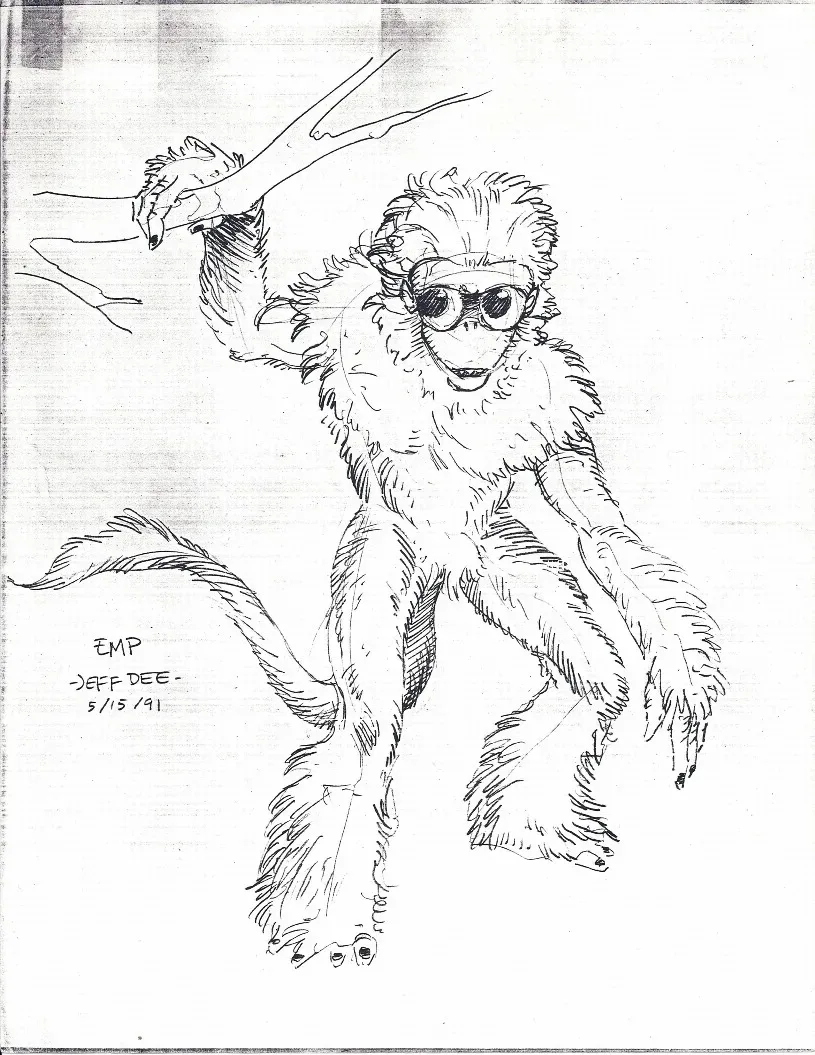
He also helped develop the emps, a people designed to move beyond standard fantasy stereotypes, including work on the structure of their language. Elsewhere, the game's extensive readable books became another source of texture. Morris maintained the text file for those books and wrote much of their content, filling Britannia with lore, jokes, references, and side details that reward curiosity.
Benson handled the core story and key figures, while the broader team developed town-specific plots and conversations. He also wrote the game's Love Theme, an enduring piece of Ultima music. Benson later recalled performing it on piano during a Valentine's Day charity event while Garriott read a love poem.
Interactivity was the point
Origin's ambition was not solely to deliver a large map. Garriott wanted Britannia to be a place in which players could, in Benson's words, simply live. That meant supporting commonplace actions as well as dramatic ones: talking, buying, selling, resting, handling objects, and learning about people.
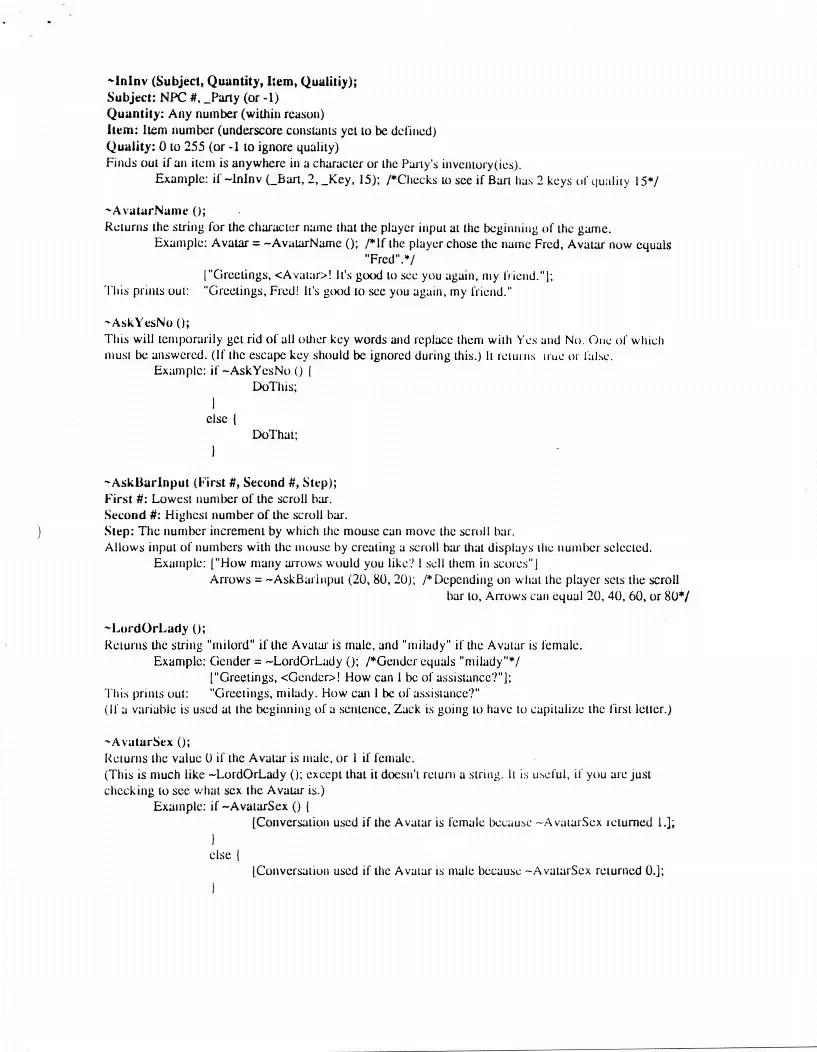
Creating that illusion required an enormous collaborative effort. The writers worked in a branching scripting format built around conditional logic: if the player does one thing, a character or event responds one way; otherwise, another path opens. Dialogue had to be written and tested across many conversational possibilities, while quality assurance teams submitted bugs for the writers and developers to address.
Writers regularly coordinated with programmers, artists, and the full project team. Town assignments were only starting points. New characters, quests, rewards, and story connections continued to emerge throughout development. The process gave contributors room to develop ideas while Benson and Garriott retained final approval over the narrative direction.
Even the game's visuals contained a memorable piece of corporate-era mischief. Near the end of development, Origin was acquired by Electronic Arts. The Guardian's sinister constructs in Britannia already resembled EA's then-familiar sphere, cube, and tetrahedron logo elements. Origin asked whether these shapes should be changed, but EA reportedly enjoyed the joke.
Why Exult matters
For years, playing The Black Gate on newer computers could be an ordeal. Its original DOS release depended on an unusual memory-management setup and pushed against the limitations of early PCs. Later systems often could not run it natively at all. DOSBox helped make older software practical again, but Ultima VII could still be demanding.
That is why Exult became so important. It is not an emulator. Instead, it is a full reimplementation of the Ultima VII engine that reads the original game's data, graphics, and plot files. Players still need a legal copy of The Black Gate or its companion game, Ultima VII Part Two: Serpent Isle.
The project began in 1998 when developer Jeff S. Freedman, known as DrCode, created a map viewer after studying documentation on Ultima VII's map and shape formats. Early versions let users walk around Britannia but not actually play the game. Progress accelerated after developers determined that the game's usecode was compiled bytecode for a virtual machine, allowing them to build tools that could interpret conversations and behavior.
Over time, contributors from multiple countries expanded Exult into a powerful way to play both Ultima VII games on modern systems. Its additions include improved save handling, optional larger views, Serpent Isle-style paperdolls for The Black Gate, and the complete Serpent Isle introduction. Exult Studio also provides map-editing support, opening the door to mods and ambitious conversions.
Dominik Reichardt, a long-running Exult contributor, initially joined because the community needed an FAQ and documentation. He became a writer, tester, macOS port maintainer, and eventually a code contributor. Development continues, with projects including a released Ultima VI conversion using The Black Gate's engine and a work-in-progress attempt to reimagine Ultima VIII within Exult's framework.
A community that outlasted the machines
The preservation of Ultima VII is not just a technical story. It is also a social one. The Ultima Dragons community began in February 1992 as a Prodigy group called Players of Ultima For Fun, created by Doug Ricket as a middle ground between rival fan factions. A joke involving "Puff the Magic Dragon" led to the Ultima Dragons name, and members adopted names ending in "Dragon."
When changing fees damaged the original Prodigy community in 1994, Ricket and Stephen Brindle rebuilt it on the open internet as the Ultima Dragons Internet Chapter. The group spread through Usenet, FTP archives, websites, IRC, and shared online spaces. More than 16,000 members have joined over the decades, and the community remains active across newer platforms.
Ultima VII's world survives because players and developers recognized that its unusual combination of freedom, atmosphere, and interactivity was worth preserving. Later RPGs have often pursued pieces of that feeling, whether through open exploration, reactive dialogue, movable interfaces, or dense environmental storytelling. Few have recreated the precise alchemy that made Britannia feel so convincingly alive.
More than 30 years later, The Black Gate remains more than an artifact from PC gaming's DOS era. It is a reminder that a role-playing game can challenge players with a mystery, invite them to inhabit a place, and trust that the smallest conversations may matter as much as the grandest quest.
Community
Discussion
Start the conversation.
No comments have been posted yet.