

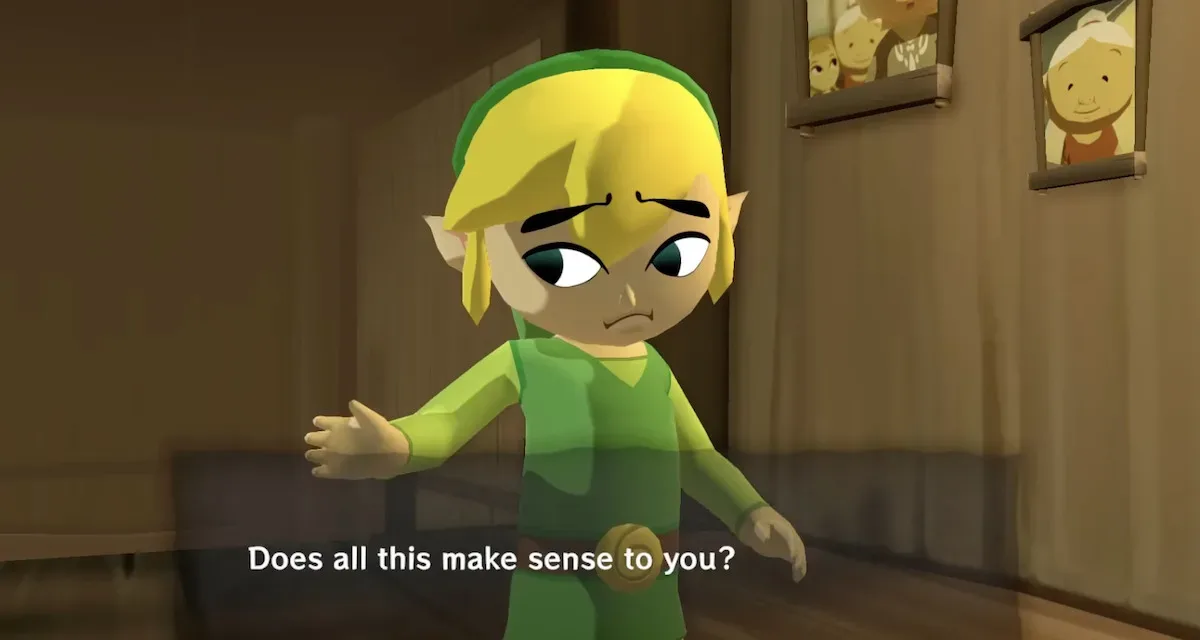
Some games change because their re-releases improve them. Others change because the person holding the controller is no longer the same player. The Legend of Zelda: The Wind Waker has always been a striking example of the first kind: its 2013 Wii U remaster, The Wind Waker HD, makes several meaningful quality-of-life adjustments to Nintendo's 2002 GameCube adventure. But returning to it alongside a young child can deliver an even larger shift in perspective.
What once seemed like a Zelda entry with too few dungeons, overly simple challenges, and an infamously exhausting Triforce hunt can instead feel like one of the series' most inviting worlds. It is a game built to reward looking around, repeating small interactions, talking to every stranger, and changing course merely because an island silhouette appears on the horizon. For an adult inclined to move efficiently from objective to objective, that can be easy to overlook. For a child encountering a huge world full of mysteries, it is the entire appeal.
A cartoon world designed to be read
Wind Waker's visual identity was controversial before it ever reached store shelves. Nintendo had previously shown a far more realistic-looking Link and Ganon fight at Space World 2000, so the reveal of a cel-shaded, big-eyed Link came as a major surprise. Time has been exceptionally kind to the final art direction, however. On a modern flat-screen through the HD version, the game resembles a playable animated film: bold colors, elastic expressions, broad physical comedy, and environments whose essential details are clear at a glance.
That clarity is not only aesthetic. It is fundamental to how Wind Waker teaches players. Link's eyebrows, shouts, posture, and reactions communicate his emotional state. Enemies animate their attacks in readable ways and often react comically when surprised. The world consistently points toward possible actions without smothering the player in explicit instructions.
For useful background on this topic, read PS2 vs. GameCube Emulation: Which Retro Console Is Easier to Run Today?.
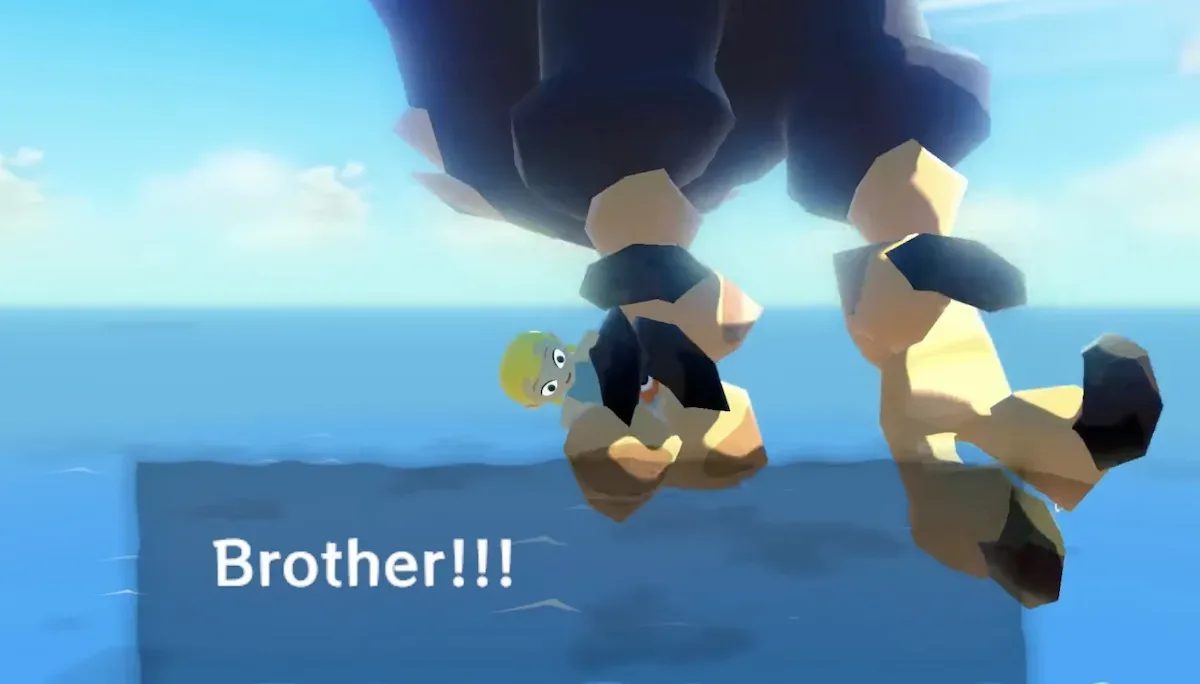
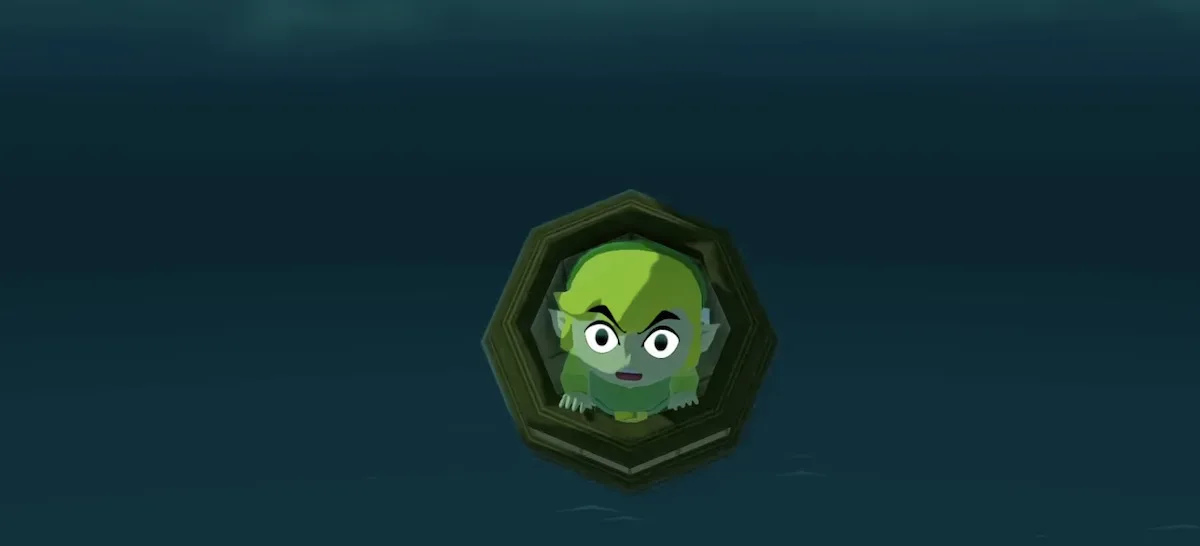
The first visit to the Forsaken Fortress demonstrates this particularly well. Link is launched into the enemy stronghold in a barrel and splats against a wall in pure cartoon fashion. He has lost his sword, but the scenario is not designed to crush a newcomer. Players can hide in barrels, avoid Bokoblins, disable searchlights, explore branching hallways, reclaim the sword, and work toward the top of the fortress. If they are caught, Link is imprisoned rather than killed, and escaping the cell is relatively straightforward.
That balance makes the opening stealth sequence a useful introduction to three-dimensional Zelda navigation. The layout of the courtyard, spotlights, and surrounding routes turns every area into a small spatial puzzle. A young player can make mistakes, understand why they happened, and try again without an intimidating punishment. What an experienced player might have dismissed as easy can reveal itself as careful, compassionate game design.
Letting Windfall Island set the pace
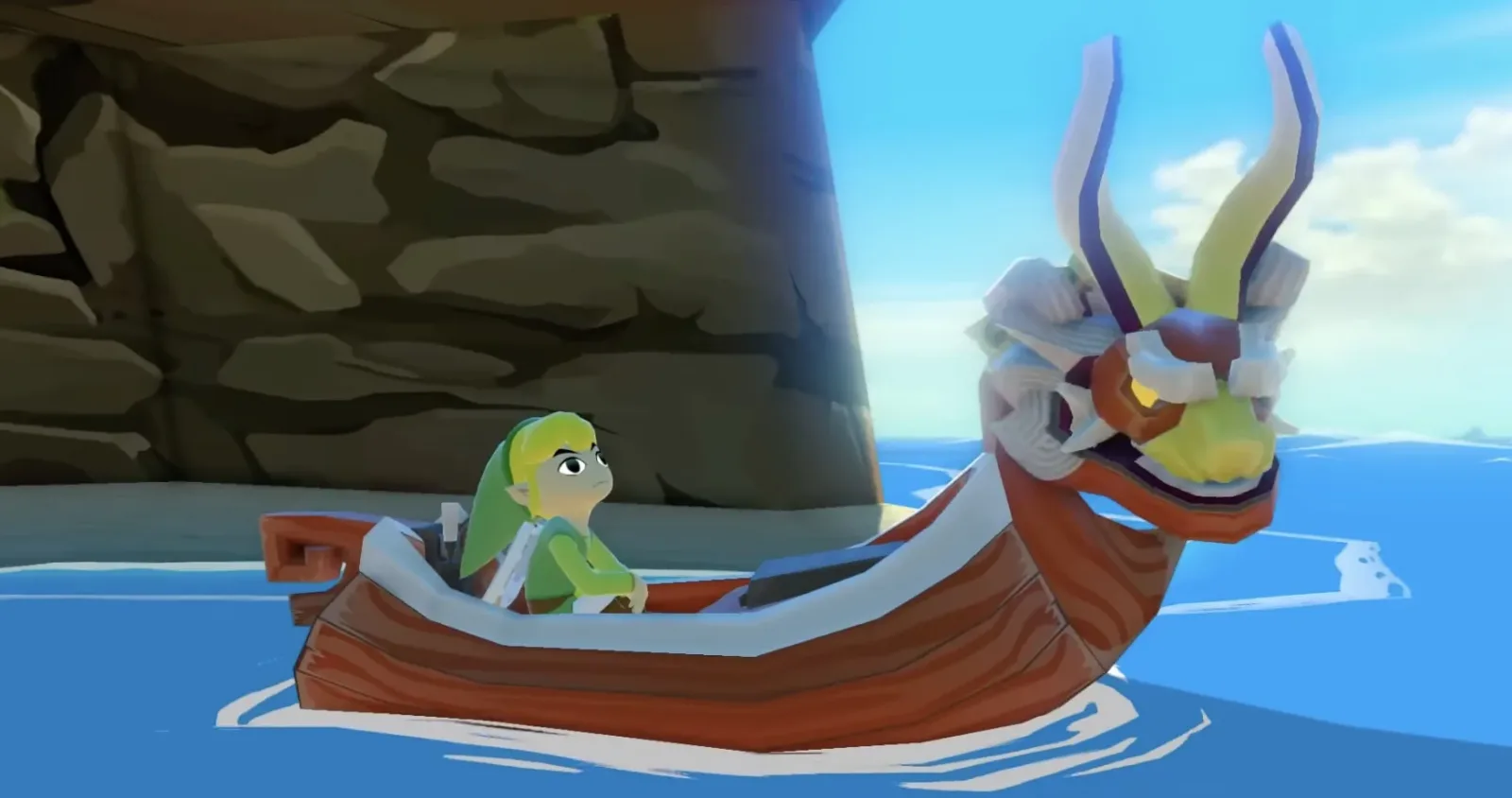
Once Link gains the King of Red Lions and begins his larger journey, an adult may be tempted to buy a sail, head directly to Dragon Roost Island, and pursue the three pearls. Yet Wind Waker is much richer when players allow places such as Windfall Island to interrupt that plan.
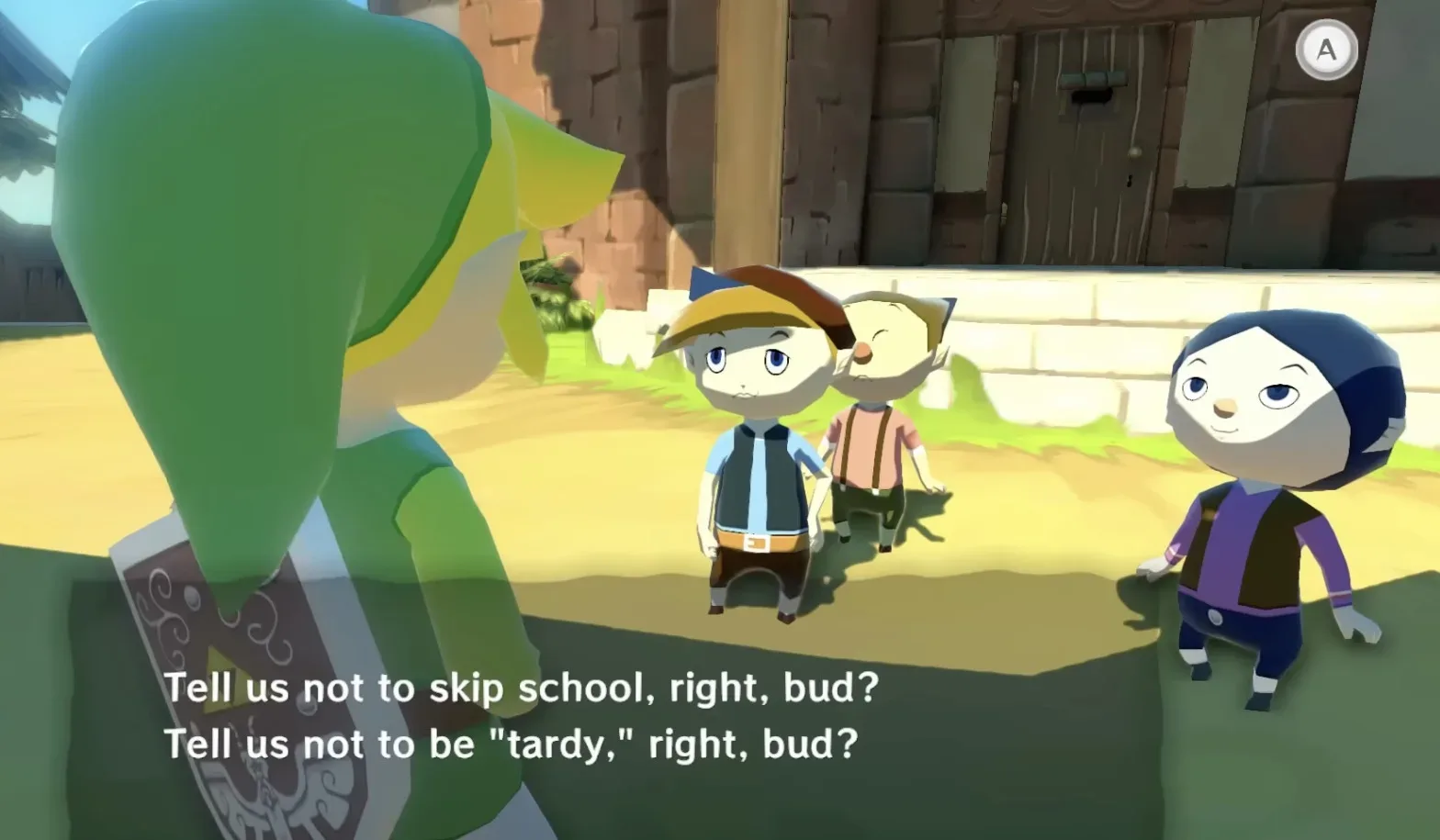
Its side activities have a wonderfully playful texture. There is Lenzo's photography quest for the Picto Box, Tingle's rescue, Mrs. Marie's School of Joy errands, a hide-and-seek game, the confusing but rewarding Sinking Ships diversion, and the discovery that irritated pigs will charge at Link. A child can happily revisit the same people, inspect buildings, stare at the night sky, and repeat conversations that an adult assumes have nothing new to offer.
Those moments are not wasted time. They establish Windfall as a place rather than a menu of tasks. They also reveal layers of storytelling that can be missed on a single-minded playthrough. The quests surrounding Mila and Maggie, two girls rescued from the Forsaken Fortress, are especially effective. Mila's family loses its fortune while trying to save her, while Maggie's family becomes wealthy after she returns with valuable skull necklaces sent by a Moblin named Moe. Their contrasting situations are funny, melancholy, and surprisingly human in a game often remembered primarily for its bright colors.
Elsewhere, smaller details keep encouraging attention. The Fishmen somehow paint nautical maps without soaking the paper. The Ho Ho statues offer advice from their lofty perches. Link can visit his grandmother on Outset Island for more than her restorative soup. And the game's talking door at the Cabana initially comes off as rude before the Cabana Deed changes its attitude. These are the kind of odd, memorable bits that turn a checklist into a lived-in adventure.
Tools that grow with the player
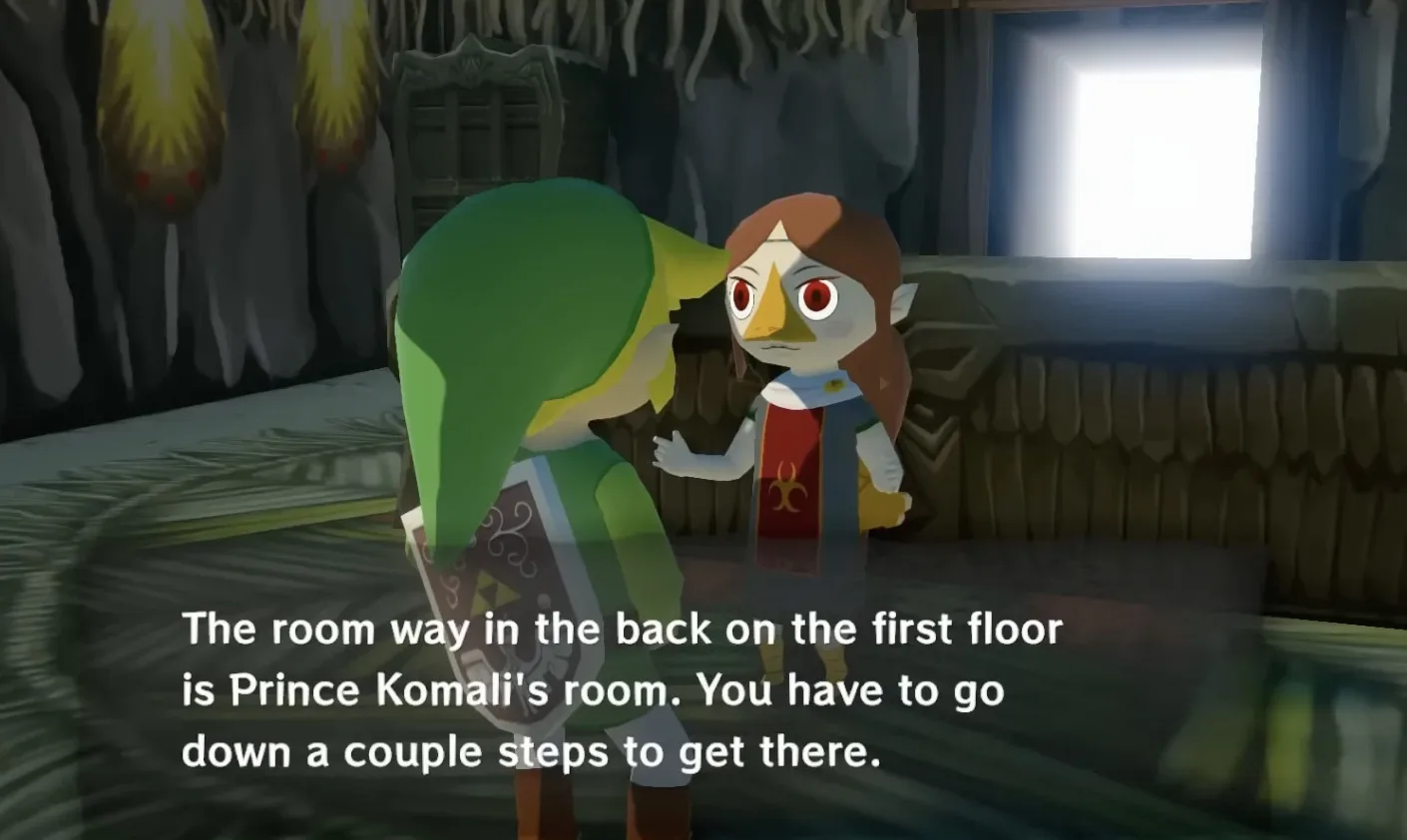
The main quest is equally effective at escalating possibilities. Dragon Roost Island introduces the Wind Waker baton and its ability to direct the wind, then grants access to bombs through Bomb Plants. Medli's role in Dragon Roost Cavern provides a more personal introduction to the grappling hook than simply locating it in a chest. It feels like help exchanged between companions.
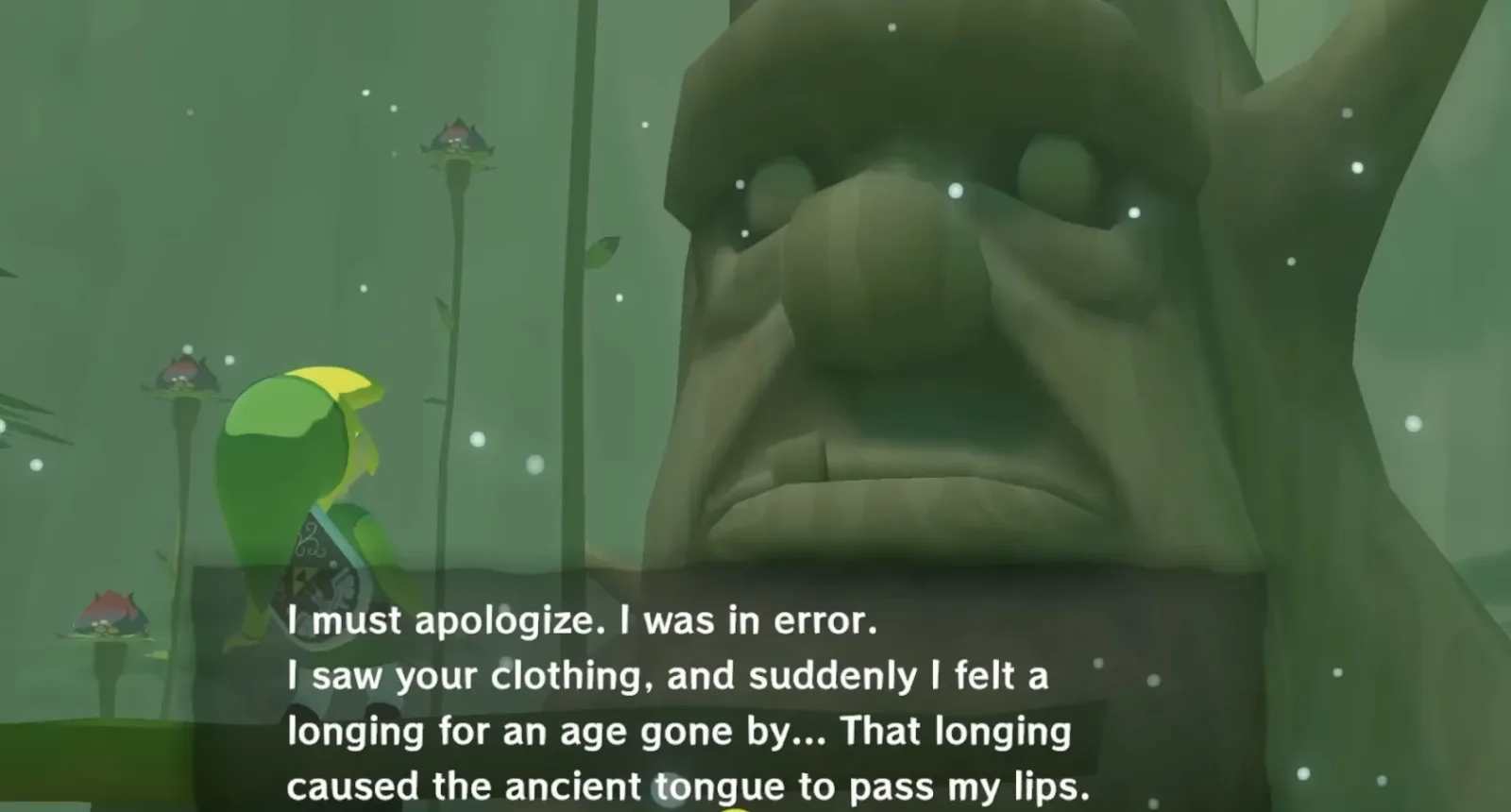
Better still, nearly every important item has more than one use. The grappling hook reaches distant platforms but can also salvage treasure from the sea. Bombs become cannon ammunition aboard the King of Red Lions. In the Forest Haven, the Deku Leaf can blast air or let Link glide over wide gaps. The boomerang, hookshot, bow, Iron Boots, and other tools continue to overlap in satisfying ways later on.
The Wii U GamePad makes that growing toolset easier to manage. Swapping equipment through the touch screen is a substantial improvement over the GameCube version's more cumbersome item management, particularly in dungeons that demand regular changes. The early dungeons also benefit from vertical layouts. Limited island space pushes their complexity upward, creating towers, shafts, and high ledges that make movement feel distinct from earlier Zelda games.
Not every pacing choice is perfect. The missing dungeon associated with the third pearl still feels conspicuous. Nintendo cut two dungeons during development because of time constraints, and players have long speculated that this portion may have been affected. The meeting with Jabun remains important to the plot, but it moves quickly compared with Dragon Roost Cavern and Forbidden Woods.
Ancient Hyrule beneath the waves
When the three pearls unlock the Tower of the Gods and Link descends into submerged Hyrule Castle, the game changes mood dramatically. The original GameCube version presented this space in black and white, while the Wii U remaster gives it a sepia look. Both approaches communicate a kingdom suspended outside time, though the older monochrome presentation carries a particularly stark, antique-cartoon quality.
Then Link pulls the Master Sword free. Color rushes back, the castle awakens, and stained-glass images of the sages from Ocarina of Time connect this far-flung sea adventure to Hyrule's past. It is a powerful transformation, and it naturally invites questions about the series' history.
It also raises uncomfortable questions about the gods' decision to flood Hyrule to stop Ganon. The king explains that the gods chose people who would build a new land and instructed them to flee to mountaintops. The stated desperation is understandable, but the implications are grim: cities destroyed, lives upended, and an old kingdom sacrificed without a clear answer for everyone left behind. Ganon eventually returns anyway. Children may accept the simple conclusion that Link and Zelda are here to save everyone, while adults can find themselves lingering on the cost of the mythology.
The Great Sea is better when there is no rush
The most important improvement in The Wind Waker HD may be the Swift Sail. In the GameCube original, sailing was slow and changing wind direction required repeatedly conducting the Wind Requiem. The Swift Sail moves the King of Red Lions faster and automatically adjusts the wind, removing an enormous amount of friction from exploration. Obtaining it through Windfall's auction can be a tedious process, and the fast-moving boat can visibly clip into the water, but the benefit vastly outweighs those minor complaints.
Speed alters the emotional geography of the Great Sea. Islands no longer feel so remote that investigating them seems inefficient. The ocean becomes an invitation: treasure chests, enemy submarines, Big Octos, Gyorgs, Seahats, ghost ships, fairy upgrades, and themed islands are all close enough to tempt a detour. The game's seamless travel across the sea remains impressive, especially given how GameCube hardware limitations shaped island size, distances, and the boat's speed.
The journey is carried by one of Zelda's strongest musical themes. The Great Sea melody makes even a routine crossing feel buoyant, while wind trails, birds, shifting weather, and the day-night cycle sell the sensation of movement across open water.
A Triforce quest seen differently
That changed relationship to exploration can completely transform the late-game Triforce search. On GameCube, finding eight Triforce Charts and paying Tingle 398 rupees to decipher each one created a costly grind before players could salvage the shards. The HD version reduces the burden considerably. Yet the larger difference is whether the hunt is treated as an obstacle standing between Link and Ganon, or as one final excuse to keep sailing.
For a player who loves treasure hunts, the latter view comes naturally. Searching maps, clearing the thirty-floor Savage Labyrinth, discovering obscure islands, meeting unusual characters, and recovering each piece of a larger mystery can be the highlight rather than the chore. Wind Waker is at its best when it permits that outlook.
Its final temples reinforce the value of companionship as well. Medli in the Earth Temple and Makar in the Wind Temple are not merely escort characters. Link directly controls them through the Command Melody, using Medli's flight and reflective harp or Makar's hovering and tree-growing seeds to solve intricate puzzles. Their temporary presence suggests the potential of a Zelda adventure with lasting party members, while their departure carries genuine emotional weight.
Revisiting The Wind Waker HD with a child does not erase its flaws. The abbreviated third-pearl section still stands out, and the game's structure will not satisfy everyone seeking dungeon after dungeon. But it makes clear that its simplicity is frequently deliberate, its world is fuller than a direct route suggests, and its famous sea is not empty if players are willing to wander. Sometimes the best way to rediscover an old adventure is to play beside someone who has not yet learned to hurry past its wonders.
Community
Discussion
Start the conversation.
No comments have been posted yet.