

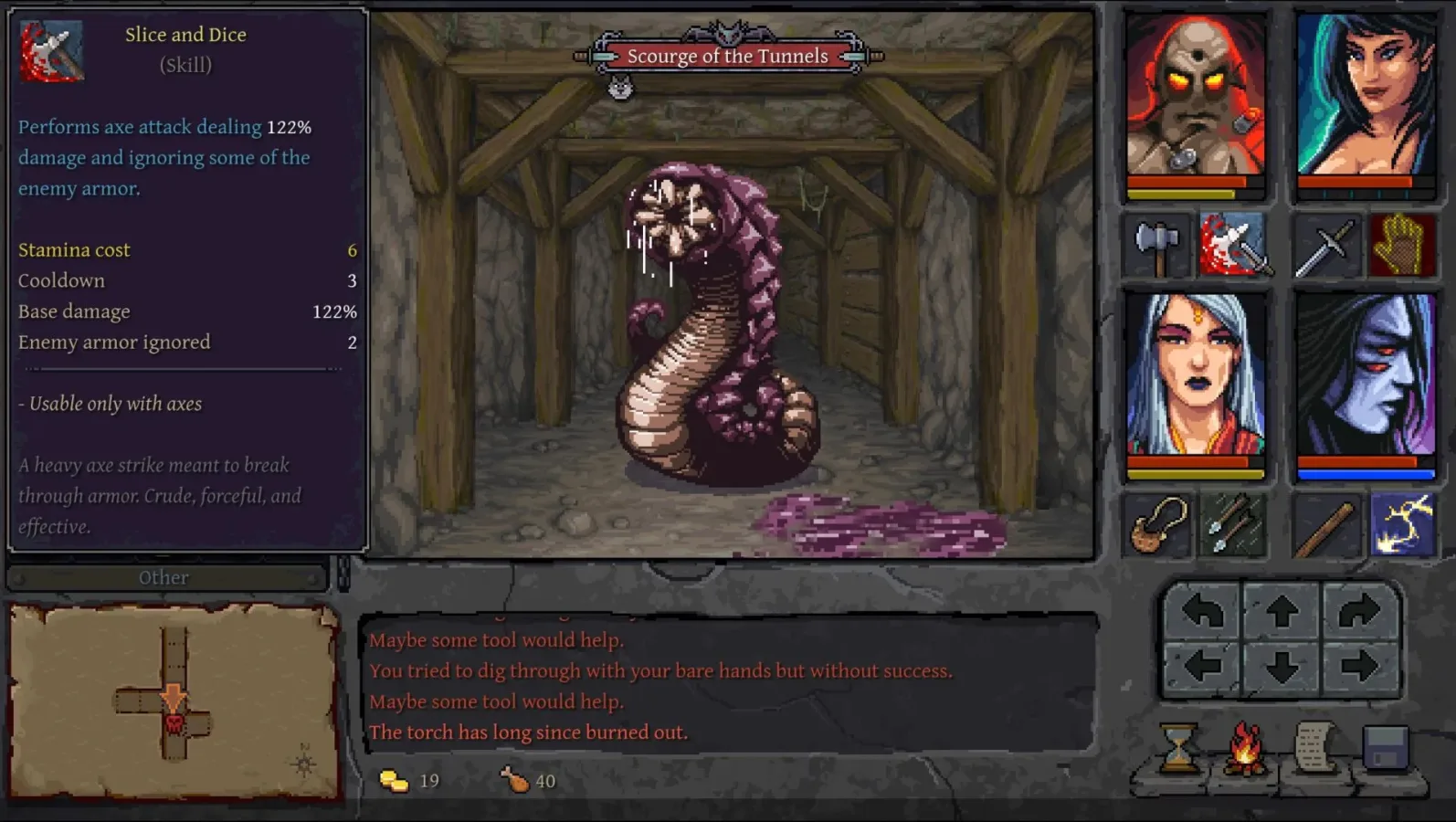
Underkeep-brings-classic-grid-based-dungeon-crawling-to-pc/">Underkeep is now available on Steam, and it arrives as a confident modern interpretation of a very particular kind of role-playing game: the old-school first-person party crawler often called a "blobber." Rather than controlling one adventurer, players guide a four-character party as a single unit through forests, settlements, dungeon corridors, puzzles, and hostile encounters.
It is a style with deep roots in games such as Wizardry, Eye of the Beholder, and 1987's Dungeon Master, later given a celebrated modern update by Legend of Grimrock. Underkeep clearly shares that lineage, from its tiled movement and party formation to the satisfaction of finding useful gear after putting down a strange creature in a dark passage. But it is not simply trying to recreate one older game. Its larger outdoor regions, quest structure, character interactions, and selective accessibility choices give it its own identity.
The result is an RPG that embraces the pleasures of deliberate exploration and committed party-building without aiming for the famously punishing extremes associated with some genre classics. There are rough edges, particularly around communicating danger and managing rest, but Underkeep's core adventure has a great deal of warmth and personality.
A four-character party built for the front line and back line
Underkeep begins with party creation. Players choose four heroes by mixing races and classes, then select portraits for the group before entering the wilderness on the way to the Village of Underkeep. This early setup matters immediately. Positioning is not cosmetic: tough melee-oriented characters belong at the front, while rangers and spellcasters are generally safer in the rear.
For useful background on this topic, read WoW Forever Players Uncover the Dawn Waker Secret, but Its Final Reward Remains Hidden.
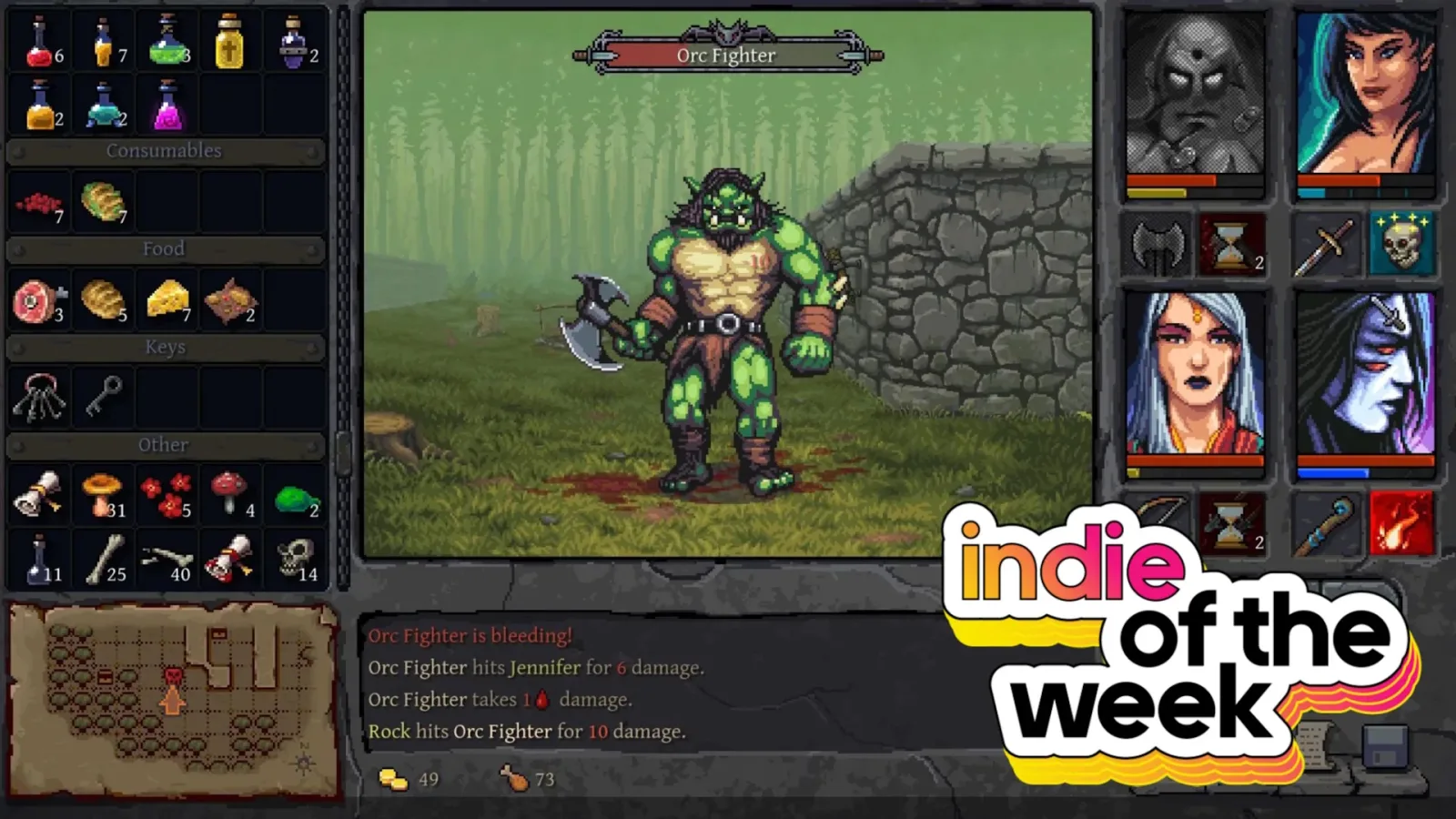
Combat is turn-based and built around the order in which the four party members take their actions. Characters can use straightforward weapon strikes and ranged attacks, while more specialized techniques become available through level-up choices and upgrades. The system asks players to think about sequencing, available stamina or magical resources, and which target needs immediate attention.
One important difference from some comparable grid-based crawlers is that the party cannot freely shuffle around the battlefield in the middle of a turn. This is not a game about sidestepping through adjacent squares to evade attacks. Instead, every member of the group completes an action, and only then does the party move to another tile, creating an opening for enemies to respond. That approach makes preparation and formation especially important.
It also gives Underkeep a clean, readable rhythm. Every decision has a cost, whether it is spending an action on damage, using an ability, or choosing an alternative response. Players who enjoy highly mobile tactical systems may find the reduced movement options limiting, but the structure supports the game's more measured, classic dungeon-crawling feel.
For another perspective on this story, read Underkeep Brings the Old-School Party Dungeon Crawler Back With Real Charm--and a Few Rough Edges.
The village opens the world up
Reaching Underkeep itself is where the adventure broadens. The village offers shops, people to speak with, and quests that send the party outward in multiple directions. From there, the game becomes a mix of mapping, combat, optional detours, mini-dungeons, equipment rewards, and small environmental puzzles.
This freedom is one of Underkeep's strongest features. It brings to mind the open-ended appeal of older fantasy RPGs such as Betrayal at Krondor and Might & Magic, where discovering a side path or an unexpected objective can feel just as meaningful as following the main goal. There is room to wander, uncover odd encounters, fill in the map, and pursue quests in an order that feels personal.
Underkeep also benefits from giving its fantasy setting more story than this subgenre often receives. The narrative is not presented as an enormous lore encyclopedia, but the people encountered along the way have stakes in the events unfolding around them. One quest involves tracking down a missing dwarf group and becoming involved in a disagreement about what should be done about an enraged dragon. These scenarios provide a welcome sense of place without overwhelming the exploration.
The game's races and classes can contribute outside direct combat as well. An Elk ranger can be helpful in noticing danger in wooded areas, while a Raven wizard can identify unusual magical traces. These details make party creation feel consequential beyond deciding who has the biggest weapon or strongest spell list. They encourage players to consider the practical identity of their group as they travel.
Exploration is rewarding, but area difficulty can be opaque
Underkeep's openness creates one of its clearest frustrations: it does not always make regional danger easy to understand before it is too late. A route that appears like a sensible next destination can quickly introduce enemies far beyond a party's current capabilities. Traveling north toward the Caerlin Woods, for example, may lead to a painful encounter with griffins before players have the levels or equipment to deal with them. Trying another route, such as the Cemetery to the south, can eventually reveal another obstacle of the same kind.
That can turn progression into a process of trial and error. The intended answer is often to retreat, explore elsewhere, improve the party, and return later. There is genuine satisfaction in coming back with better weapons and a few additional levels, then easily defeating foes that had previously demolished the group. It is a classic RPG payoff.
Still, a subtle indication of an area's expected challenge would make this loop less aggravating without undermining the joy of discovery. Quest dialogue, visual cues, or rough danger ratings could help players distinguish between a difficult but reasonable route and a place they should clearly save for later. Underkeep currently leaves much of that judgment to direct experience.
Death is forgiving, while rest management is not
For a game inspired by old dungeon crawlers, Underkeep is relatively generous about reviving fallen party members. Each region includes a statue where a dead hero can be brought back in exchange for gold. The revived character returns with only a tiny amount of health, so the party is not instantly restored to full fighting form, but the system avoids the harsher recovery methods of older games.
Healing is also available through found or crafted potions and, more frequently, through resting. It is here that Underkeep's resource management becomes less comfortable. Resting consumes food, sometimes in surprisingly high quantities, as the party recovers health, stamina, and mana. Meals can be expensive to maintain, and the amount used may be difficult to anticipate.
There is no option to interrupt rest partway through, either. That means a player cannot easily decide to recover only a little, reassess supplies, and continue on. A more transparent system that displayed anticipated food consumption before resting, along with the ability to wake the group after a chosen duration, would give players more control and make food planning feel strategic rather than uncertain.
These complaints do not erase the value of resource pressure. Food, healing, and survival choices belong in this kind of dungeon crawler. The issue is mainly clarity: players should feel that they are making informed tradeoffs, not discovering the full cost only after committing.
Build choices encourage commitment
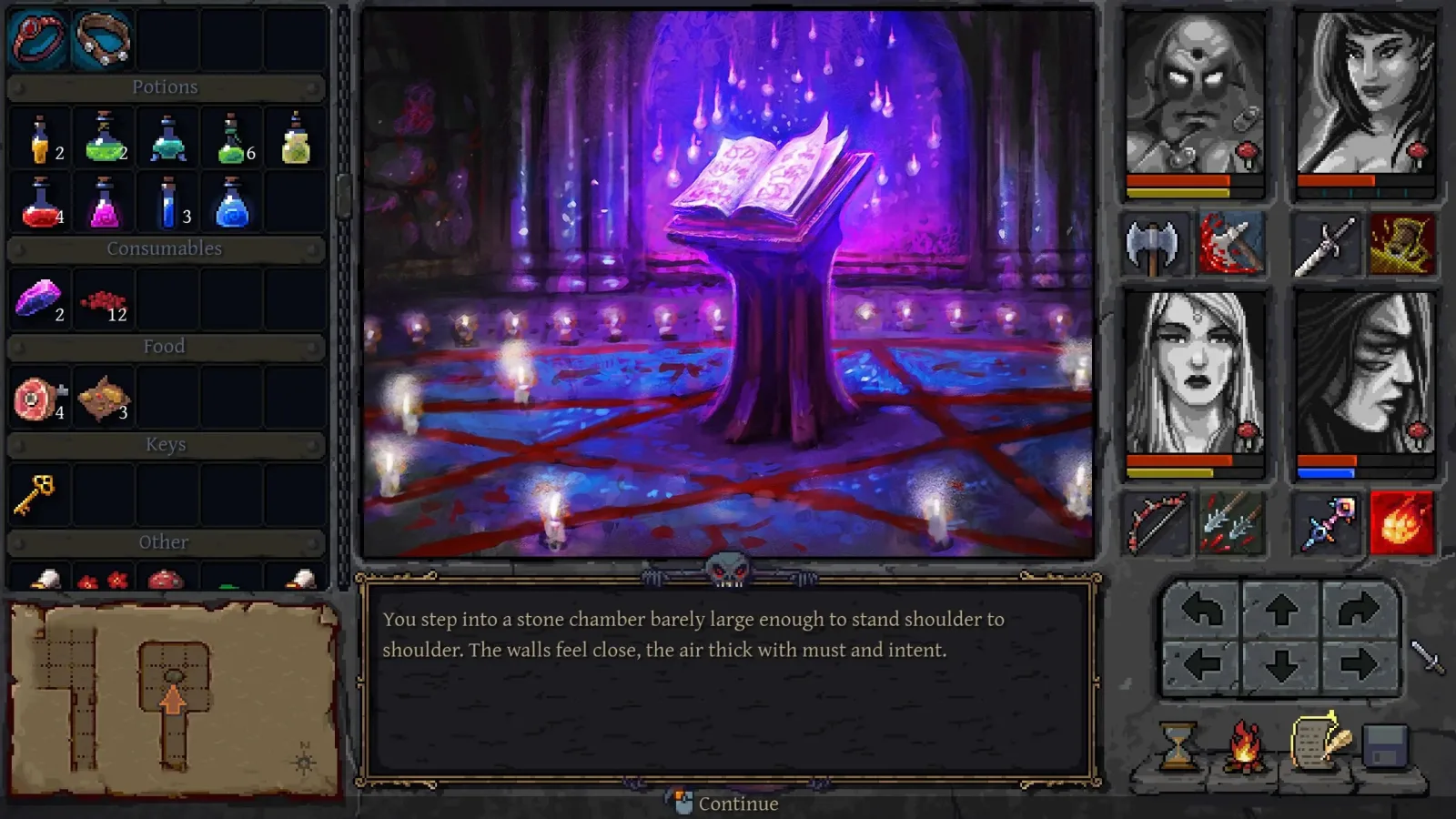
Spellcasting is another area where Underkeep takes a more straightforward path than some of its ancestors. Players looking for elaborate rune combinations or deep spell-construction systems will not find that here. Instead, characters select from a useful range of abilities as they level and can swap between learned options as needed.
Level-ups are scarce enough that these decisions carry real weight. Investing heavily in one or two skills can create a focused specialist, while distributing points offers broader tools at the cost of peak power. Since there is no respec option, the game asks players to live with their decisions. That permanence may be intimidating for those who want to experiment freely, but it also makes every chosen ability feel important.
Underkeep's storytelling and mechanical choices are willing to be playful, too. Depending on how a particular side quest is resolved, the entire party can occasionally turn into mushrooms. It is the sort of unexpected, slightly absurd consequence that helps the game stand apart from a purely grim exercise in survival and statistics.
A welcome return for a neglected RPG tradition
Underkeep does not attempt to match the severe difficulty of Wizardry or the massive lore density associated with Might & Magic. Its strength is that it understands a different appeal: simple, tactile adventuring with a party that grows over time, satisfying dungeon rewards, memorable monsters, and enough freedom to make a map feel worth exploring.
The presentation helps considerably. Enemy designs are a highlight, the game's visuals give its creatures and locations a distinctive fantasy character, and the soundtrack provides a particularly strong accompaniment to the journey. Even an early reward like a suspicious-looking wheel of moldy cheese can evoke the odd treasure-filled charm that made the genre memorable in the first place.
Underkeep is not flawless. Difficulty boundaries need clearer communication, rest needs more player-facing information and flexibility, and some players may want a richer spell system. Yet its flaws sit alongside a compelling foundation rather than replacing one. For players hungry for a new grid-based, party-driven RPG that respects the old blobber format while offering a friendlier and more story-aware adventure, Underkeep is an easy game to keep on the radar.
Community
Discussion
Start the conversation.
No comments have been posted yet.