

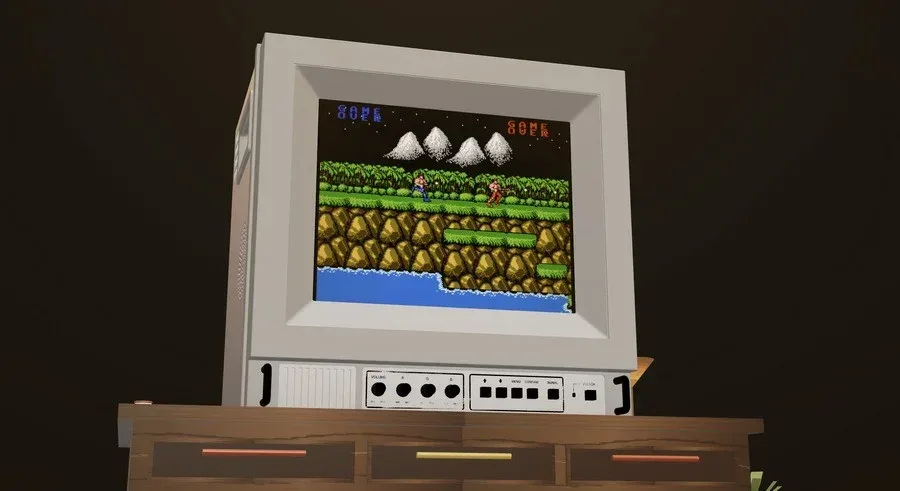
Retro gaming's display question has never had a simple answer. For many players, a CRT television remains the ideal companion for old consoles: it has the native shape, motion characteristics, scanline behavior and input response associated with the machines of the era. The trouble is that CRTs are bulky, aging, increasingly difficult to transport, and not always easy to find in good working condition. At the opposite end are modern flat-panel displays, which are convenient and widely available but often built around widescreen formats and contemporary connections.
Unico is positioning its newly revealed TRAVELLER ULW10 as an attempt to occupy the space between those two choices. The product is a modern LCD monitor, but one designed around a 4:3 aspect ratio and fitted with legacy-friendly inputs. Rather than claiming to replace high-end conventional monitors or recreate a CRT outright, the company is pitching the ULW10 as a more focused display experience for players who want a portable, console-oriented setup with a more period-appropriate screen shape.
The TRAVELLER ULW10 is expected to launch on Kickstarter soon. At present, Unico has highlighted its general concept, connection options and portable design, while key technical details that many retro enthusiasts will want to know have not yet been announced.
A modern LCD built around an old familiar shape
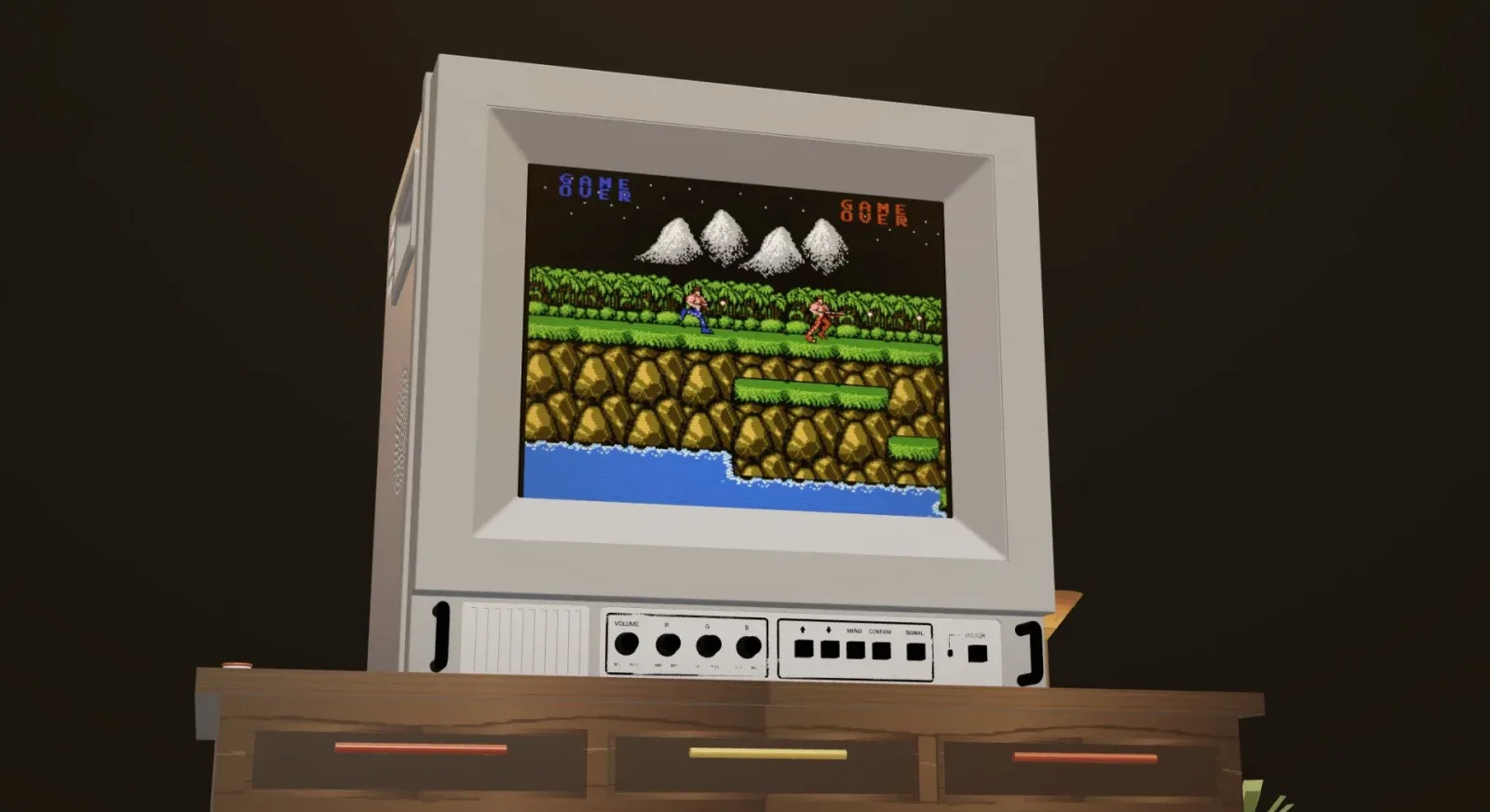
The most immediate point of difference is the ULW10's 4:3 panel. That shape was standard for much of console gaming history, encompassing generations that were designed with square-ish televisions in mind. Playing those systems on a modern 16:9 television can involve either stretching the image, accepting black bars at the sides, or relying on display settings that may not always be ideal. A dedicated 4:3 monitor removes that particular compromise at the physical-display level.
For useful background on this topic, read CeX Lists Retro Birmingham Store on Bull Street, Pointing to Dedicated Classic-Gaming Return.
That alone does not make a screen inherently suited to retro hardware, of course. Image processing, scaling quality, latency, refresh behavior and supported signal formats all matter. Still, the panel shape speaks directly to a familiar frustration among retro players: even when modern displays can show older games perfectly well, they frequently feel like they were designed for a different type of media.
Unico describes the design as retro-inspired rather than presenting it as a conventional monitor intended to top the broader LCD market. The company has stated that the ULW10 is not trying to be the best standard monitor; its goal is instead to provide an experience that typical monitors do not. That distinction is important. The appeal here is not merely specifications on a product sheet, but the promise of a self-contained screen built around the rituals and visual proportions of older console play.
RGB, VGA and HDMI cover old and new connection needs
The ULW10 is set to include RGB and VGA inputs, two inclusions that immediately make it more interesting than a basic modern portable monitor. Legacy connectivity is often a major hurdle in putting together a retro setup. Original consoles were released long before HDMI became standard, and their video output methods vary significantly from system to system, region to region and modification to modification.
For another perspective on this story, read Unico's TRAVELLERoULW10 Is a Portable 4:3 LCD Pitch for Retro Consoles.
RGB is particularly notable because it is a favored format within many retro gaming setups. Depending on the hardware and cable arrangement, it can offer a clean signal path for older consoles. VGA support may also appeal to players with compatible computers, arcade hardware, Dreamcast setups, adapters or other devices that make use of the format. The practical usefulness of each connection will ultimately depend on the ULW10's exact implementation and its handling of the signal types sent to it.
HDMI is also included, making the screen useful beyond strictly vintage equipment. That could allow the unit to serve as a compact display for hardware that already uses HDMI, as well as for external processing devices that convert or scale legacy signals before delivering them over a modern connection. For players who use a mixture of original hardware, mods, switchers and scalers, having both legacy-oriented and HDMI options in one small display could be a meaningful convenience.
However, the announcement does not yet specify several details that will be crucial for informed buying decisions. There is no confirmed resolution, no announced refresh rate, no stated latency figure, and no full breakdown of supported input timings or resolutions. There is also no detailed information yet about how the screen processes lower-resolution signals, whether it accepts 240p directly through its legacy inputs, or how it handles different regional standards.
Those questions matter because "legacy inputs" can mean very different things in real-world use. A display can physically include an RGB or VGA port while still imposing conversion or scaling behavior that some users may not prefer. Retro communities tend to examine these details closely, especially when a product is designed around original consoles rather than simply accommodating them as an extra feature.
A portable setup with room for the console
Portability is the other central part of the TRAVELLER ULW10 concept. Unico says the monitor is light enough to move around easily, and its design includes a rear compartment intended to store a console. That changes the proposition from a desk display into something closer to a compact gaming station.
For collectors with limited space, that format could be more appealing than dedicating a large CRT or a permanent television setup to one machine. It may also suit events, meetups, temporary game rooms or simply players who want to move a system between rooms without dismantling a larger collection of cables and equipment. A display and console package that can be carried together has an obvious charm, particularly for hardware that was originally designed around communal living-room play.
The rear storage idea also distinguishes the ULW10 from many portable monitors, which generally assume they will be paired with a laptop, a modern console or another HDMI-equipped device. Unico is clearly trying to make the display feel purpose-built for the particular needs of retro console users, where the device connected to the screen may be physically larger, older and dependent on less common cables.
There are still practical questions around that storage compartment. Unico has not outlined which console sizes it will accommodate, how cables are routed, how ventilation is handled, or whether the space is intended for a specific class of compact hardware. Those details will determine whether it becomes a broadly useful feature or a more limited design flourish. Even so, the concept is easy to understand: reduce the friction between owning classic hardware and actually setting it up for an evening of play.
Why a 4:3 LCD may appeal despite CRT competition
The retro display market is full of trade-offs. CRTs are prized for authenticity, but they demand space and maintenance. Modern televisions are easy to purchase, but their built-in scaling and processing can be inconsistent with old signals. External scalers and line multipliers can substantially improve the picture on newer screens, although they add expense, cables and configuration. Specialist displays can offer an alternative, yet their usefulness depends heavily on how well their features align with a player's specific hardware.
The ULW10's potential appeal lies in making a deliberate compromise rather than trying to solve every display problem at once. It is not a CRT, and its LCD technology will not behave exactly like one. But a lightweight 4:3 screen with older connections, HDMI support and a console-carrying design may be attractive to people who value convenience, portability and visual framing alongside compatibility.
That is especially true for players who already understand the limits of modern flat panels but do not want the logistical burden of maintaining a tube television. A compact dedicated unit could offer a more inviting place for occasional sessions than a large television in a shared room, while avoiding the bulk of vintage display hardware.
Kickstarter details will need close scrutiny
As with any crowdfunded hardware product, the TRAVELLER ULW10 should be assessed carefully once its Kickstarter campaign goes live. Prospective backers will need to consider the finalized specifications, the manufacturing plan, pricing, shipping arrangements and delivery estimates before deciding whether the concept meets their needs. At this stage, Unico has said that the campaign is coming soon, but has not provided those final purchase details.
Potential buyers should also look for demonstrations using a range of real devices. The most useful footage would show the monitor handling different legacy signals, switching between inputs, displaying fast-moving games and operating with the kinds of consoles and cables that its intended audience actually owns. Clear information about compatibility is likely to matter more than broad lifestyle messaging for a product aimed at technically informed retro players.
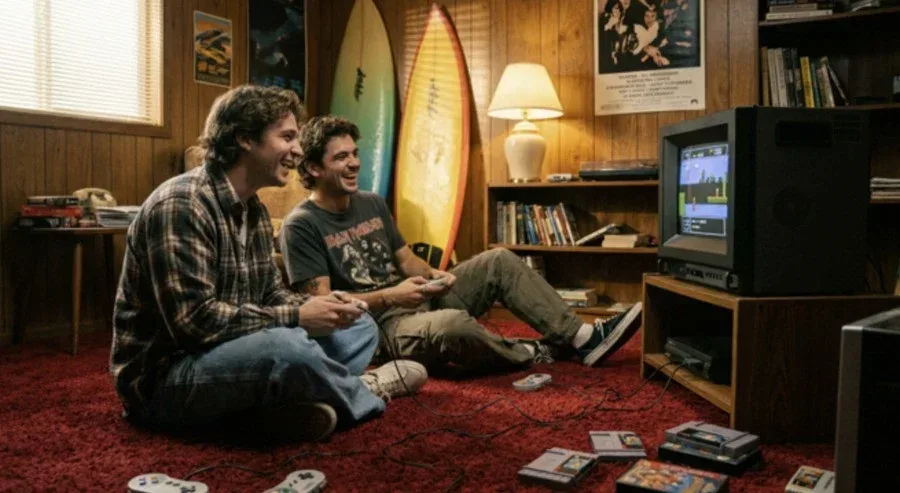
Unico's promotional material has drawn attention for using AI-generated lifestyle imagery, which may not inspire confidence in every potential customer. That does not by itself establish how the eventual hardware will perform, but it does make transparent, practical demonstrations all the more valuable as the campaign approaches.
A niche concept with a clear purpose
The TRAVELLER ULW10 is entering a category where enthusiasts often have strong preferences and highly specific requirements. Some will continue to favor CRTs. Others will prefer a modern television combined with an external scaler. But Unico's monitor is aimed at another group: players who want a modern, movable LCD setup that visibly acknowledges the form factor and connection standards of classic consoles.
Its 4:3 screen, RGB and VGA inputs, HDMI connection and rear console compartment give the device a distinctive identity even before its deeper specifications are known. Whether it can become a genuinely useful retro display will come down to the unanswered technical questions, as well as the execution of its Kickstarter campaign. For now, it is a portable retro-gaming monitor idea that understands one essential point: for old games, the screen is often as important to the experience as the console itself.
Community
Discussion
Start the conversation.
No comments have been posted yet.