

CRT televisions were once the bulky old technology that households could not replace quickly enough. As plasma panels, LCD screens, and eventually OLED displays became standard, countless cathode-ray tube sets were discarded, donated, or left behind in storage. For retro game players, however, those supposedly obsolete displays have become highly desirable again. Original hardware from the 8-bit, 16-bit, and early 3D eras was built around the strengths and quirks of CRTs, from their motion handling to their scanlines and their near-instantaneous response.
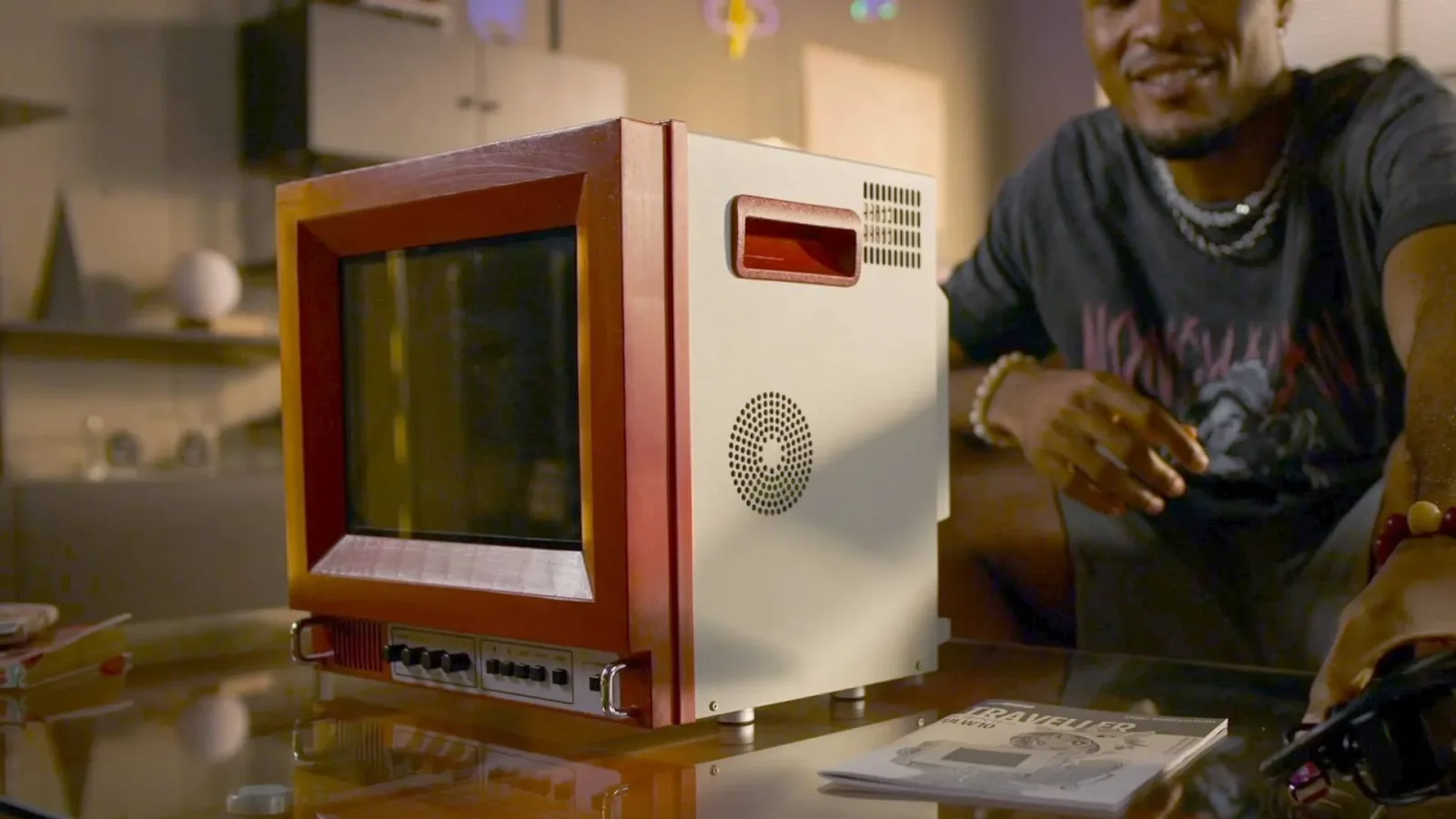
That renewed interest has also created a difficult market. Working CRTs are finite, increasingly old, often heavy, and sometimes expensive to transport or repair. Professional Sony PVM and BVM monitors, in particular, have become collector items because of their picture quality and flexible inputs. It is therefore no surprise to see companies exploring modern products that borrow the appearance of those monitors. The latest is Unico's TRAVELLER-ULW10, a Sony PVM-inspired cube display that has appeared ahead of a Kickstarter campaign.
According to GamesRadar+ hardware writer Phil Hayton, the product is being presented as a way to revisit the classic console experience, but the information currently available raises more questions than it answers. The TRAVELLER-ULW10 looks like a compact retro monitor on the outside, yet it is described as housing a 10-inch 4:3 LCD panel rather than an actual cathode-ray tube. That distinction is crucial for players hoping for a modern alternative that meaningfully recreates the behavior of a vintage display, rather than simply a modern screen in nostalgic packaging.
A PVM-Inspired Shell With LCD Hardware Inside
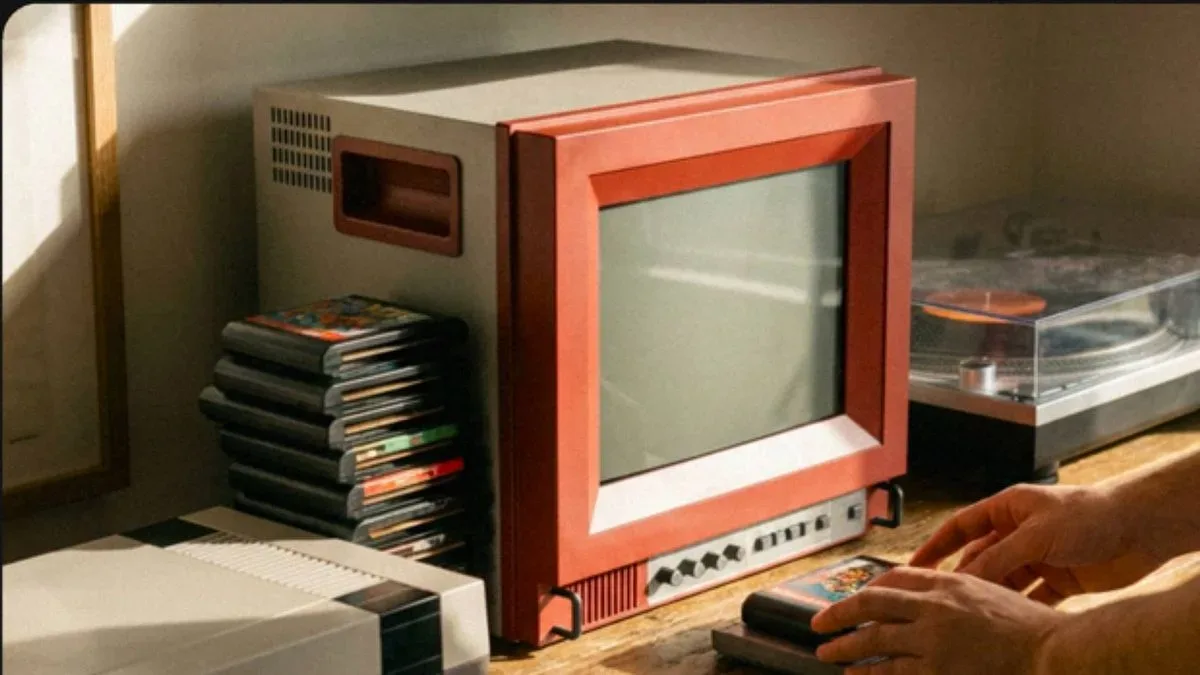
Unico, an arcade hardware maker founded in 2019, is positioning the TRAVELLER-ULW10 around a familiar visual language. Its boxy shape and monitor-inspired styling clearly evoke Sony's Trinitron PVM line, screens that are especially sought after by retro enthusiasts. The practical appeal is easy to understand: a small 4:3 display fits the native presentation of many older consoles more naturally than a widescreen television, while a compact enclosure can be much easier to accommodate than a large and exceptionally heavy CRT.
However, an enclosure and aspect ratio alone do not determine whether a display feels suitable for older machines. CRTs do not merely show a 4:3 image. Their analog behavior, image processing characteristics, phosphor presentation, motion clarity, and handling of low-resolution signals all contribute to the result. Modern LCD panels can be excellent, but they need carefully designed processing and low-latency signal handling if they are to serve retro consoles well.
This is where the current uncertainty around the TRAVELLER-ULW10 becomes important. As reported by GamesRadar+, Unico has not yet publicly detailed the display's core specifications or the board powering it. Without that information, it is not possible to establish how the unit treats the varied video signals produced by older hardware, whether it scales them cleanly, or how much processing delay may be introduced between a controller input and what appears on screen.
Inputs Sound Promising, but Processing Matters More
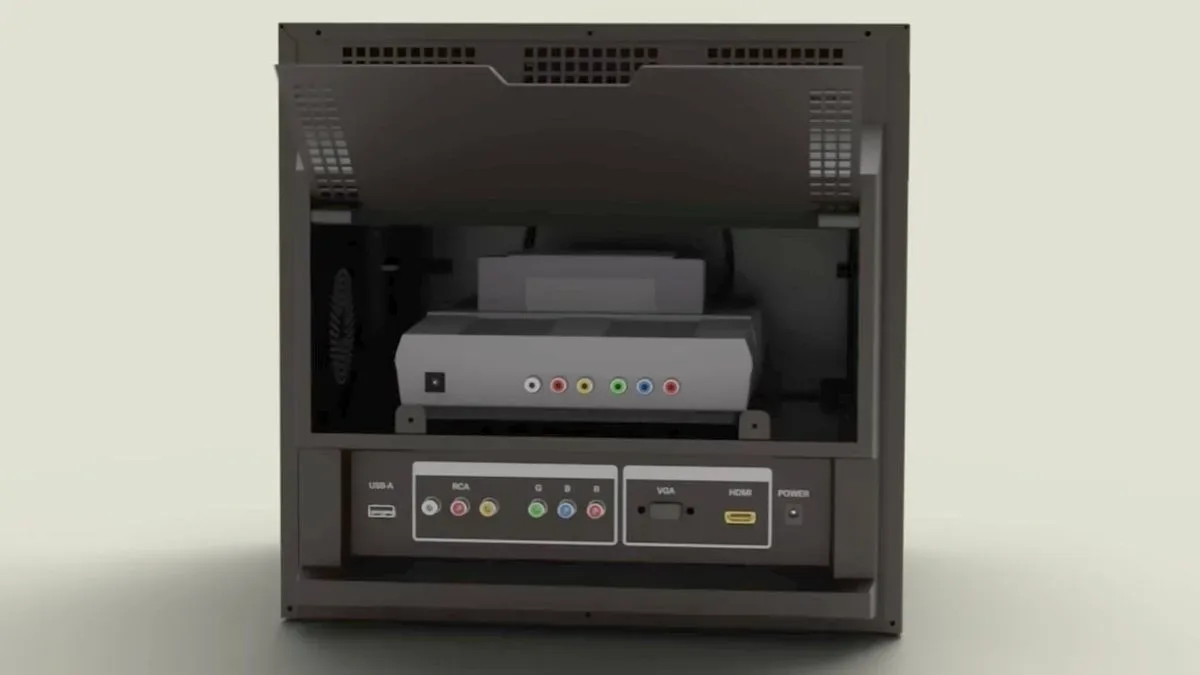
Unico reportedly plans to include RGB and VGA alongside HDMI. On paper, that could make the device more flexible than plugging old consoles directly into an ordinary modern TV. RGB is particularly relevant in retro gaming because several systems can deliver clean analog RGB output with the proper cables or modifications. VGA support could also be useful for hardware and arcade-style setups that use that connection. HDMI, meanwhile, gives the device a clear route for newer systems or externally processed sources.
Still, the presence of ports does not automatically answer the technical questions. A retro-friendly screen must convert and display old signals properly. Many consoles output resolutions and refresh behaviors that modern flat panels do not natively accept gracefully. A quality scaler or line multiplier can help preserve sharp pixel art, maintain correct aspect ratios, and minimize lag. A basic conversion solution can instead introduce softness, visual artifacts, inconsistent motion, or enough delay to affect action games.
Hayton notes that one possible best-case scenario would involve technology comparable to a GBS-C upscaler. Such solutions are known in the enthusiast space for helping old analog sources work with modern displays. But that remains speculation rather than a confirmed feature of the TRAVELLER-ULW10. The product's internal main board has not been shown, and Unico has not outlined its scaling method, latency performance, panel refresh behavior, or any picture-processing options.
Composite-only consoles introduce another potential complication. Systems such as the NES and Nintendo 64 are commonly associated with composite video in many setups. If Unico's product is designed around RGB and VGA inputs, it may need additional conversion hardware to support those sources directly and competently. The source material does not confirm whether that capability is included. Until Unico releases fuller specifications, prospective buyers cannot assume every vintage machine will connect without external adapters or extra processing hardware.
Retro Aesthetics Are Not the Same as CRT Emulation
The difference between a CRT-inspired product and a display that genuinely reproduces CRT-like presentation is at the center of the skepticism. A modern flat panel can be made more convincing with carefully designed features, including low-latency processing, scanline options, appropriate scaling, aspect-ratio controls, and display modes that account for the way old games were authored. But none of those features are currently established for the TRAVELLER-ULW10.
That does not mean the unit cannot be useful. A 10-inch 4:3 LCD with multiple inputs could potentially be a convenient small screen for a desk, a travel setup, an arcade cabinet project, or a shelf-based retro station. The concept of placing a console in the space beneath or beside the display also has obvious visual appeal for players building compact gaming corners. Yet convenience and visual nostalgia are not equivalent to authentic video reproduction.
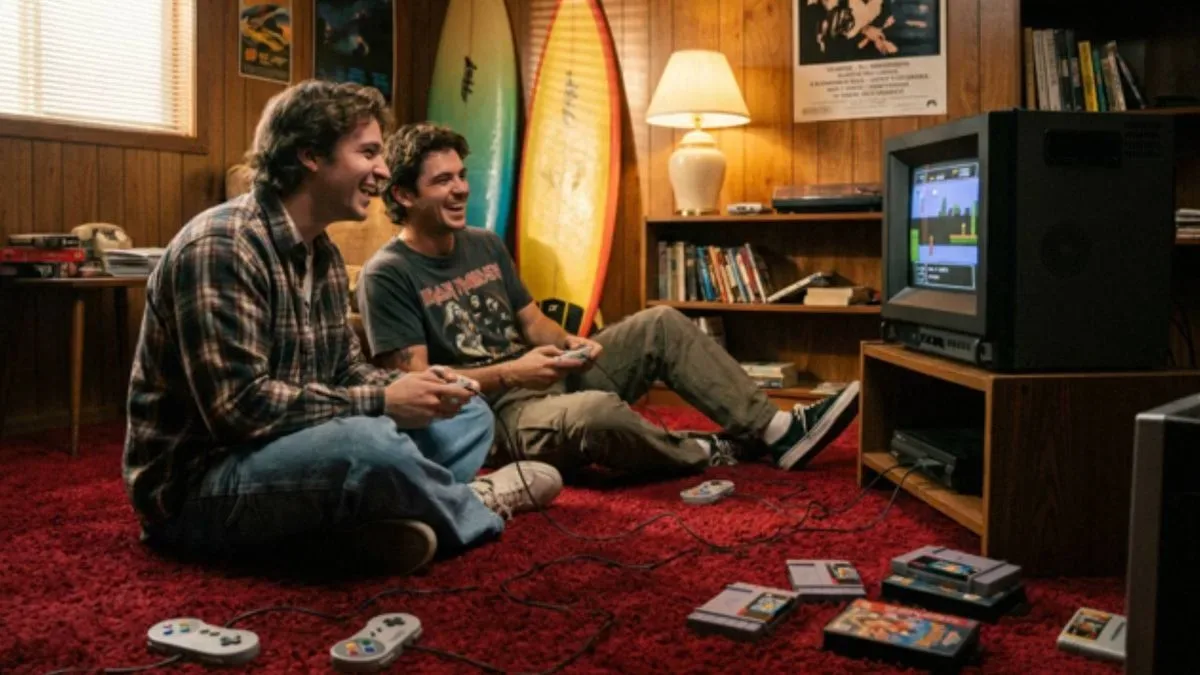
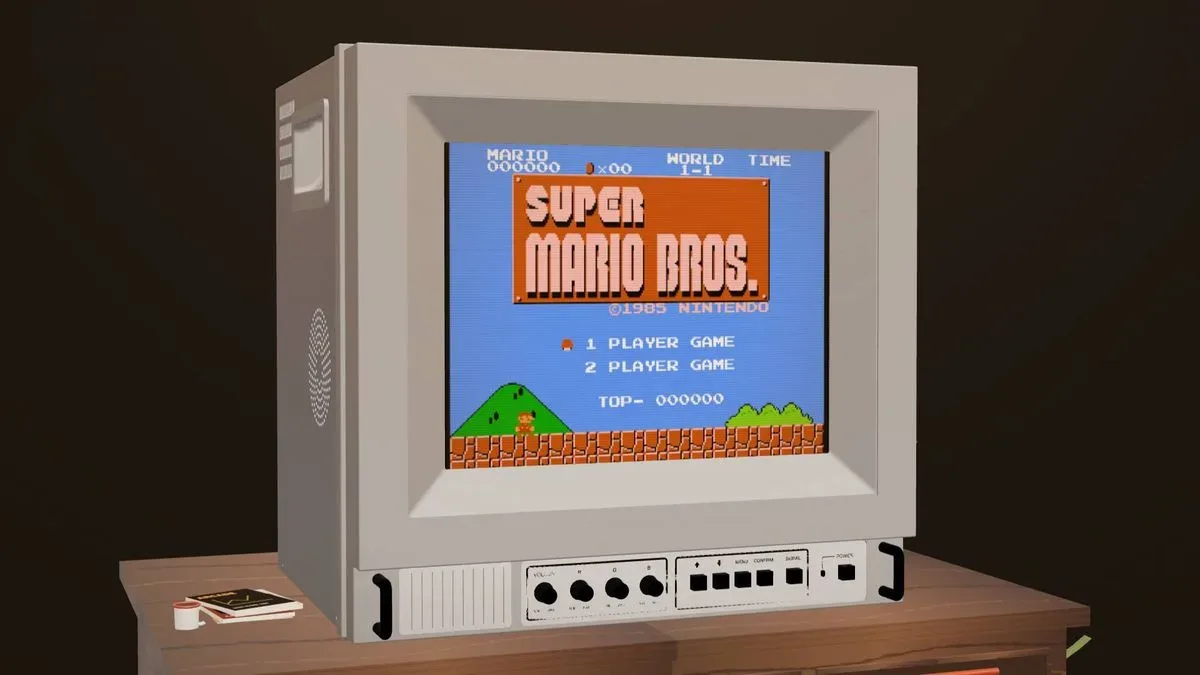
GamesRadar+ also highlighted concerns around the campaign's presentation. Some of the promotional lifestyle imagery is AI-generated, and the images can make the product appear larger than its stated 10-inch display size. Other renders have been noted as visually inconsistent, including one that resembles a different, larger CRT-like set. The promotional material has also drawn attention for details that appear odd in context, including side grills that seemingly do not conceal speakers in the product video.
None of those presentation choices prove anything about the final hardware. They do, however, make detailed technical transparency more important. A niche audience shopping for a retro gaming display is likely to care less about generalized nostalgia language than concrete answers about supported signals, input lag, panel behavior, audio, power, build quality, and what exactly happens when an original console is connected.
Another Entry in an Emerging Faux-CRT Market
The TRAVELLER-ULW10 is not the first product to chase the desire for a new CRT-like experience. GamesRadar+ points to RetroBox, a startup that earlier promised a revival of the VHS combo TV concept. That portable faux-tube project had not yet arrived at the time of the report. Social media has also seen LCD-based PVM-style concepts from Retrooldtech, showing that the attraction of recreating a beloved monitor design is widespread.
The market opportunity is clear. Original CRT ownership brings practical obstacles beyond finding a working set. Older displays take up space, weigh a great deal, can require maintenance, and may be difficult to move safely. At the same time, modern televisions often provide a poor out-of-the-box experience for older consoles. A well-engineered new display that handles retro signals correctly could fill a genuine need, especially for people who cannot accommodate a tube television.
But the bar is higher than making an LCD resemble a PVM. Players already have access to external scalers, line multipliers, specialized cables, and modern displays with varying degrees of retro suitability. A purpose-built all-in-one unit needs to explain why its internal solution is preferable to those existing options. If its hardware is merely a basic adapter paired with an inexpensive LCD panel, the decorative shell may not offset concerns about lag or image quality.
Kickstarter Status and What Buyers Should Wait to Learn
At the time covered by GamesRadar+, the TRAVELLER-ULW10 was on a pre-launch Kickstarter page and had six backers. The campaign may still reveal considerably more information in a formal launch announcement. That is the stage at which Unico has an opportunity to address the unanswered questions surrounding the device rather than relying on renders and broad promises about reliving classic console gaming.
Before treating the TRAVELLER-ULW10 as a replacement for a CRT, retro players will want confirmation of several fundamentals:
- Exact supported input formats and whether composite sources are accommodated.
- How RGB, VGA, and HDMI signals are processed internally.
- Measured or clearly stated input latency.
- Native panel resolution, refresh behavior, and scaling options.
- Whether image features such as scanlines, aspect-ratio controls, or low-lag modes are provided.
- Audio specifications, including whether the enclosure includes built-in speakers.
- Clear footage and photography of a finished, functioning unit rather than only renders.
For now, the Unico TRAVELLER-ULW10 remains an intriguing idea with an appealing retro silhouette, not a verified CRT substitute. Its 4:3 format and claimed input selection could make it a practical device, but the details that matter most to serious retro players have not been established. Until Unico shows what is inside the PVM-inspired box and explains how it handles real legacy hardware, caution is warranted. In a market full of nostalgia-driven promises, the eventual performance--not the shape of the casing--will decide whether this LCD earns a place beside classic consoles.
Community
Discussion
Start the conversation.
No comments have been posted yet.