

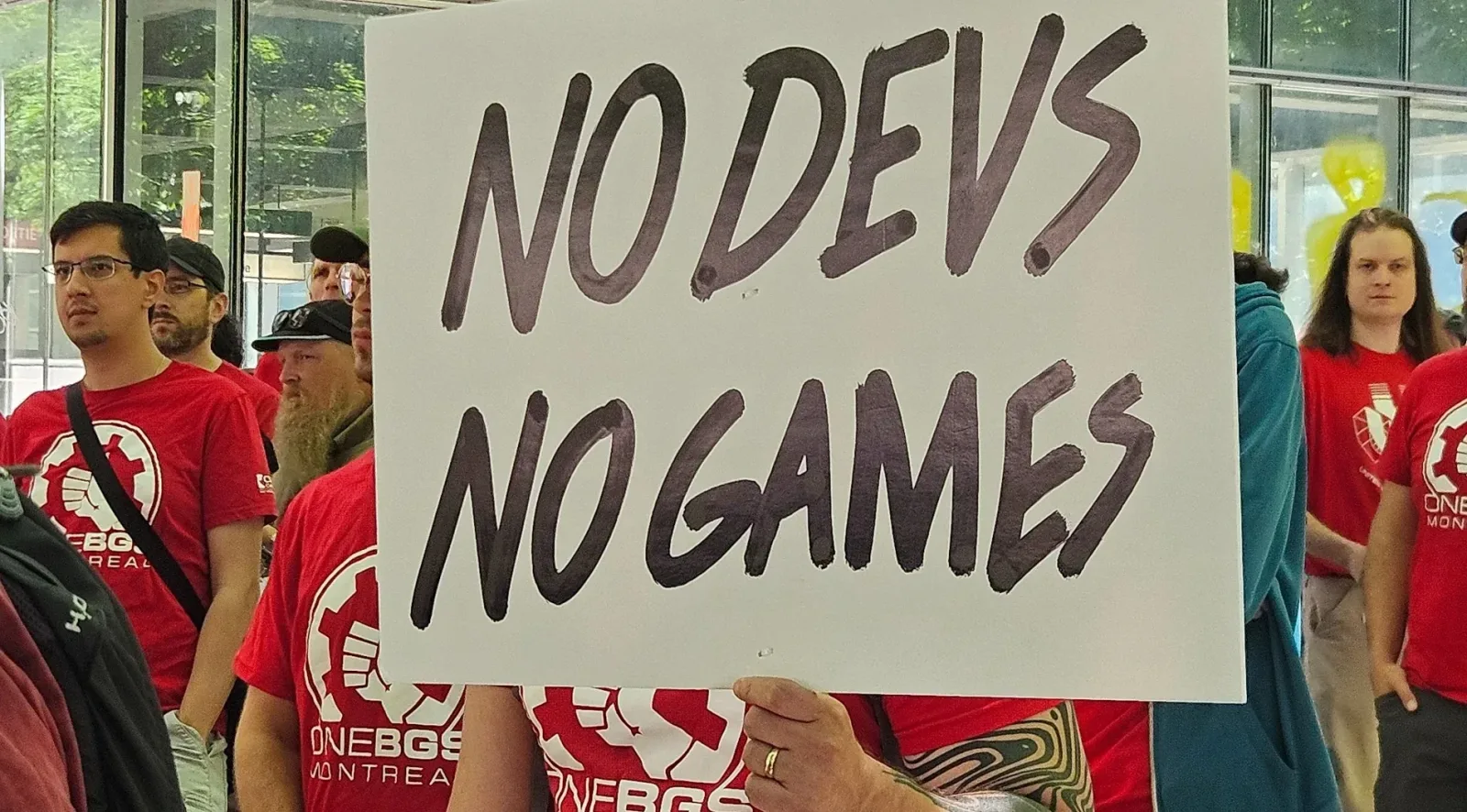
The United Video Game Workers-CWA has shared the results of a hardship fund created to assist developers affected by the games industry's continuing wave of layoffs. Through an itch.io bundle, union dues, and outside donations, the group raised $290,000 in two weeks and has now distributed the full amount to more than 150 game workers.
The money was intended as immediate practical support for people navigating unemployment, with recipients using assistance for necessities including rent, medical expenses, and outstanding debt. For workers suddenly separated from their jobs, the fund was designed to help cover the difficult period between a layoff and finding their next role.
The effort was organized by United Video Game Workers-CWA in collaboration with Necrosoft Games. While the total is modest beside the budgets and revenues regularly associated with the largest publishers, it represents direct aid delivered to individuals at a time when many development teams have been reduced, reorganized, or eliminated entirely.
Support focused on immediate needs
Layoffs can have effects that extend far beyond a lost salary. Health coverage may be tied to employment, severance can be limited or unavailable, and the process of finding another position can take months in an industry where many studios are simultaneously cutting staff. A hardship fund cannot resolve those structural problems on its own, but it can make the difference in meeting the next rent payment, managing an urgent medical bill, or avoiding deeper debt during a job search.
For useful background on this topic, read Warren Spector Sees Deus Ex DNA in Zelda's Open-World Freedom.
United Video Game Workers-CWA framed the project around exactly those pressures. The organization said the $290,000 was fully disbursed to more than 150 people from across the industry. Recipients described the assistance as a lifeline during a period of acute financial strain, emphasizing the human stakes behind the layoff announcements that have become routine throughout games.
The campaign's mix of funding sources is also notable. The itch.io bundle offered supporters a way to contribute through games, while dues and direct donations allowed the union and its broader community to add to the pool. That combination turned a short fundraising window into tangible help for a sizable group of workers.
A cross-industry picture of layoffs
The applicants represented a wide range of companies and disciplines, underscoring that the current employment crisis is not confined to one publisher, genre, or platform. Workers who applied had previously been employed at major industry names including Xbox, Activision Blizzard, Electronic Arts, and Ubisoft, among others.
That breadth matters because modern game development is deeply interconnected. A major console release may involve internal studio teams, support studios, contractors, quality assurance specialists, localization staff, artists, audio teams, producers, designers, engineers, community workers, and many other roles. Cuts at one company do not simply affect one game; they remove experience and stability from the wider talent pool serving PC, console, handheld, and mobile development.
Public coverage of the business often concentrates on corporate restructuring, cancelled projects, revised forecasts, major acquisitions, or a publisher's release calendar. Those details matter, but they can obscure what a reduction means to the people whose names may never appear in a trailer or credits reel. The hardship fund's recipient list puts that personal dimension back into focus: these are professionals trying to remain housed, stay healthy, and continue their careers after losing work.
For many workers, the challenge is compounded by timing. When job cuts happen across several large companies in the same period, openings become more competitive precisely as more experienced applicants enter the market. Even developers with established credits can face an extended search, especially if their specialty is tied to a project type, engine, region, or studio structure that is currently shrinking.
Veteran experience is leaving studios
One of the clearest findings in the hardship fund report is the level of experience among the people seeking help. Thirty-two percent of applicants said they had worked in the games industry for at least 10 years. That figure highlights a concern that goes beyond the immediate damage caused by layoffs: the potential loss of institutional knowledge.
Experienced staff do more than fill senior job titles. They often understand how a studio's tools evolved, why earlier production decisions were made, where a pipeline is likely to fail, and how to guide newer developers through the less visible parts of shipping a game. Their knowledge can help teams avoid costly mistakes and can give younger employees mentorship that is difficult to replace quickly.
Games are frequently discussed as though individual technology or intellectual property alone determines whether a company can sustain success. In practice, long-term teams are an enormous part of that equation. A studio that retains people over many years can develop internal leadership, maintain production expertise, and create room for staff to grow from junior roles into leads and directors.
Nintendo is often cited as an example of the value of retaining employees and developing them over time. Continuity allows workers to build familiarity with a company's tools and creative processes before taking on bigger responsibilities. The same principle can apply across the industry, whether a team is making a blockbuster console game, an independent PC release, a mobile title, or technical support for another studio's production.
Recent reporting on Rockstar offered another illustration of the potential value of longevity. Rockstar said that 21 percent of its employees, around 1,000 people, had been with the company for more than a decade. That kind of concentration of veteran staff is significant in a field where large, complicated games can take years to make and require coordination across many specialties.
It would be simplistic to suggest that every company can operate in exactly the same way or that workforce retention alone guarantees a successful game. Development conditions, management decisions, changing technology, market demand, and creative ambition all play major roles. Still, the hardship fund data raises a serious question: what does the industry lose when large numbers of workers with a decade or more of experience are pushed out at once?
Relief is valuable, but it is not a replacement for protections
The $290,000 fund demonstrates the capacity of workers and supporters to organize quickly around an urgent need. It also reveals the limits of charitable relief in an industry that continues to experience mass layoffs. A one-time payment can create breathing room, but it does not guarantee health coverage, long-term income, a new role, or protection against the next round of cuts.
United Video Game Workers-CWA says it hopes to hold similar fundraisers in the future while continuing its broader work around organizing studios and pursuing stronger worker protections. That goal places the hardship fund in a wider labor context. Emergency aid is one response to the effects of layoffs; collective bargaining, workplace organizing, and clearer protections are efforts aimed at changing the conditions that leave workers so exposed in the first place.
For developers, the issue is not only whether another job eventually appears. It is also whether they can endure the period before it does without losing housing, taking on unmanageable debt, or leaving the industry altogether. When experienced workers depart games because continued employment no longer feels viable, the consequences may be felt years later in the form of thinner teams, fewer mentors, and less accumulated craft knowledge.
What the fund's result represents
The campaign's final number is encouraging because it translates into help for more than 150 people. At the same time, its existence is a stark reminder of the scale of the crisis that prompted it. Developers from some Of the World's largest game companies needed emergency financial assistance after losing their jobs, and nearly one-third of applicants brought at least a decade of industry experience with them.
For now, the fund has helped recipients bridge an uncertain transition. The next test for the industry is whether it can create a more stable future for the people who make its games. The developers helped by this drive are not abstract figures in a restructuring plan. They are artists, engineers, designers, producers, testers, and other professionals whose work has shaped games across every major platform.
United Video Game Workers-CWA's campaign shows that a community can respond when those workers need support. Its longer-term significance may depend on whether that solidarity is matched by lasting changes that make emergency funds less necessary in the first place.
Community
Discussion
Start the conversation.
No comments have been posted yet.