


Valve's Steam storefront is reportedly on course for a staggering year. Estimates attributed to Alinea Analytics put Steam's game-sale revenue at $1.7 billion for September 2026, $5.5 billion across the third quarter, and $16.5 billion so far this year. If that pace holds, the digital PC marketplace could approach $20 billion in game sales before the end of 2026.
Those figures should be treated as estimates rather than a complete financial disclosure. Valve is privately held and does not publicly provide the detailed revenue, costs, or profit reports that would settle the matter. The estimates also appear to concern game sales, not revenue from Steam hardware. Still, even allowing for uncertainty, the scale suggested is enormous.
That naturally revives an old question: what should Valve do with the money Steam generates? The company has no public shareholders demanding quarterly returns, a distinction that gives it more freedom than most major platform holders. Valve can invest in new technology, distribute profits internally, fund its own projects, or simply retain capital. But Steam's success rests on the work of publishers, developers, modders, players, and a huge global audience that has made the service synonymous with PC game buying.
Steam does provide valuable infrastructure. It handles distribution, payments, updates, community features, workshop tools, cloud saves, wishlists, regional pricing, support systems, and a customer base that is exceptionally difficult to reach elsewhere. Yet its dominant position also means that listing on Steam is close to unavoidable for many PC developers. That makes the platform's fees, discoverability tools, moderation choices, and review design matters that affect an entire industry.
For useful background on this topic, read Replay's October Challenge Wants Your Spookiest Gaming Clips.
The 30% question has not gone away
The most obvious place to begin is Valve's standard revenue share. Steam generally takes 30% of a game sale, though Valve introduced lower rates for exceptionally high-grossing games in 2018. Once a title reaches $10 million in sales, the platform's share drops to 25%; after $50 million, it falls to 20%.
The result is difficult to defend on fairness grounds. The smallest teams, for whom every dollar can determine whether another project is possible, commonly remain at the highest rate. The largest publishers, which are already best equipped to negotiate marketing, distribution, and financing, receive the more favorable terms after they become massive successes.
That does not mean Steam should abandon the idea of taking a cut. Running a global digital marketplace costs money, and a storefront that has spent decades building consumer trust is offering a real service. But a more progressive model would better reflect the realities of game development. Valve could reduce or waive its fee on an initial band of revenue for small developers, then scale upward as sales grow.
There are many possible thresholds, and Valve would need to consider abuse prevention, publisher structures, refunds, taxes, and regional differences. Even so, the broad principle is straightforward: a studio selling a few thousand copies should not necessarily face the same percentage as a corporation selling millions. A lower fee on a first $100,000 or $200,000 in sales could be transformative for a small team while being comparatively minor against the reported scale of Steam's annual business.
Competitors have shown that lower headline cuts are possible, even if a favorable revenue split alone has not been enough to displace Steam's network effect. Steam does not need to imitate another store's exact model. It has the resources to build an approach tailored to the developers who depend on it most.
Give developers a permanent seat at the table
Steam has introduced useful tools over the years, but developers often experience the platform as opaque. Changes to visibility, recommendation systems, discount rules, page features, or policy enforcement can have enormous consequences. The people making games are frequently left to infer how those systems work from outcomes rather than participating directly in their design.
Valve could establish a standing developer advisory council with meaningful access to the company's product teams. It should not be a publicity exercise populated solely by major publishers. A useful panel would include solo developers, small studios, mid-sized independent publishers, teams from different regions, accessibility specialists, multiplayer developers, visual novel creators, and people who understand mature and niche communities. The PC market is too broad for a single definition of what a developer needs.
Its role would be practical. Members could identify recurring pain points, test proposed changes, explain unintended effects, and help Valve distinguish between complaints caused by temporary disruption and flaws that structurally disadvantage certain kinds of games. The council could also publish regular summaries of the issues being raised, without exposing confidential business information.
Valve already has access to an immense amount of sales and player-behavior data. Data is useful, but it cannot fully explain why a creator feels pressured to launch early, why a game is being mistaken for a copycat, or why a promotional experiment works for a familiar franchise while failing for a new studio. Direct, sustained consultation could fill that gap.
Discoverability needs people as well as algorithms
Steam's open submission model has undeniable benefits. More creators can sell games without passing through a traditional gatekeeper, and unusual projects can find audiences that might never exist in a tightly controlled store. The downside is volume. Thousands of games arrive every month, ranging from ambitious original work to low-effort asset repackaging and projects that struggle to demonstrate a clear identity.
Steam's recommendation systems are central to solving that problem, but algorithms should not be the only answer. Valve previously took a much more hands-on approach to the games on its service. Steam later used Greenlight, a community-voting process that was itself imperfect, before moving to Steam Direct in 2017. The current, more open system avoids many of Greenlight's bottlenecks, but it also leaves quality work fighting for attention in an overwhelming catalog.
Human curation does not have to mean rejecting unusual games or imposing a narrow corporate taste. In fact, it should mean the opposite. Valve could employ a diverse editorial and discovery team with room for people who understand strategy games, experimental art games, local multiplayer, simulation, horror, romance, adult-oriented games, accessibility-first design, and every other corner of PC gaming.
That team would not need to declare what is objectively "good." It could identify projects worth putting in front of potentially interested players, flag obvious low-effort duplication for closer review, and create optional themed collections with transparent standards. A curator who loves dense turn-based games will notice different strengths than one who follows cozy games or shooters. Steam should use that range rather than pretend a single automated model can recognize every kind of value.
Importantly, any such program must be accountable. Developers should know whether editorial selection affects search or recommendation placement, and there should be an appeal route when a game is categorized incorrectly. The goal is not a secret hierarchy. It is a more navigable store.
Steam reviews need more nuance
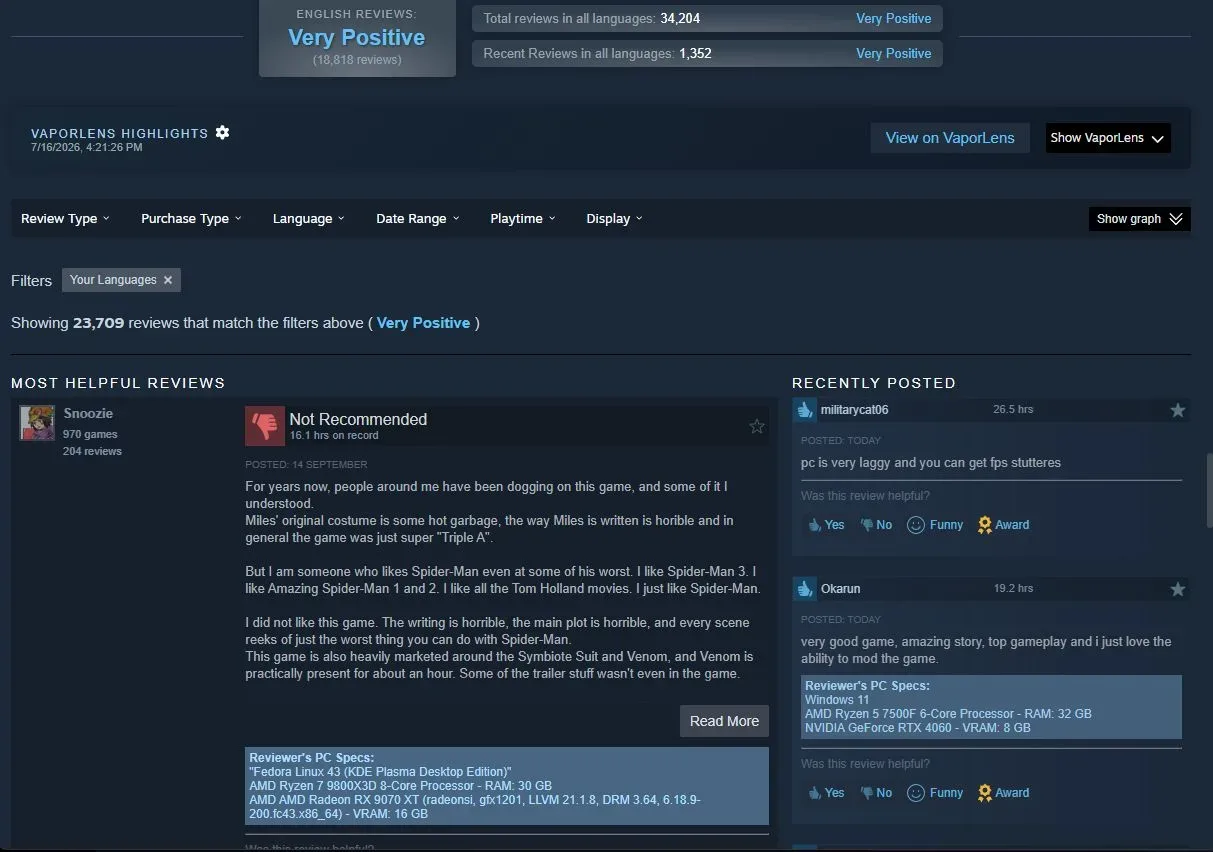
Steam's user-review prompt asks a sensible consumer question: would you recommend this game? Its answer format, however, remains unusually blunt. Players give a positive or negative assessment, and aggregate labels are generated from those votes. That can be helpful for a quick purchase decision, but it compresses too many experiences into a binary.
A player may enjoy a game but feel it needs a sale price. They may admire its systems while warning that its performance is poor. They may recommend it to established fans but not newcomers. None of those positions fits comfortably into a simple thumbs-up or thumbs-down.
Valve could test an "unsure" option, or introduce structured labels that let users indicate whether their hesitation concerns technical performance, monetization, accessibility, early-access status, online requirements, or value for money. A review page should make it easier to separate enduring criticism of a game from a short-lived backlash over an unrelated controversy.
Review bombing is another longstanding issue. Steam already uses tools intended to identify off-topic review activity, but there is room to make context clearer at a glance. Players should be able to see when unusual review activity occurred, what it concerned, and whether it reflects the current state of the game. Better information would serve consumers without taking away the ability to criticize publishers or developers when criticism is warranted.
Build on the ideas that are already working
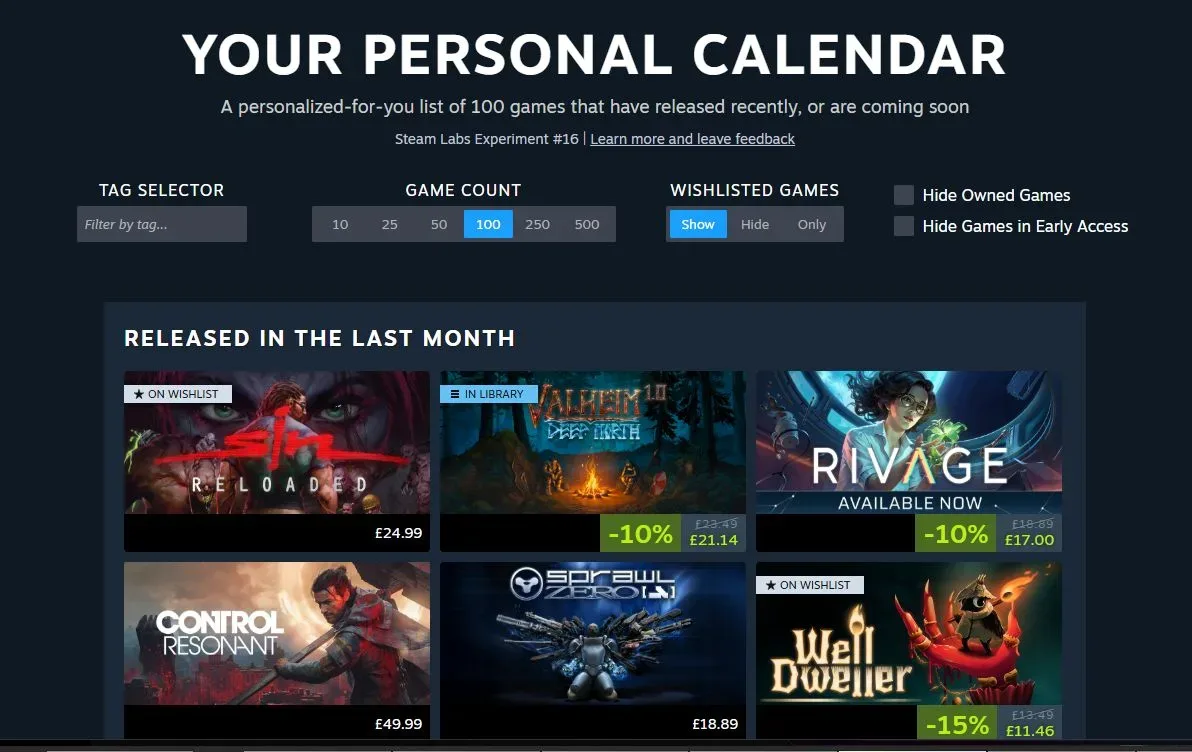
Valve is not incapable of useful experimentation. Steam's Personal Calendar, introduced around a year ago, is an encouraging example. It organizes recently released and upcoming games that the service believes a user may want, drawing attention to releases from the past month, the past week, and the near future. Independent developers have said the feature can help their games reach suitable audiences.
But a helpful feature hidden under a Recommendations tab cannot reach its potential. Steam's front page is frequently dominated by major promotions, seasonal sales, and established bestsellers. Personal discovery tools could be made more prominent without eliminating those commercial events. The platform could offer clearer optional pathways for players who want to find new releases, smaller games, overlooked titles in their library-adjacent genres, or projects from creators they have followed.
Valve's wealth gives it permission to test more ideas, measure their effects, and discard failures without placing the risk on independent teams. It could fund accessibility audits, expand translation and localization support, provide educational resources on launches and pricing, or create grants for tools that help developers understand their own audiences. It could also make more of its marketplace research publicly useful, sharing anonymized findings about discoverability and consumer behavior with creators who cannot afford their own market analysis.
A platform leader has choices
No single change will fix the pressures facing game development. Lower fees will not guarantee sales. Curation can create new disputes. More detailed reviews can be gamed. Advisory panels can become performative if leadership does not act on their feedback. But Steam's unusual position means Valve has the capacity to try, revise, and keep trying.
If the reported 2026 sales pace is close to accurate, the question is not whether Valve can afford meaningful improvements. It is whether it sees a healthier ecosystem as part of its responsibility. A marketplace built by creators and sustained by players should reinvest in both. Reducing the burden on small studios, improving discovery, modernizing reviews, and treating developers as partners would be a strong use of Steam's extraordinary success.


Community
Discussion
Start the conversation.
No comments have been posted yet.