


FLING UP TOGETHER is turning cooperative platforming into a particularly precarious shared responsibility. Developed by OFF BOX Studios, the two-player physics game has received a new gameplay trailer, released on October 6, alongside a free demo on Steam. Its premise is direct: two players are connected by a single rope, and they must climb a towering vertical world without either partner falling.
That final condition is the important one. A fall does not simply leave one teammate waiting for a revive point or force them to catch up. In FLING UP TOGETHER, a mistake by either player resets the pair's run. The rope can be used to save a friend, propel them through the air, and help solve platforming challenges, but it can just as easily turn a close call into a total disaster. The result is a co-op game built as much around communication and recovery as precise movement.
The Steam demo gives players an opportunity to try that central idea before the full game arrives. It is designed for two participants rather than solo advancement, with every route and every mistake shaped by the fact that both climbers are physically tethered together.
One rope, no independent escape route
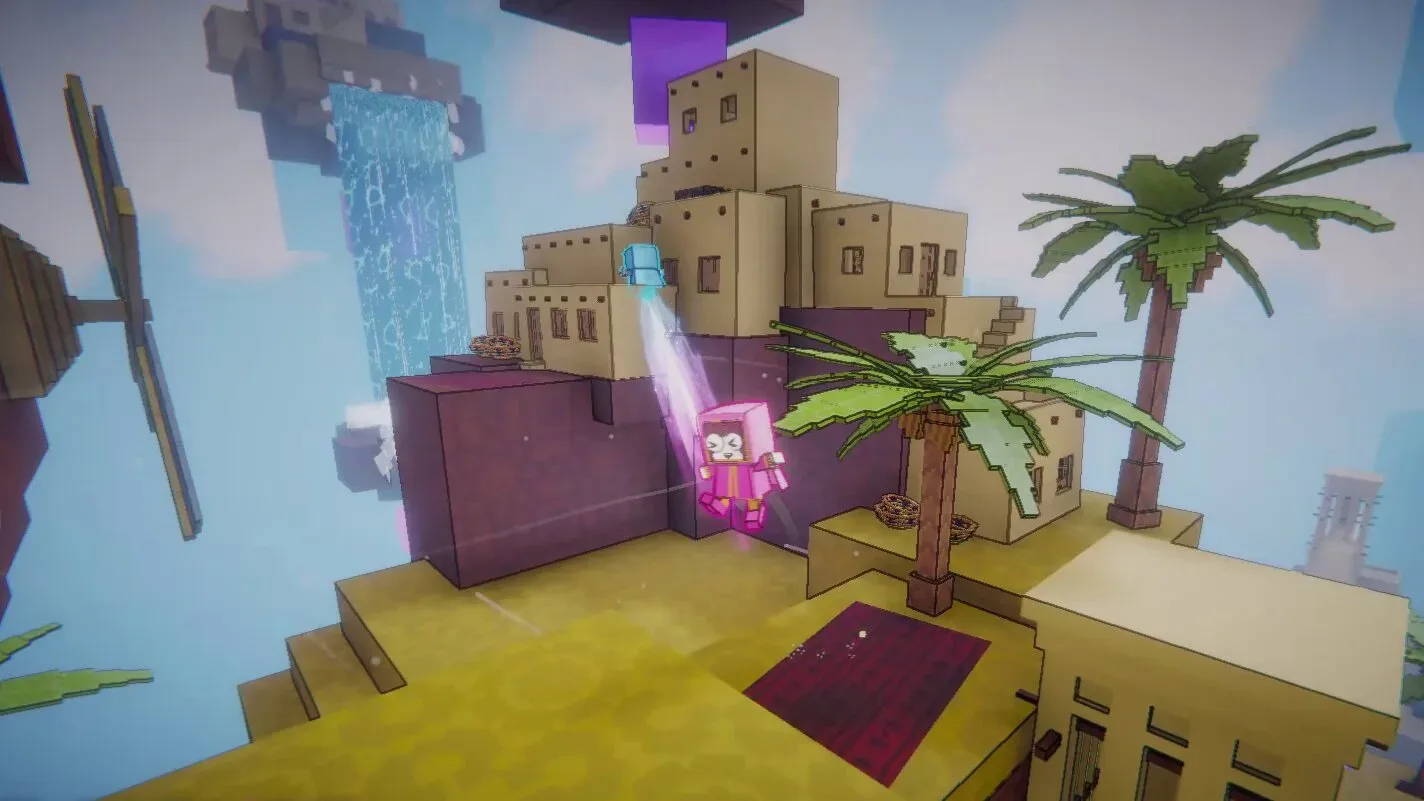
Many co-op platformers let players separate, pursue different tasks, and eventually regroup. FLING UP TOGETHER instead makes separation impossible. The shared rope is the defining mechanic in every part of a climb, meaning players cannot simply solve their own side of a challenge and move on.
For useful background on this topic, read Razer Reveals Wolverine V4 Pro With Capacitive Thumbsticks for Xbox and PC.
One player can pull their partner toward a ledge, create momentum for a launch, or catch them before they tumble out of reach. Those same actions can produce the opposite outcome if they happen at the wrong time. A pull made too early could throw a teammate off their intended landing spot. A sudden movement may alter the rope's tension and drag the other player into an obstacle. Even a successful jump can become a problem when the player left behind has no safe place to stand.
That setup places a premium on short, clear calls between teammates. Players will need to decide who is jumping, who is anchoring, when to pull, and whether a risky rescue is worth attempting. Since either person can influence the rope at any moment, both have the power to make a heroic save or cause an immediate reset.
Every ascent is a shared attempt: a teammate's stumble is not somebody else's problem, because the entire team goes back to the start.
The all-or-nothing structure should make progress feel hard-earned. Reaching a new section after a difficult series of jumps is a win for both players, while failing near the top of a route creates the kind of memorable collapse that cooperative physics games often thrive on. The game leans into that emotional swing, framing blame, relief, laughter, and shared celebration as key parts of the experience rather than side effects of its design.
Vertical stages filled with sky islands and ruins
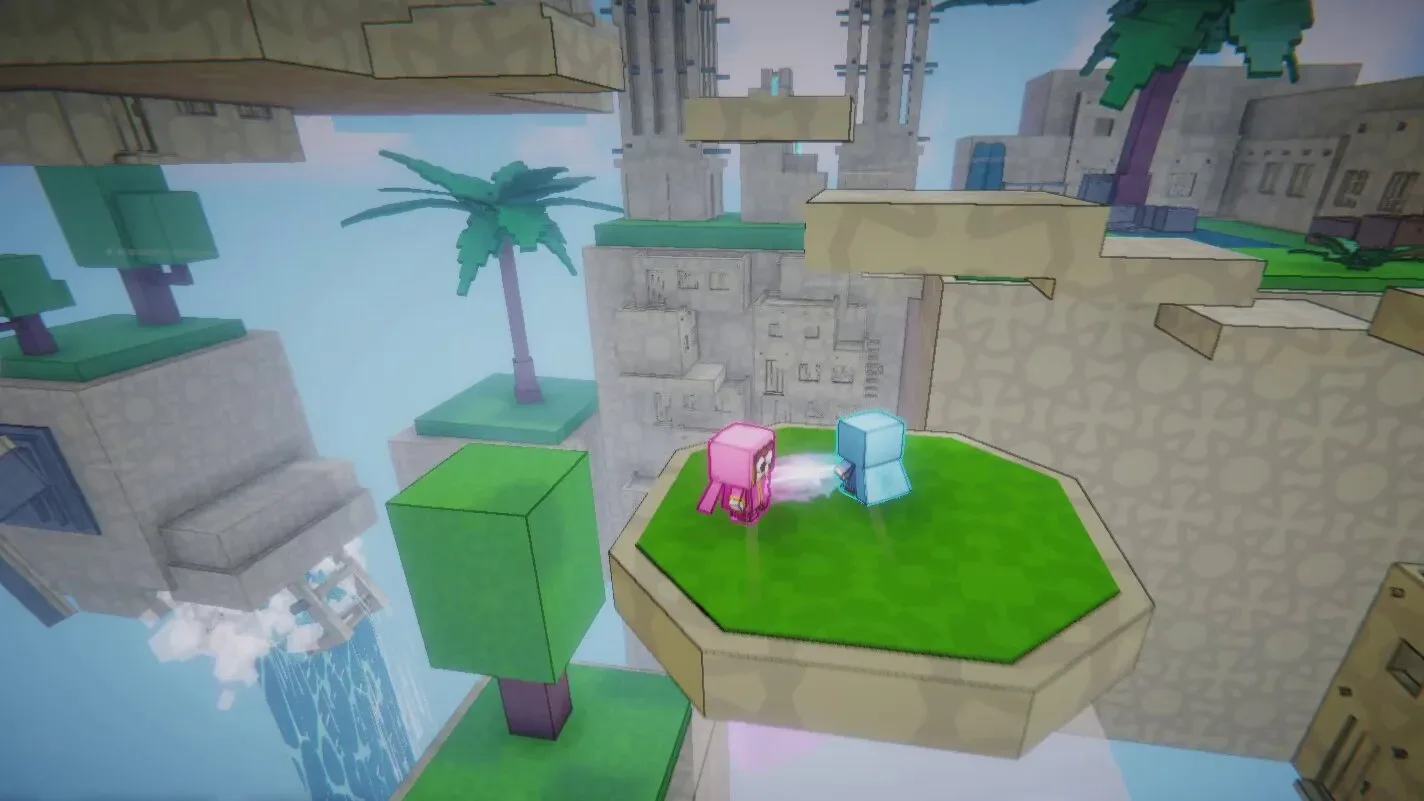
The climb takes place across a vertical world that includes sky islands, floating ruins, and large bridges. Rather than moving across a conventional left-to-right course, players work upward through a succession of elevated spaces. That vertical focus makes gravity an ever-present concern: the higher the pair climbs, the more punishing a bad landing or mistimed swing can become.
The environments provide more than scenery. Gaps, moving obstacles, narrow platforms, and changing heights all interact with the rope system. A broad platform may give one player enough room to establish a stable position while the other swings across an open space. A smaller perch can force careful timing, as the first climber must avoid being yanked away when their partner follows.
Monumental bridges and suspended ruins also suggest routes where players will need to think about their combined position rather than individual footing. It is not enough for one person to reach the next surface. They must make sure their teammate can get there too, and that the rope will not turn the second attempt into a fall for both.
Colour-coded platforms demand coordinated positioning
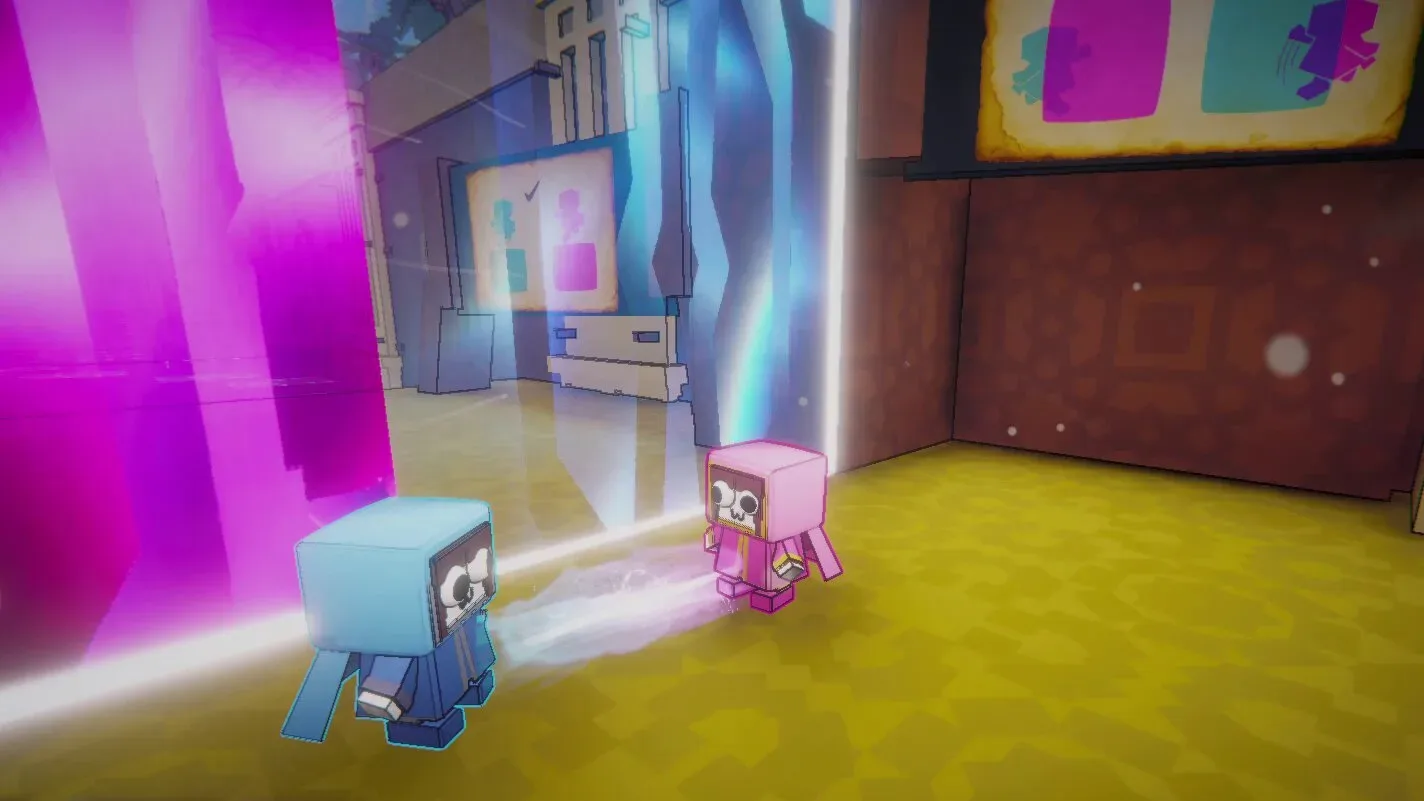
FLING UP TOGETHER adds another restriction to its shared-rope platforming through colour-coded surfaces. Each player can stand only on platforms that match their own colour. This means an apparently simple route may be inaccessible to one teammate, even if the other can reach it with ease.
The system forces the pair to create opportunities for one another. A player who can safely stand on a particular platform may need to act as an anchor, then physically haul their partner across a space where they cannot land. In other situations, one climber may need to open a route by reaching their matching platform first, allowing the other to swing, fling, or be pulled onward.
Colour restrictions should make the game's co-op requirement meaningful beyond the rope itself. Players are not merely attached while performing the same jumps. They have distinct safe zones and must account for their partner's movement options when choosing a path. A platform that is ideal for one player may be unusable for the other, creating puzzles where positioning and momentum matter together.
- Shared rope mechanics: Players pull, swing, launch, and rescue one another while remaining physically connected.
- Run-ending falls: If either player falls, the team's current climb resets.
- Colour-based co-op puzzles: Each character can use only platforms that match their colour.
- Vertical progression: The pair ascends through floating environments, ruins, bridges, and sky-bound challenges.
- Physics-driven comedy: Ragdoll reactions, moving obstacles, and ill-timed pulls can turn a near-success into a spectacular failure.
A platformer that embraces the funny side of failure
While the reset rule gives FLING UP TOGETHER real tension, its presentation is also intended to make failure entertaining. The game uses ragdoll physics, silly characters, and moving hazards to ensure that a bad outcome can be as amusing to watch as it is frustrating to experience.
That is a natural fit for a rope-based game. Physics interactions can be difficult to predict perfectly, especially when two people are simultaneously reacting to danger. One player might leap toward safety just as their partner pulls in the opposite direction. A rescue attempt can become an accidental slingshot. A carefully planned crossing may collapse because someone lands on the wrong colour platform or gets tangled around a moving obstacle.
These are the moments likely to define a session. The game's structure encourages players to talk through attempts, assign responsibility after a fall, and immediately try again. For friends who enjoy the chaos of shared-screen-style party challenges or demanding cooperative obstacle courses, the appeal may lie less in flawless execution than in seeing how a well-meaning plan goes wrong.
At the same time, the high reset stakes mean the comedy has a competitive edge. When a pair has climbed far above the starting point, even a small accidental tug can carry significant consequences. The difference between a triumphant save and a full reset may be only a split second of timing.
The Steam demo is available now
Players interested in testing their coordination can now download the free FLING UP TOGETHER demo through Steam on PC. The newly released gameplay trailer offers another look at the game's upward climb, rope interactions, colour-matched platforms, and the chaotic outcomes that can occur when both players try to act at once.
OFF BOX Studios has not detailed a full release date in the announced information. For now, the demo is the available way to see whether a chosen climbing partner is a dependable lifeline, an overenthusiastic rope-puller, or the reason every promising run ends at the bottom.
FLING UP TOGETHER's concept is uncomplicated, but its rules create plenty of room for escalating problems. Two players get one rope, neither can truly proceed alone, and one slip sends them both back. For co-op duos willing to trade blame, frantic instructions, and repeat attempts, that may be exactly the point.


Community
Discussion
Start the conversation.
No comments have been posted yet.