

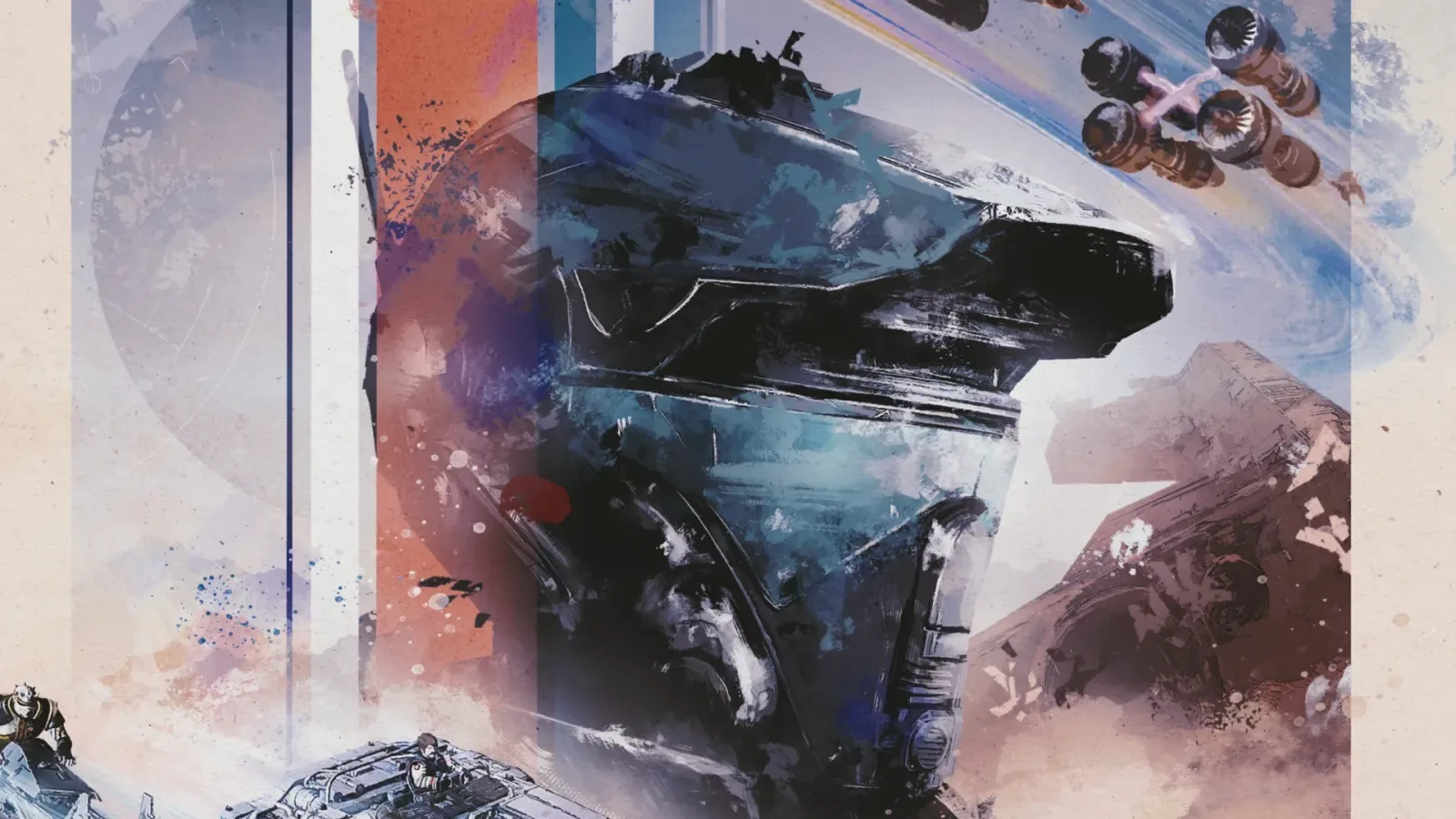
Star Wars: Galactic Racer delivers much more than a familiar sci-fi racing fantasy. The recognizable planets, sounds, vehicles, and visual touchstones provide an immediate sense of place, but the game's strongest achievement is the racing framework built around them. Fuse Games has created a tense, satisfying racing roguelite where every tournament run asks players to learn dangerous courses, understand recurring opponents, and shape a vehicle around a preferred style of competition.
On PlayStation 5, Galactic Racer is an energetic and generously packed racer with a campaign that encourages repeated attempts, plus Arcade, Scenario, and multiplayer options that make the overall package feel substantial. It can be intimidating at the start, and its handling of podracing introduces a recurring frustration. Yet when a build clicks and a difficult circuit finally becomes readable at extreme speed, Galactic Racer becomes remarkably hard to put down.
A tournament campaign built around risk and adaptation
The central campaign follows a racer attempting to enter the Galactic League and eventually bring down reigning champion Kestar Bool, whose history is tied to the protagonist's earlier imprisonment. The broad outline is well suited to a racing game, but the story puts more effort into its cast and rivalries than the genre often does. Allies and enemies have personality, the voice performances give the competition a welcome sense of consequence, and mid-race communications are often entertainingly sharp. Rivals will tease poor driving, mock mistakes, and make each event feel like part of a larger contest rather than an isolated race.
The tournament structure is where Galactic Racer separates itself from a conventional campaign. A run spans several races across multiple planets, and accumulating too many losses means being removed from the tournament. That failure state is not merely a setback; it is a defining part of the roguelite design. Progress depends on making each attempt more informed than the last, whether that means remembering a brutal corner sequence, changing an ability loadout, or understanding how a particular rival prefers to race.
For useful background on this topic, read The Witcher 3: Wild Hunt Remastered Review - The Definitive Return to the Continent.
This format gives success a real sense of momentum. Winning a race is rewarding, but surviving a difficult stretch while protecting a promising build can be just as important. The campaign's racers are consistent across tournament attempts, allowing their tendencies to become familiar. Some are aggressive and disruptive, while others are more defensive or repeatedly lean on certain tools. Learning those habits adds a welcome competitive layer. It is not only about navigating the course cleanly; it is also about recognizing who might attempt to knock a vehicle out of position and when to hold an answer in reserve.
Building the right machine for the circuit
Between races, pit stops offer opportunities to speak with characters, repair damaged parts, acquire abilities, purchase components, upgrade a vehicle, and renew contracts based on specific objectives. The flow of currency and unlocks is generous enough that runs regularly offer new decisions rather than forcing players into a long grind. New engine types and parts help keep repeated attempts from feeling mechanically identical.
The upgrade system has enough flexibility to support distinct approaches. Improving the afterburner can raise overall speed, while better drifting helps control tight technical sections. Increasing battery capacity opens more room for equipped abilities. Players who prefer aggression can pursue tools that make elimination events easier, while others can build around resilience against hazards such as ice or acid.
Abilities offer another important source of tactical variety. Auto-pilot can provide a brief moment of relief during a particularly demanding part of a course, while lock-on ion blasts, corrosion vents, and shockwaves create opportunities to pressure opponents. A speed-focused setup can lean into the ramjet, a powerful turbo that carries meaningful danger when pushed too hard, then pair it with afterburner upgrades and repeat-use speed abilities such as Surge. That kind of build can be thrilling, especially once a route is understood well enough to exploit every straightaway and shortcut.
The best part of this system is that it makes failure productive. A lost tournament is disappointing, but it often clarifies what went wrong. Perhaps a vehicle needed more drift control rather than raw acceleration. Perhaps the next run needs defensive options for a particular rival. Galactic Racer consistently encourages experimentation, including unconventional configurations that may initially seem odd but prove surprisingly effective once taken onto the track.
Speed is exciting, but track readability takes work
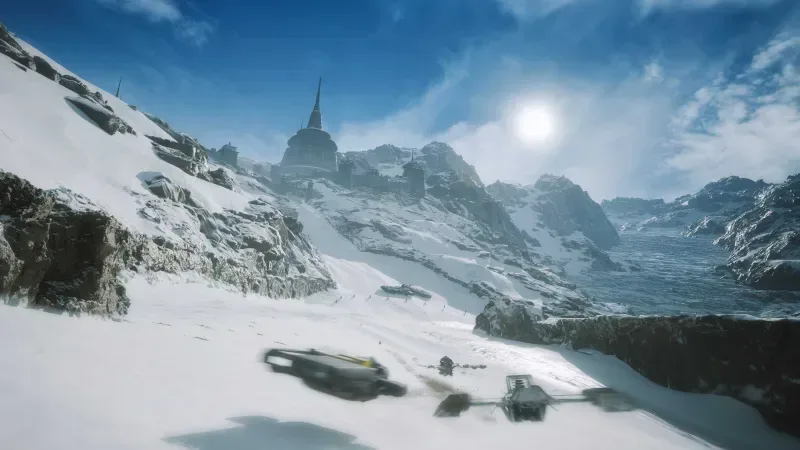
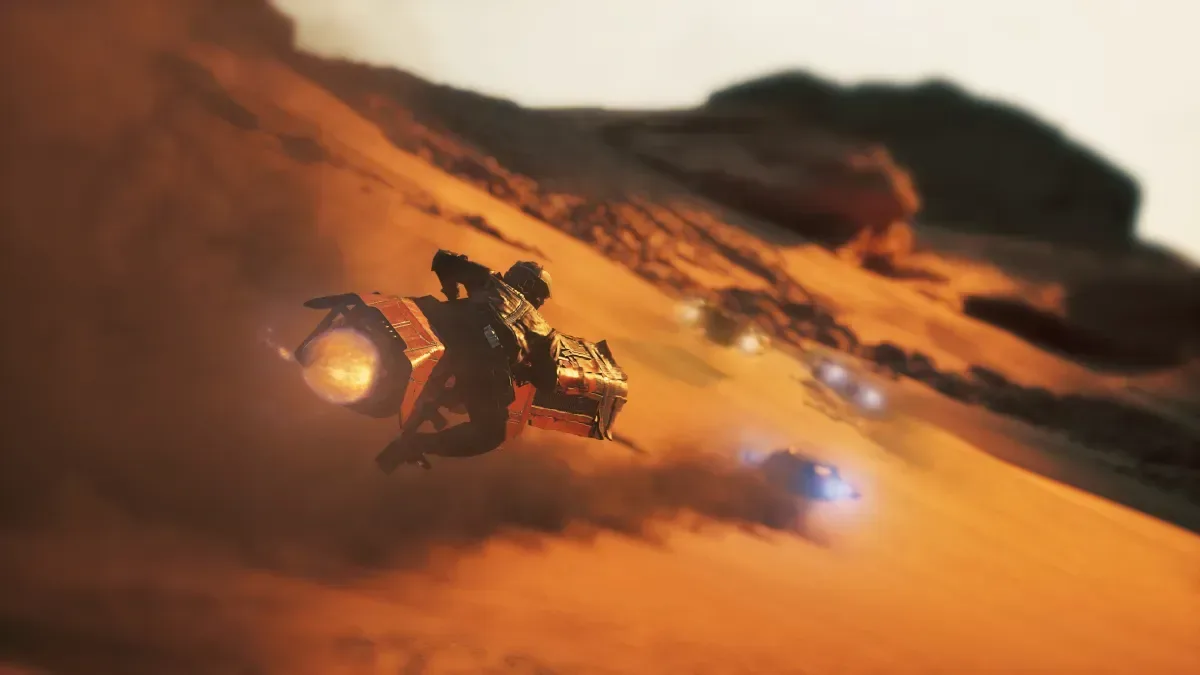
The racing itself is fast, technical, and often exhilarating. Courses appear across multiple planets, including locations such as Jakku and Crait, with several tracks per destination and reverse variants that increase the available range. The environments are attractive and designed to feel embedded in the larger universe rather than like generic racing arenas. Crashed wreckage, harsh terrain, narrow structures, and imposing landmarks all contribute to the sensation of racing through a lived-in galaxy.
That environmental commitment sometimes creates a clarity problem. At top speed, familiar scenery can become a blur, and it may be difficult to immediately distinguish between a route through a piece of debris and an obstacle that must be avoided. The absence of a minimap makes that initial adjustment period more difficult. Razor-thin passages and abrupt corners are demanding even once learned, and newcomers may find the first portion of the campaign unusually unforgiving.
Galactic Racer does not provide much guidance for getting over that opening hump. It expects players to absorb track layouts, vehicle systems, and opponent behavior through repetition. That approach will appeal to racers who enjoy the process of improving through practice, but it also risks losing players before the game's systems have had a chance to reveal their depth. With familiarity, confusion gives way to confidence, and threading a landspeeder through a narrow corridor or drifting cleanly around a sharp bend becomes immensely satisfying.
Four vehicle styles, with one troublesome necessity
The game's vehicle variety is a major strength. Landspeeders are dependable drifting machines and may be the most comfortable choice for many campaign runs. Speeder bikes offer a different flavor of responsiveness, able to stop sharply and launch forward with bursts of speed. Skim speeders use a distinctive knife's-edge turning style that allows them to cut around corners in their own fashion. Each vehicle category changes the feel of the race enough to make switching worthwhile rather than merely cosmetic.
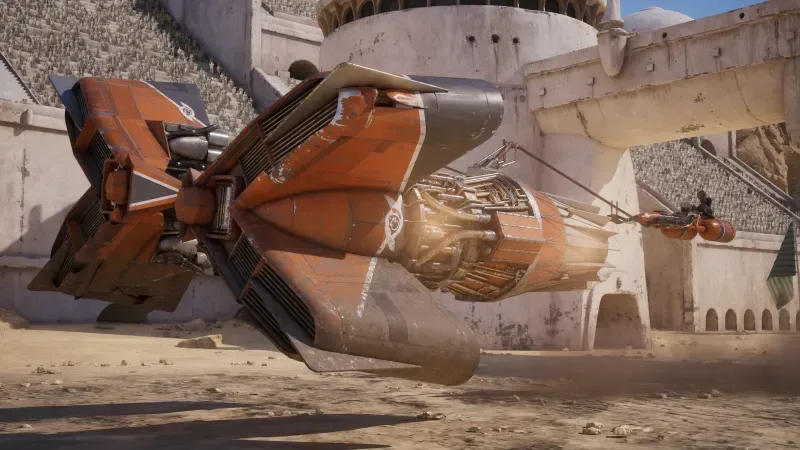
Podracers are the fourth type, and they are appropriately dramatic. They are incredibly quick, unstable, and dangerous, making their events feel unpredictable in a way that captures their fearsome reputation. The issue is not that podracing lacks excitement. The problem is that the campaign can force players into podracer events after they have spent several races establishing a build and rhythm around a different vehicle. Failing one of those mandatory events can jeopardize or end an entire tournament run.
That interruption feels needlessly harsh. Podracers work better as an optional specialty discipline, and Galactic Racer wisely includes them in other settings where their volatility is easier to embrace. They can be used in additional modes and in multiplayer races specifically built around podracers. Within the campaign, however, their required appearance can turn an otherwise carefully managed run into an unwelcome gamble.
More than one way to chase the finish line
Outside the main tournament, Galactic Racer provides meaningful alternatives instead of token side attractions. Arcade includes time trials, advanced races, and other challenges that make it useful for players who want to refine skills without campaign pressure. Scenario mode offers curated six-race campaigns with pre-built characters and vehicles, encouraging players to step outside their favorite custom setup and explore other driving styles.
Multiplayer also carries over much of the game's roguelite identity. Quick six-race tournaments retain upgrade choices, and pre-race bets against other competitors introduce personal stakes to the contest. Single quick races, experience progression, and cosmetic unlocks provide further reasons to keep competing. The result is a multiplayer offering with more texture than a basic collection of online races, and it should serve players who want a longer-term reason to return.
There is plenty to master even after the campaign concludes. Time trials and leaderboards can turn a previously conquered course into a fresh obsession, where shaving fractions from a lap or surpassing another competitor's time matters more than simply earning a medal. Galactic Racer understands that a great racing game needs a reason to keep driving after the credits, and its combination of build experimentation, vehicle types, alternate modes, and competitive times provides that reason.
Who should play Star Wars: Galactic Racer?
This is an especially strong recommendation for racing fans who enjoy learning demanding tracks, iterating on builds, and accepting failure as part of progression. Players looking for a highly accessible arcade racer may find the early campaign difficult, particularly because the lack of a minimap and limited onboarding make high-speed navigation challenging. Those frustrations are real, but they are offset by systems with enough depth to reward perseverance.
Fans of the setting will find plenty to appreciate in the locations, vehicles, musical flavor, and colorful roster, but prior affection is not required. Galactic Racer stands on its own because its core racing is compelling. Its most memorable moments come from turning a risky vehicle configuration into a winning run, outmaneuvering a familiar rival, or finally conquering a section of track that once seemed impossible to read.
Final takeaway
Star Wars: Galactic Racer is a very good racing game first and a richly themed galactic adventure second. Its roguelite tournament structure, flexible upgrades, sharp vehicle variety, and plentiful supporting modes make it an easy game to revisit. A tough introduction, occasionally confusing course design, and disruptive mandatory podracer events keep it from the very top tier. Even so, the speed, challenge, and constant promise of one better run make this an impressive and addictive racer on PlayStation 5.
Community
Discussion
Start the conversation.
No comments have been posted yet.