

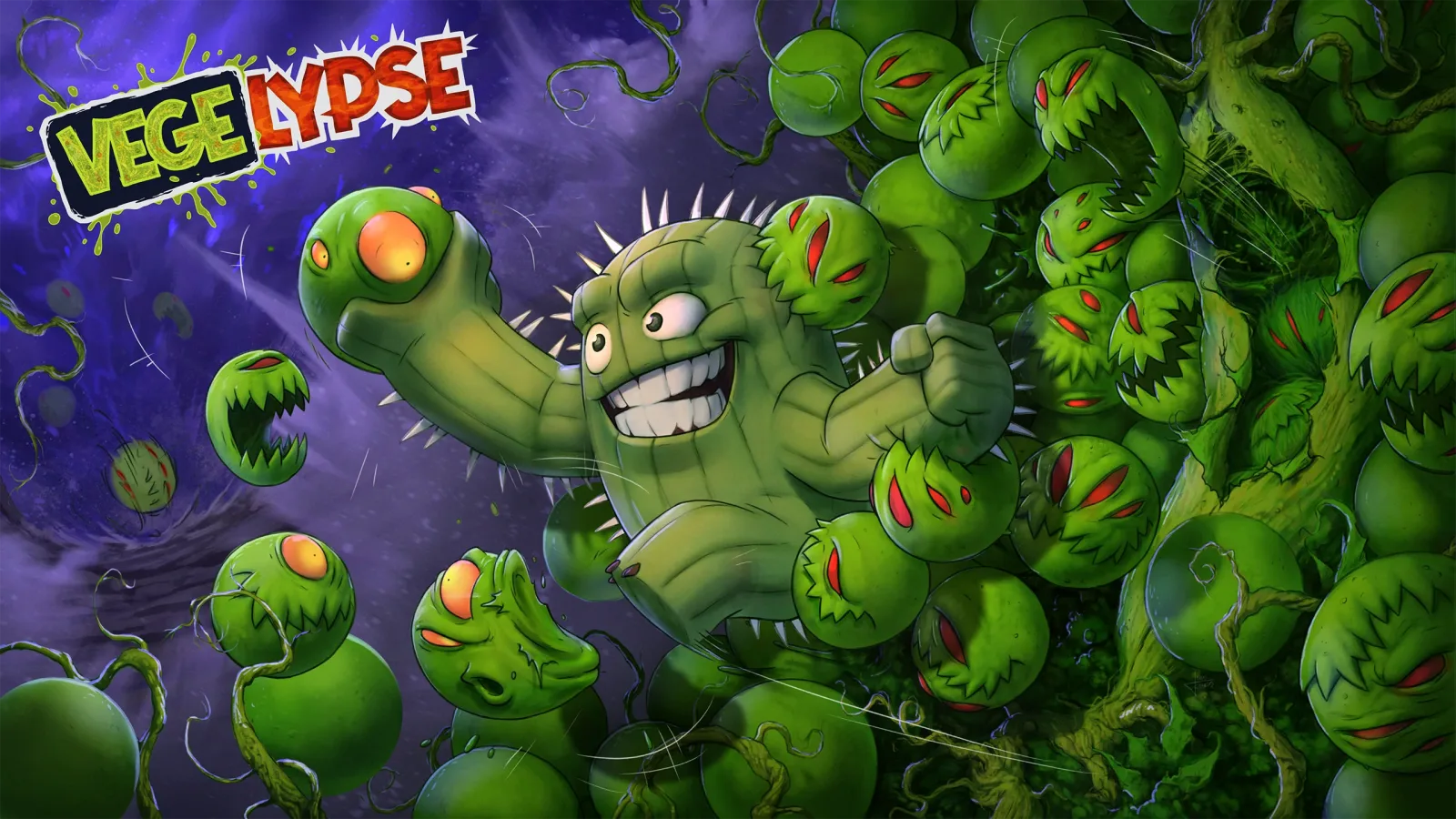
Vegelypse is inviting players into an unusually colorful apocalypse: one where the countryside has been overrun by vicious mutated fruit and vegetables, and the response involves a cactus-fronted hard rock band punching, crushing and chopping through the chaos. A Steam playtest for the hand-painted 2.5D beat 'em up is running through the end of October, giving PC players an early chance to try its blend of arcade brawling, roguelike run customization and local cooperative play.
The setup is suitably strange. An explosion in a nearby town has unleashed the hostile produce upon an otherwise quiet rural setting. Players take control of members of the Hard Rock Cacti Band and push toward the origin of the disaster, dealing with hordes of warped edible enemies along the way. It is a premise built around exaggerated action and cartoon absurdity, but the underlying structure aims to give each attempt a different shape through modifiers, Perks and an evolution system.
A beat 'em up built for repeat runs
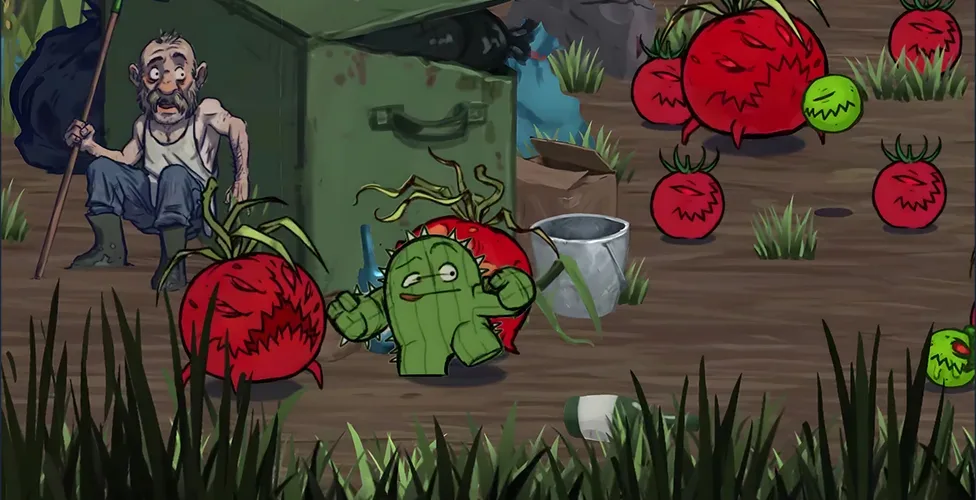
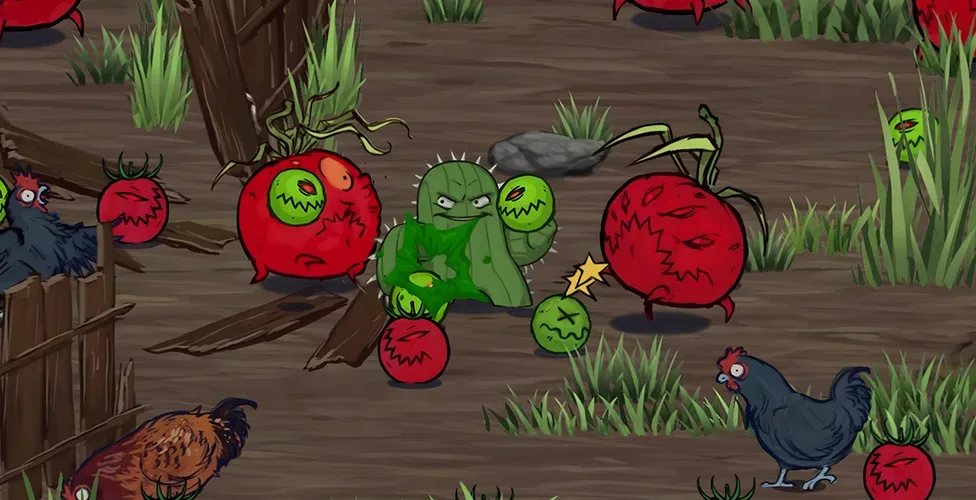
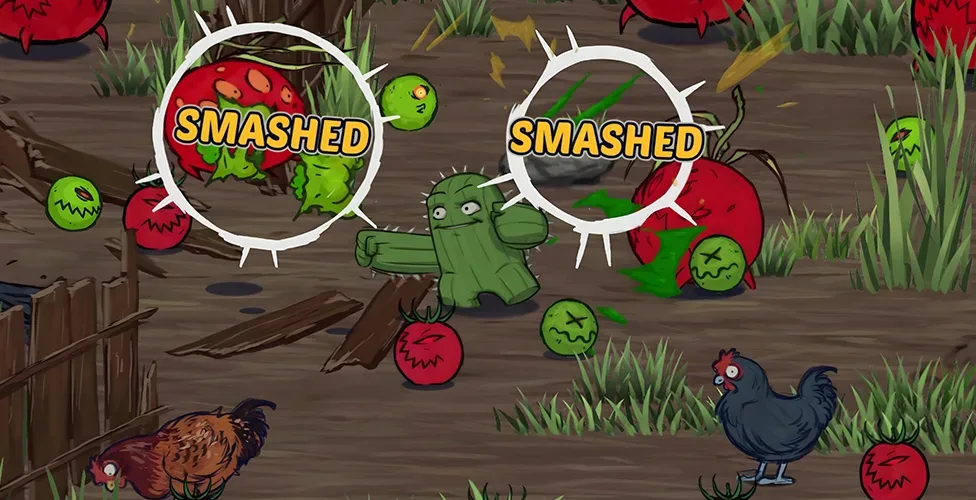
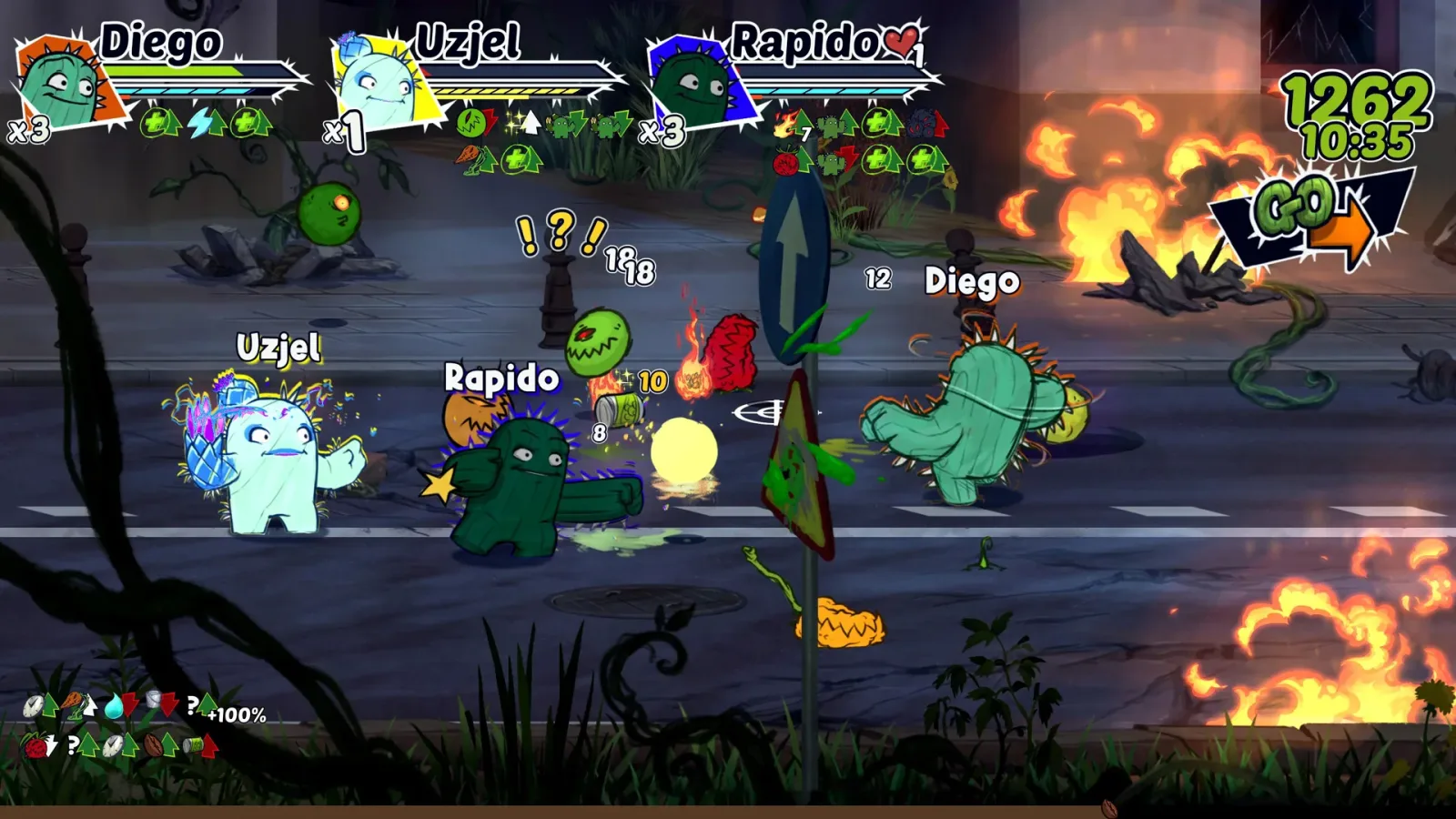
At its foundation, Vegelypse is a classic-style side-scrolling beat 'em up. Players move through maps, face groups of enemies, and use direct melee attacks to clear the path ahead. The game's 2.5D presentation places that action in environments with depth while retaining the readable, lane-based feel associated with the genre. The enemy theme supplies the central visual hook: this is not a conventional invasion of monsters or machines, but a fight against dangerous produce transformed by the unexplained catastrophe.
What separates the game from a purely stage-by-stage brawler is its roguelike layer. Runs can be altered by random modifiers, while Perks and evolution mechanics give players ways to shape their character's capabilities over time. The stated goal is variety: rather than approaching every session with an identical toolkit and route through combat, players should encounter changing conditions and build decisions that affect how they tackle a map.
For useful background on this topic, read Call of Duty: Modern Warfare 4 DMZ Is Not Free to Play.
That structure is especially well suited to a beat 'em up, where the immediate satisfaction of crowd control and repeated combos can benefit from longer-term decisions. A modifier can make a familiar encounter demand a new approach, while an evolution or Perk selection can encourage a different combat focus on a later run. The available details do not yet define every possible modifier or upgrade, but the playtest includes more than 100 modifiers, suggesting that build experimentation is a major part of the experience rather than a minor extra.
Two cactus band members and room for a full local group
The playtest lets players choose between two playable members of the Hard Rock Cacti Band. Their quest leads toward the source of the Vegelypse, and the test includes three storyline quests to establish that central journey. The full concept leans into music as part of its identity as well: combat is accompanied by an energetic hard rock soundtrack, a fitting match for a band whose instruments appear to be as important to the game's personality as its prickly heroes.
Local co-op is supported for two to four players. That is a particularly natural fit for the genre, since shared-screen beat 'em ups have long excelled at turning a straightforward fight into a collaborative scramble. With up to four people playing together, the game can potentially become more than a sequence of individual builds; teams will also need to navigate the busy screen, handle incoming enemy groups and make the most of whatever random modifiers a run provides.
For another perspective on this story, read Vegelypse Playtest Opens With Co-Op Combat Against Mutated Produce.
The emphasis remains on local multiplayer rather than online play in the currently announced playtest details. Players looking to team up should therefore plan around the same-device cooperative option that has been confirmed. Solo players are not excluded, however, since the story progression, arcade score chasing, challenges and Endless mode all present reasons to spend time with the game beyond a group session.
What the October playtest includes
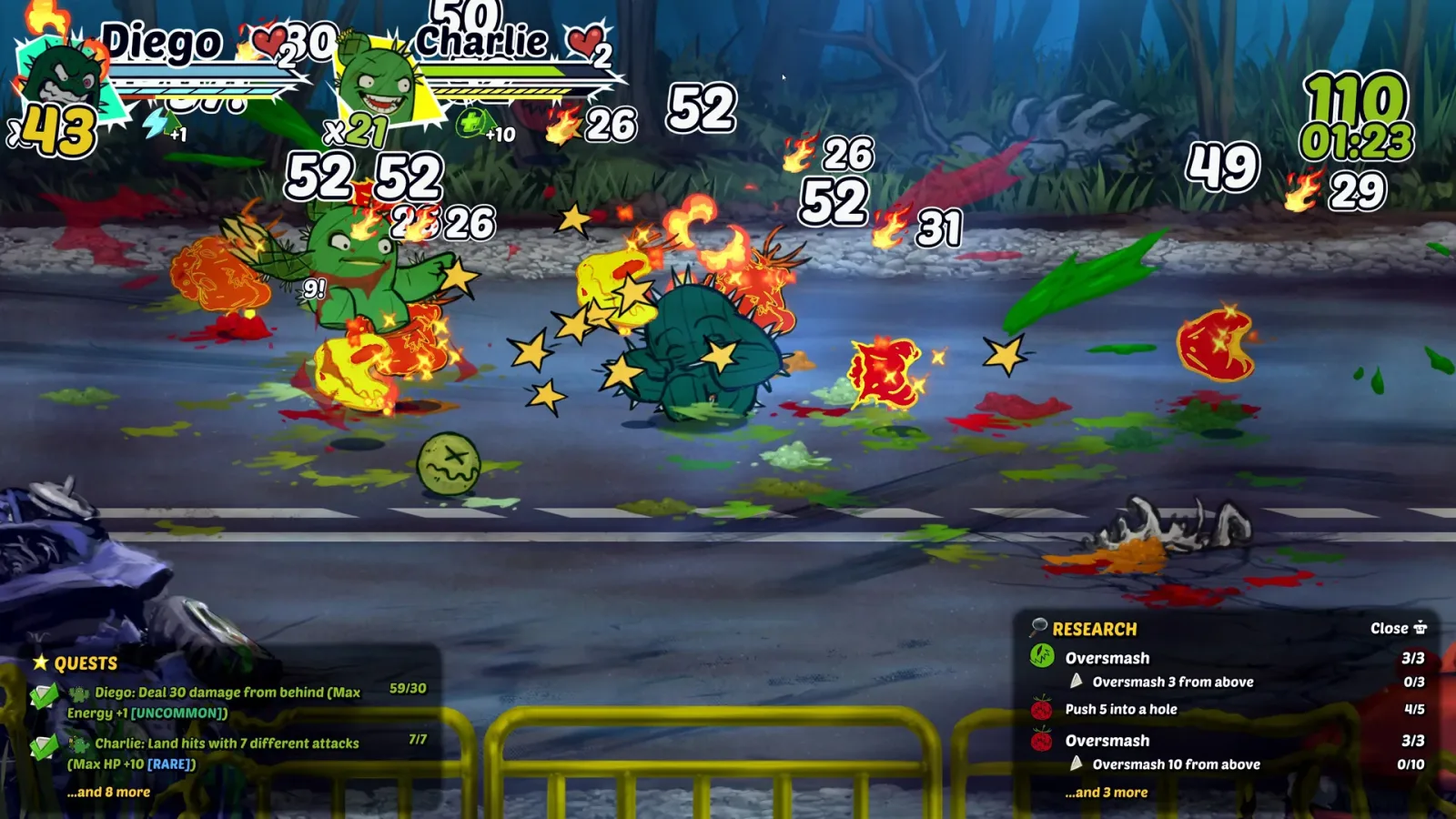
The Vegelypse playtest is not being positioned as a tiny technical demo. Its announced selection includes 10 maps, six enemy types, three storyline quests, dozens of challenges and research objectives, and an Endless mode. This should give participants opportunities to see both the game's guided narrative framing and its repeatable systems.
- 10 maps for battling through the affected countryside.
- Three storyline quests following the effort to trace the outbreak back to its cause.
- Six enemy types drawn from the mutated fruit and vegetable threat.
- Dozens of challenges and research objectives that add goals beyond simply clearing fights.
- More than 100 modifiers intended to keep runs variable.
- Endless mode for players who want to test how long they can survive the escalating action.
- Two-to-four-player local co-op for shared brawling sessions.
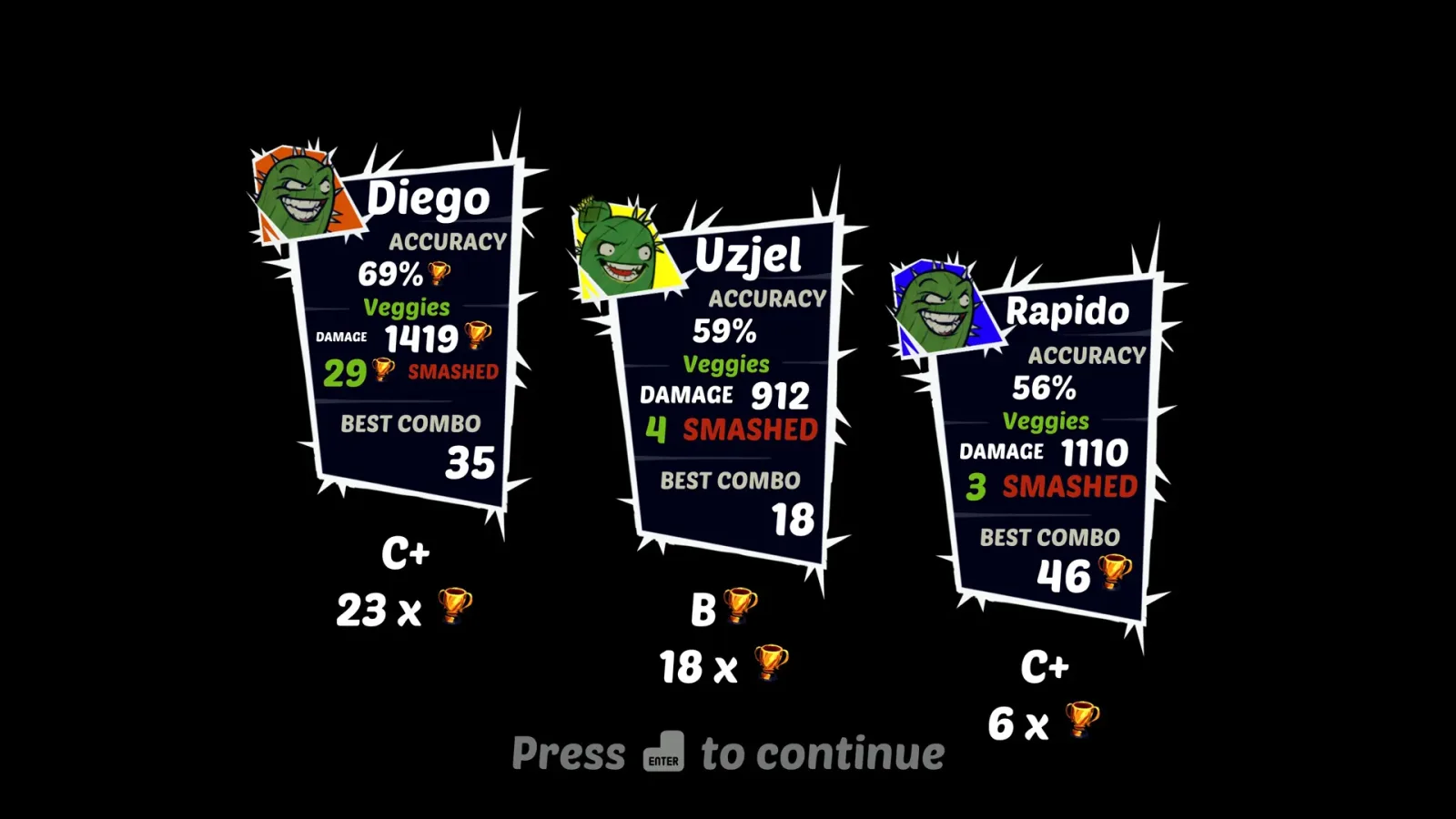
Three broader modes are also part of the game's announced design. Story Mode is the narrative-focused route and houses the push toward the cause of the catastrophe. Arcade Mode shifts attention to high-score play, appealing to those who prefer measuring performance and replaying stages for stronger results. Arena Mode is described as a home for distinct challenges, which could make it an important destination for players seeking more specific combat tests than the campaign route provides.
Together, those modes indicate an effort to serve several beat 'em up audiences at once. Story Mode can provide a reason to see the world and its bizarre enemy concept through to a conclusion. Arcade Mode recognizes the genre's long history of score competition and mastery. Arena Mode and Endless mode, meanwhile, can provide focused repeatability for people who want combat without committing to a larger narrative progression.
Hand-painted animation gives the outbreak its own look
Vegelypse's other major distinguishing feature is its visual presentation. The game uses frame-by-frame, hand-painted animation inspired by classic cartoons. That approach is well matched to a world that turns vegetables into villains: the concept benefits from expressive motion, exaggerated attacks and a visual style able to make a grotesque food apocalypse feel playful rather than grim.
Hand-painted art can also help a brawler maintain clarity in crowded encounters. In games where several players and numerous enemies occupy the same space, readable silhouettes and energetic animation matter. Vegelypse will ultimately need to prove that its art remains legible amid four-player action and the effects of its modifiers, but the classic-cartoon inspiration gives it a more distinctive foundation than a standard post-disaster setting.
The setting itself provides an appealing contrast. The event begins near a town and spreads into the countryside, turning a peaceful backdrop into a battlefield. That contrast allows the game to present its mayhem as an intrusion on an ordinary place rather than placing it in an already ruined world. Combined with the hard rock identity of its protagonists, the result is a deliberately offbeat mixture of rural scenery, animated slapstick, music-driven attitude and enemy designs rooted in everyday food.
Why the playtest matters
For a game combining old-school brawling with randomized progression, a public playtest is a useful step. The tension between those two design traditions can be difficult to balance. Beat 'em ups depend on responsive combat, satisfying enemy reactions and encounters that feel fair when the screen gets busy. Roguelike systems need upgrade choices and random effects that create variety without making a run feel arbitrary. Co-op adds another balancing concern, particularly when the game supports as many as four local players.
The October test gives Vegelypse an opportunity to put those elements in players' hands while also showing the breadth of its early content. Ten maps, challenges, research objectives and alternate modes provide more useful ground for experimenting with the modifier and Perk systems than a single introductory stage would. Feedback from a test like this can be especially important for judging whether the game's run-to-run variety complements its core punches and combos.
Players interested in the premise can request access through the Vegelypse Steam page and add the game to their wishlists. The playtest is scheduled to remain available until the end of October. No final release date, price, or additional platform plans have been announced in the current information.
A promisingly odd brawler for co-op fans
Vegelypse is entering a crowded action landscape with a concept that is easy to remember. Its mutated-produce apocalypse, cactus rock band heroes and hand-painted cartoon style are far removed from the usual fantasy dungeon or sci-fi war zone. More importantly, the game is not relying on that premise alone: the local co-op support, Story, Arcade and Arena options, Endless mode, challenges, and large pool of modifiers point to a project built around replaying fights in different ways.
The playtest should offer the clearest early indication of how successfully those ingredients work together. If the immediate beat 'em up action holds up and the roguelike systems add meaningful variety, Vegelypse could give players looking for an unconventional couch co-op brawler plenty to dig into. Until the end of October, Steam players have the chance to find out whether this particular vegetable uprising can be defeated with enough cactus-powered hard rock.
Community
Discussion
Start the conversation.
No comments have been posted yet.