

Warning: This article discusses major spoilers for the VisionQuest finale, including its post-credits material.
VisionQuest has answered one of the biggest questions surrounding its place in the Marvel Cinematic Universe: why does a story centered on Vision not bring Wanda Maximoff directly back into the main narrative? For many viewers, the possibility seemed almost unavoidable. Vision and Wanda remain one of the MCU's defining relationships, WandaVision built an entire series around their family and grief, and the character's fate has remained unresolved since 2022's Doctor Strange in the Multiverse of Madness.
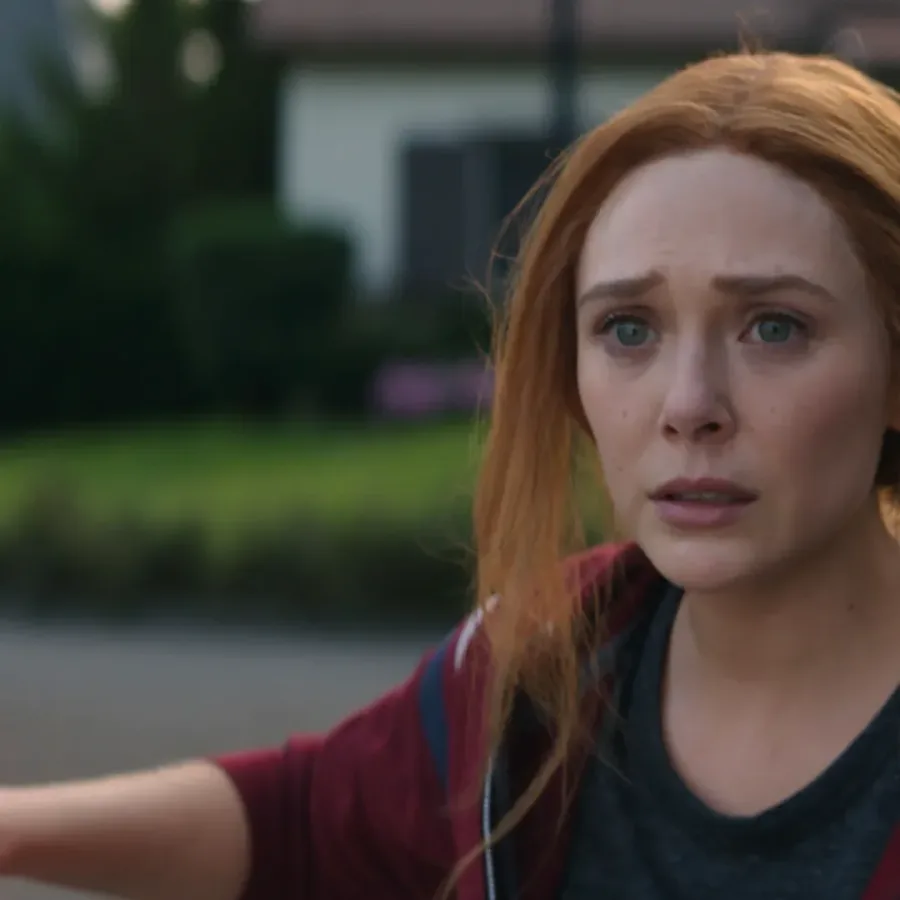
Yet Wanda is not part of VisionQuest's central events. Paul Bettany, who returns as Vision, has explained that this was a deliberate creative decision. Marvel Studios president Kevin Feige was concerned that bringing Elizabeth Olsen's Scarlet Witch into the series in a substantial way could overwhelm the show's own dramatic purpose: establishing Vision as the emotional center of a standalone story.
The decision may disappoint fans who hoped VisionQuest would deliver a straightforward reunion between Wanda and Vision. At the same time, it reflects a familiar issue for a long-running shared universe. Some characters carry so much history, popularity, and emotional baggage that their arrival can instantly redefine the story around them. In Wanda's case, that history is particularly difficult to separate from Vision.
For useful background on this topic, read Playable PokéPark Fishing Rally DS Cartridge Surfaces More Than 20 Years After Its Japan-Only Event.
Why Wanda's return could have changed VisionQuest
Bettany recalled that there were conversations about whether Wanda should appear and whether doing so might open broader MCU storytelling questions that Marvel preferred to address later. Feige's view, as Bettany described it, was that the creative team had succeeded in making audiences care about Vision on his own terms. A major Wanda appearance at the end could pull the focus away from that accomplishment.
Feige's concern was not simply that Wanda is a popular character. It was that an on-screen reunion would immediately invite the audience to view every event through the lens of WandaVision. The ending would no longer primarily be about where Vision had arrived, what he had learned, or how his journey had changed him. Instead, it would become an advertisement for the next chapter in Wanda and Vision's relationship.
That is a meaningful distinction for VisionQuest. A return to the couple's shared mythology might be emotionally satisfying, but it could also turn the series into a sequel to WandaVision in all but name. Bettany said he agreed with Feige's assessment that VisionQuest should be capable of standing on its own.
For a character such as Vision, that independence matters. His MCU history is full of questions about identity, memory, personhood, and what remains when a life has been altered or rebuilt. Those themes can easily become secondary if the climax revolves around whether he reunites with Wanda. VisionQuest instead positions its title character as someone whose story has value beyond romance, family, or a long-awaited reunion.
A long-running question after Multiverse of Madness
Wanda's absence has been especially noticeable because the MCU left her fate uncertain in Doctor Strange in the Multiverse of Madness. At the end of that film, she appeared to die after the destruction of Mount Wundagore. However, comic-book storytelling and MCU precedent have made audiences cautious about treating an off-screen or ambiguous death as final, particularly for a character as important as the Scarlet Witch.
In the years since, speculation has persisted over how and when Olsen might return. VisionQuest looked like an obvious opportunity. The show's connection to Vision, its place in the wider legacy of WandaVision, and the existence of Billy and Tommy as central points of fan interest made it easy to expect the family's fractured story to converge.
That did not happen during the show's main plot. Wanda does not arrive to drive VisionQuest's central conflict, resolve its emotional threads, or share the kind of scene fans had imagined with Vision. The series avoids making her the answer to Vision's journey.
That choice also protects the show from an increasingly common shared-universe problem: the tendency for a finale to become defined by what it teases rather than what it concludes. A Wanda return within the main ending would have been an enormous moment, but it might have made the rest of VisionQuest feel like setup. By keeping the primary narrative focused on Vision, the series has more room to function as its own chapter.
The post-credits scene changes the conversation
While VisionQuest keeps Wanda separate from its principal story, it does not ignore her forever. The finale's post-credits scene returns viewers to her resting place at the snowy cliffs of Mount Wundagore. A cloaked figure, presented in a way that strongly resembles Robert Downey Jr.'s Victor von Doom, reaches toward her and addresses her as the Scarlet Witch.
"Scarlet Witch, awaken. Your power will be mine."
Wanda's eyes then open, making clear that her MCU story is not over. The sequence serves as a major confirmation of Olsen's return while remaining structurally detached from VisionQuest itself. It arrives after the series has completed its main business, which allows Marvel to plant a major future development without changing the intended focus of the show.
There is also an important practical detail to the scene. The reveal appears to rely largely on reused footage from Doctor Strange in the Multiverse of Madness, rather than a conventional new performance integrated into VisionQuest's narrative. That presentation further emphasizes the distance between Wanda's tease and Vision's story. The show does not suddenly become a Scarlet Witch project in its final moments; it adds a separate signal about where the larger MCU may be going.
For audiences who spent months expecting Wanda to appear before Avengers: Doomsday, the scene is both a payoff and a redirect. The prediction that she would return was correct, but the expected route was not. Rather than re-emerging through a reunion with Vision, Wanda appears to be moving toward a confrontation or alliance involving Victor von Doom.
What this means for Wanda, Vision, Billy, and Tommy
The post-credits scene creates more questions than it answers. Victor von Doom's demand for Wanda's power suggests that her abilities will be central to whatever comes next, but it does not establish the circumstances of her awakening, her state of mind, or whether she will be acting freely. Wanda's history in the MCU is marked by grief, manipulation, devastating choices, and attempts at redemption. Any return will need to address those experiences rather than merely treat her as a source of extraordinary power.
It also leaves the possibility of a family reunion unresolved. VisionQuest does not deliver a meeting between Wanda and Vision, and it does not settle whether Wanda will reconnect with Billy and Tommy. That uncertainty may be frustrating for viewers who wanted immediate closure after the emotional weight of WandaVision, but it gives Marvel several viable directions for future stories.
- Wanda could return as a key player in the conflict surrounding Victor von Doom.
- Vision may continue on a separate path before any reunion is attempted.
- Billy and Tommy's connections to Wanda could become central to a later storyline.
- A future meeting between the family members could carry more impact after each character has developed independently.
None of those outcomes has been confirmed beyond the implication of Wanda's awakening. Still, the creative choice in VisionQuest makes one thing clear: Marvel did not want her return to erase Vision's autonomy as a character.
VisionQuest's finale and the road to Avengers: Doomsday
The VisionQuest finale has drawn attention for more than its Scarlet Witch tease. Its late addition of a new villain complicates the closing chapter, even as the series succeeds in its treatment of Vision and Ultron. That mixed ending makes the post-credits scene particularly potent, because it leaves viewers with a major MCU development after the core story has already reached its conclusion.
In a franchise built around interconnected stories, it can be difficult to let an individual project breathe. Feige's reported hesitation over a main-story Wanda appearance shows an awareness of that tension. Vision and Wanda are compelling together, but their relationship is so significant that it can eclipse nearly everything around it. VisionQuest's approach suggests the MCU is trying to preserve the value of both characters by not forcing every development into one series.
The next major opportunity for answers is Avengers: Doomsday, which is scheduled to premiere on December 18. Whether it will reveal Wanda's status, explain Victor von Doom's interest in her, or move her closer to Vision, Billy, and Tommy remains unknown. For now, VisionQuest has drawn a line between its own story and the future it is teasing: Vision gets to be the point of VisionQuest, while Wanda's awakening opens a much larger and potentially more dangerous chapter.
Community
Discussion
Start the conversation.
No comments have been posted yet.