

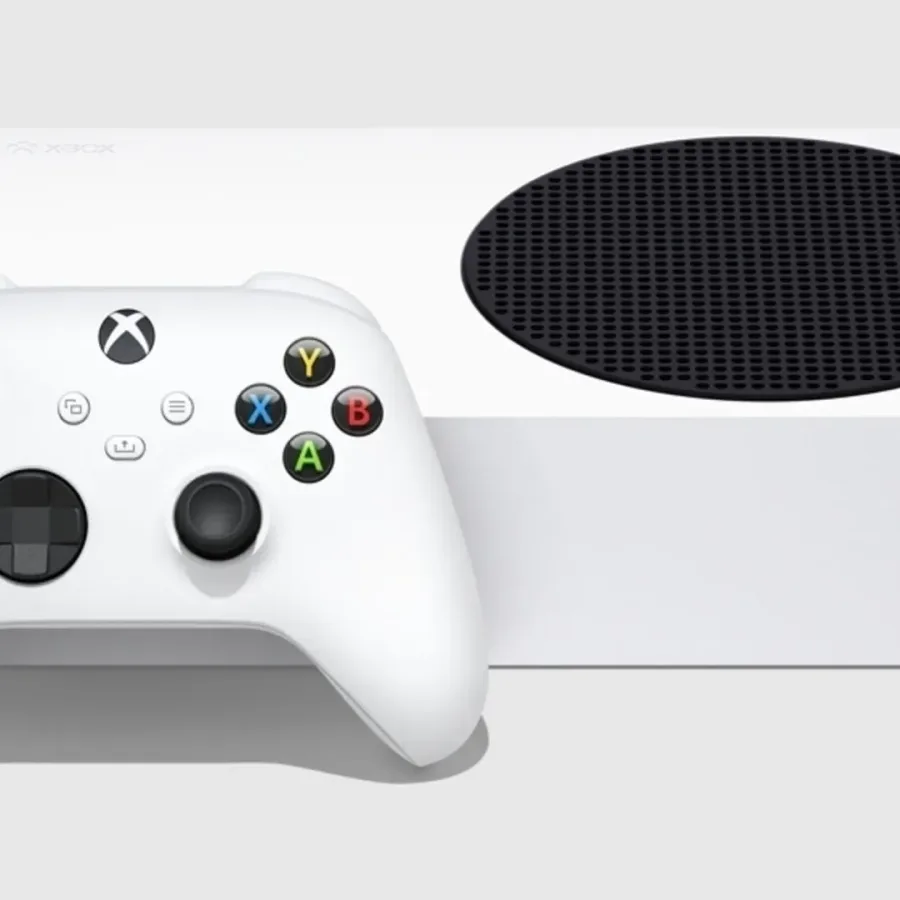
Wardogs developer Bulkhead says the Xbox Series S is already shaping decisions about the game's future features, even though the shooter is not expected to arrive on consoles until 2028. Speaking during a press conference tied to Wardogs Season 2, CEO Joe Brammer said the studio must account for the less powerful Xbox hardware when evaluating additions that could have a major performance cost. Dynamic weather is one of the clearest examples: it is an ambition for the team, but not something currently in active development.
That does not mean Wardogs will be without rain. Season 2, which launches October 15, introduces rainy conditions, but the implementation is deliberately more controlled than a full dynamic weather system. Rather than having a storm arrive in the middle of a match, change conditions over time, and eventually clear away, rain will remain in place for the duration of a match. The result is a persistent downpour instead of a shifting weather simulation.
For Bulkhead, the distinction comes down to maintaining stable performance in a game meant to reach PC and console players alike. The studio is looking beyond its current PC-focused early-access period and is trying to avoid building features that become difficult to support once Wardogs expands to additional platforms.
Why dynamic weather is a performance concern
Dynamic weather can affect far more than a map's visual presentation. A system that changes from clear skies to rainfall during play may need to manage particle effects, lighting changes, wet surfaces, visibility shifts, ambient audio, and transitions that must be synchronized for everyone in a multiplayer match. Those elements can place pressure on processing, memory, and graphical performance, particularly when they need to work reliably in competitive online play.
For useful background on this topic, read Marvel Rivals Team Tightens Spoiler Controls for Avengers: Doomsday Crossover.
Brammer said the team is limited by the Xbox Series S in the same way developers must generally work within the constraints of the platforms they support. He described the console as very low-end hardware for a game such as Wardogs and said performance is the reason the studio is not currently pursuing dynamic weather. Bulkhead would like to explore it eventually, he said, but no one is assigned to the feature at present.
"We have to be mindful of these things we're putting in the game now," Brammer said, explaining that the studio's current rain implementation avoids the additional burden of weather changing partway through a round.
The issue matters even at this stage because game systems are often easier to build with future requirements in mind than to retrofit later. Wardogs may be years away from console release, but Bulkhead is already evaluating how each new feature could affect those versions. That approach is intended to prevent the team from reaching the end of PC development with systems that require extensive rebuilding for controller users or console hardware.
Series S remains part of a broader industry debate
The Xbox Series S launched alongside Xbox Series X in November 2020 as the more affordable member of Microsoft's current console generation. Its lower hardware specifications have made it a recurring topic among developers who want to deliver feature-rich games on the latest console platforms while keeping performance and feature support consistent.
Microsoft's current approach requires games to launch on both Xbox Series X and Xbox Series S rather than allowing a Series X-only release. The versions are also expected to maintain parity on major features. That policy has made the Series S an important baseline for studios planning Xbox versions, even where Series X can accommodate more demanding technical options.
Wardogs is not the first project whose creators have publicly addressed those constraints. Moon Studios founder Thomas Mahler said earlier in 2026 that problems involving Xbox Series S were behind a delay to the Xbox release of No Rest for the Wicked. Baldur's Gate 3 also reached Xbox later than other platforms, with Microsoft engineers helping address split-screen co-op functionality on Series S.
These cases do not mean every game faces the same obstacle, since performance requirements vary dramatically by engine, genre, map scale, visual design, and multiplayer demands. But they demonstrate why a lower-spec console can influence decisions long before a console build is ready for release. In Wardogs' case, Bulkhead is treating the Series S as a target that needs to be considered while the game continues evolving on PC.
A lower baseline can also benefit PC players
Studio co-founder Howard Philpott agreed that Series S limits how far developers can push certain boundaries compared with more powerful current-generation hardware. At the same time, he argued that the machine offers an important benefit: it gives Bulkhead a concrete baseline for performance work that can carry over to lower-spec PCs.
That objective is central to the studio's broader priorities for Wardogs. Philpott said Bulkhead spent considerable time discussing PC performance before release, but the relationship between Series S development and accessible PC specifications was not as widely emphasized. Designing with the Xbox baseline in mind has pushed the team to improve the experience for players who do not own high-end gaming rigs.
The practical appeal is clear. A multiplayer game benefits when more players can run it effectively, because broader hardware support can expand the potential community and make it easier for friends to play together. Philpott acknowledged there is an obvious financial upside to reaching more customers, but said the desire to let as many people as possible join their friends is also fundamental to Wardogs' purpose.
For PC players, that could make the studio's compromise on advanced features easier to understand. Some graphical and simulation ambitions may require careful scaling or may arrive later than enthusiasts would prefer, but the same caution could help ensure the game remains viable on machines below the top end of the market. Bulkhead's position is not that demanding features are unwanted; it is that they must fit within a performance strategy spanning a wide range of hardware.
Controller support exposed the need for earlier planning
Console considerations are not limited to raw graphics performance. Bulkhead's experience with controller support became another lesson in why a future multiplatform game needs to account for its eventual audience from the beginning.
Philpott said Wardogs had always been imagined as a multiplatform project. However, when the game was approaching early access on PC, controller support was initially treated more as a requirement that needed to be addressed than as a core development foundation. Player demand for it proved much stronger than expected, leading the team to add support quickly.
The current controller implementation is functional, in Philpott's view, but it still needs substantial improvement. Adding it after systems had already been built around keyboard-and-mouse play meant Bulkhead had to revisit those systems and determine how they could work effectively with a gamepad.
Senior producer Kane Allard said the process was a difficult one and changed the studio's thinking. The team had to make pre-existing systems work with controller inputs, creating a considerable workload. The result was a more forward-looking philosophy: future additions should be designed with console and controller use in mind from the outset rather than adapted later.
Allard said the controller-support push "burned us a bit," but it also made the team realize it needed to build new work more intelligently with consoles in mind.
Bulkhead has also hired a professional Halo player to assist with controller support, with the goal of giving that aspect of Wardogs additional care. The involvement suggests the studio is not simply aiming for basic compatibility; it wants the controller experience to receive focused feedback from someone familiar with high-level play on a gamepad.
Season 2 is the immediate focus
While console planning, lower-end PC optimization, and possible future weather systems are significant long-term subjects, Wardogs Season 2 is the next major milestone. It arrives October 15 and will bring the new persistent rain feature to the game. Players should not expect storms to develop or dissipate within a match, but the addition still represents a step toward more atmospheric conditions while staying within Bulkhead's present performance budget.
The studio's comments underline a reality that can be easy to overlook when looking at a single visual feature: every new system has implications across hardware targets, controls, multiplayer reliability, and future release plans. For Wardogs, the Xbox Series S is a constraint Bulkhead cannot ignore. Yet the same baseline is helping guide optimization work intended to make the game more approachable on lower-spec PCs.
Whether dynamic weather eventually arrives remains uncertain. Bulkhead has made clear that it is an aspiration rather than a promised feature, and there is no team actively working on it now. What is clear is that Wardogs' development is being shaped by its future multiplatform goals well before the planned 2028 console launch. Season 2's rain may be fixed for an entire match, but the decisions behind it reflect a much larger effort to balance ambition, accessibility, and dependable performance.
Community
Discussion
Start the conversation.
No comments have been posted yet.