

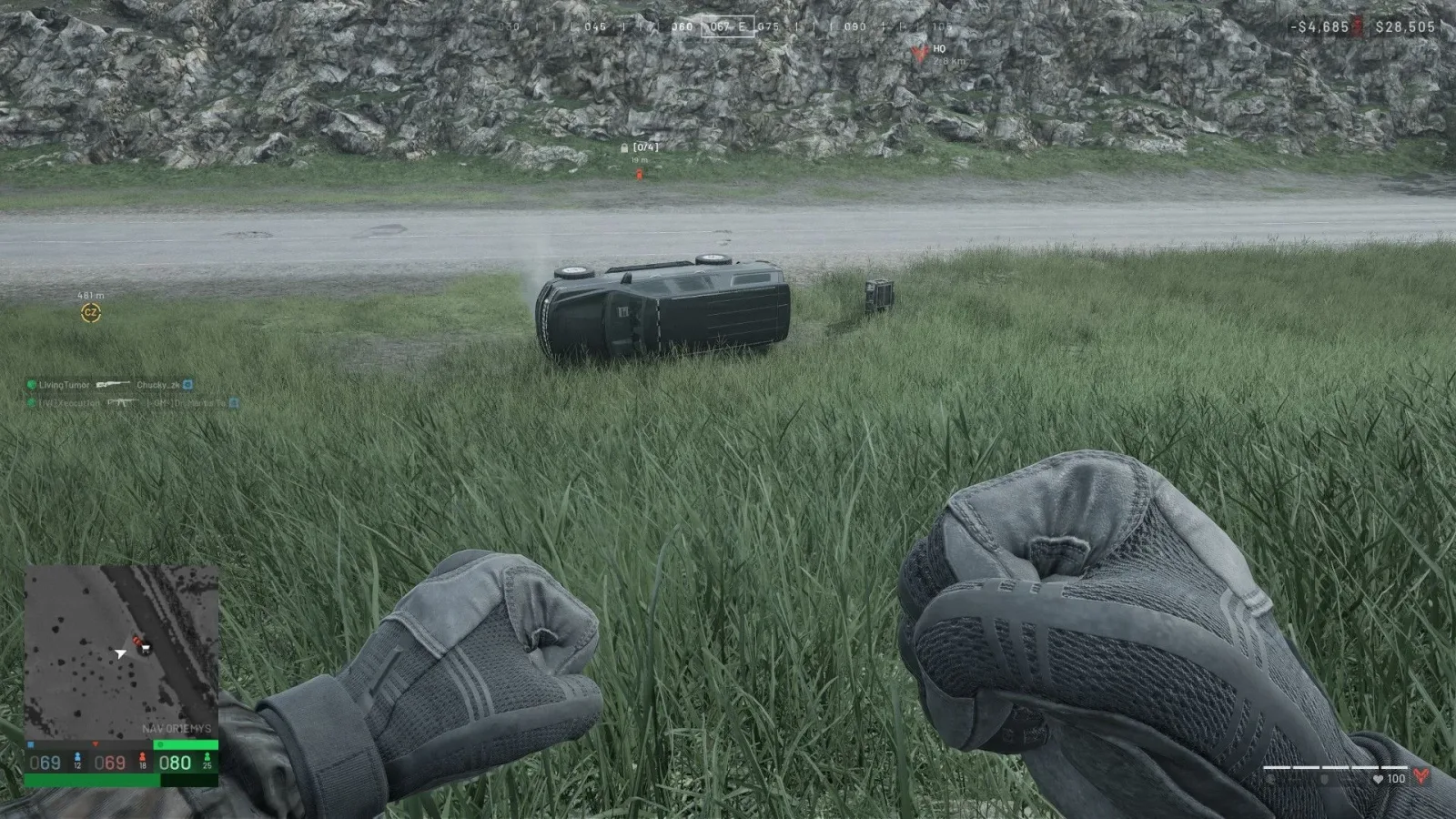
Wardogs may look familiar at first: rifles, military vehicles, sprawling maps and rapid firefights all place it comfortably alongside modern multiplayer military shooters. Spend some time in a match, however, and its priorities become much clearer. This is a first-person shooter in which the most important number is not necessarily eliminations, deaths or even captures. It is money.
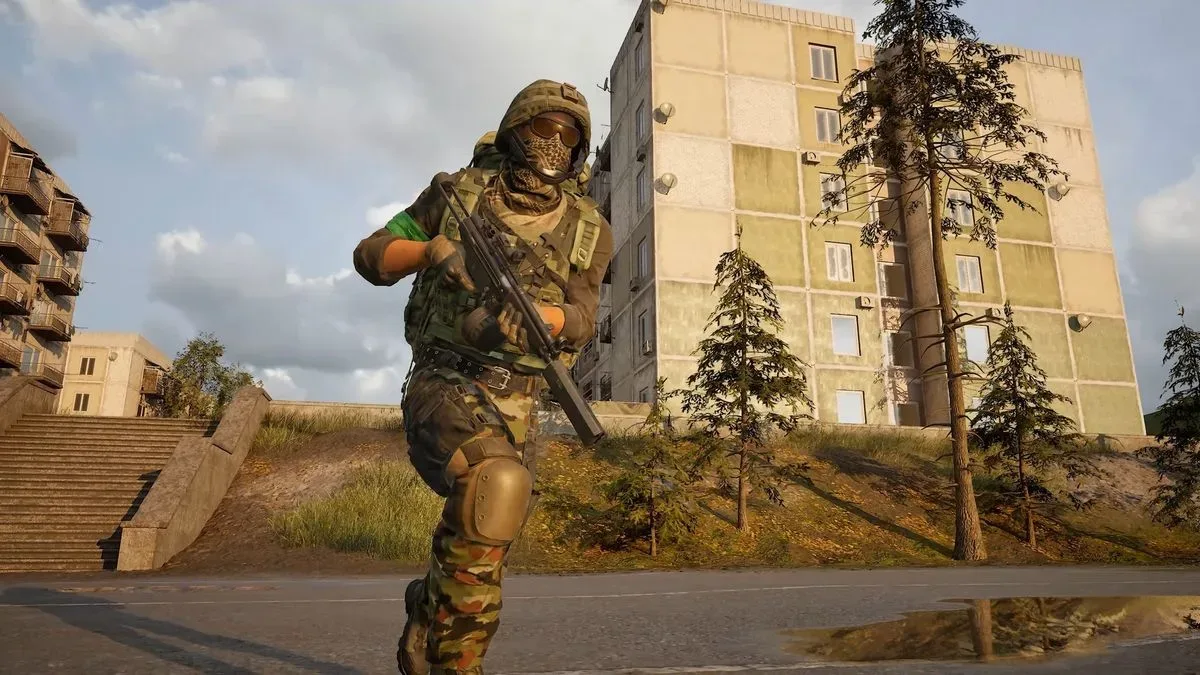
Players enter Wardogs as mercenaries aligned with one of three Private Military Companies, all competing for control of the battlefield. Shooting enemy players can certainly be profitable, and direct combat remains a major part of the experience. Yet Wardogs makes space for a considerably wider range of jobs than the usual run-and-gun multiplayer formula. A player can make a meaningful contribution by hauling supplies, constructing defenses, moving teammates by air, treating wounded allies or gathering intelligence from afar.
That economic focus gives the Early Access shooter an unusual identity. It can still deliver the intensity expected of a large-scale FPS, but it also recognizes the people keeping an army moving behind the front line. In Wardogs, a player who barely fires a weapon may finish above a highly active soldier on the scoreboard simply by running a successful transport operation.
Cash, not kills, shapes the match
The core fantasy is explicit: players are mercenaries, and mercenaries need to get paid. Cash supports nearly every important aspect of a player's match-to-match life, including progression and the loadout purchased after respawning. That creates pressure to earn, but it also means the game offers several ways to do so.
For useful background on this topic, read World of Warcraft: Forever Details Its Raids, PvP, Add-On Limits, and Long-Term Promise.
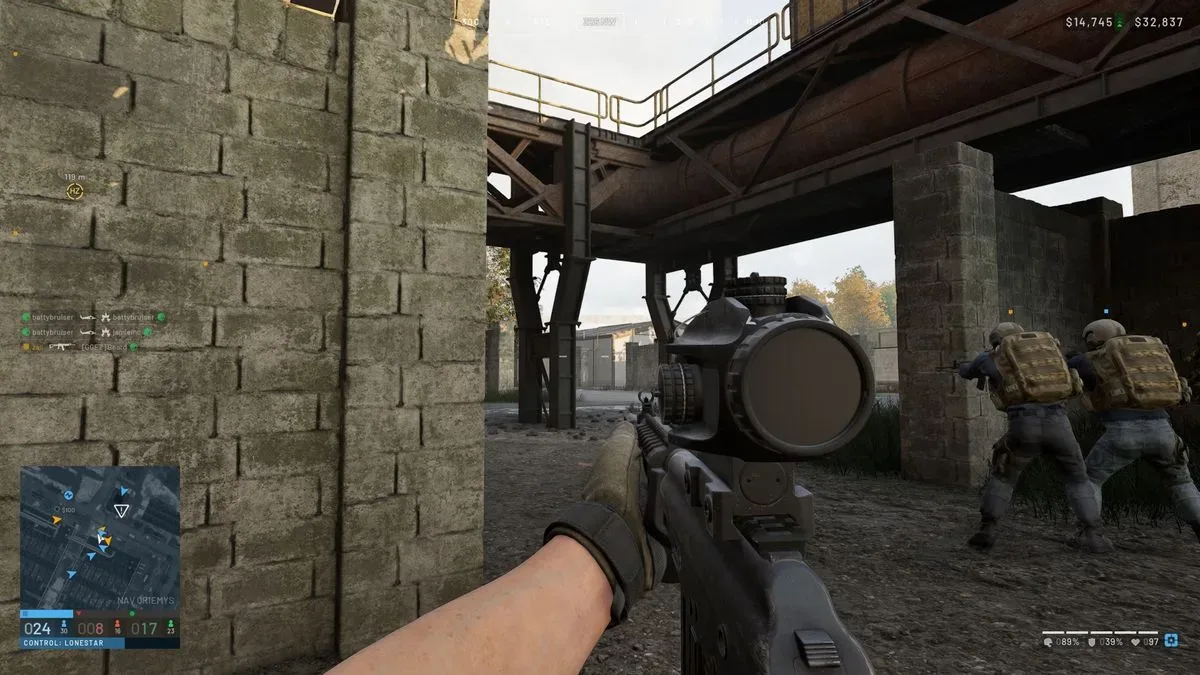
Joining the battle at the front is the most immediately recognizable choice. Wardogs features satisfying gunplay and a very fast time-to-kill, making a short trip into contested territory dangerous and exhilarating. Taking down opponents can bring in money, while medics can also build up their earnings near the action by helping their side survive the chaos.
What distinguishes Wardogs is that the frontline is not the only place where valuable work happens. Its vast maps create real distance between spawn areas, forward bases and the central fight. Supplies have to be moved. Defensive positions need material. Players require rides. A team without people willing to perform those jobs can find itself at a substantial disadvantage, regardless of how capable its shooters might be.
The result is a scoreboard that reflects cash earned rather than a conventional kill-focused hierarchy. Seeing a leading player with few or no eliminations is entirely plausible. That person may have spent the game as an aviation specialist, continuously flying newly spawned teammates toward combat and collecting payment for every useful journey. In another match, the highest earner could be a supply driver ensuring an isolated Forward Operating Base never runs out of ammunition, fuel or construction materials.
A shooter where logistics is a legitimate playstyle
Wardogs has a broad menu of non-combat and support-oriented roles, turning some matches into a combination of shooter, transport sim and battlefield management game. Helicopter pilots can operate as air taxis, getting reinforcements to important locations much faster than they could travel on foot. Truck drivers can shift vital resources through dangerous routes. Builders can use those resources to establish or reinforce defenses. Recon players can prioritize observation over firing, using a spotter scope to keep watch and pass on useful information.
These activities are not presented as background flavor. They are tied directly to a team's ability to hold ground and sustain its operations. The sense of a living military system evokes the large-scale ambitions of games such as MAG on PlayStation 3, as well as the expansive battlefields associated with the Arma and Operation Flashpoint series. There is also a logistical dimension that recalls Foxhole, though Wardogs approaches those ideas from a first-person military perspective.
Its wide role selection also means that players can settle into a particular specialty over time. Someone who does not enjoy high-pressure close-range combat could dedicate their sessions to becoming a better pilot or driver. Another player may prefer the quiet work of reconnaissance, locating threats and watching over contested areas. Others can focus on sabotage, sniping or special-forces-style operations. Wardogs does not ask everyone to be a frontline rifleman, and that is one of its biggest strengths.
Three companies compete for control
Every match divides 100 players between three competing teams. That three-way structure changes the rhythm of territorial play. Rather than a simple battle between two sides, any group moving into a control area needs to consider pressure from two possible enemies, while one rival can potentially exploit a clash between the other two.
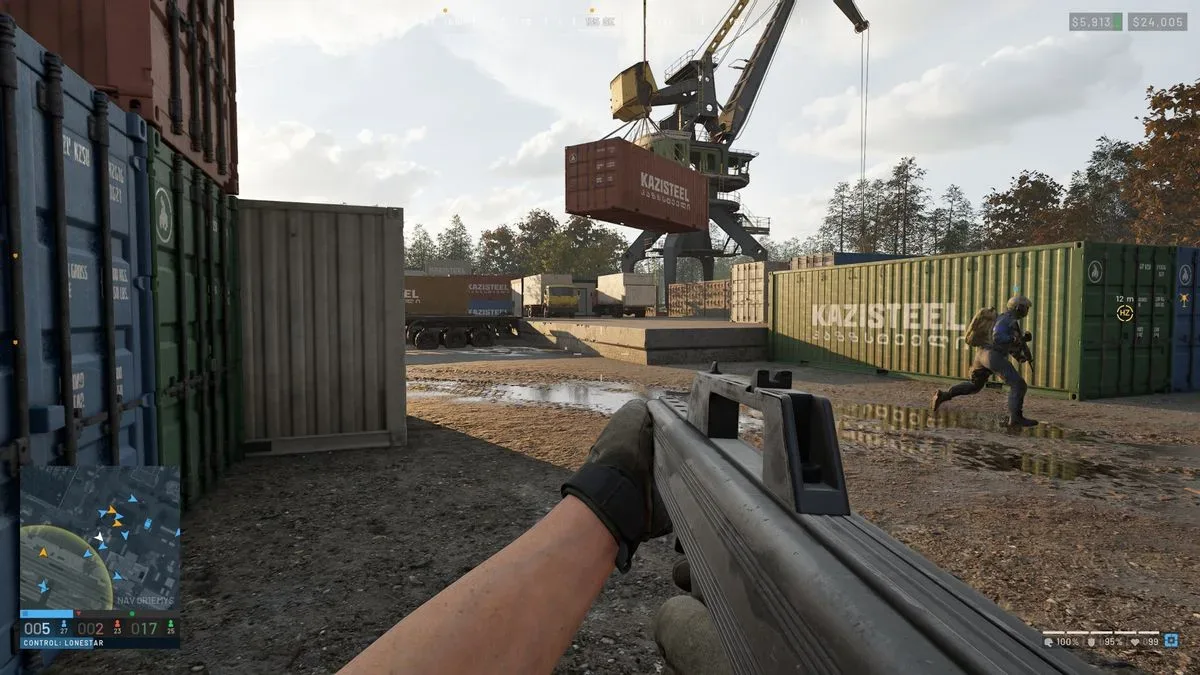
The immediate objective is built around a circular Control Zone. To score, a company needs more players inside that zone than either of the opposing PMC teams. The leading team receives one point every 30 seconds, and the first side to reach 100 points wins the match.
Vehicles add another layer to the battle for the zone and the wider map. A vehicle parked at a Forward Operating Base can be spawned once a team has accumulated 20 points. That helps reduce the reliance on waiting for another player to provide transportation, though it does not eliminate the importance of people who specialize in moving teammates and supplies. Reaching the control area is one concern; keeping a network of bases equipped is another.
The 100-player cap does introduce a slightly awkward mathematical reality. Three teams cannot be split evenly from a total of 100, resulting in two groups of 33 and one group of 34. It is a small imbalance, but it is a visible quirk in a mode where player count inside the Control Zone determines who earns points.
Early Access rough edges are hard to ignore
Wardogs' ambition comes with limitations, especially for players starting fresh. The opening levels can feel punishing because basic protective equipment is not immediately available. Newcomers cannot purchase body armor or a helmet from the outset, leaving them especially vulnerable during the game's already quick firefights. Starter weapons are technically capable of killing opponents, but they can feel underpowered compared with the equipment that becomes available later.
That opening hurdle risks discouraging players before they have seen the game's more interesting systems. The essentials should become affordable after roughly an hour of play, but those first matches may still be rough, particularly for anyone facing established players with better gear and more experience navigating the maps.
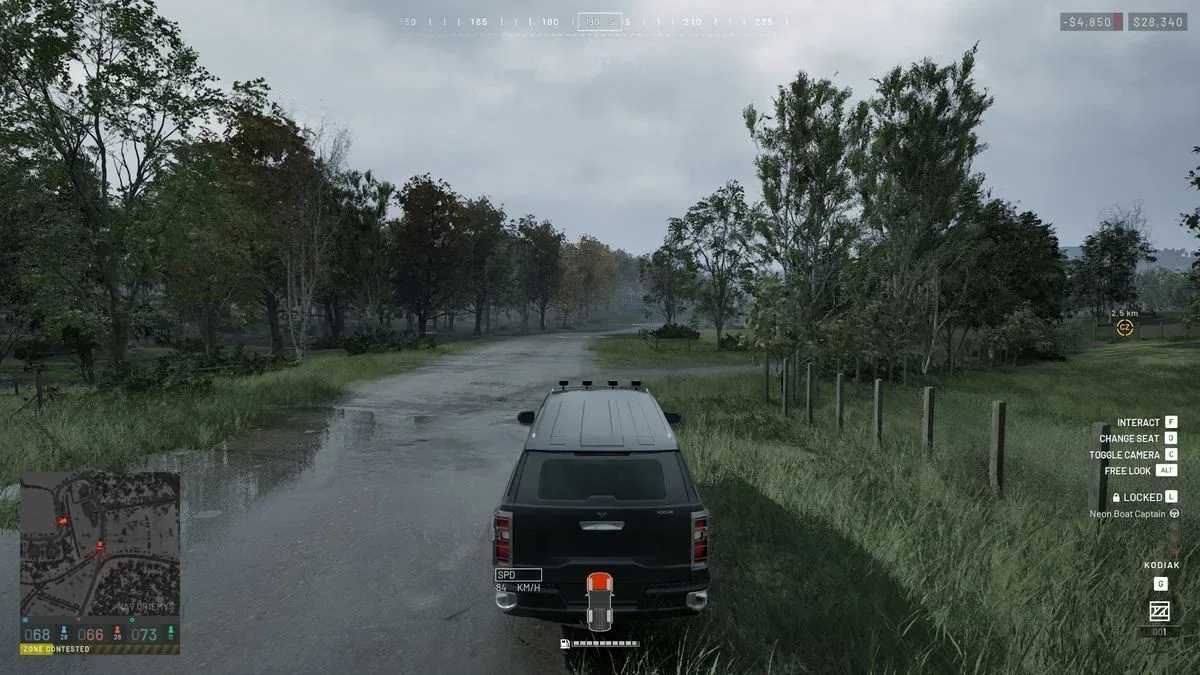
Vehicle handling is another area that appears to need refinement. Using vehicles with a keyboard can feel slippery and imprecise, as if trucks and other transports are gliding over ice instead of responding firmly to player input. Given how central transport can be to the Wardogs economy, awkward controls have an outsized effect. A player might be willing to overlook clumsy handling in a game where driving is incidental; here, it can undermine an entire preferred role.
Linux compatibility is also a significant concern. Earlier playtest builds were playable by Linux users before the game's anti-cheat software changed, but the current situation lacks Linux support. For players who had already participated under those previous conditions, the change is particularly frustrating.
Teamwork gives Wardogs its best moments
Playing with friends or an organized clan is likely the clearest route to the strongest Wardogs experience. Coordinated groups can divide responsibilities between fighters, pilots, drivers, medics and builders, then turn the game's many interlocking systems into a tactical advantage. A reliable helicopter pickup or a well-timed supply delivery can matter just as much as an aggressive push into the Control Zone.
Solo players are not necessarily shut out, though. Using voice chat and joining random squads can lead to welcoming interactions, with players generally willing to cooperate around shared objectives. As with any online multiplayer game, unpleasant exceptions exist, but the varied roles provide multiple ways for newcomers to find a place in a team without needing to top the kill feed.
Wardogs is at its most compelling when a player's value is measured by what the team needs, not by how often they pull the trigger.
That flexibility may ultimately determine whether the game retains its audience through Early Access. Wardogs has no shortage of genre ingredients, but its appeal lies in how freely it lets players move among them. One session can be a frantic FPS battle. The next can feel like a stripped-down survival experience built around equipment and risk. Another might be spent almost entirely behind a steering wheel, in a cockpit or at a spotting scope.
There are meaningful issues to solve, from the new-player economy and vehicle feel to platform support and the slight team-size mismatch. Even so, Wardogs has a compelling central idea: warfare is not sustained by soldiers alone. It is sustained by the people who bring the ammunition, construct the fortifications, carry the wounded, chart the battlefield and make sure everyone gets where they need to go. And in this mercenary battlefield, every one of those jobs has a payday attached.
Community
Discussion
Start the conversation.
No comments have been posted yet.