

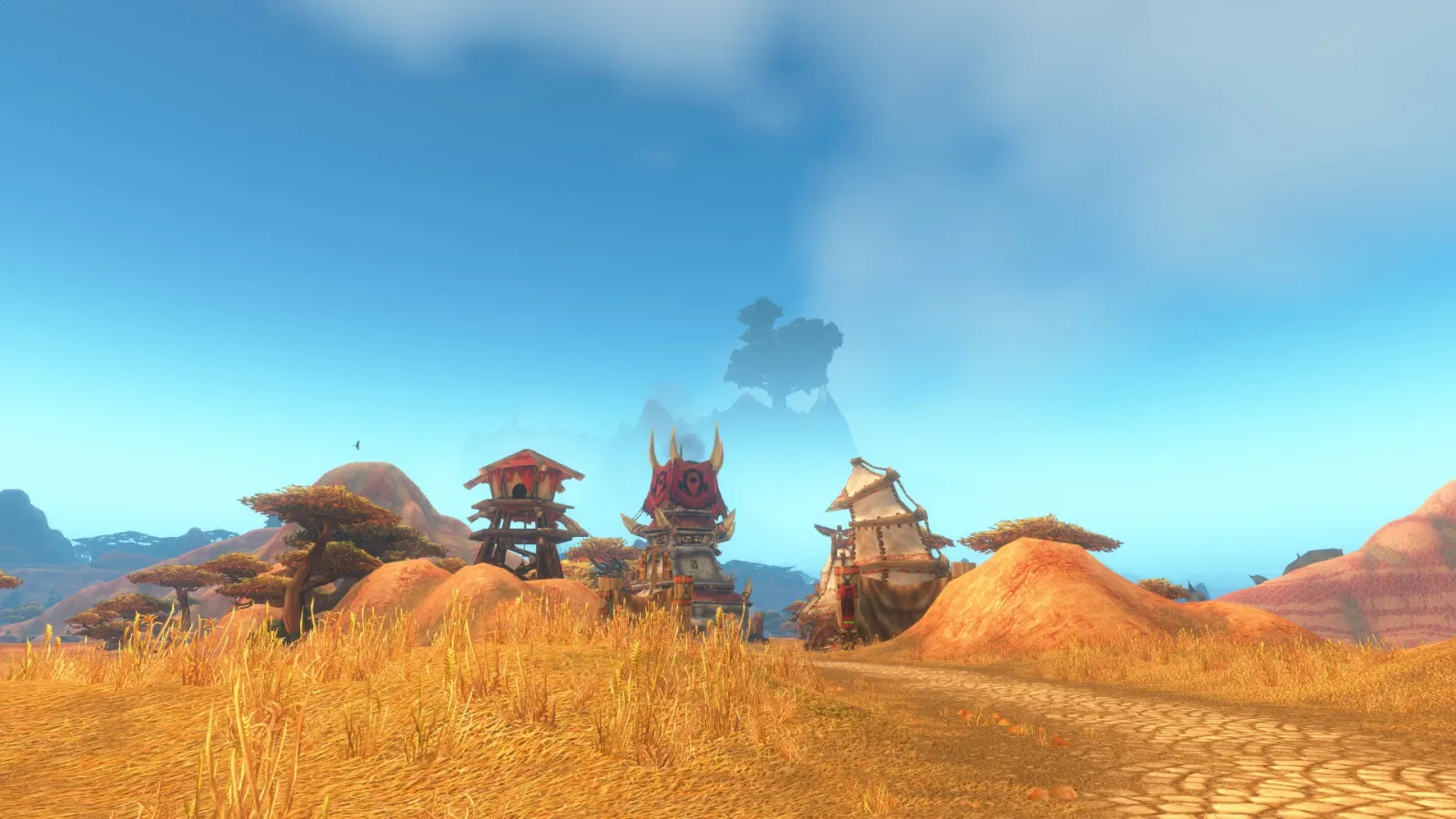
World of Warcraft: Forever is making a persuasive case that an MMORPG does not always need to hurry players toward its biggest attractions. Twenty-five hours into the experience, it is entirely possible to have barely touched the headline additions: no new dungeons, no new raids, no trip to the Riverlands, and only limited time with the fresh quest content. Yet the game can still feel remarkably absorbing.
That may sound counterintuitive for an expansion or refresh built around new material. The usual expectation is to race toward the latest zone, reach the new instance content, test the endgame systems, and form an early verdict from the features designed to sell the update. Forever appears to be producing a different sort of early impression. Its strongest quality, at least in these opening hours, may be how confidently it asks players to slow down.
That slow pace is not merely a result of old-fashioned design left intact by inertia. Long trips, inconvenient trainer visits, rare quest drops, death runs, and side objectives all create friction. But Forever seems to frame that friction as part of the appeal. The result is a version of Azeroth where getting somewhere can matter nearly as much as arriving.
Azeroth Is Full of Productive Detours
Consider the sort of activity that can consume a player's first 25 hours. One task involves spending roughly an hour traveling between continents for a torch with little practical value. Another requires making that same journey again to help a friend obtain the identical item. Elsewhere, a separate extended trek is tied to a sleeping bag reward that is also of limited utility. None of these sound like efficient progression routes, and that is precisely the point.
For useful background on this topic, read Fortnite Reveals Pirate Shop Token Odds After Player Backlash.
In a game optimized around reward-per-minute calculations, these assignments would likely be dismissed as bad design. A torch that does not meaningfully improve a character and a sleeping bag that is almost useless would be easy candidates for a guide's "skip this" section. But in Forever, their value is not strictly in the inventory item at the end. They offer excuses to move through the world, to cross zones, to stop in cities, and to run into other people who are pursuing their own peculiar errands.
Even basic maintenance can become an expedition. A class trainer visit may require returning to Kalimdor while a character is questing in the Eastern Kingdoms: flying back to Undercity, taking a zeppelin, locating the trainer in Orgrimmar, then retracing the whole route to resume adventuring. Profession trainers and banks add more stops to the mental itinerary. It is the kind of loop that modern online games often remove with fast travel, remote progression menus, and ubiquitous convenience systems.
Forever instead leaves those gaps in place, then supplements them with small reasons to embrace them. It does not make the journey objectively faster. It makes the journey feel less like dead time.
The Classic Formula, Deliberately Reconsidered
Much of this will be recognizable to anyone who has played World of Warcraft Classic. Classic has always asked more of players' patience than contemporary MMO design. Flight paths are limited, travel takes time, deaths can mean lengthy corpse runs, and quest objectives do not always drop at a gratifying rate. A group can spend an hour defeating worgen only to gather six pieces of the required "Worgen Bits," despite the apparent abundance of werewolves involved.
That kind of scarcity can be irritating. So can dying seven or eight times against mages that turn out to be above a character's level. There is no need to pretend every delay is inherently delightful. The difference is that Forever appears to understand the texture created by those delays. It leans into them instead of treating them solely as remnants of a less refined era.
The distinction matters. In the original Classic context, slowness could feel like a historical artifact: the product of a time before major MMORPGs had aggressively streamlined nearly every interaction. In Forever, it reads more intentionally. Extra quests for humble objects, campfires that encourage players to linger, and layering that keeps zones populated all help transform inconvenience into opportunities for unscripted play.
The game's new elements are not necessarily enormous reinventions of World of Warcraft. The Skyborne starting island, experienced during beta, is described as perfectly acceptable, if a little more modern in tone than some players may prefer. New quests are scattered into the broader leveling journey, including the torch and sleeping bag missions. But these additions seem designed to enrich the road rather than replace it.
Small Social Moments Carry the Experience
The most important content in Forever may be the content no designer can fully script. While traveling across Azeroth, players can wave to strangers on the road, share buffs, join temporary groups, or simply watch the world become unexpectedly crowded. A player who spots a corpse might offer a resurrection, sparing someone an aggravating trip back from the graveyard. Another can choose to remain after finishing their own quest just to help a newcomer complete theirs, sacrificing another 20 minutes for no obvious reward.
These gestures are tiny in isolation, but they are the connective tissue of a healthy MMO. They make the world feel inhabited rather than merely populated. A server can have thousands of people online and still feel lonely if everyone is moving efficiently between personal objectives. Forever's structure appears to create enough downtime and mutual vulnerability that people have reasons to acknowledge one another.
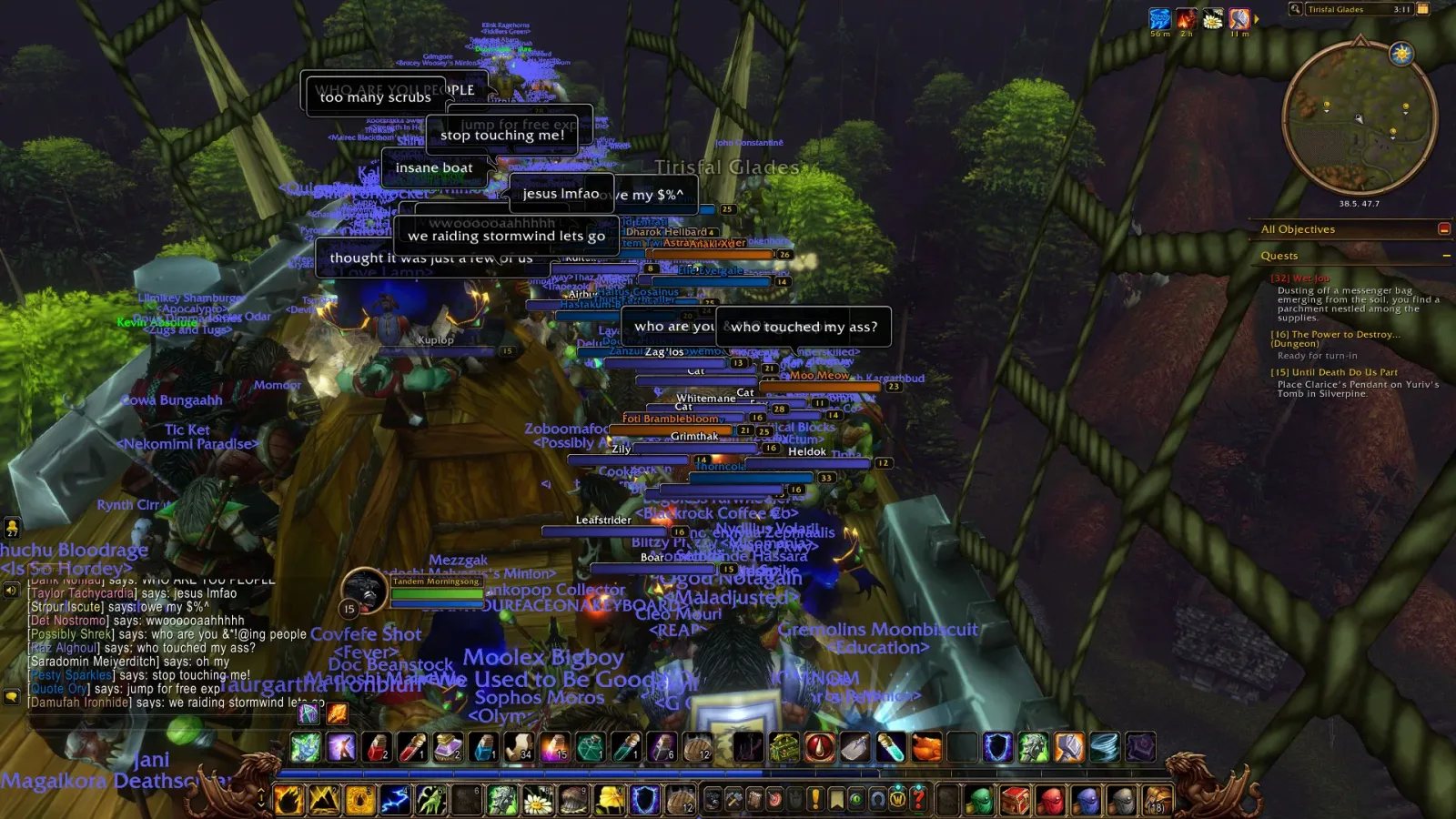
There are more chaotic versions of that social energy too. A layering mishap on a zeppelin reportedly resulted in something like 200 players arriving in Undercity at once. The crowd created immediate comic panic among those already in the city. It is not a polished, carefully staged event, but it is exactly the kind of strange shared memory that persists longer than a routine quest completion.
General chat can become a destination of its own. A simple "Good morning," sent while fishing early in the day, can turn into an extended conversation among several players and eventually lead to someone spinning silly invented tales about a warlock named Daniel. No loot system can generate that exact encounter. It happens because players are given room to be present rather than pushed constantly toward the next objective marker.
Fishing, Campfires, and a More Mindful MMO
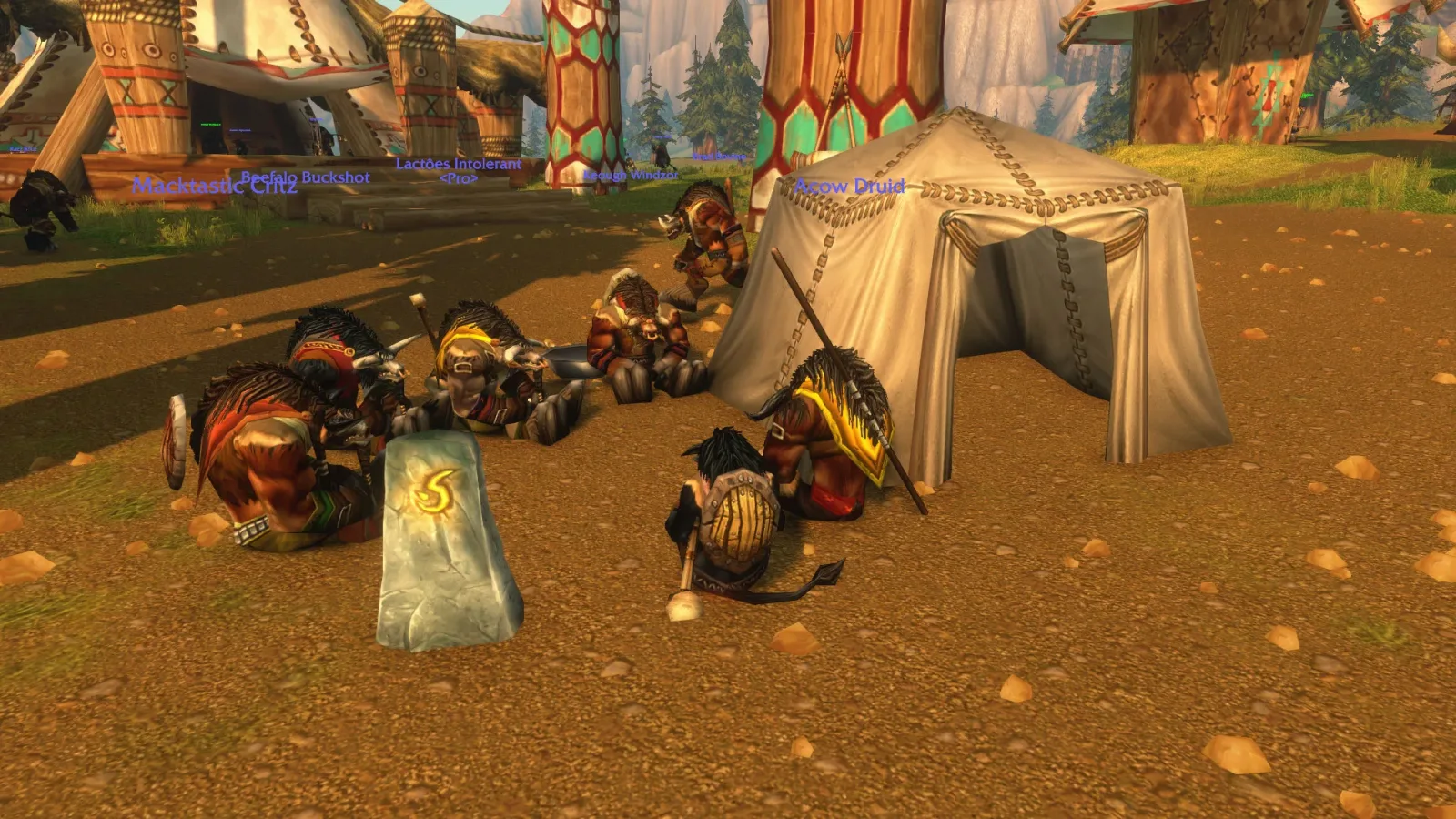
Fishing has long occupied an unusual place in World of Warcraft. It is repetitive, slow, and optional, yet it can offer a welcome counterpoint to combat and quest routing. In Forever, fishing seems to fit the larger mood. The same is true of campfires, where players can pause and chat with whoever gathers nearby. These quiet systems encourage a form of play that is difficult to quantify but easy to recognize when it works.
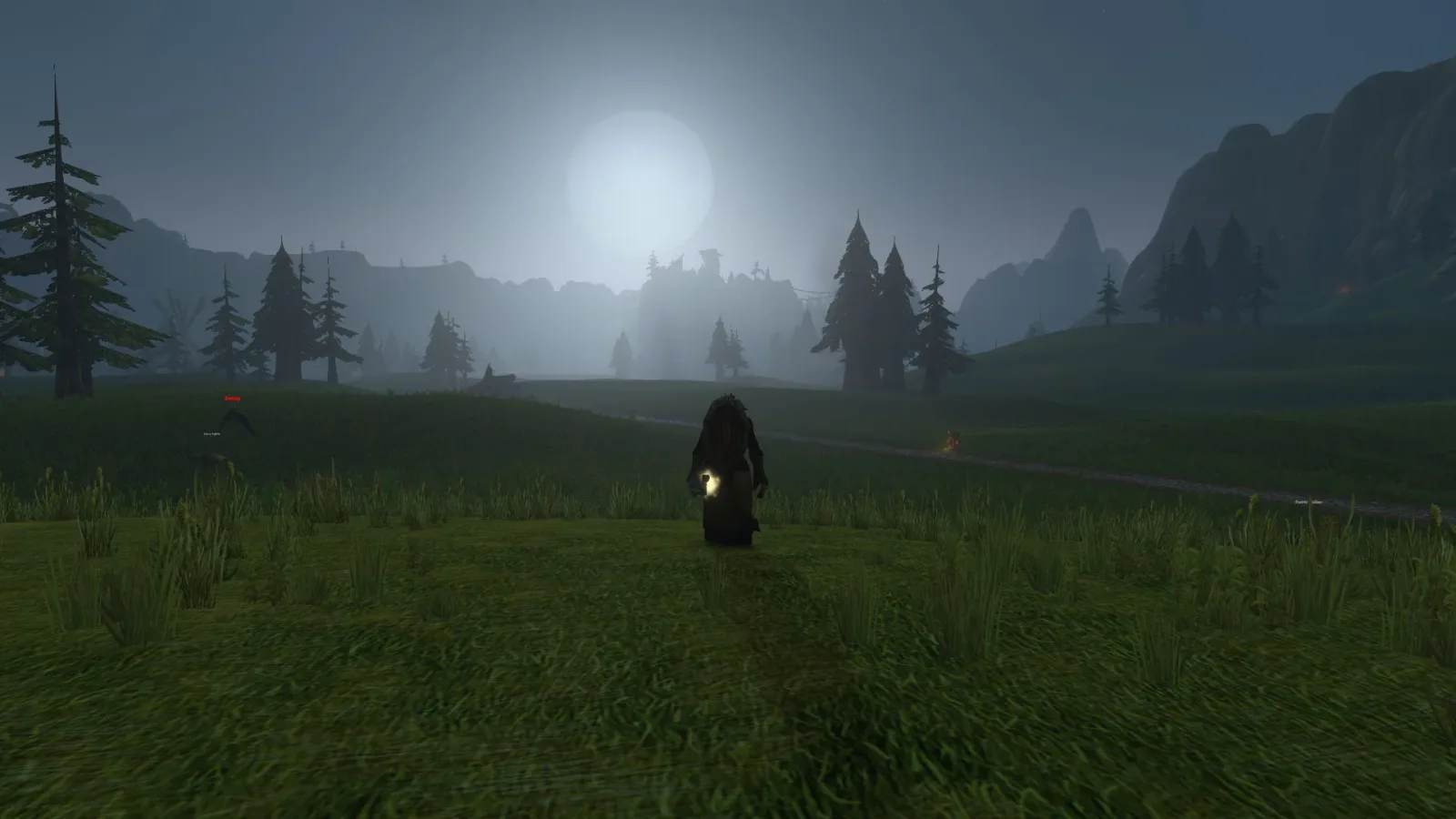
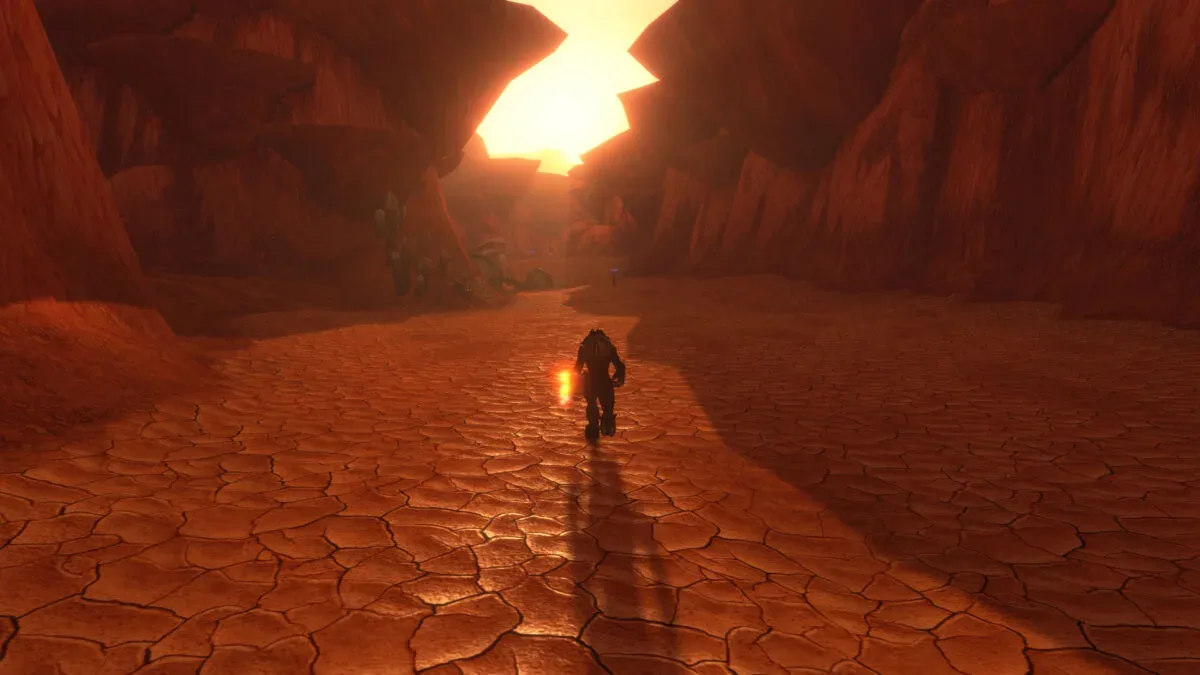
The world itself helps. Improved lighting changes the character of familiar territory, with sunlight moving over plains and swamps, filtering through fog and trees, and reflecting on rivers. A wider draw distance allows landmarks such as Mt. Hyjal to loom in the distance, a visible promise of what waits at higher levels. These details do not replace gameplay, but they give long stretches of travel a visual and emotional purpose.
That creates a kind of mindfulness rare in a genre frequently dominated by optimization. The player is not always doing nothing during a long flight, a fishing session, or a run between cities. Sometimes they are looking at the world, talking to strangers, noticing a landmark, or deciding to help somebody. Forever turns the absence of urgency into an experience of its own.
There Is Still Plenty Left Unseen
It is too early to treat 25 hours as a final assessment of everything World of Warcraft: Forever has to offer. The new dungeons have not yet been explored in this account, while raids remain months away at the current leveling pace. The Riverlands are still out of reach, and much of the new content remains unopened. Players seeking a detailed dungeon breakdown or an endgame verdict will need to wait.
But that incompleteness is revealing. In many games, failing to reach major new features after 25 hours would be a criticism. Here, it may be evidence that the leveling journey is succeeding at its intended purpose. The player has a growing list of tasks: quests to finish, a cross-continent turn-in, a sleeping bag scavenger hunt, trainer visits in Orgrimmar or Thunder Bluff, profession errands, banking, and eventually dungeon runs. It resembles a real-world chore list in its sheer accumulation, except it inspires anticipation rather than dread.
That is an impressive trick. Forever does not eliminate busywork. It makes busywork feel like a path through a living place. Progress toward level 60 is still happening, but there is no overwhelming need to sprint toward it. The next 50 hours may include plenty more inefficient trips, rare drops, missed turns, deaths, and distractions. If the early hours are any indication, those supposedly pointless moments may end up being the reason the journey is worth taking.
World of Warcraft: Forever's early strength is not that it has made Azeroth faster, cleaner, or more convenient. It has made the old world feel worth lingering in again.
Community
Discussion
Start the conversation.
No comments have been posted yet.