

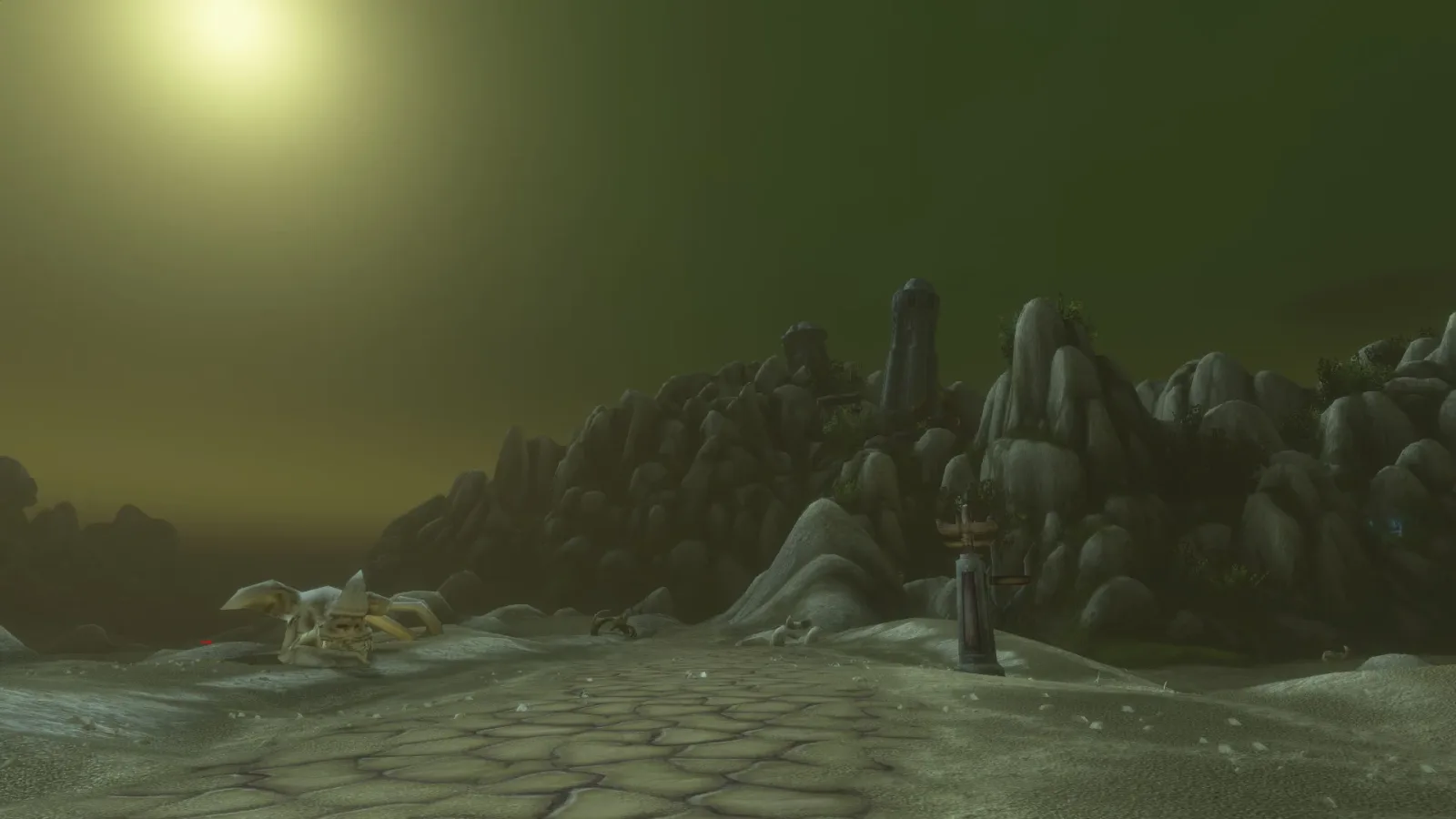
World of Warcraft: Forever is only a couple of weeks old, but its in-game economy is already facing a serious stress test. A lucrative farming route in the new Blackmaw Hold dungeon allowed some players to amass extraordinary amounts of gold in a short time, creating a divide between those who used the method early and everyone else trying to earn currency through ordinary leveling, professions, dungeon runs, and trade.
The issue has become bigger than one over-generous pack of enemies. Players are now debating what counts as an exploit, whether wealthy accounts are distorting Auction House prices, and whether Blizzard will punish prominent creators and streamers by the same standards applied to regular players. A hotfix has stopped the most visible farming method, but it has not erased the gold that had already entered circulation or calmed concerns about uneven enforcement.
Blackmaw Hold became an early gold-printing machine
The problem centered on a room in Blackmaw Hold containing roughly 30 enemies that were reportedly easy to kill. Those enemies dropped unusually large amounts of currency, along with valuable items that could be sold for additional gold. In a game mode where gold is still scarce for most of the population, that combination made the room extremely attractive.
Players discovered they could turn the encounter into a repeatable routine. They would enter the dungeon, rush straight to the room, clear the enemies, leave, and return after the instance reset. Repeating the process on a schedule meant that a group could build up a stockpile far beyond what the normal early-game economy would typically support.
For useful background on this topic, read Firaxis Games Restructures as Reported New XCOM Project Misses Internal Milestones.
Blizzard has since changed the enemies so they no longer provide those drops. That has ended the direct loop, but the timing matters. By the time the fix arrived, some participants had reportedly accumulated hundreds or even thousands of gold.
In a mature version of an MMO, a large amount of currency may be less startling because long-running economies naturally inflate and veteran players often have enormous reserves. Forever is in a very different position. Many players are still leveling, building their first professions, and saving for major milestones. The contrast is especially sharp because riding training is expensive: learning to ride at level 40 costs 90 gold, while faster riding at level 60 costs 900 gold. Those costs are intended to be meaningful goals, not incidental purchases.
For a player still counting a few gold pieces at lower levels, seeing others emerge from an early dungeon route with four-figure wealth can make the economy feel tilted before it has had time to establish itself.
For another perspective on this story, read World of Warcraft: Forever Gold Exploit Puts Early Economy and Enforcement Under a Microscope.
Inflation fears are focused on the Auction House
The concern is not simply that some players got rich. Gold becomes a broader economy problem when it is used to purchase limited supplies of materials and push up prices for everyone else. Community discussion has highlighted examples of players with exploit-generated wealth buying out large quantities of desirable Auction House goods, including Arcane Crystals.
Streamer Ziqo was shown purchasing the full available supply of Arcane Crystals in one widely circulated example. Such buying behavior does not automatically prove that every subsequent price movement is manipulation, and a young market can be volatile for many reasons. Still, it illustrates why players are worried. Someone with a huge pile of currency can afford to remove supply from the market, relist goods at higher prices, or simply outbid ordinary crafters and adventurers on items they need.
That has a compounding effect in an MMO. Higher material prices can raise the cost of crafted equipment, consumables, enchants, and profession leveling. Players who did not use the farming method may then need to spend more time gathering or farming merely to keep pace with the prices created by those who did.
There is also a perception issue that is difficult for any live-service game to solve after an economy shock. Even if the market eventually stabilizes, players who feel they missed a short-lived jackpot can conclude that they have permanently fallen behind. In a progression-driven game, that feeling can be nearly as damaging as the raw currency totals.
Public figures are at the center of the argument
The controversy has gained particular attention because several recognizable World of Warcraft personalities have been named in community conversations. Ziqo is the only figure publicly identified in the discussion who has acknowledged using the Blackmaw Hold method and shared video evidence. He also named Sodapoppin and Brucewayner while discussing the situation. Community accusations have additionally been directed at Jokerd, Liz, and Ahmpy.
Those mentions should not be treated as proof that every named player participated in the same way or to the same extent. The broader point raised by players is that high-profile accounts are highly visible, and their actions can influence both the game economy and community behavior. If a popular streamer demonstrates or benefits from a lucrative loophole, many others may attempt the route before a fix arrives.
Some players argue that the farm should not be treated as a severe violation because it did not require hacking, third-party automation, or an external cheat. From that perspective, participants took advantage of enemy drops and dungeon behavior that existed inside the game until Blizzard changed them.
Others reject that defense. They argue that repeatedly targeting an obviously abnormal reward loop is precisely the kind of behavior that should bring intervention, especially when it grants a major advantage in a newly launched economy. For these players, the question is not whether someone modified the client, but whether they knowingly exploited unintended game behavior for disproportionate gain.
Past real-money trading concerns add to the frustration
Debate around the dungeon exploit is also tied to pre-existing concerns over real-money transactions, commonly called RMT. Ziqo had previously drawn attention during the Forever beta over engagement with RMT. His gold was wiped in that earlier situation, while his account was not banned for a period of time.
That history has intensified demands for clear and consistent action now. Players are comparing the apparent treatment of high-profile accounts with reports from ordinary users who say they have been banned in the main game despite not taking part in RMT. Some of those players insist they were penalized after attempting mundane actions, such as sending a small sum of gold to a friend or offering normal-priced enchanting services.
Individual ban reports are inherently difficult to verify from outside the game's enforcement systems. A player's description may not include all activity reviewed by support or automated detection tools. False positives can happen in online games, but so can incomplete accounts of a ban. Even so, the perception of inconsistency has become a major part of the backlash.
When creators can openly discuss exploit use while other players believe they were punished for ordinary trading, the distinction between enforcement and favoritism can appear blurred. Blizzard does not need only to address the exploit itself; it also needs to convince the community that the rules apply to accounts with large audiences as well as those without them.
What players want Blizzard to do next
The Blackmaw Hold drop change was an immediate containment measure, but many players do not think it is sufficient. The most common request is for Blizzard to remove all gold gained through the farm from participating accounts. Some want related proceeds addressed as well, including profits generated through goods bought or resold with exploit-derived currency.
Calls for penalties range from short suspensions to permanent bans. Others have urged Blizzard to publicly identify sanctioned high-profile players, arguing that transparency would demonstrate that partnership history, visibility, or streaming popularity does not provide immunity. Opponents of public naming may reasonably question whether disciplinary action should remain private, but they generally still want confirmation that meaningful enforcement took place.
There are indications that temporary bans have begun reaching some accounts connected to the exploit. What remains unclear is the full scale of those actions, how Blizzard is determining who knowingly abused the route, whether gold removals will accompany suspensions, and whether every prominent player accused by the community will face the same scrutiny.
A crucial early test for Forever
Early economies are fragile because expectations form quickly. World of Warcraft: Forever has reached the point where players are approaching maximum level, preparing for expensive riding upgrades, and beginning to compete more actively for materials and crafted goods. That makes the response to a gold injection especially important.
Blizzard has already removed the reward source, which prevents the problem from continuing in its original form. The harder work is repairing trust. A targeted rollback of improperly acquired wealth, clearly applied account penalties, and communication about how similar cases will be handled could help reassure players that the early economy has not been left to the people who found the loophole first.
Without that confidence, every unusually expensive Auction House listing and every future exploit claim may feed the same suspicion: that the race in Forever is not being won through adventure, preparation, or skill, but through who was willing to exploit a broken room before the door was closed.
Community
Discussion
Start the conversation.
No comments have been posted yet.