

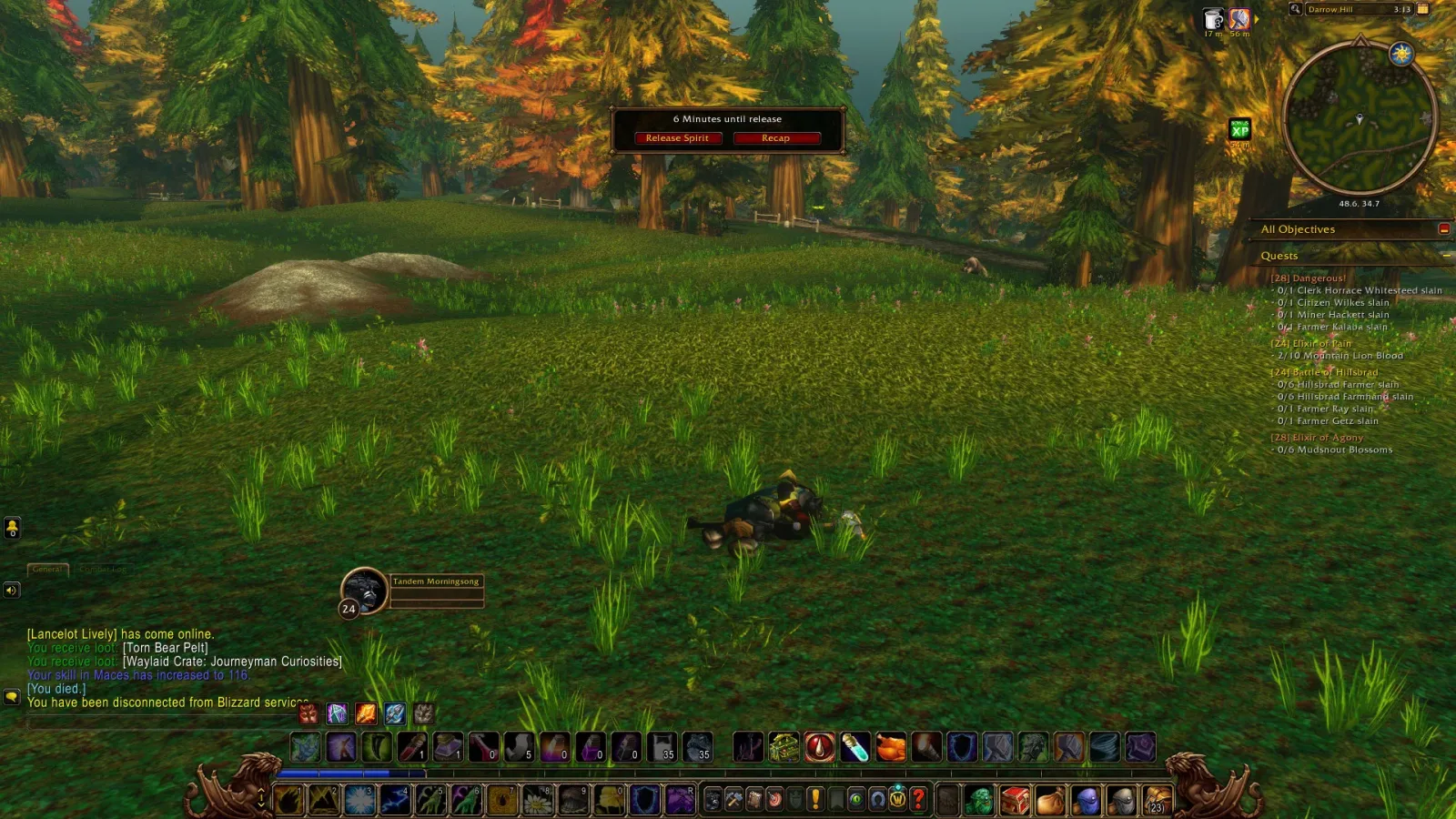
World of Warcraft has trained generations of players to recognize the rhythms of failure. A difficult pull goes wrong, an unexpected patrol joins the fight, a boss ability lands at exactly the wrong moment, and the screen changes from a vibrant fantasy landscape to a far less flattering death interface. Before the journey can continue, players receive a breakdown of the damage that defeated them and must decide when to hit the familiar Release Spirit button.
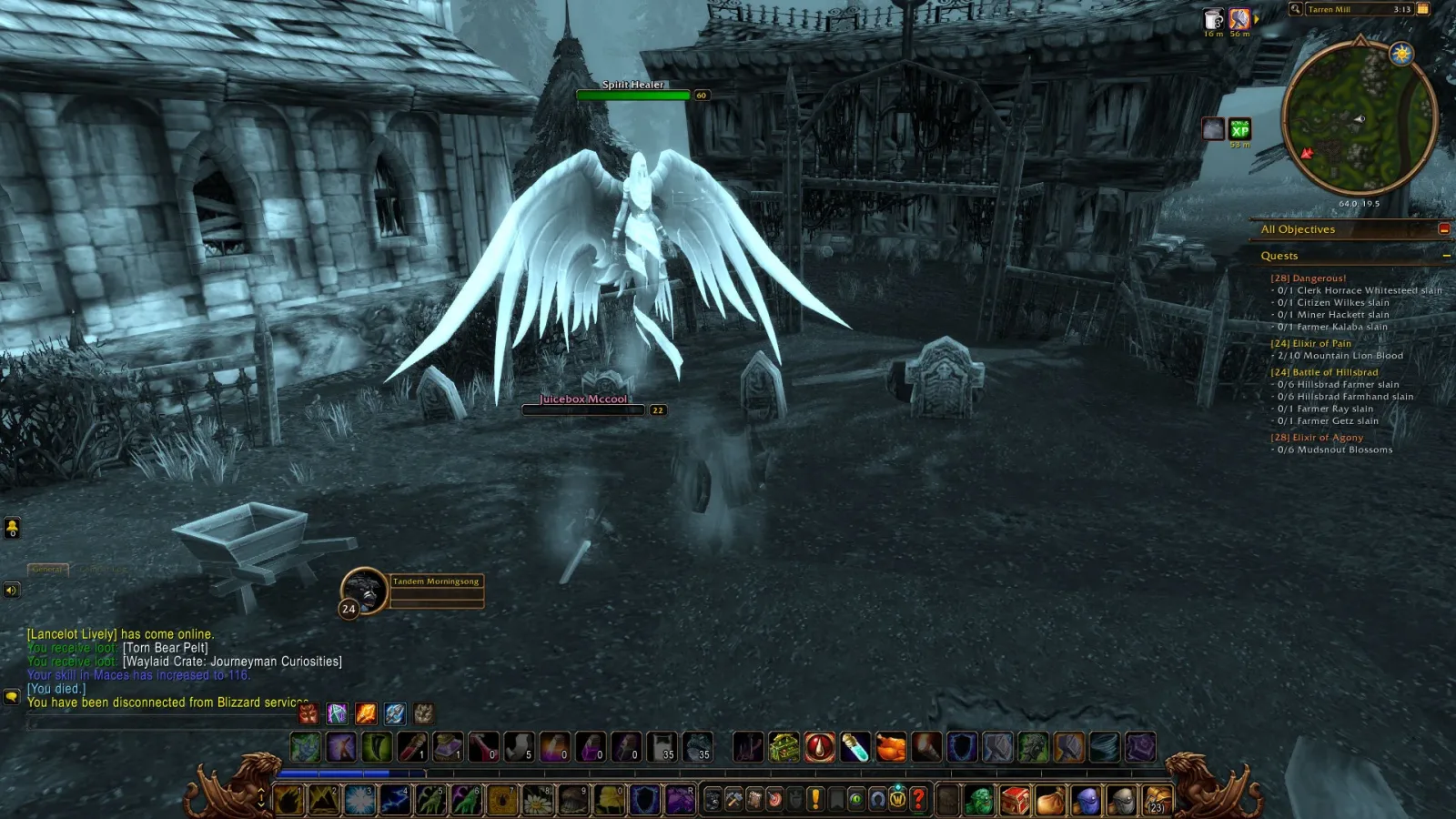
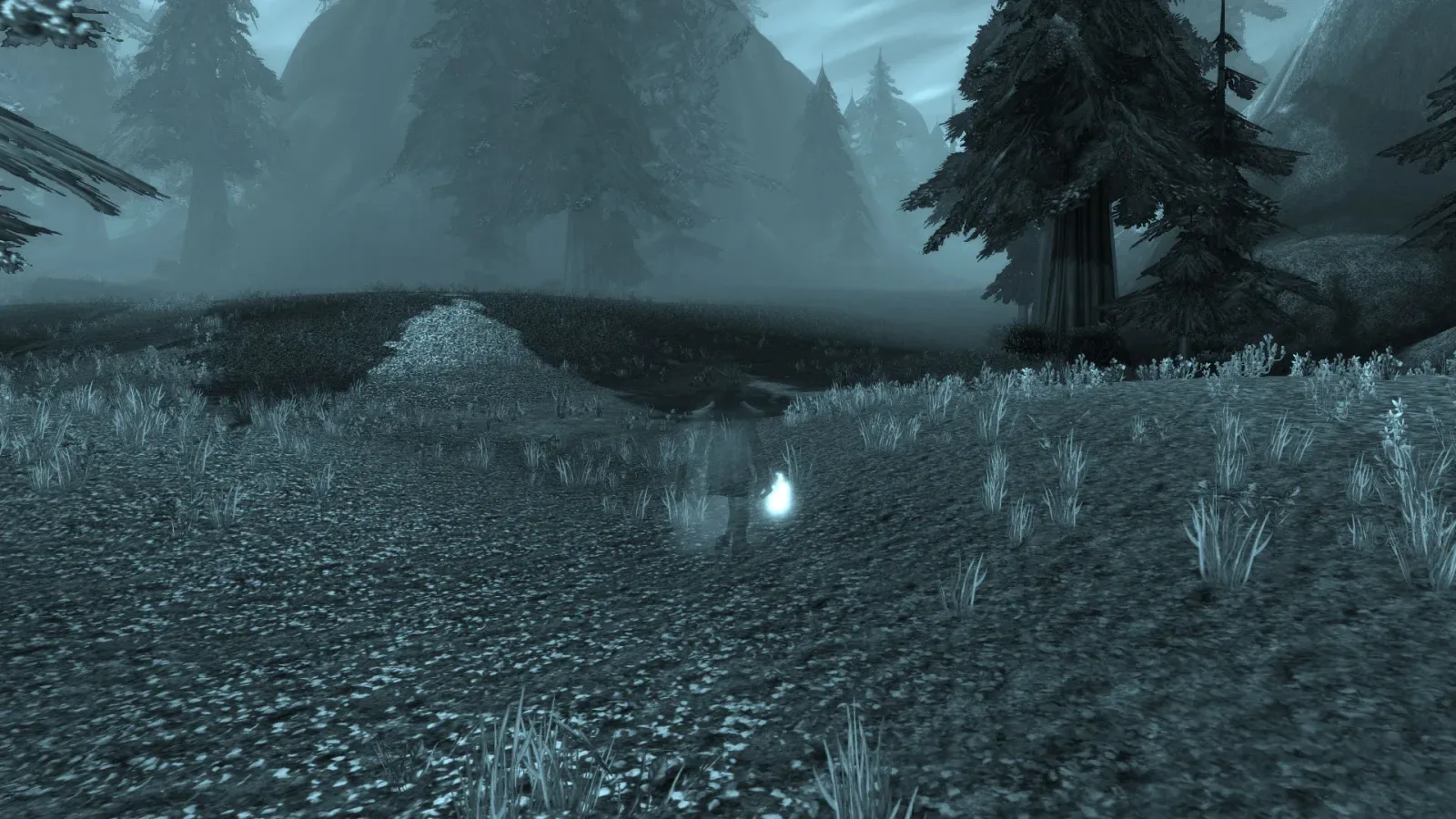
For most non-hardcore characters, that choice begins one of the most routine processes in the game: the corpse run. The player appears at a nearby graveyard in spectral form, with the world drained into a ghostly black-and-white presentation. There is little to do besides travel. Ghost characters cannot meaningfully resume their adventure, interact with the world normally, or use their usual tools. They simply have to make their way back to their body and resurrect there. The other option, resurrecting directly at the graveyard, comes with damaged gear and a punishing temporary debuff, making it a last resort unless the corpse is particularly inconvenient to reach.
Anyone who has played enough WoW has heard the music that accompanies this state. It is somber, sacred-sounding, and so familiar that many players likely file it away as part of the game's broader atmosphere without giving the lyrics much thought. Yet the choral piece is not merely using indistinct fantasy vocals. The voices repeat a recognizable Latin phrase: "Agnus Dei."
That detail creates an unexpectedly funny, if also oddly compelling, question: what exactly is the Lamb of God doing in Azeroth?
For useful background on this topic, read Tanuki: Pon's Summer Embraces Its Underdog Role in a Crowded November.
A hymn attached to a corpse run
In Christian liturgical tradition, Agnus Dei translates to "Lamb of God." It is a title for Jesus Christ, drawing on John the Baptist's description of Jesus in the Gospel of John. The phrase has a long history in church music and worship, so its appearance in a fantasy game's death-state soundtrack can sound much more specific than the usual wordless choir associated with mystical or spiritual scenes.
World of Warcraft is full of vocal music, but its use is typically more clearly rooted in the setting. Some pieces rely on nonverbal chanting and sustained choral notes. Others use languages associated with the game's many cultures, including Elven-themed material such as "Nightsong," a memorable piece associated with the Cataclysm era. Azeroth has built up an enormous collection of invented languages, beliefs, pantheons, cosmic forces, and supernatural traditions over more than two decades.
That makes "Agnus Dei" stand out. Rather than sounding like an invented sacred language or an ambiguous collection of vowels, it is a phrase with an unmistakable meaning in the real world. And it is attached to a mechanic every ordinary WoW player is likely to encounter again and again. Whether someone is adventuring in modern retail WoW, revisiting Classic content, or playing other non-hardcore versions of the game, death usually means hearing that chant while jogging through the afterimage of the world toward a corpse.
The result is an odd collision of game design and theological language. WoW players do not just hear the track during a one-time cinematic or in an obscure corner of a raid. They hear it while dealing with a very practical consequence of losing a fight to an overconfident pull, a dangerous elite enemy, or an opponent guarding a quest item. In one classic example, a player pursuing Humbert's Sword around Dun Garok may have plenty of time to contemplate the words while making yet another long trip back to their body.
Does the phrase establish Christian lore in Warcraft?
The entertaining answer is to leap immediately from a Latin lyric to the biggest possible conclusion: Jesus Christ exists somewhere in Warcraft cosmology, salvation extends to Azeroth, and one of the innumerable afterlives in the setting is a version of heaven. That is a hilarious image, particularly in a world filled with demons, undead armies, warlocks, dragons, cosmic entities, and a great deal of very casual violence.
But a soundtrack lyric is not necessarily a canonical declaration. Music often borrows from real-world languages, instruments, vocal styles, and religious traditions because they evoke a certain emotional response. Latin is especially common in fantasy and horror music because it can instantly communicate age, ritual, mystery, mourning, or divine grandeur to listeners who recognize its cultural associations. A composer may choose it for texture and tone without intending to import every element of the tradition behind it into a fictional setting.
There is no need to assume that Azeroth's inhabitants know the phrase, use it in worship, or connect it to an earthly Christian figure. The player hears a great deal that their character arguably does not. Interface sounds, combat alerts, quest notifications, and background tracks serve the audience as much as they serve the imagined world. The graveyard music could therefore be read as non-diegetic: music for the player's emotional experience of death, not a hymn literally echoing across Azeroth's graveyards.
Still, the specificity of the phrase makes it hard not to wonder. If it were simply a wordless choir, there would be no puzzle. "Agnus Dei," however, has a defined translation and a religious role associated with sacrifice, mercy, sin, and redemption. Those concepts are not alien to Warcraft. The franchise is packed with sacrifice and resurrection narratives, fallen heroes seeking atonement, holy warriors, death magic, curses, and civilizations wrestling with the consequences of catastrophic conflict.
That does not make WoW secretly Christian fiction. It does mean the music lands in an unusually pointed place: the moment after death, while the player is temporarily separated from their body and moving toward restoration.
Shadowlands makes the question even stranger
Modern Warcraft lore complicates any attempt to treat the death theme as a simple clue. Shadowlands directly explored the franchise's afterlife, introducing multiple realms associated with the souls and destinies of the dead. Its story made clear that the cosmology is enormous and that the player's view of it is not necessarily complete. There may be further destinations and spiritual systems beyond the places shown in the expansion.
That openness leaves room for fans to joke that an unseen Christian heaven could be one more destination among countless afterlives. Yet it is important to separate playful speculation from established lore. The existence of other unexplored realms does not establish any particular real-world religion within Warcraft's fiction. Nor does the use of "Agnus Dei" answer the larger questions raised by Shadowlands about judgment, purpose, redemption, and what happens to souls from different worlds.
In fact, WoW's resurrection mechanics are already deliberately game-like rather than a clean expression of its narrative rules. Player characters die, return to their corpses, take spirit healer penalties when necessary, and carry on questing. Major story deaths, meanwhile, can be permanent and emotionally defining. The graveyard run is a convenience system designed to keep play moving, even when it is dressed in haunting visual and musical language. Trying to derive a full theology from it is likely to produce more contradictions than answers.
The real value of an unanswered detail
There may never be an official lore explanation for why the graveyard theme uses "Agnus Dei." The most straightforward possibility is also the least exciting: the phrase was selected because it sounded haunting, mournful, and appropriate for an eerie interval between death and resurrection. That would be a perfectly normal artistic choice.
Yet the absence of a firm answer is what makes the observation enjoyable. World of Warcraft has existed long enough for even its smallest repeated details to become part of players' shared memory. A piece of music heard during countless corpse runs can remain unnoticed for years, then suddenly become impossible to ignore once someone identifies the words. From that point forward, every death has an extra layer of absurdity and intrigue.
It is also a reminder that game music does more than fill silence. The track turns a mechanical penalty into a brief tonal shift. The player is no longer fighting, trading, gathering, or questing; they are crossing an uncanny version of the world, briefly detached from normal life and trying to return. The solemn choir gives that transition weight, even when the actual reason for death was a wildly avoidable mistake.
So, does Jesus Christ canonically exist in World of Warcraft? There is no clear evidence that the graveyard song is intended to settle that question. But the repeated use of "Agnus Dei" ensures that it remains a strangely persistent one. Until Blizzard offers a definitive explanation, players can keep doing what WoW players do best: debating lore, inventing increasingly elaborate theories, and running back to their corpses while a very recognizable Latin refrain follows them through the gray.
Community
Discussion
Start the conversation.
No comments have been posted yet.