

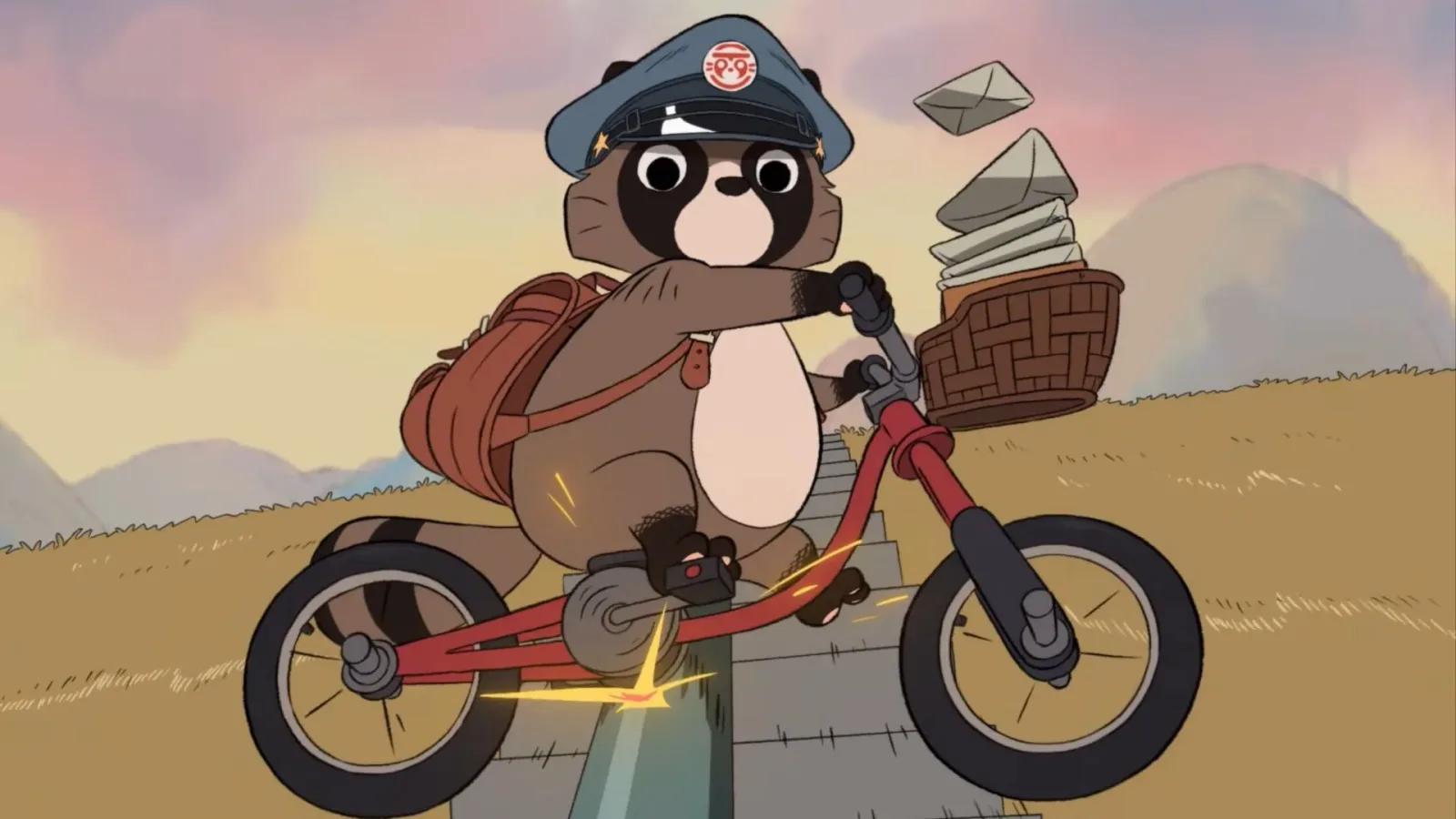
Tanuki: Pon's Summer has arrived at a daunting moment for any new game, let alone a smaller, unusually charming indie release. Denkiworks' cozy delivery adventure puts players on a BMX bike as a round tanuki races around a Japanese town, grinds rails, pulls off aerial tricks, and brings packages to local residents. It is a premise built to stand out. Yet its release window has placed it between the November 5 launch of a remake of The Legend of Zelda: Ocarina of Time and the looming arrival of Grand Theft Auto 6.
That is not exactly the kind of calendar placement most developers would choose when trying to win attention. One title represents one of gaming's most enduring adventures returning in a new form, while the other is widely viewed as one of the biggest entertainment launches ever attempted. But Denkiworks co-founder and game director Liam Edwards is approaching the situation with a mixture of realism and optimism. Rather than pretending Tanuki: Pon's Summer can dominate a period filled with blockbusters, the team is embracing its position as the appealing alternative: a "lovely little underdog" waiting for players once they want a break from Hyrule and Vice City.
It is a sensible identity for a game whose appeal comes from personality, playfulness, and a smaller-scale sense of place. Tanuki: Pon's Summer is not chasing spectacle through gigantic worlds or cinematic crime drama. Its hook is much more immediate: being a BMX-riding tanuki delivering parcels through an adorable town, turning routine errands into opportunities for stylish traversal and trick-based movement.
A Cozy Game With Momentum
Before its full release, Tanuki: Pon's Summer made an impression during Steam Next Fest in June. The demo gave players a glimpse of its central loop, mixing package delivery with rail-grinding, jumps, and bike tricks around a colorful Japanese setting. That combination of cozy slice-of-life atmosphere and arcade-inspired mobility made the game memorable amid the enormous number of demos that appear during festival events.
For useful background on this topic, read Binding of Isaac: Repentance+ Heads to Consoles on GTA 6 Launch Day.
The full game has now expanded on that initial pitch, and its Steam reception has been labeled "Very Positive." That early response matters enormously for a game launching without the advertising reach or cultural footprint of the industry's biggest franchises. A favorable launch can create momentum through recommendations, player clips, community discussion, and the simple fact that people increasingly look for a game they can recommend after finishing a much larger release.
For Tanuki: Pon's Summer, that long-term path may be more important than trying to compete for every player's attention during a packed release week. Cozy and inventive games often find their audiences gradually. A player may see it in a storefront, remember a demo they enjoyed months earlier, hear a friend mention its charming delivery missions, or seek it out after spending dozens of hours with a more demanding open-world game.
Edwards acknowledged that the team could not have planned around every change in the market, particularly Nintendo's decision to shadow-drop the Ocarina of Time remake on November 5. He noted that the overlap between Zelda players on Switch 2 and the potential audience for Tanuki: Pon's Summer may be more meaningful than any overlap with GTA 6 players. That observation highlights the difficult balancing act of publishing games around major releases: not every blockbuster affects every audience equally, but a huge launch can still consume storefront visibility, social conversation, and players' limited time.
Finding Space Between Two Giants
Launching near a massive game is often treated as a disaster by default, but it can also create a clear contrast. Zelda and Grand Theft Auto are both names associated with years of anticipation, huge expectations, and immense player investment. Tanuki: Pon's Summer offers something intentionally different. Its central image is not a legendary hero confronting evil or a criminal empire expanding across a sprawling city. It is a potbellied tanuki on a bike, trying to make deliveries while treating the town like a personal trick course.
That distinction could be precisely what helps it endure. Players do not always want the next hundred-hour commitment. After an intense action game or a blockbuster campaign, a lower-pressure experience with a cheerful tone can feel like a welcome reset. The game's BMX mechanics also give its cozy premise an extra layer of energy. Movement is not merely a way to get from one delivery point to another; it is part of the fun, inviting players to interact with the environment through rails, jumps, and airborne stunts.
The challenge is ensuring people know the game exists in the first place. Edwards said Denkiworks has worked with publisher Critical Reflex to identify the places where Pon and the game's distinct concept can shine. For a project with such a specific personality, targeted visibility may be more valuable than trying to speak to everyone. The players most likely to enjoy it are likely to respond strongly to the exact things that make it unusual: its animal protagonist, Japanese town setting, delivery-focused structure, and freely expressive BMX traversal.
In an era when many games are marketed using broad labels, Tanuki: Pon's Summer has the advantage of being easy to describe and difficult to confuse with something else. "The BMXing tanuki game" is a memorable elevator pitch. More importantly, it suggests an experience that is instantly understandable while still leaving room for discovery.
Word of Mouth May Be the Real Release Strategy
Edwards' hopes are focused on longevity. The idea is not that every prospective player will buy Tanuki: Pon's Summer on day one while larger games dominate conversations. Instead, the team is betting that positive impressions will accumulate and that the game will remain visible when players start asking what to play next.
This is where strong user reviews can be especially valuable. A "Very Positive" Steam rating does not guarantee broad commercial success, but it is an important public signal. For an indie game built around warmth and novelty, player enthusiasm can communicate far more effectively than a conventional sales pitch. People who have enjoyed an afternoon of deliveries and tricks are likely to tell others about the moments that made them smile, whether that is a smooth grind through town, an unexpected jump, or the simple charm of inhabiting Pon's world.
That community-driven discovery cycle is particularly suited to games that do not depend on spoilers or one giant narrative twist. Tanuki: Pon's Summer appears positioned as the kind of experience players can keep recommending over time. Its premise remains appealing whether someone encounters it at launch, during a quieter release month, or after a major holiday season has passed.
There is also an advantage in being a smaller game amid enormous releases: expectations can be more personal. Players are not necessarily looking for an all-consuming cultural event. Sometimes they are looking for an enjoyable game that feels handcrafted, has a clear point of view, and respects the desire to simply have a good time. The underdog framing works because it acknowledges the scale difference without treating it as a reason to disappear.
A Reminder That the Release Calendar Is Not the Whole Story
The modern game calendar can make it seem as though every launch must be judged immediately against the biggest names in the industry. A title that does not top charts or dominate awards discussions can be labeled overlooked before it has had the chance to reach the people it was made for. But games can have long lives, especially on digital storefronts where discovery continues well after launch week.
Tanuki: Pon's Summer may not be the title that defines November's headlines. Its developers appear to understand that. Yet it could still become one of the games players remember fondly from the period: a colorful detour discovered after the biggest adventures are complete, or a comforting companion played alongside more demanding releases.
Its arrival is also a useful reminder that crowded launch windows are not made up only of competing products. They are filled with different moods, genres, and audiences. A player interested in Zelda's fantasy exploration may still want a relaxed game between major quests. Someone counting down to GTA 6 may want an entirely different kind of world to spend time in beforehand. Tanuki: Pon's Summer does not need to replace either of those games. It simply needs to offer a compelling reason to take a ride through its town.
And based on the response so far, that reason is already resonating. The combination of delivery work, BMX tricking, and a lovable tanuki protagonist has given Denkiworks a game with a distinctive identity at exactly the time when distinct identity can matter most. There may be little chance of outshining the biggest releases on the calendar, but there is plenty of room to become the delightful surprise players find once they look beyond them.
Tanuki: Pon's Summer is available now on PC, PlayStation, Xbox, Nintendo Switch, and Nintendo Switch 2.
Community
Discussion
Start the conversation.
No comments have been posted yet.