

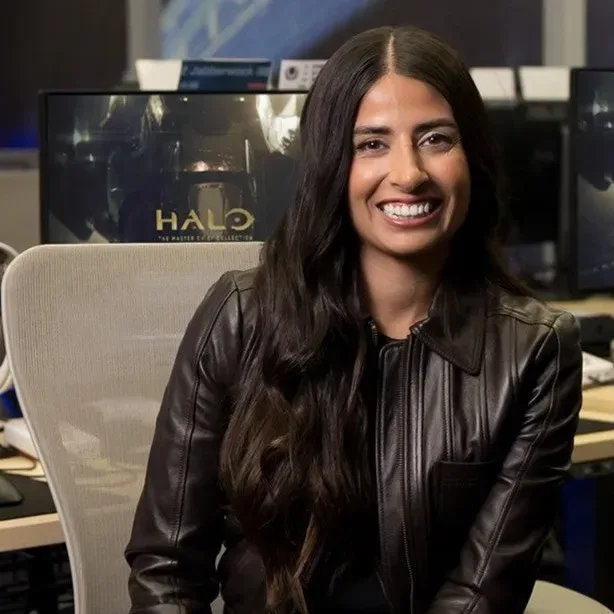
Xbox CEO Asha Sharma is reportedly taking a notably direct approach to learning about the people using Xbox products: spending several hours each month responding to customer support tickets herself. It is an unusual detail for the head of a major gaming organization, especially one whose first six months have already included sweeping changes to marketing, subscriptions, studio operations, and the company's franchise strategy.
Sharma's reported support work is intended to give her a clearer view of the practical problems players face. The experience has also apparently underscored just how complicated a single customer issue can be to resolve. That may sound obvious to anyone who has tried to sort out an account, hardware, subscription, purchase, or technical issue, but it is a valuable perspective for an executive overseeing a vast ecosystem of devices, games, services, and development teams.
For Xbox users who have submitted a support request during Sharma's tenure, there is at least a possibility that a response was handled by the CEO herself. There is no indication that she is attempting to replace the company's regular support operation or that every ticket receives that level of executive attention. Instead, the reported practice appears to be a recurring effort to understand player experiences from the closest possible vantage point.
A hands-on look at the Xbox customer experience
Customer support is often where the broad promises of a platform meet the messy realities of day-to-day use. A player may have a problem that looks simple at first glance but involves multiple layers: a Microsoft account, a payment method, an Xbox Game Pass subscription, a console setting, a game entitlement, a family-control feature, a regional storefront rule, or a third-party publisher's service. Even when a problem has a clear solution, getting to it can require information from several systems and teams.
For useful background on this topic, read Sora Joins Fortnite, and the Kingdom Hearts Crossover Looks Unsettlingly Different.
Sharma's support-ticket sessions reportedly taught her how difficult it can be to solve an individual player's issue. That observation is particularly relevant for Xbox, which operates across console hardware, subscriptions, cloud-connected services, first-party publishing, and a wide range of games with their own online systems. A decision that seems straightforward at a corporate level can become much more complicated when it reaches an individual account or a specific piece of software.
The gesture also has symbolic value at a time when players are increasingly sensitive to the distance between corporate leadership and the communities affected by business decisions. Support tickets are rarely submitted because everything is working perfectly. They arrive when a player is frustrated, confused, locked out, charged unexpectedly, unable to access content, or simply looking for help. Reading and answering those cases can offer an unfiltered look at the friction points people encounter.
Whether the initiative ultimately produces visible product changes remains to be seen. Still, it gives Sharma an additional channel beyond financial reports, surveys, social-media reaction, and internal presentations. The issues that reach support may not represent every Xbox player, but they can expose patterns in the experience that headline metrics do not always make obvious.
A turbulent first six months
Sharma's early period as Xbox CEO has not been quiet. Among the reported changes was the end of the divisive This is Xbox marketing campaign. The campaign had generated mixed reactions, and ending it signaled a willingness to reassess a public-facing strategy that had become a point of debate among fans.
Her first six months also included a reduction in the price of Xbox Game Pass Ultimate. Subscription pricing is one of the most visible decisions Xbox can make, since Game Pass sits at the center of the company's modern strategy. Changes to Ultimate affect not only current members but also the broader conversation about the value of an Xbox subscription and the role that recurring services play in the company's future.
Those moves came alongside far more difficult developments. Sharma has also overseen mass layoffs and development studio spin-outs. Such decisions carry major human consequences for affected employees and can leave players uncertain about the teams and projects they follow. They also complicate any attempt to define a leadership era through only consumer-friendly announcements or high-profile game deals.
The contrast is striking: a CEO can be personally responding to a customer's technical issue while simultaneously leading an organization through substantial structural changes. Both realities are part of the current Xbox picture. For players, the most immediate concern may be whether games, subscriptions, and support improve. For employees and studios, the stakes extend much further, involving jobs, creative independence, and the future direction of teams that have spent years building Xbox projects.
A renewed focus on core franchises
One of Sharma's clearest reported priorities is a greater emphasis on Xbox's underserved core franchises. That direction suggests the company sees considerable value in properties with established audiences, recognizable identities, and room to grow. It also speaks to a longstanding desire among Xbox fans: more consistent investment in the series that helped define the platform.
The most immediately exciting example for many role-playing game fans is Obsidian Entertainment's reported work on a new Fallout RPG. The project is set to be directed by Josh Sawyer, the creative lead associated with Fallout: New Vegas and a highly regarded RPG developer. The combination of Obsidian, the Fallout setting, and Sawyer's involvement has naturally prompted enthusiasm, particularly from players who hold New Vegas in especially high regard.
Important details about the new game have not been laid out publicly in the information available so far. There is no confirmed release window, no announced platform list, and no outline of its story, scope, systems, or relationship to previous entries. The key development is that Obsidian has begun work on the RPG, with Sawyer directing it. For now, expectations will largely be shaped by the team's history and the appetite for another major entry in the series.
A franchise-first strategy can be appealing because it gives fans something concrete to anticipate. Established series come with built-in interest, but they also carry heavy expectations. Players want the qualities they associate with a beloved property preserved, while also expecting meaningful evolution rather than repetition. In the case of Fallout, that means the eventual game will likely face close scrutiny over role-playing depth, choices, world design, writing, and how it distinguishes itself within a long-running franchise.
Kojima agreement expands beyond OD
Sharma's Xbox has also secured a major creative partnership with Hideo Kojima. The game director has signed a multi-project agreement that expands the existing arrangement for the horror game OD. The expanded deal also includes Physint, described as a spiritual successor to Metal Gear Solid.
Physint had originally been planned as a PlayStation exclusive before that arrangement was reportedly set to be cancelled earlier in the summer. Its inclusion in the broader Xbox agreement is a significant development, not least because Kojima's projects tend to command intense attention well before their final details are known. The director's name carries global recognition, and the prospect of a new project positioned in the orbit of Metal Gear Solid will inevitably create high expectations.
As with Obsidian's new Fallout RPG, many essential details surrounding Physint remain unclear. The available information does not establish a release date, price, or full platform plan. It does, however, show Xbox pursuing projects from prominent creators while also putting more attention on its own established franchises.
That combination could become a defining part of Sharma's approach. On one side are internally owned series with long histories and sizable communities. On the other are partnerships with celebrated outside creators capable of bringing prestige, attention, and a different kind of creative identity to Xbox's lineup. Balancing those ambitions against the realities of studio restructures and development costs will be a substantial challenge.
Why support tickets matter to the bigger strategy
It would be easy to treat the CEO answering support tickets as merely a curious anecdote. Yet it fits the larger questions Xbox faces. The company is not only selling games; it is maintaining an ongoing relationship with players across services and devices. A lower subscription price matters only if members can use the service smoothly. A major game announcement matters only if audiences can find, buy, download, and play it without unnecessary barriers. A marketing reset matters only if the company can make its value proposition clearer in practice.
Direct exposure to support cases cannot solve every one of those challenges. It can, however, help leadership understand where policy, product design, communication, and technical systems fall short for real people. It may also reveal the difference between a problem that looks isolated internally and one that feels deeply consequential to the player experiencing it.
Sharma's first half-year has already delivered a mix of changes that will be judged over a much longer period. The end of a contested campaign, a Game Pass Ultimate price cut, layoffs, studio spin-outs, renewed attention to key franchises, and expanded Kojima collaboration all point to an Xbox organization in transition. Her decision to personally spend time in customer support adds a small but meaningful human-level detail to that broader picture.
For now, Xbox players may never know whether the person who helped with a specific ticket was the company's CEO. But the practice suggests Sharma wants an understanding of Xbox that includes not only blockbuster announcements and boardroom strategy, but also the individual moments when a player simply needs something fixed.
Community
Discussion
Start the conversation.
No comments have been posted yet.