

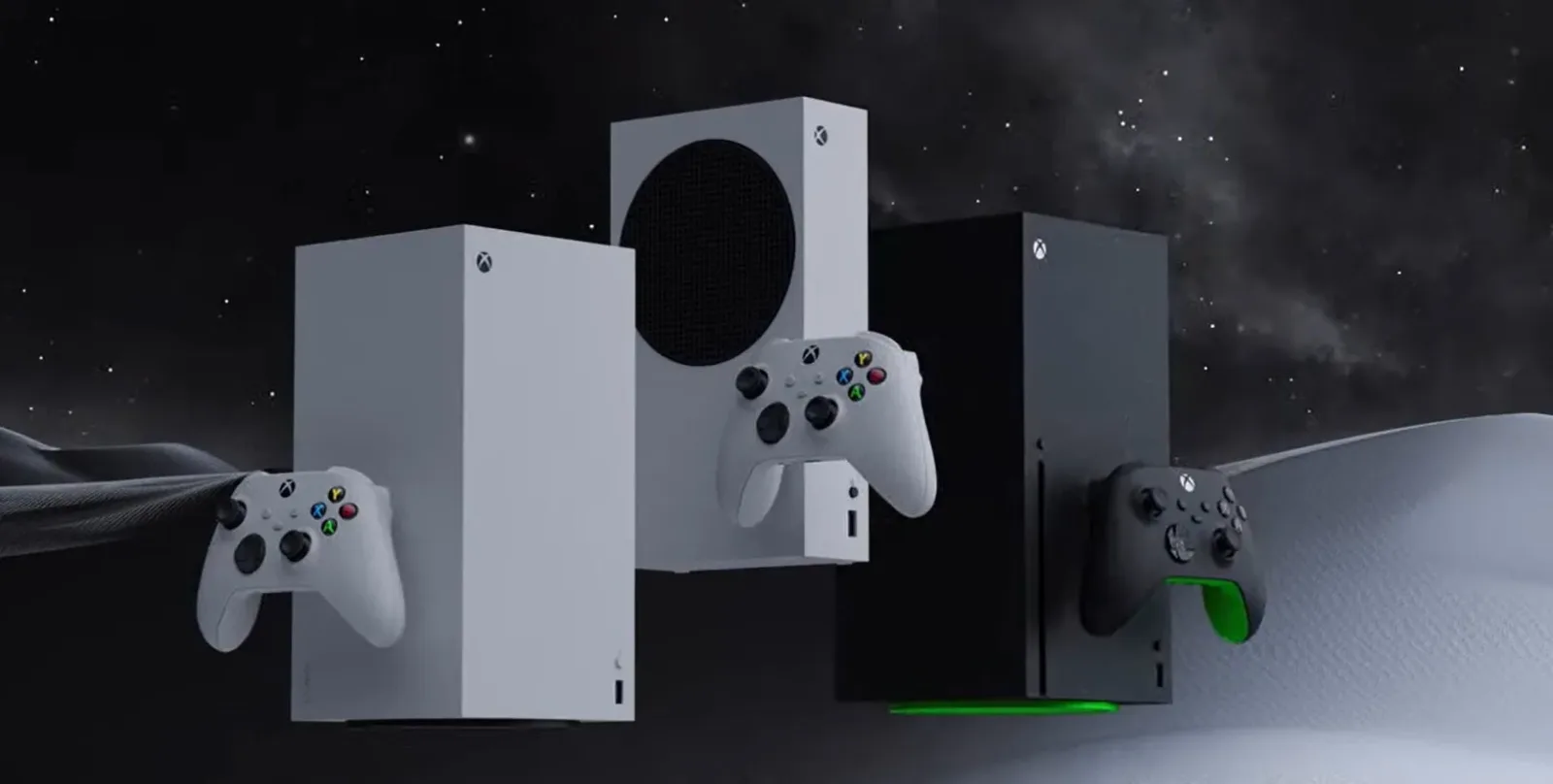
Xbox owners are reportedly receiving an unusual marketing email that asks whether they have stopped using their console and suggests that they trade it in at Best Buy. Screenshots circulating online show messaging aimed at Xbox Series X and Xbox Series S users, with the campaign presenting a potential return of up to $375 for a Series X and up to $200 for a Series S.
The apparent email has quickly drawn attention not simply because it promotes a retail trade-in program, but because of its framing. Rather than treating the console as the center of a player's Xbox experience, the message reportedly raises the possibility that a recipient has "moved on" to playing Xbox games elsewhere, including on PC. It then positions handing over the console as a logical next step.
That is a striking pitch for a company whose current-generation consoles remain active products. It also arrives at a time when Xbox has increasingly emphasized an ecosystem spread across console, PC, cloud access, subscriptions, and other devices. Still, encouraging existing hardware owners to part with their systems is the kind of language that naturally invites questions about the campaign's purpose, its intended audience, and what it says about Microsoft's evolving relationship with dedicated console hardware.
Embedded X/Twitter post
What the reported Xbox email says
Multiple Xbox users on social platforms and the ResetEra forum have shared or corroborated reports of receiving the email during the past day. The screenshots describe an offer connected to Best Buy trade-ins and appear to be directed at people who have not recently played on an Xbox console.
For useful background on this topic, read LEGO Star Wars R2-D2 Set Falls to $80, Including a Darth Malak Minifigure.
The message reportedly opens by asking users whether they have not played on their console in a while. It goes on to suggest that players may now be accessing Xbox games through PC or another method. From there, it recommends trading in the physical Xbox hardware at Best Buy.
The advertised figures are conditional maximums rather than guaranteed values. A Series X can reportedly receive up to $375 back, while a Series S can reportedly receive up to $200 back. As with any trade-in promotion, the final valuation would be expected to depend on the particular model, condition, included accessories, local program terms, and any other requirements set by the retailer. The reported email does not establish that every recipient would qualify for those highest amounts.
The unusual nature of the wording has made the posts an easy target for jokes online. A platform holder telling owners that perhaps they no longer need the platform's dedicated device can sound counterintuitive, especially when the company is still selling that device. But the pitch fits more cleanly when viewed through Xbox's broader strategy: Microsoft wants people using Xbox services and buying or playing Xbox games, even if their primary machine is a Windows PC rather than a Series console.
Why people initially questioned the screenshots
Some observers were skeptical of the images because the displayed sender used the @e.xbox.com domain. An unfamiliar-looking address, especially when paired with an unexpected trade-in offer, is a reasonable reason for caution. Players are regularly warned about phishing campaigns that mimic major gaming brands, and a console trade-in prompt could be an appealing disguise for a malicious link.
There are, however, indications that the domain itself is legitimate. The address is an official Xbox subdomain, and a Microsoft employee had publicly confirmed in 2025 that it was an approved domain used by Microsoft and Xbox for communications. That does not mean every message that appears to use the address should automatically be trusted, nor does it replace basic safety checks. It does mean the domain seen in the circulating screenshots is not, by itself, proof of a scam.
The number of people reporting the same message also adds weight to the claim that this is a real marketing push. The email has been corroborated across more than one online community, rather than resting on a single isolated screenshot. No formal public explanation of the campaign's targeting, duration, or exact terms has been detailed in the reports, so some uncertainty remains around its full scope.
Anyone receiving a message like this should still take the sensible route: inspect the sender carefully, avoid entering account information through an unexpected email link, and independently navigate to a retailer or official account page if they want to investigate a promotion. The campaign may be legitimate, but caution around email offers remains important.
Best Buy is not an arbitrary partner
Microsoft and Best Buy already have an established business relationship, making the retailer's involvement less surprising than it may seem at first glance. The two companies worked together in 2025 on a campaign promoting Microsoft Copilot features, including customer-facing advertising and social media activity. Microsoft also announced in 2025 that Best Buy had added Microsoft Defender for Endpoint to work alongside its existing Tanium endpoint management solution.
Those initiatives concern areas beyond gaming, but they demonstrate that the companies have worked together across consumer marketing and enterprise technology. A trade-in program aimed at Xbox customers would therefore not necessarily require a brand-new relationship or an unusual arrangement.
Trade-ins also benefit retailers in several ways. They can bring customers into stores, potentially encourage the purchase of other electronics, and supply used hardware for resale. Microsoft, meanwhile, may see value in retaining people within the Xbox software and services ecosystem even if they no longer own a current Xbox console. A user playing Xbox titles on PC remains a potential customer for games, subscriptions, add-ons, and other Microsoft services.
None of that confirms the precise financial structure behind the offer. It is not known whether Microsoft receives a share connected to trade-in transactions, whether Best Buy is funding the promotion independently, or whether the campaign includes some other commercial arrangement. The reported material only points to a Best Buy trade-in opportunity marketed through Xbox communications.
A revealing example of Xbox's hardware-light messaging
For years, console manufacturers have used hardware ownership as the obvious foundation for their gaming businesses. The familiar goal was to sell the box, grow the installed base, and then sell games and subscriptions to the people using that box. Xbox still operates in that world, but Microsoft has spent considerable time arguing that Xbox is bigger than a single console.
Game Pass, Xbox Play Anywhere support, PC releases, cloud streaming initiatives, cross-progression, and the company's increasing willingness to publish selected games on rival platforms all reflect that expanded definition. In that context, an email aimed at lapsed console players can be read as a blunt expression of the company's priorities. If a person no longer uses a Series X or Series S but still plays Xbox-supported games on PC, Microsoft may regard that person as remaining inside the ecosystem.
That does not remove the uncomfortable optics. The Series X and Series S are still the dedicated local hardware through which many players access Xbox games, backward compatibility, physical discs in the Series X's case, and console-focused features. Telling some owners that it might be time to trade one in risks sounding like an admission that the console itself is no longer central.
It may also be particularly odd for players who prefer the convenience and simplicity of a living-room console. PC gaming is not an interchangeable substitute for everyone, even when the same games are available. Cost, performance expectations, storage, a user's existing setup, game ownership, input preferences, and the desire for physical media can all make a console the better fit for an individual household.
What players should take from the reported offer
For inactive Series X|S owners, the practical question is straightforward: does the offered trade-in value make sense compared with keeping the console or selling it privately? The maximum figures are attention-grabbing, but they should be treated as a starting point rather than a promised payout. A console in poor condition, one missing components, or a model outside a retailer's preferred criteria could receive a lower valuation.
- Check the model and condition requirements before traveling to a store.
- Confirm whether a quoted value is cash, store credit, or subject to promotional conditions.
- Back up saves where necessary and remove personal data before surrendering hardware.
- Deactivate or sign out of accounts and ensure the console has been reset properly.
- Compare the retailer's offer against local private-sale prices if maximizing value is the priority.
There is also a broader choice. A player who has temporarily stopped using an Xbox may return to it later for a specific release, a backward-compatible favorite, a Game Pass title, or local multiplayer. The convenience of recovering a few hundred dollars now needs to be weighed against the cost and hassle of buying another machine later.
The bigger picture remains unsettled
The reported email does not, on its own, prove a major shift in Xbox's hardware plans. It appears to be a targeted retail promotion, and campaigns that focus on lapsed users often use more direct language than broad brand advertising. It would be a mistake to treat one email as a definitive statement that Microsoft is abandoning consoles or that every Xbox owner is being urged to sell.
Even so, the campaign is notable because it makes a normally implicit message unusually explicit. Xbox increasingly wants its audience to think about games and services across several devices, not just the plastic box under the television. Asking some inactive console owners to consider a trade-in at Best Buy is an unusually candid, if awkward, extension of that approach.
For now, the evidence points to a genuine Xbox-linked communication promoted to at least some Series X and Series S users, with Best Buy positioned as the trade-in destination. The full eligibility rules and scale of the effort remain unclear. What is clear is why the email has attracted so much discussion: few console marketing messages are likely to be remembered for suggesting that owners may be better off without the console.
Community
Discussion
Start the conversation.
No comments have been posted yet.