

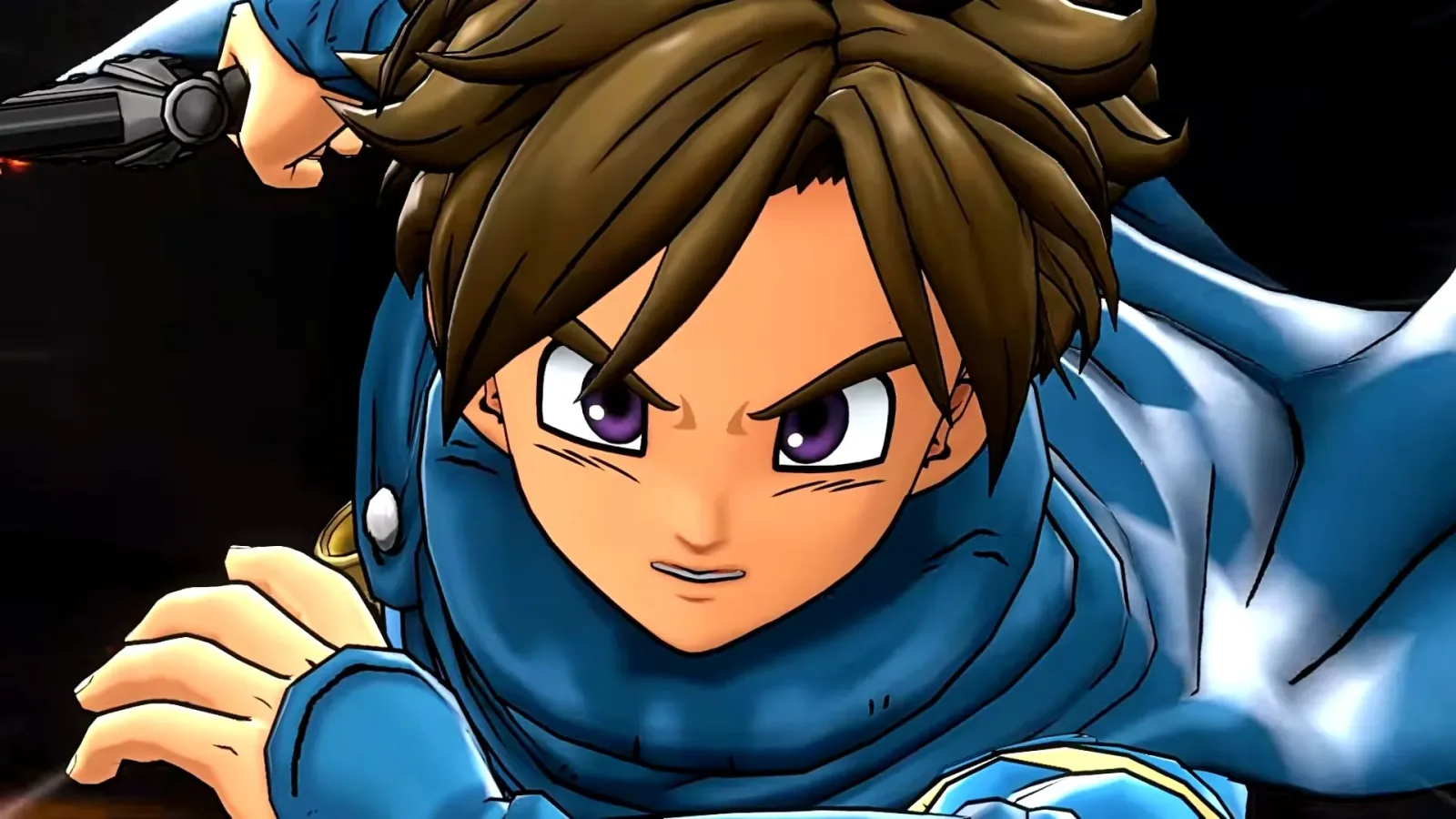
Dragon Quest has endured for four decades as one of Japan's defining role-playing game series, but a newly revealed mobile project has reopened a difficult conversation about its future. Following debate surrounding the game's continued use of artwork modeled on the late Akira Toriyama's instantly recognizable style, Chrono Trigger composer Yasunori Mitsuda has argued that Square Enix should consider ending the long-running franchise rather than continuing it in its current form.
Mitsuda's comments concern Dragon Quest Quest RPG: The Cursed Tree and the Chosen Isle, a newly announced mobile entry. The project has attracted substantial online discussion not just because of its place in the famous series, but because its illustrations evoke the visual language established by Toriyama, the legendary artist who designed Dragon Quest's characters and monsters for decades. Toriyama, also celebrated worldwide as the creator of Dragon Ball, died in 2024.
In a blog post discussing the reaction to the game, Mitsuda said the approach was not beneficial for Toriyama, his fans, or the artist's legacy. He then went further, suggesting that Dragon Quest itself should be put to rest and that series creator Yuji Horii should instead be given the freedom to build a completely new RPG.
A concern about legacy, not a dismissal of Dragon Quest
Mitsuda is not speaking as someone indifferent to Dragon Quest's importance. His remarks make clear that he regards the series as a landmark work that has influenced both players and game developers since its 1986 debut. That history is precisely why his call is striking: rather than treating Dragon Quest as a brand that can simply continue indefinitely, he frames it as a creative work deeply tied to the people who made its identity possible.
For useful background on this topic, read Unauthorized Full-Game Ports Are Appearing Inside Roblox.
For generations of players, Dragon Quest has been defined by the collaboration between Horii, artist Akira Toriyama, and composer Koichi Sugiyama. Horii's approachable scenarios and traditional RPG sensibilities, Toriyama's expressive cast designs and monsters, and Sugiyama's orchestral music created a style that was immediately identifiable. Even as individual games varied in setting, battle systems, party structures, and storytelling ambitions, that creative foundation connected the series across eras.
Toriyama's contribution was especially visible. The series' famous Slime is a simple but unforgettable example of how his art helped establish Dragon Quest's personality. Its friendly shape and expressive face turned what could have been a routine low-level enemy into a symbol recognized far beyond the RPG audience. Heroes, villains, townspeople, and monsters likewise carried a visual warmth and charm that distinguished Dragon Quest from many fantasy games.
That makes imitation or continuation a sensitive issue. Some fans welcome any effort to preserve a familiar visual identity, especially in a series with such a strong tradition. Others feel that reproducing an artist's look after their death can become uncomfortable when it is used to support another commercial release. The unveiling of The Cursed Tree and the Chosen Isle has brought both responses to the surface, along with disagreements over how closely its art resembles Toriyama's own work.
Mitsuda believes Yuji Horii should make something new
Rather than proposing a replacement artist or a drastic redesign for Dragon Quest, Mitsuda's proposed answer is more fundamental. He suggested retiring the series and allowing Horii to create a brand-new RPG. His reasoning reflects the difficulty of making something genuinely fresh while remaining bound to a franchise with 40 years of expectations, iconography, and creative history.
Mitsuda's position is that continuing in this way is not good for the artist, Toriyama's fans, or Toriyama himself, and that Dragon Quest may be better concluded so Horii can pursue an entirely new RPG.
That idea does not mean Dragon Quest's legacy would disappear. On the contrary, ending a series can preserve its existing work as a completed body of games rather than turning it into a property expected to produce new entries forever. The original titles, remakes, spin-offs, music, art, and memories associated with the franchise would remain. Horii's influence on Japanese RPG design would remain equally secure.
A new role-playing game from Horii could also offer room for different visual collaborators, new mechanics, and a world that is not required to echo earlier Dragon Quest adventures. Such a project could take inspiration from the genre's traditions without needing to carry every expectation attached to the Dragon Quest name. That is the creative possibility Mitsuda appears to be highlighting.
It is also an argument shaped by the realities of authorship. Major game series are collaborative and often outlive their individual creators, but certain franchises become inseparable from a small number of defining talents. Dragon Quest may be one of the clearest examples. Continuing the name may be possible from a business and development standpoint, yet the question raised by Mitsuda is whether possible is the same as desirable.
The mobile announcement has intensified an existing debate
Dragon Quest Quest RPG: The Cursed Tree and the Chosen Isle is at the center of the latest backlash because it presents a new product carrying Dragon Quest's established aesthetic after Toriyama's death. Mobile games are often a particularly charged space for this type of discussion. They can introduce a property to a vast audience and provide a continuing stream of character art, events, and collectible content, but they can also make fans more wary of a beloved series being treated chiefly as a brand to extend.
There is no single consensus among Dragon Quest fans. Some have focused on whether the revealed art succeeds as an homage. Others have questioned whether any successor should try to replicate Toriyama's visual style so closely. Still others have argued that Dragon Quest should continue, but with a new artistic direction openly shaped by another creator rather than an approximation of the old one.
Those distinctions matter. Respectful influence is a normal part of art, and long-running game franchises regularly retain visual elements across changing teams. Yet there is a difference between maintaining a recognizable design language and creating work that audiences perceive as standing in for an artist who is no longer here to guide or approve it. The response to the new mobile RPG shows how emotionally important that difference is to many players.
Mitsuda's perspective adds weight to the debate because of his own position in game music and Japanese RPG history. His work on Chrono Trigger places him close to a period when Japanese role-playing games were becoming defining cultural works for players around the world. His comments do not establish an official plan for Dragon Quest, nor do they indicate that Square Enix or Horii intends to retire the franchise. They are a personal creative judgment from a veteran composer responding to a topic that has clearly touched a nerve.
Dragon Quest's future remains Square Enix's decision
Square Enix has not announced that Dragon Quest will end, and The Cursed Tree and the Chosen Isle demonstrates that the company is still pursuing new releases under the series banner. As things stand, Mitsuda's proposal is a call for reflection rather than a reported change in strategy.
Still, the response to the mobile announcement may influence how future Dragon Quest projects are received and discussed. Fans will likely keep asking who is shaping the visual identity of new games, how Toriyama's influence is being acknowledged, and whether the series can evolve without feeling detached from the people who made it special.
There is no easy resolution. Ending Dragon Quest would disappoint players who want to see the series continue for future generations. Continuing it without Toriyama, meanwhile, means confronting the challenge of honoring a foundational artist without reducing his contribution to a visual template. Choosing a bold new look could be seen as a necessary evolution by some fans and as a departure from Dragon Quest's soul by others.
What is certain is that Toriyama's influence is too large to vanish from games, manga, animation, or popular culture. Dragon Quest helped demonstrate how transformative character and monster art could be for an RPG, and that achievement will remain visible whether the series continues, changes course, or someday reaches a conclusion. Mitsuda's comments have put the most difficult version of that question into public view: whether preserving Dragon Quest's legacy may ultimately require letting it end and allowing its creator to begin again.
Community
Discussion
Start the conversation.
No comments have been posted yet.