

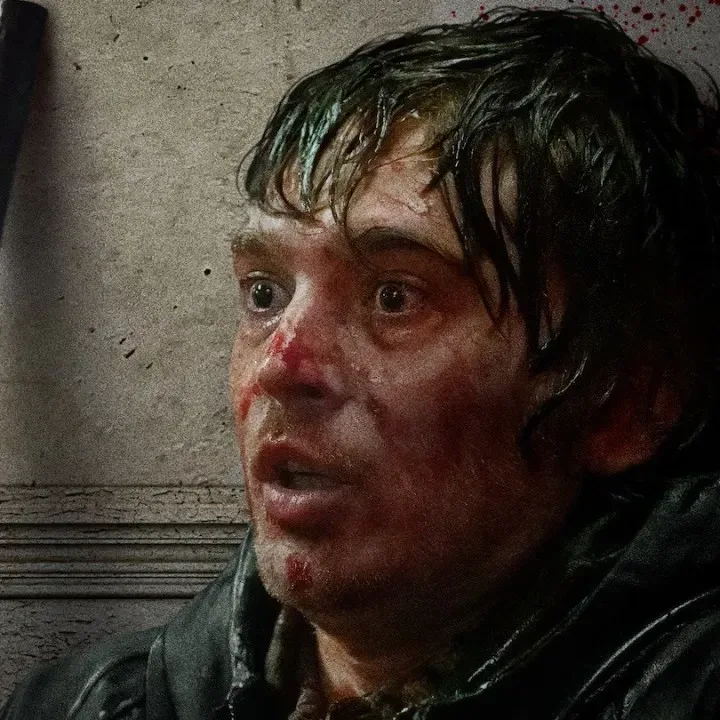
Zach Cregger's Resident Evil has not reached theaters yet, but the filmmaker is already thinking beyond its first outbreak. Cregger has said he would be interested in telling more stories in Capcom's long-running survival-horror universe and that he has ideas for what a second movie could explore.
That does not mean a follow-up is confirmed. The new film is still waiting for its September 18, 2026 release, and any sequel decision will naturally depend on how audiences respond and how the movie performs. Still, Cregger's comments suggest that his work on the adaptation has left him eager to continue in this particular world rather than treat it as a one-and-done assignment.
"I can't help thinking about other places this story could go," Cregger said in a recent interview. "I've got ideas, but this movie hasn't even come out yet. Let's see what happens."
It is an intriguing statement because Cregger's Resident Evil is not being positioned as a straightforward retelling of one of the games. Instead, it is an original story set amid the Raccoon City Incident, following an ordinary person forced to survive as the situation around them collapses into chaos. That approach has become one of the biggest talking points surrounding the project, particularly among fans who hoped to see the stories of familiar game protagonists adapted directly.
For useful background on this topic, read Worm Office Chaos, DIY Shipbuilding and a Strong New Wave of Indie Games.
An Original Route Through Raccoon City
The decision to tell a new tale inside the broader Resident Evil setting gives Cregger room to approach Raccoon City from a different angle. The game series has often centered on highly capable figures: police officers, special agents, soldiers, and survivors who become deeply tied to the conspiracy surrounding Umbrella and its biological weapons. Putting an average person at the center of the movie changes the perspective considerably.
Rather than beginning with someone who understands weapons, investigations, or the strange threats hidden within the series' world, the movie's protagonist is expected to experience the disaster from a more vulnerable position. That can make the Raccoon City Incident feel immediate in a way that differs from the games without discarding the franchise's fundamental appeal. The city remains a place of panic, infection, monsters, secret experiments, and crumbling public order; the viewpoint is simply different.
Cregger has defended that creative choice in the face of divided reactions. He has emphasized that he is a genuine fan of the games and did not attach the Resident Evil name to an unrelated project merely to secure financing. His stance has been that the games already tell their own stories extremely well, making a beat-for-beat screen version less compelling to him than creating a fresh narrative that can exist alongside the material players know.
That distinction could be especially important if the first film succeeds. A sequel would not necessarily need to repeat the exact structure of the opening movie or follow the same character perspective. An expansive setting like Resident Evil contains multiple outbreaks, locations, organizations, and types of horror. Cregger has not revealed what his ideas involve, but his interest in "other places" for the story to go indicates he sees more potential within the universe than a single contained movie.
Why This Franchise Feels Different to Cregger
Cregger contrasted his thoughts about Resident Evil with his earlier horror film Barbarian. He said he has never seriously entertained making another movie in the Barbarian universe because, in his view, that film's power came from the way its narrative unfolds rather than from returning to its underlying subject matter.
He described that earlier story as fundamentally unpleasant and suggested that he does not want to write another film focused on what Barbarian was about. With Resident Evil, however, he sees a different kind of opportunity. The franchise is built to support a range of stories, from claustrophobic survival horror to larger conspiracies involving dangerous viruses, parasites, mutated creatures, and the people trying to contain or exploit them.
Cregger also said there is a major aspect of the new film's ending that he wants to discuss, though he stopped short of revealing anything before release. The comment is notable for two reasons. First, it suggests the conclusion could give viewers plenty to debate once the movie arrives. Second, it leaves open the possibility that the ending may establish an idea, threat, or direction worth revisiting in another installment.
Of course, a sequel hook and a sequel plan are not the same thing as a green light. The filmmaker himself was clear that audiences will need to see the first movie before any further steps can be considered. But his willingness to openly discuss future possibilities makes it clear that he is not approaching the adaptation as a closed creative chapter.
Familiar Signs of Resident Evil Horror
While the central plot is original, promotional material has continued to point toward recognizable elements from the games. Recent trailers and marketing have given fans reasons to scrutinize every creature, location, and visual clue for references to different eras of the series.
A Spanish-language trailer released by Sony España appeared to include a creature with features resembling someone overtaken by Las Plagas. That parasite is most closely associated with Resident Evil 4, where Leon faces enemies transformed and controlled through the infection. The apparent visual nod has naturally led to speculation about how broadly Cregger's movie might draw from franchise history, even though the film is rooted in the Raccoon City Incident.
Another promotional image showed an X-ray view of a Doberman Pinscher. For longtime players, that image immediately evokes the infected dogs that became one of the series' earliest and most memorable threats. The material appears to suggest that T-Virus-infected dogs could appear in the movie, serving as a callback to the original games and their famously tense encounters with fast-moving canine enemies.
Neither tease necessarily explains the full shape of the film, and viewers should be cautious about drawing definitive plot conclusions from trailers and posters. Still, they demonstrate that the production is not avoiding the visual language that has made Resident Evil so recognizable. The challenge will be balancing those references with the movie's new protagonist and standalone narrative.
That balance has long been difficult for game adaptations. Fans often want faithful depictions of beloved characters, settings, and story beats, while filmmakers frequently seek the flexibility to make a movie function for viewers who have never played the games. Cregger's version is attempting to meet that challenge by using a familiar catastrophe and iconography while telling a story not already covered by a single entry in the game series.
A Major Opening Weekend Could Change the Conversation
Early projections have suggested that Resident Evil could earn between $40 million and $50 million during its opening weekend. If that range holds, the film could surpass the opening launches of previous movie adaptations based on the franchise.
Those projections are not guarantees, particularly for horror releases whose fortunes can change quickly once reviews, word of mouth, and competing releases enter the equation. Yet the estimates point to considerable attention around Cregger's take. The steady rollout of teasers has helped keep the conversation active, while the choice to depart from a direct game adaptation has produced both enthusiasm and apprehension.
Cregger has acknowledged that he was naive to think every game fan would be happy with his approach. That is an understandable realization for a property with decades of history and a passionate audience. Resident Evil has changed dramatically across its games, however, moving between haunted-mansion survival horror, conspiracy thrillers, action-heavy missions, rural nightmare scenarios, and more personal tales of infection and loss. In that sense, an original movie is not entirely outside the franchise's spirit; it is another interpretation of a setting that has repeatedly reinvented itself.
The September 18 release will determine whether Cregger's first trip to Raccoon City connects with audiences strongly enough to become the beginning of something larger. For now, the director has only said that he has ideas and wants to see what happens. But for fans watching every trailer frame for clues, that may be enough to start wondering not only how this new Resident Evil story ends, but where it could go next.
Community
Discussion
Start the conversation.
No comments have been posted yet.