

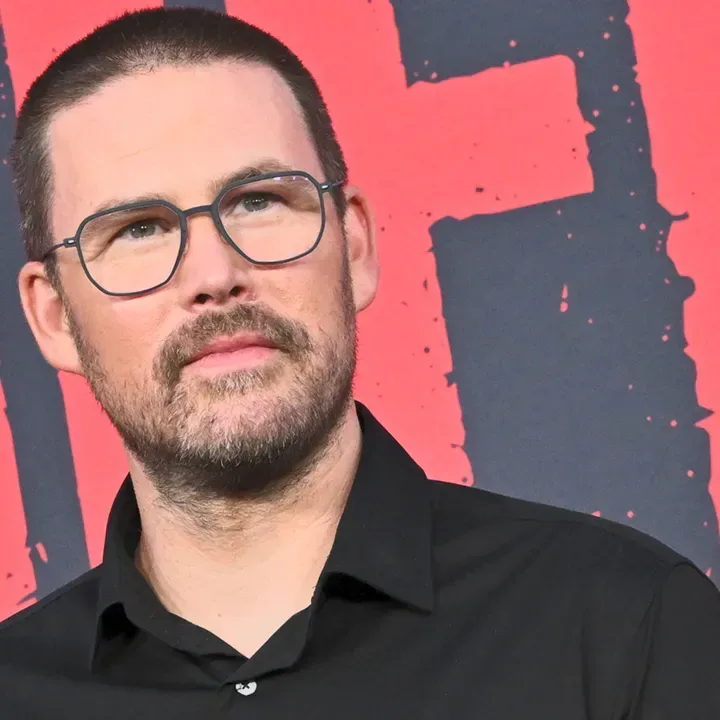
Resident Evil director Zach Cregger has spoken candidly about the difficult conversation surrounding his video game adaptation before it reached theaters. While the film ultimately became a substantial commercial success, Cregger says much of the reaction in the lead-up to release was centered on its relationship with Capcom's games rather than the qualities of the movie he had made.
Speaking during an appearance on The Town with Matthew Belloni podcast, Cregger described his frustration with the way fans debated the project. The director, known for horror movies including Barbarian and Weapons, said the attention was frequently directed toward perceived deviations from familiar franchise lore, character choices, and setting details instead of the film's own story, performances, scares, and filmmaking.
That experience appears to have strengthened Cregger's instinct to concentrate on original work in the future. Although he is proud of Resident Evil and has acknowledged having ideas for a potential follow-up, he has also suggested that taking on another established property may not be his preferred path. For now, he has left the possibility open rather than ruling it out completely.
A Debate About Adaptation Expectations
Video game adaptations arrive with an unusual level of baggage. A new horror movie can introduce its world, its rules, and its characters on its own terms. A film carrying the Resident Evil name, by contrast, enters a decades-long conversation that includes multiple game eras, numerous protagonists, wildly different tones, animated films, previous live-action adaptations, remakes, spin-offs, and an especially devoted audience.
For useful background on this topic, read The Rings of Power Team Says Season 3 Finds Its Storytelling Confidence.
Cregger found that this history dominated the response before audiences had a chance to see the finished movie. He explained that fans were assessing whether the project met their individual expectations for the games. Some questioned the use, or non-use, of recognizable characters. Others argued over the interpretation of established continuity and whether a movie should closely reproduce familiar material at all.
In practical terms, many of the early discussions revolved around a small number of visible trailer details. Fans asked why Leon was absent, why Raccoon City was depicted with snow, and why Austin Abrams' character had a smartphone. None of those questions are inherently surprising for a property with such a detailed history. But for Cregger, they represented a broader issue: the public debate had become a referendum on what an adaptation was "supposed" to be before it became a discussion about the movie's actual creative ambitions.
The director had previously made clear that he was taking liberties with the material in service of the film. That position did not entirely settle nerves among viewers hoping for a more direct translation of specific games, locations, and characters. Skepticism remained prominent from the first trailer through the movie's theatrical launch on September 18.
"I think I was frustrated at the conversation around Resident Evil and how much of the conversation really didn't have anything to do with the movie," Cregger said.
Cregger later conceded that he may have been naïve to expect a less heated reaction. That self-awareness matters because the situation is not unique to Resident Evil. Major game franchises often have fans whose attachment is tied not merely to a title or setting, but to particular versions of characters, mechanics, timelines, and memories of playing. Even a well-received adaptation can trigger disagreement if it alters an element audiences consider central.
The Film's Reception Changed the Picture
Pre-release arguments did not stop moviegoers from showing up. Resident Evil opened to $108 million worldwide, an impressive start for a movie reported to have a $75 million budget. The release then continued to perform across the following weeks, ultimately passing $400 million globally as Halloween weekend came to a close.
That total gives the film a very different position in the broader history of game-based movies than the early backlash might have implied. A strong opening can be driven by curiosity and brand recognition, especially for a name as recognizable as Resident Evil. Sustained theatrical attendance, however, indicates that the film reached beyond the loudest online arguments and found an audience willing to embrace its own version of Raccoon City.
The critical reaction was also favorable. The movie premiered to strong reviews, including an 8/10 assessment, while general audiences responded positively to its new snowy setting and approach to the franchise's horror foundations. That does not erase the disagreement among fans who wanted a more literal adaptation. It does, however, show that Cregger's approach connected with plenty of viewers, including those who may have had little investment in the finer points of game lore.
This divide is increasingly common in franchise entertainment. Fans who know every entry may view changes as a loss of something important, while newcomers can experience the same choices as accessible world-building. Filmmakers face the complicated task of addressing both groups without making a movie that feels like a checklist of references. The commercial performance of Resident Evil suggests Cregger found an audience for his balance, even if the road to release was contentious.
Why Resident Evil Carries So Much Weight
Capcom's series has remained relevant for decades because it is not a single fixed thing. The franchise began as survival horror, became an action-heavy blockbuster series in some installments, then returned toward tense first-person horror with later games. Remakes have reinterpreted landmark entries for modern players, while side stories and alternate perspectives have expanded the universe in different directions.
That flexibility has helped Resident Evil endure, but it also makes any adaptation difficult. One fan's ideal movie may be a claustrophobic mansion mystery. Another may want the police-station survival horror of Resident Evil 2. Someone else may be looking for the action spectacle associated with later entries, or for a specific hero such as Leon, Jill Valentine, Chris Redfield, or Claire Redfield.
As a result, every omission and alteration can become larger than the scene or plot point at hand. Cregger's comments reflect the challenge of making an adaptation in that environment. His frustration was not simply that viewers had opinions; it was that the discussion often appeared to stop at the question of fidelity rather than reaching the question of whether the film worked as a horror experience.
For game audiences, there is no simple answer to that tension. Faithfulness can mean accurately recreating story beats, preserving personalities, carrying over visual details, or simply retaining the feelings a game created. Those are not always compatible goals. A movie must also function for viewers who have never held a controller, and it has a much shorter runtime than a game campaign. Creative changes are often unavoidable, though that does not make them automatically welcome.
Could Cregger Return for Resident Evil 2?
With more than $400 million in worldwide ticket sales, the question of a sequel is inevitable. Cregger has said that he has ideas for a second Resident Evil movie. The financial case for continuing is clear, and Sony could certainly be interested in bringing him back after such a successful launch.
Still, there is no confirmed sequel at this time, and Cregger's latest remarks make the situation more nuanced. He has expressed a desire to move away from the pressures attached to pre-existing intellectual property. The reaction to Resident Evil appears to have been a lesson in the expectations that accompany a franchise with a large, vocal, and highly knowledgeable fan community.
That does not amount to a definitive goodbye. Cregger characterized the possibility in "never say never" terms, which leaves room for a return if the right story, circumstances, and creative approach emerge. But viewers should avoid treating his sequel ideas as confirmation that a follow-up has been greenlit or that he will necessarily direct it.
There is also an interesting creative question hanging over any hypothetical continuation: would a second film move closer to familiar game material after the first movie's reception, or would it double down on the independent identity Cregger established? The answer may depend on what Cregger himself wants from another chapter. It may also depend on whether the studio sees the first film's distinct choices as essential to its success.
Original Work Is Next
Whatever happens with Resident Evil, Cregger is already developing his next original feature. His upcoming project, The Flood, is a sci-fi thriller that he is writing, producing, and directing. Jennifer Lawrence is set to star in the film, which is scheduled to premiere on August 11, 2028.
The move back to an original story fits his comments about the franchise experience. Original movies are hardly free from pressure, especially after the success of Barbarian, Weapons, and now Resident Evil. But they give a filmmaker far more control over the audience's first encounter with a world. There are no decades of canon to measure against a trailer, no established protagonist whose absence dominates discussion, and no single accepted version of a setting to defend.
For Resident Evil, the debate will likely continue. Some fans will remain unhappy with the liberties Cregger took, while others will view the film's box-office run and positive reception as evidence that bold reinterpretation can work. Cregger's own perspective sits somewhere between those positions: he stands by the movie and is proud of it, but he also recognizes that he underestimated the intensity of the adaptation conversation.
That is perhaps the clearest takeaway from the film's journey. The director delivered a hit and found a large audience, yet success did not make the process painless. In a franchise as enduring as Resident Evil, the movie itself is only one part of the discussion. Cregger's experience shows just how difficult it can be to persuade fans to judge a new adaptation on its own terms.
Community
Discussion
Start the conversation.
No comments have been posted yet.