

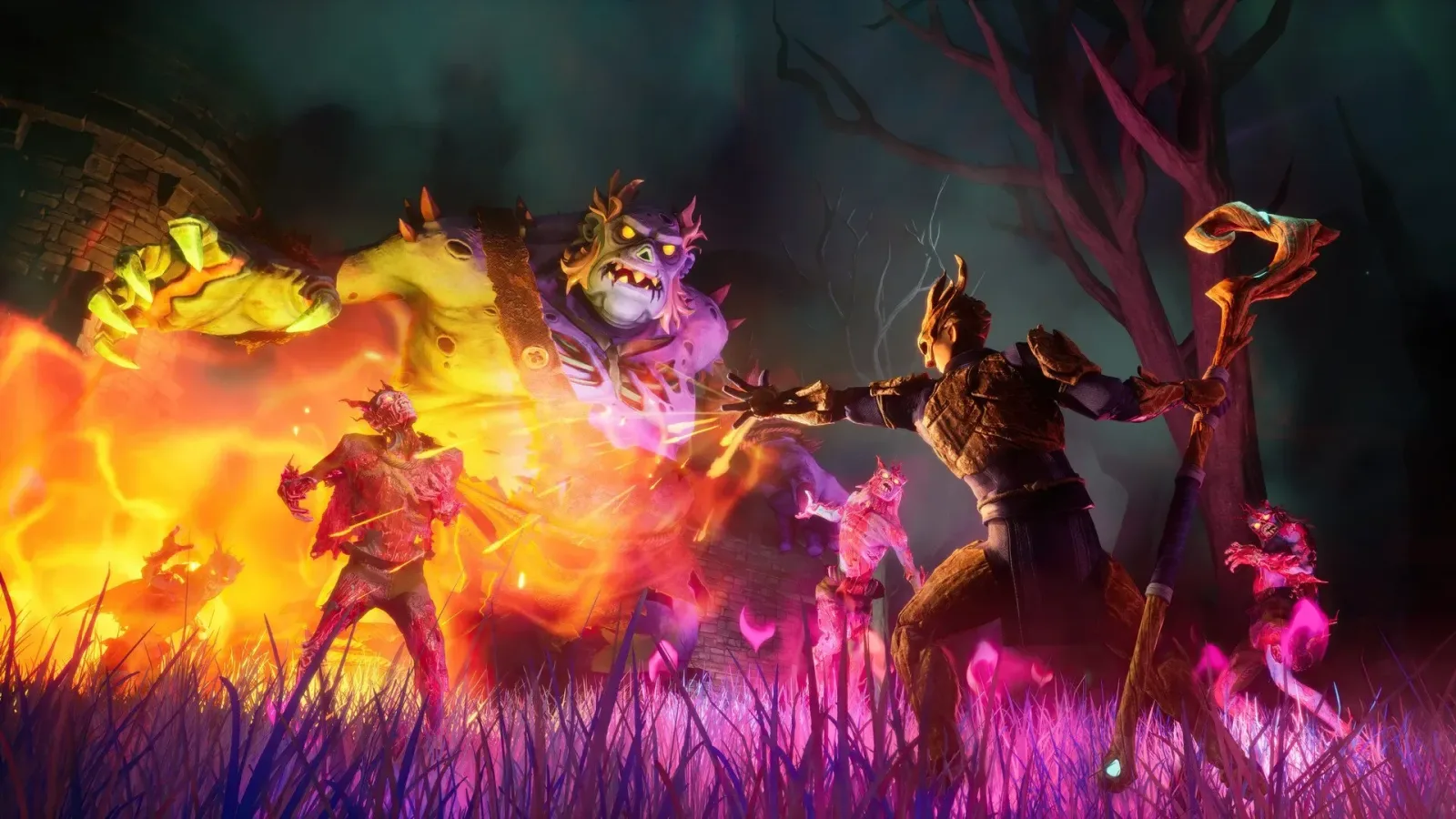
RuneScape: Dragonwilds is an ambitious attempt to bring RuneScape's fantasy identity into a survival-crafting RPG structure. Set on the dragon-ravaged continent of Ashenfall, it combines gathering, base building, farming, smithing, combat, and environmental exploration across a large adventure. The result has real appeal: there are dragons to hunt, ruins to plunder, secrets to uncover, and a steady stream of equipment to make. Unfortunately, the game too often confuses a lengthy progression path with a satisfying one. Its best ideas are regularly buried beneath excessive gathering, sprawling crafting chains, and unclear objectives.
The balance between role-playing adventure and survival systems is respectable on paper. Players can forage for food, construct shelters, craft weapons and armor, furnish a base, and continually improve their odds against Ashenfall's dangers. But nearly every activity eventually feeds back into the same resource loop. Need stronger equipment? Gather more materials. Need access to better materials? Build the right tools and stations. Need the spells that can make gathering faster? Spend more time leveling the relevant skills first. That structure creates momentum early on, but it becomes increasingly laborious as progression advances.
Ashes, dragons, and scattered history
Ashenfall is Dragonwilds' strongest asset. The setting is not always especially distinctive at a glance, but it has more depth than its surface presentation initially suggests. The history of the continent's early settlers and the campaign against Dragon Queen Kuldra emerges through glowing blue books, side quests, and discoveries tucked throughout the world. Stories of greed, grief, and survival help give context to the dragon-infested wilderness, even when the immediate task is something more ordinary, such as clearing a temple or fighting low-level creatures.
Familiar RuneScape faces also help anchor the experience for players with an existing affection for that world. That connection matters. Dragonwilds can offer many hours of content, and its lore rewards those willing to wander off the critical path, but the setting alone may not be enough to carry players who do not already enjoy RuneScape or survival games. The game has an old-school interest in letting players discover solutions themselves, which can be engaging when a clue leads to an overlooked cave, resource, or side story. It can also be frustrating when the answer is simply a tool requirement the game has not adequately communicated.
For useful background on this topic, read Biddy Blas Becomes Star Wars: Galactic Racer's Breakout Viral Star.
An NPC may point toward a broad destination without explaining the exact item needed to complete the next step. Learning that a particular obstacle requires an Iron Pickaxe, for instance, may involve trial and error rather than a clear chain of information. That approach fits the spirit of self-directed adventure, and some players will enjoy piecing together the route forward. Others may spend hours gathering, searching, and upgrading without feeling closer to the next meaningful story beat.
Crafting is central, and eventually exhausting
Crafting is the heart of Dragonwilds, but it is also the source of its biggest problems. The game offers a broad range of things to create: tools, melee weapons, bows, armor, jewelry, magical equipment, furniture, structures, and more. Having so many avenues for building a character and home is appealing. The trouble is that the process becomes bloated by both the number of resources required and the number of stations needed to process them.
As gear tiers rise, the material demands rise with them. Better equipment can require components such as Fine Cloth, which itself requires threads, as well as gold bars and other refined ingredients. By the middle of the adventure, the crafting setup can involve separate stations for tools and weapons, armor, jewelry, bows and arrows, and magical armaments such as wands. These specialized facilities make thematic sense, but their practical effect is to add more management to every upgrade. Several of these functions could have been consolidated without compromising the survival-crafting fantasy.
The issue is not that Dragonwilds asks players to work for powerful gear. Survival games need a sense of preparation and investment. The issue is the frequency with which advancement becomes a prolonged chore. Each new region brings the expectation of spending roughly three to five hours gathering and crafting just to become durable enough for an expedition from the base, much less an unfamiliar quest area. Ores and other essential materials are especially important, turning the pursuit of upgrades into a repeated cycle of chopping, mining, refining, and returning to the workbench.
Magic can ease some of that repetition through spells that accelerate tasks, but those conveniences are themselves locked behind skill progression. It is a recurring design pattern: the game offers solutions to its own tedium after demanding enough time in the tedious systems to earn them. There is a setting that can make the experience grind less severe, and players who are primarily interested in exploration should strongly consider it. In its default form, however, Dragonwilds seems too willing to make routine labor the price of seeing the next interesting thing.
Combat flexibility without much reason to use it
Dragonwilds does not use strict RPG classes. Instead, players shift roles through equipment, changing from armored melee gear to robes for magic or other loadouts for ranged fighting. In theory, this is a flexible approach that allows experimentation without locking anyone into a permanent choice. In practice, melee appears to be the most reliable answer to most challenges.
Many fights involve enemies approaching from several directions, making ranged combat less comfortable than its distance advantage suggests. Bows and wands can be useful, and magic is not ineffective, but enemies do not frequently present magical weaknesses that encourage a deliberate change in strategy. A sword can often power through encounters through attack speed, buffs, and straightforward damage. As a result, switching between combat identities can feel less like meaningful buildcraft and more like an option with limited practical purpose.
That lack of combat distinction is disappointing because Dragonwilds otherwise gives players plenty to make. When a game offers separate crafting paths for weapon types and magical gear, it should make each route feel comparably valuable in the field. More encounters that rewarded range, elemental damage, crowd control, or carefully chosen magical tools could have helped the system live up to its potential.
A very long road through Ashenfall
Dragonwilds is a large game. The first major arc can take around 20 to 30 hours before the first dragon is slain, while the Fellhollow arc can require a similar amount of time for its story quests. That scale gives the game room for expansive progression, but it also magnifies its pacing problems. Once the gathering-and-upgrading routine becomes familiar, the prospect of entering another area can feel less exciting than exhausting.
To the game's credit, regions are not merely different collections of resources. Fellhollow introduces soulrifting, a mechanic that unlocks alternate planes and invisible bridges. These environmental ideas add texture to exploration and suggest that the developers understand the importance of giving each area its own identity. Such moments are reminders of the more inventive game inside Dragonwilds, one that could stand more confidently beside modern survival classics if its progression were less padded.
Death further intensifies the friction. When health is depleted, the character drops their entire inventory and returns to the last camped location. The lost gear can be recovered from a gravestone, and the game mercifully places those gravestones outside dungeons rather than forcing another full dungeon run merely to reclaim belongings. Still, dying unexpectedly in a dangerous area can mean making a tense return trip just to avoid replacing a bag full of resources through yet another crafting spree. This penalty can be disabled in the settings, but leaving it active makes the default experience considerably more cumbersome.
Who should explore Dragonwilds?
RuneScape fans who enjoy long-form crafting progression, environmental discovery, and relatively sparse guidance are the most likely to find value here. Players who genuinely enjoy chopping wood, mining ore, refining materials, and slowly expanding a settlement may appreciate the deliberate rhythm. The game's lore, regional variety, and sheer amount of content can sustain that audience for a long time.
Players seeking a smoother action RPG, a more clearly directed campaign, or a survival game with less friction should approach more cautiously. Dragonwilds has engaging exploration and a functional foundation, but other games in the genre deliver similar base building and wilderness adventure with a more consistently entertaining journey between major milestones.
Final takeaway
RuneScape: Dragonwilds succeeds at creating a broad fantasy survival adventure with dragons overhead and plenty of mysteries beneath the surface. Its world has room to roam, its crafting has substantial scope, and its regional mechanics occasionally break through the repetition with welcome creativity. But the game places too much emphasis on material grinds, redundant crafting infrastructure, and opaque progression. Ashenfall is worth visiting for dedicated RuneScape followers and patient survival-crafting enthusiasts, yet its adventure is too often delayed by the work required to reach it.
Community
Discussion
Start the conversation.
No comments have been posted yet.