

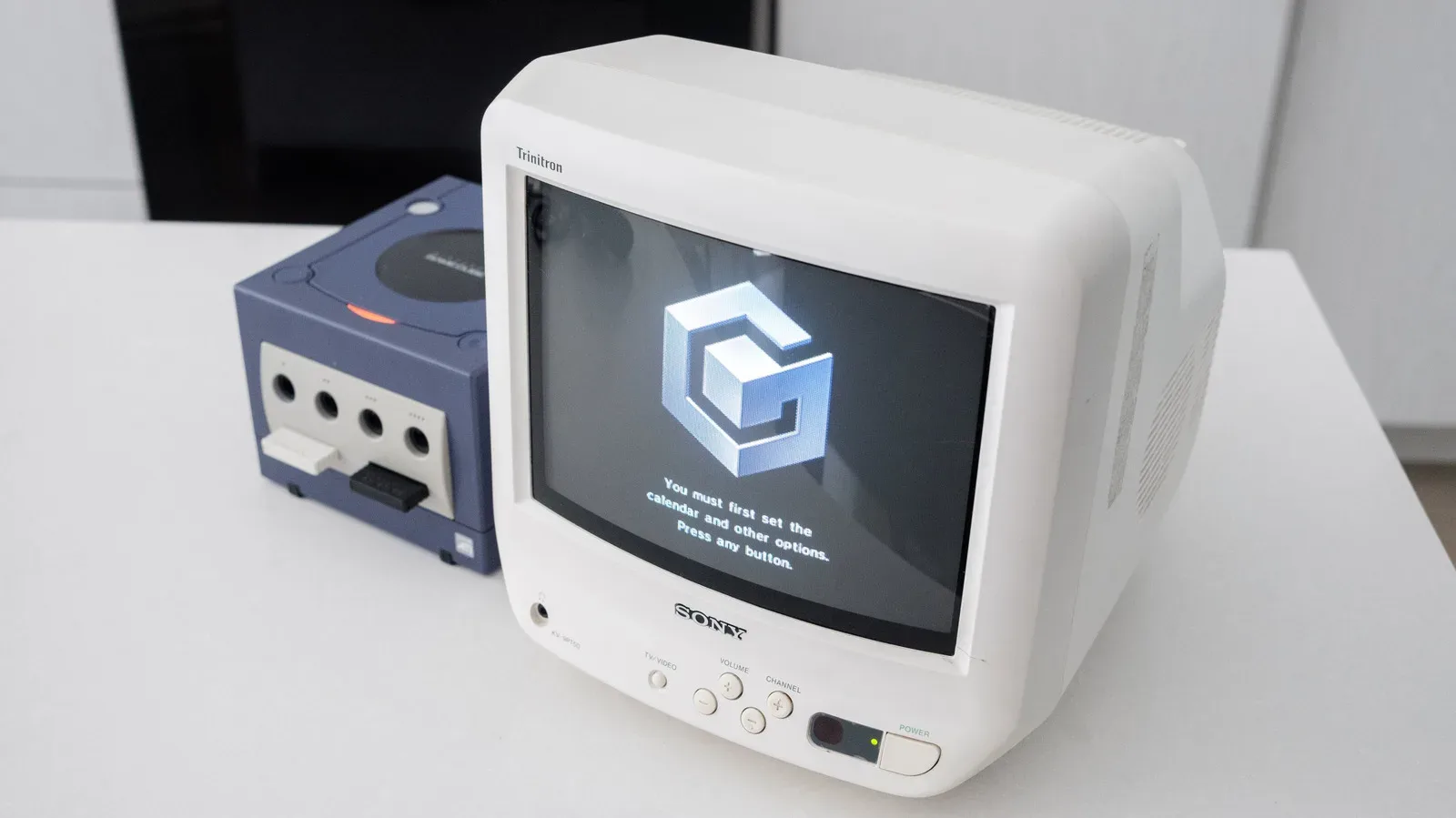
Nintendo's GameCube turned 25 in 2026, marking a quarter-century since the compact purple console debuted in Japan on September 14, 2001. North America followed on November 18 that year. It arrived in a fiercely competitive generation: Sony's PlayStation 2 was already building enormous momentum, Microsoft's Xbox was launching with Halo: Combat Evolved, and blockbuster releases including Grand Theft Auto III, Metal Gear Solid 2 and Final Fantasy X were reshaping expectations for console games.
The GameCube was not positioned as an all-purpose entertainment machine. Its mini-discs did not play DVDs, unlike the PS2 and Xbox. It also lacked the broad third-party backing enjoyed by Sony's console. Yet Nintendo's machine developed a distinct identity through bold exclusives, unusual experiments and some of the most polished local multiplayer games ever made. Looking back, its catalogue is full of titles that either changed their series forever or have remained beloved precisely because no one has quite replicated them.
Some are easy to revisit through modern releases and subscription libraries, while others remain frustratingly tied to original hardware and discs. Together, though, they make a persuasive argument that the GameCube deserves far more than nostalgia. These are games whose ideas, aesthetics and competitive spirit still feel alive.
Animal Crossing made everyday life into a game
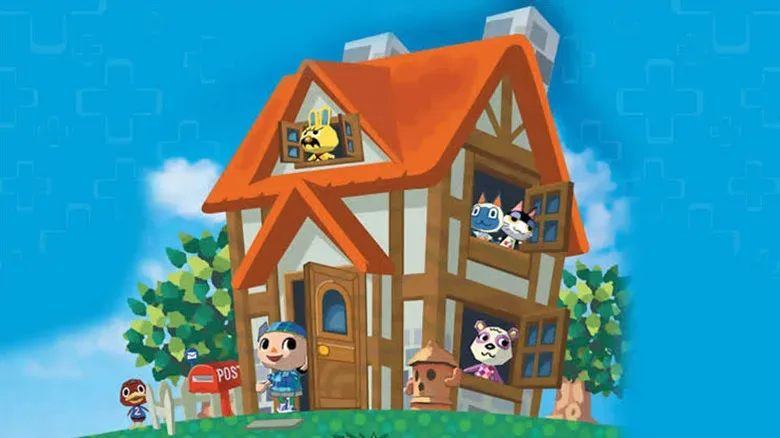
The original North American Animal Crossing, released in 2002, established an approach that is still central to the series. Players move into a village, take on a home loan from Tom Nook, and settle into a deliberately unhurried routine of fishing, bug catching, fossil hunting, decorating and getting to know unpredictable animal neighbors. Its clock ran in real time, making the game's world feel like a place that continued alongside the player's own schedule.
For useful background on this topic, read Aurzen E1R Roku TV Mini Projector Falls to $90, Bringing Big-Screen Streaming to a Smaller Budget.
That basic rhythm remains remarkably recognizable next to Animal Crossing: New Horizons. K.K. Slider is there performing on Saturday nights, villagers have oddball personalities, and progress comes from self-directed goals rather than a conventional campaign. The series has gained layers of customization and online functionality over the decades, but its core appeal was already present on GameCube.
There is one major difference: the first game had no online play. Visiting another town was a physical affair involving memory cards. That limitation became part of its social folklore, whether friends coordinated visits in person or mischievously altered a town before returning a borrowed memory card. Nintendo launched several enduring series early in the GameCube era, and Animal Crossing stands alongside Luigi's Mansion and Pikmin as proof of how quickly new ideas were becoming major pillars for the company.
Eternal Darkness remains a uniquely unsettling horror experiment
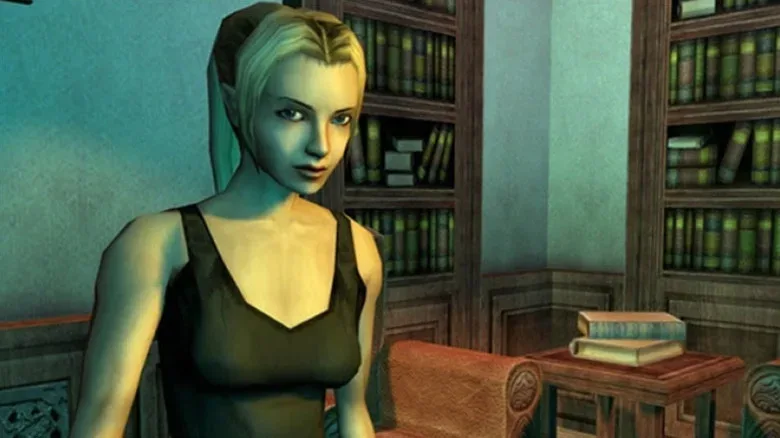
Eternal Darkness: Sanity's Requiem is still one of the strangest games Nintendo has ever published. Released in 2002, it did not simply use monsters, combat and eerie environments to create fear. It tried to make the player doubt the game system itself. As characters lose sanity, the game can simulate television malfunctions, distort the camera, interrupt audio, display insects that appear to crawl across the screen, or even present fake technical failures and apparent save-data disasters.
Those effects have been widely imitated in spirit, but Eternal Darkness remains unusually committed to the premise. Its horror is not just about an avatar's vulnerability; it is about the uneasy feeling that the game might be malfunctioning or directly targeting the person holding the controller.
Underneath those tricks is a substantial third-person action-horror adventure with Lovecraft-inspired mythology. Players follow roughly a dozen protagonists through periods separated by thousands of years, gradually connecting a larger supernatural conflict. There are puzzles, limb-targeting combat and a flexible magic system that adds a role-playing dimension. The unfortunate catch is accessibility: the game has never received a port, remaster or rerelease, leaving original GameCube hardware and discs as the main path to playing it today.
GameCube gave classic series new dimensions
Several of the console's greatest achievements came from taking established Nintendo formulas into 3D without abandoning what made them work. Metroid Prime is perhaps the clearest example. On paper, moving Samus Aran from side-scrolling exploration into a first-person view looked like a radical change. In practice, the 2002 game preserved the franchise's focus on isolation, discovery, ability upgrades and interconnected spaces.
Tallon IV is memorable not merely as a setting for combat, but as a world that invites scrutiny. Players scan creatures, ruins and machinery to uncover environmental storytelling about the planet's collapse and the forces active within it. Bosses and hostile corridors can be demanding, but the defining sensation is the excitement of opening up a previously unreachable route. Its sequels are highly regarded, yet the first Metroid Prime remains a high point for the series. It is also among the easier GameCube classics to play now, thanks to the faithful Switch remaster.
The Legend of Zelda: The Wind Waker took a different route, replacing the visual language of Ocarina of Time with expressive cel-shaded art and placing Link on a vast ocean. Its sea traversal can be divisive, but its strongest locations remain magical: Dragon Roost Island, in particular, combines striking music, vertical exploration and an immediate sense of place. The game also represented an early Nintendo step toward a more open adventure structure. It did not always fill its waters with equally compelling discoveries, but its best moments reward curiosity in a way that still resonates.
Its visual style has aged exceptionally well. Rather than chasing realism, The Wind Waker embraced animation-like exaggeration, allowing its faces, waves and combat to retain clarity and personality decades later.
The Legend of Zelda: Twilight Princess closed the GameCube era in 2006 while simultaneously serving as a Wii launch title. Its development began for GameCube, and that version has several notable distinctions. Most famously, Link is left-handed. The Wii release mirrored the world so the on-screen swordplay would better align with right-handed Wii Remote motions; the later Wii U HD version returned to the original layout.
Twilight Princess offered a more grounded and dramatic contrast to The Wind Waker. Hyrule's fields, forests, Lake Hylia and Snowpeak Mountain created a large-feeling world for the time, while Epona travel and hidden sword techniques gave Link a particularly capable moveset. The wolf transformation occasionally interrupts the adventure's pace, but it develops into a useful tool. Retrospectively, some may view the game as more traditional or derivative than other Zelda entries, yet it remains a polished culmination of the dungeon-focused Link, Zelda and Ganon formula.
Melee and Double Dash captured the local multiplayer era
Before online console play became an expected default, GameCube thrived in living rooms. Super Smash Bros. Melee is the machine's most enduring competitive phenomenon. Later games expanded the roster, stage count and crossover scale enormously, especially Super Smash Bros. Ultimate. But Melee retains a distinct precision and speed that have kept its competitive scene active for decades.
With a GameCube controller and a CRT display, its movement can feel unusually immediate. Advanced techniques reward intense practice, while the game is still intuitive enough for spontaneous group matches. That balance helps explain why it continues to be played at a high level long after its 2001 release. It is not the biggest Smash game, but for many players it remains the most responsive.
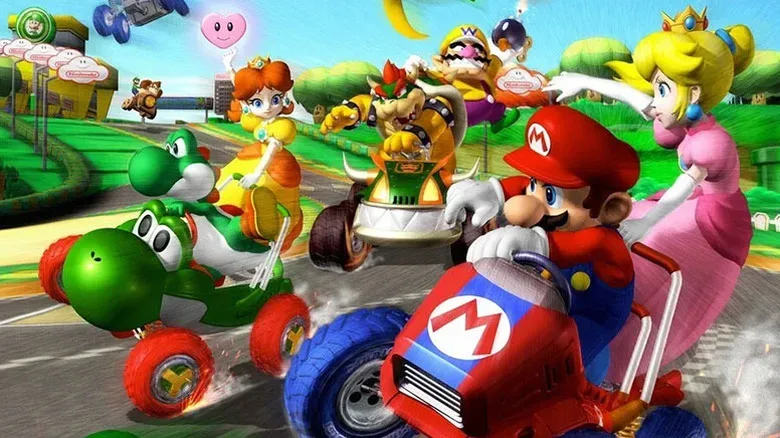
Mario Kart: Double Dash!! was equally built for shared couches, though it took a more experimental approach. Each kart carried two characters: one drove while the other handled items. Two players could therefore operate a single vehicle as a team, creating a co-op wrinkle that no other mainline Mario Kart has explored in quite the same way.
It also delivered a major visual leap from Mario Kart 64, with colorful tracks, hidden routes and more elaborate environments. Courses such as Wario Colosseum and its version of Rainbow Road showed off the GameCube's ability to handle larger, more imaginative racing spaces. The game's influence is obvious in the number of Double Dash tracks that have appeared again in later Mario Kart releases.
Speed, strategy and action beyond Nintendo's usual image
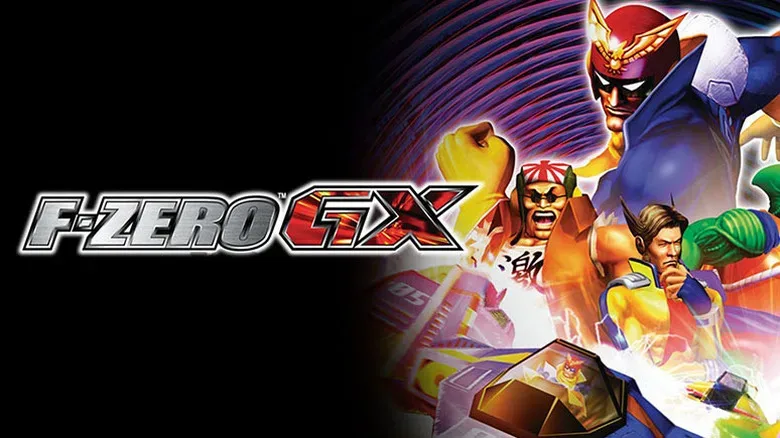
F-Zero GX remains one of the great technical showcases of its generation. Its futuristic racing is blisteringly fast even by current standards, and the speed makes every mistake costly. Courses are longer, more visually complex and more dangerous than those in the original Super NES game, while rival AI ensures that a moment of lost momentum can send a player tumbling down the order.
Its difficulty is part of its legend. Progressing through its challenges requires concentration and mastery, but the visual spectacle and sensation of velocity are still extraordinary. It also carries extra weight as the last full traditional F-Zero entry. Nintendo has not returned to the series in that form, although F-Zero GX is available through the Nintendo Classics GameCube collection for Nintendo Switch 2 users with a Switch Online Expansion Pack subscription.
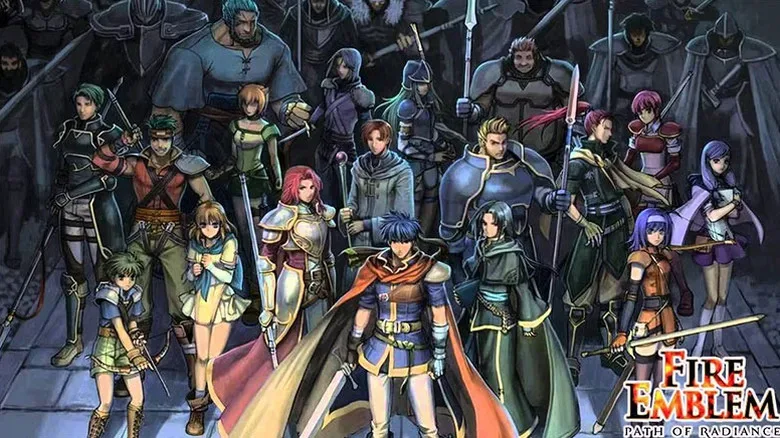
Fire Emblem: Path of Radiance, released in 2005, was the franchise's sole GameCube installment and its first move into 3D. Its character models and presentation understandably show their age, and it lacks the relationship systems that helped later games such as Awakening and Three Houses reach a wider audience. Still, its tactical foundations are strong, and many qualities associated with modern Fire Emblem are visible here in an earlier form.
Intelligent Systems had to adapt the series' strategic battles to a new visual perspective, and the result remains engaging. The story is frequently considered among the series' best, with an English localization that preserves much of the Japanese script's nuance. For players interested in seeing the roots of contemporary Fire Emblem storytelling and 3D battlefield design, it remains essential.
Then there is Resident Evil 4, a game so frequently rereleased that it is easy to forget its 2005 debut was initially exclusive to GameCube. Nintendo's system was not generally defined by action blockbusters, making Capcom's achievement all the more striking. The over-the-shoulder camera and fully 3D presentation transformed the feel of aiming and encounters, creating a kinetic template that influenced the Resident Evil series and action games broadly.
The original GameCube edition still looks impressive, particularly in its character detail and dense environments. It demonstrated that the console could deliver crisp, smooth visuals that compared favorably with contemporaries. Its later ports, remake and near-universal availability have made it one of gaming's most durable landmarks, but the GameCube version is where that modern action language began.
Skies of Arcadia Legends deserves another flight
Skies of Arcadia Legends is technically a GameCube port of a Dreamcast game, but it is too good--and too well suited to Nintendo's library--to leave out. The GameCube version improves stability and frame rate issues while adding characters, making it a strong candidate for the definitive edition.
Its world of floating continents and airship travel remains distinctive. Players follow sky pirates on a world-saving adventure, explore a three-dimensional overworld and participate in large turn-based ship battles against enemy vessels and enormous foes. The creative pedigree is formidable, with developers whose previous work included Phantasy Star, Panzer Dragoon and Sakura Wars.
Sega had once planned a PlayStation 2 version, but focused on the GameCube release instead. Despite the game's reputation, it has not received the digital revival many role-playing fans have hoped for. A modern return would give more players a chance to experience its adventurous tone, unusual setting and celebrated soundtrack.
The GameCube may have spent much of its original life in the shadow of larger commercial successes, but its legacy has become clearer with time. It was a machine where Nintendo could launch a quiet village simulator, reinvent Metroid, make Zelda sail across a cartoon ocean, publish disturbing cosmic horror and host some of the fiercest multiplayer competition ever created. Twenty-five years later, that combination still feels special.
Community
Discussion
Start the conversation.
No comments have been posted yet.