

Grand Theft Auto 6 is already positioned as one of the biggest entertainment launches in gaming, but one British entrepreneur has offered an unusual way to think about its price: buying it could, in theory, save players thousands of dollars.
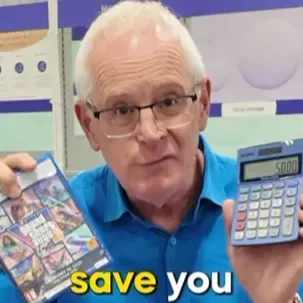
Mark Tilbury, a self-made millionaire known online for videos about frugal habits and personal finance, has posted a short video framing GTA 6 as a cost-effective alternative to expensive evenings out. The calculation is intentionally playful rather than literal financial guidance, but it has struck on a familiar conversation within gaming: what does a large, premium-priced game cost per hour compared with other forms of entertainment?
Tilbury begins with the $99.99 Ultimate Edition price, rather than the $80 standard edition. Using an estimated 80-hour completion time, he puts the initial entertainment cost at roughly $1.25 per hour. He then argues that optional activities and open-world exploration could drive that figure down to around 50 cents per hour for someone who spends substantially longer in the game.
His final comparison is where the video becomes deliberately exaggerated. If a person played four hours per evening, Tilbury suggests the game could occupy 50 nights. Set against an assumed $100 spent on a night out, he arrives at the claim that purchasing GTA 6 "actually saves you $5,000."
For useful background on this topic, read SUMEE! Brings a Wii-Inspired Multi-System Emulator Interface to iPhone.
"If it takes you 80 hours to complete, that's $1.25 per hour of fun," Tilbury said, before suggesting that side activities and map exploration could reduce the hourly cost even further.
That conclusion naturally depends on a number of assumptions. Not everyone would otherwise spend $100 whenever they leave the house, and a player does not need to treat gaming and socializing as mutually exclusive choices. Nor is it established that GTA 6 will take 80 hours to finish, or how much optional material an individual player will want to pursue. Still, the basic point is easy to understand: a single purchase that provides dozens or hundreds of hours of enjoyment can compare favorably with many other hobbies when viewed strictly through a cost-per-hour lens.
The cost-per-hour case for a giant open world
Cost-per-hour arguments are common whenever a major game is priced above the usual retail range. They can be especially persuasive for open-world releases, role-playing games, live-service titles, and sandbox experiences because these games are often designed to support very different playtimes. One person may follow only the main story, while another can spend weeks chasing side missions, collectibles, activities, vehicles, hidden areas, and emergent encounters.
Grand Theft Auto has long been associated with that flexibility. Its appeal is not solely about reaching the credits. Players often spend large stretches of time experimenting with the systems around them, revisiting missions, exploring cities, causing chaos, or simply taking in the world Rockstar has built. That makes the franchise particularly suitable for the kind of back-of-the-envelope calculation Tilbury presented.
GTA 6 also has the expectations of a generational blockbuster attached to it. The game's scale, the prominence of protagonists Jason and Lucia, and the prospect of a broad open map have all contributed to the belief that it could become the sort of release people play for an exceptionally long time. Reports and recent discussion around the game have indicated that its world will open up relatively early, allowing players considerable freedom to explore rather than holding them to a narrowly linear path for an extended period.
That structure could make a large difference to the perceived value of the game. A player who pays the same upfront price but discovers a favorite activity, region, or side-story thread may extract far more time from it than someone focused exclusively on the main narrative. The value is personal, not universal, but the distinction matters in a game built around player agency.
Why the joke connected with players
The video's $5,000 claim is plainly hyperbolic, yet commenters recognized the experience behind it. One player described gaming as the way they explain their hobby to people who may not understand why they spend so much time with games, noting that they do not drink much, smoke, use drugs, or regularly go out with friends. For players whose preferred downtime is at home, a new game can indeed be their primary discretionary entertainment purchase for a while.
Another response jokingly said the argument should go "straight to mum," reflecting a long-running gamer experience: explaining the price of a new release to skeptical parents or relatives. A third commenter took the gag further by pointing to Rockstar's enormous development spending and declaring the game a bargain on that basis.
These reactions underline why cost-per-hour remains a useful, if incomplete, lens. People do not buy entertainment only because it is efficient. A two-hour film, a concert, a restaurant meal, a sports event, or a night with friends can be meaningful regardless of how much each hour costs. Games are no different: a shorter experience can leave a stronger impression than a 100-hour one. Repetition, padding, or a lack of interest can make even a vast game feel like poor value to the wrong player.
But gaming has a distinct advantage in the debate because a game can be revisited. A player may return after finishing the story, start over, attempt challenges, or use the world as a social space. The purchase price is fixed, while the amount of time spent can grow long after the first weekend. For a release as culturally visible as GTA 6, that longevity is likely to be part of the conversation from day one.
A bigger question about premium game prices
Tilbury's decision to use the Ultimate Edition price is notable. At $99.99, it represents the more expensive option, while the standard edition is listed at $80. Even with the higher figure, the video argues that the game can look inexpensive when spread across a large number of hours. That is a useful framing for publishers, but it also raises questions about where premium game pricing may go next.
There has been growing interest in whether a release with GTA 6's stature can shift consumer expectations around what a top-tier game costs. Publishers may see a game of its anticipated size and production scale as a test case. At the same time, most companies do not have Rockstar's resources, brand recognition, or ability to command attention over such a long development cycle. A higher sticker price is easier to defend when players believe they are getting an event-level game with enormous scope and lasting relevance.
The risk is that price and size can become conflated. Bigger does not always mean better, and consumers may be less willing to accept premium prices for games that appear to offer a long checklist rather than a compelling reason to keep playing. GTA 6 will not settle that issue alone, but it may become an important reference point in the next round of pricing debates.
Frugality, entertainment, and November 19
Tilbury's persona gives the post an extra layer. Despite his wealth, he is known for emphasizing practical spending habits, including reusing old cups, flying economy, sticking to a small clothing rotation, and avoiding luxury hotels. In that context, the GTA 6 calculation is less a serious instruction to replace a social life with a controller and more a humorous application of a frugal-living mindset.
The sensible takeaway is not that every purchase of GTA 6 creates $5,000 in savings. It is that entertainment value is relative. For someone who was already planning to spend a great deal on other leisure activities, a game they genuinely expect to play for many hours may feel like a strong use of their entertainment budget. For another person, the standard edition may still be too expensive, or the game may not match their interests at all.
With GTA 6 scheduled for release on November 19, those questions will soon move from projections to player experience. Until then, Tilbury's video provides a lighthearted reminder of why blockbuster games are often judged differently from other purchases. A price tag can look large in isolation. Spread across months of exploration, missions, experimentation, and whatever comes next for the series, it can look very different.
Community
Discussion
Start the conversation.
No comments have been posted yet.