

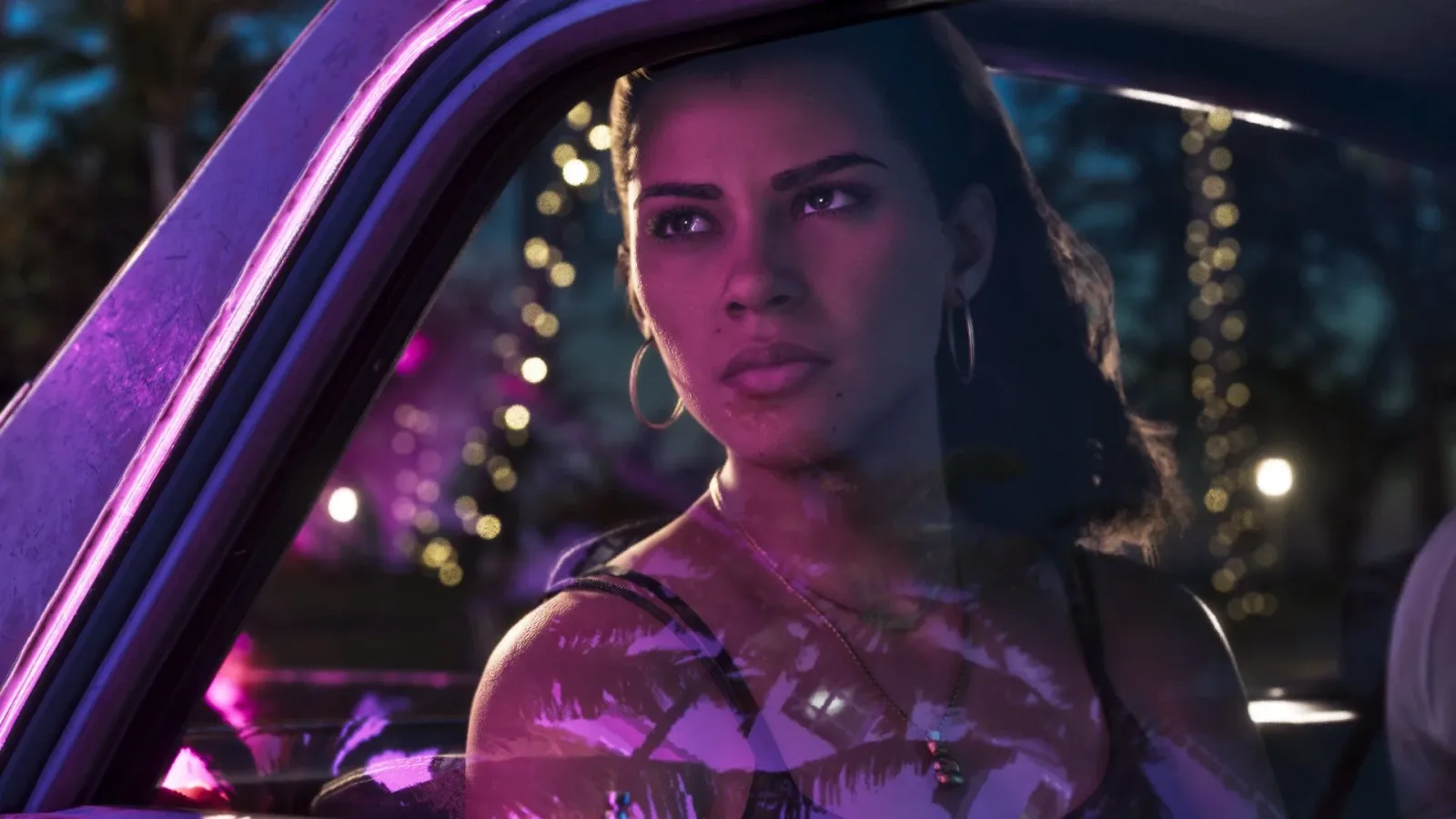
Grand Theft Auto 6 is arriving under a level of expectation few games will ever face. The long gap since its predecessor, the immense cultural reach of the series, and the continuing popularity of Grand Theft Auto Online have all made Rockstar Games' next open-world crime epic one of the most closely watched releases in the industry.
For Rockstar, that attention appears to have created a simple but daunting production goal: meeting expectations would not be enough. Aaron Garbut, a longtime Rockstar art director and one of GTA 6's lead developers, has said the team felt it could not simply deliver the version of the game people already assumed they would receive.
"We can't just trot out something that's what people might expect, or that was the easy thing to do," Garbut said while discussing the project with Edge magazine.
That mindset is reflected in Garbut's description of the areas Rockstar was unwilling to reduce or simplify. He pointed to the game's scale, visual detail, interactivity, narrative, and open world as elements where the studio has not compromised. To convey just how oversized the undertaking feels, he used a deliberately extreme comparison: Rockstar has, he said, "built a pyramid on Everest."
For useful background on this topic, read GOG's Preservation Mission: DRM-Free Classics, Lost Extras, and Licensing Labyrinths.
It is a striking image, but it fits the unusual position GTA 6 occupies. This is not merely a sequel expected to expand on a successful formula. It is a game tasked with following one of the most commercially successful entertainment products ever made, after more than a decade of anticipation. Every trailer detail, technical claim, setting reveal, and character moment has been examined intensely by fans looking for evidence that the next Grand Theft Auto can justify that wait.
A Bigger Goal Than a Bigger Map
Open-world games are often measured first by geographic size. GTA 6's world has been characterized as being close to the combined scale of several earlier Rockstar games, an impressive point on its own. Yet Garbut's comments suggest that acreage is not the primary measure Rockstar wants players to use when judging its ambition.
The more revealing focus is density: the amount of activity, authored behavior, environmental response, animation, and small-scale character work packed into that world. A larger map can be meaningful, but only if it feels like a place with its own momentum. Rockstar's stated priorities indicate that GTA 6 is aiming to make its setting feel broader not only horizontally, but in the depth of detail players encounter from moment to moment.
That distinction matters for a series such as Grand Theft Auto. Its cities have always been built around more than missions and vehicles. Pedestrians react to mayhem, radio stations create a sense of place, strangers provide distractions, and incidental scenes help sell the fantasy that a city keeps moving when the player is not looking. GTA 6 appears to be pushing that approach further, with Rockstar investing in systems that are easy to overlook individually but substantial in aggregate.
One example is the game's perspiration system. Its protagonists, Jason and Lucia, can sweat depending on how intensely they dance. On paper, that is an exceptionally specific detail. It does not sound like a headline feature designed to define the game's main campaign. But it illustrates the kind of response Rockstar is pursuing: character presentation tied to actions rather than existing as a fixed, generic visual state.
That approach also helps explain why Garbut emphasized interactivity alongside scale and story. The promise is not simply that players will have more terrain to cross, but that the game will account for more of what is happening within that terrain. A dance floor interaction influencing how a character looks is a small example, yet it signals a wider design ambition built around context and reactivity.
Hundreds of Thousands of Animations
Another indication of the project's scope is the reported total of roughly 600,000 unique animations. Animation is one of the less visible ways a game can become more convincing and more expensive at the same time. Players may not consciously count variations in movement, reactions, gestures, transitions, or environmental interactions. They notice the overall effect when characters appear more natural, when crowds seem less repetitive, and when actions connect smoothly instead of feeling like isolated canned sequences.
A figure that large also underscores why GTA 6 cannot be understood as a straightforward graphical upgrade. More animation work potentially affects nearly every aspect of an open-world game: how protagonists move, how NPCs behave, how vehicles and physical spaces are used, and how scenes respond when the player interrupts their expected flow. It represents a massive amount of production labor behind the illusion of spontaneity.
Of course, an animation count alone does not explain how those animations are distributed or how frequently players will see them. The number is meaningful as a sign of scope, but the eventual test will be whether that volume translates into a more believable world during normal play. Rockstar's comments point toward that being the intended result.
Background Characters Are Part of the Build
Rockstar has also assembled a writing team devoted specifically to background NPCs. That detail may be among the clearest expressions of the studio's priorities. In a game of GTA 6's projected size, background residents cannot all be treated as simple scenery if the world is meant to feel inhabited. Their conversations, behavior, incidental stories, and reactions are part of the texture players absorb while traveling between major missions.
Dedicated writers for those characters suggest Rockstar sees ambient storytelling as a major piece of the final experience rather than a secondary layer added around the main plot. Jason and Lucia will naturally sit at the center of the game's narrative, but the surrounding population can determine whether their journey feels rooted in a living place or merely staged inside a mission hub.
This is also where the "pyramid on Everest" comparison becomes easier to understand. A giant game world, a major story, and elaborate protagonist performances are already large tasks. Adding vast amounts of bespoke work for the people at the edges of the player's attention compounds the challenge. It means the project's scale is not limited to the content players are guaranteed to see; it extends to material many players may only encounter briefly, or perhaps miss altogether.
A Project Too Large for Any Single View
GTA 6 has reportedly become so extensive that no one person at Rockstar knows every detail about it. For a production of this magnitude, that is perhaps unsurprising. Modern blockbuster development is highly specialized, with teams responsible for art, writing, mission design, audio, animation, systems, technical work, world creation, and much more. Still, it is a powerful statement about the game's breadth.
There is a difference between a project being large and a project becoming genuinely difficult to comprehend in full. GTA 6 appears to fall into the latter category. The game's individual components have to function separately, but they also need to work together: animation must support interaction, NPC writing must fit the world, visual detail must coexist with performance demands, and the narrative must retain a sense of direction within an enormous open environment.
That coordination challenge is the less glamorous side of ambition. Players will judge the finished game by what happens when they pick up a controller, not by the scale of its internal organization. Yet Garbut's remarks make clear that Rockstar believes the production effort itself is necessary to deliver an experience that avoids feeling predictable.
What the November Launch Means
Grand Theft Auto 6 is scheduled to launch on November 19 for PlayStation 5 and Xbox Series X|S. No additional platforms were identified in Garbut's discussion of the game's release plans.
The road to that date will likely remain defined by enormous anticipation, and Rockstar's own framing only raises the stakes further. Saying a game cannot merely meet expectations is an ambitious promise in any circumstance. Saying it about GTA 6, after the series has spent years at the center of fan speculation, makes it a standard the studio will be expected to demonstrate through the final product.
Still, the details shared so far offer a more concrete explanation for Rockstar's confidence than a vague claim that the sequel will simply be "bigger." The stated focus is on an open world with greater responsiveness, a huge range of animation, background characters important enough to require specialized writers, and a level of content so extensive that no developer can hold the entire game in their head.
Whether GTA 6 ultimately achieves the Everest-sized goal Garbut describes will only be clear once players can explore it themselves. For now, Rockstar's message is unmistakable: it is not treating the next Grand Theft Auto as a safe continuation. It is presenting it as an attempt to make the expected feel insufficient.
Community
Discussion
Start the conversation.
No comments have been posted yet.