

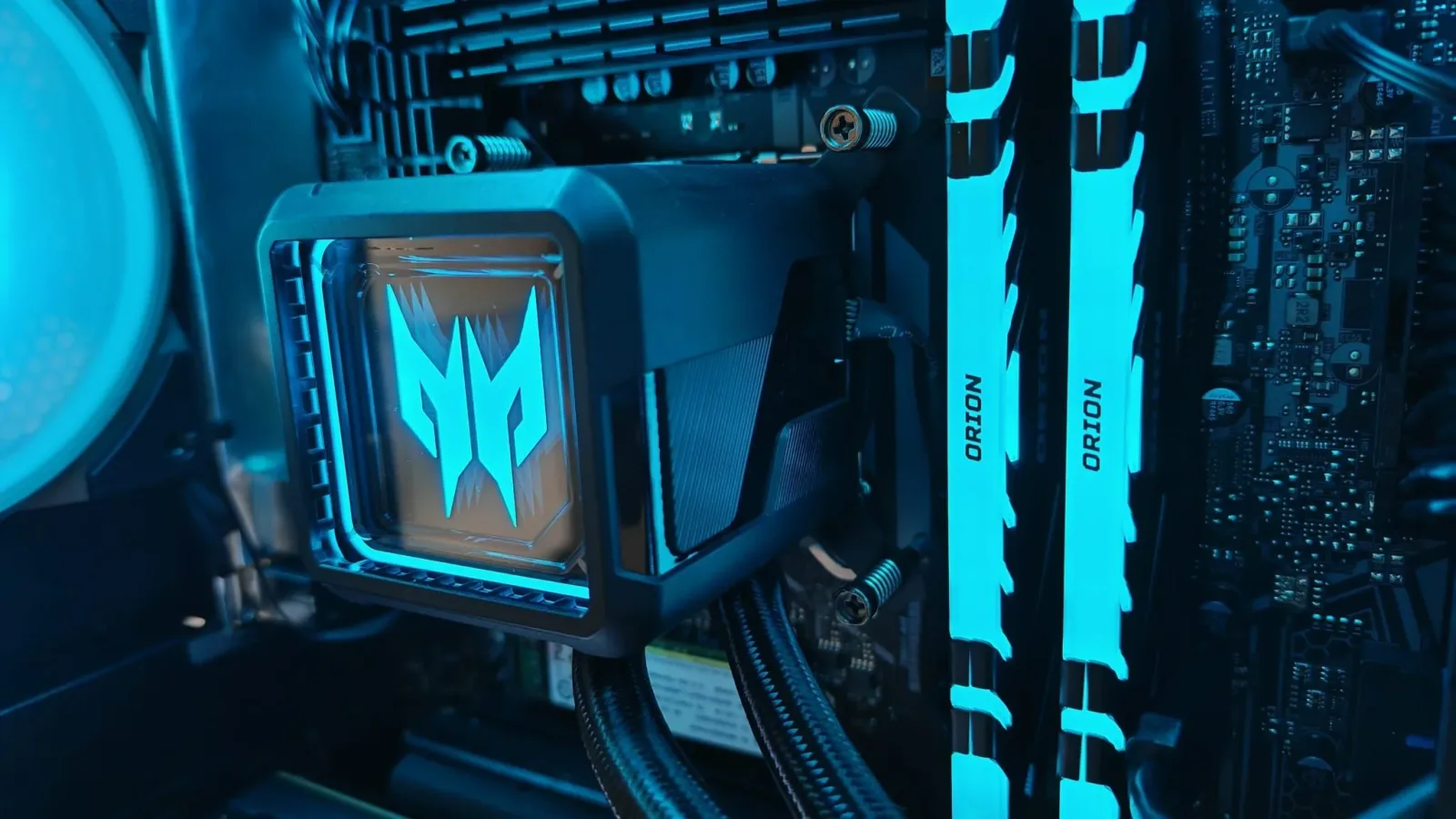
Gamers planning a desktop upgrade or a new laptop purchase may have to contend with higher prices before the market improves. Acer chairman and CEO Jason Chen has offered a notably optimistic view of the current memory crunch, arguing that it cannot realistically continue all the way to 2030. That reassurance comes with an important qualification: he still expects average PC prices to increase by between 5% and 20% during the fourth quarter of 2026.
The comments create a more complicated picture than a simple prediction of either a prolonged hardware disaster or an imminent return to normal. Chen's assessment is that memory supply is available to Acer and that the imbalance will not endure for the rest of the decade. Yet the near-term costs facing PC makers, and therefore buyers, remain substantial. For gaming PCs in particular, where a system purchase already combines expensive graphics hardware, processors, storage, cooling, and memory, even a modest increase across components can meaningfully affect the final price.
Chen made his remarks in an interview with Economic Daily, where he was emphatic that a shortage lasting until 2030 was not a plausible outcome. Because the comments were translated from Chinese, the exact force of the wording may vary, but the central position is clear: Acer does not expect the supply situation to remain constrained for that long.
Acer sees available supply, even as the wider market remains tense
Chen said supply has been consistently available and characterized the market as having many potential sellers but comparatively few buyers. Interpreting those words requires some caution, both because of translation and because Acer's experience may not represent every company or every part of the consumer market. Still, it suggests that Acer has not faced the same immediate difficulty securing memory for its laptops and other product lines that many gamers may expect from broader discussion of a RAM crisis.
For useful background on this topic, read Takashi Iizuka Calls Sonic 'Like My Own Son' as the Series Reaches 35 Years.
Acer sells and distributes branded memory products, but it does not manufacture its own memory chips or storage devices. That distinction matters. The company still depends on the same global memory supply chain that feeds the rest of the PC industry. Its confidence, therefore, may reflect its purchasing relationships, scale, planning, or expectations for additional semiconductor fabrication capacity rather than a claim that demand has disappeared.
There is a possible basis for a more positive long-range forecast. Memory manufacturers can expand output through semiconductor fabrication, and wafer supply is expected to improve over time. If production catches up with demand by 2030, that would help explain why Chen sees a multi-year shortage as unsustainable. Capacity growth, however, is not the same thing as an immediate return to low retail prices. Manufacturing expansion takes time, and the effects of existing commercial agreements can linger after physical supply starts to improve.
That is the key tension in Chen's outlook. He is not predicting that PCs will suddenly become cheaper in late 2026. Instead, he expects consumers to encounter higher average prices first, followed by a possible easing beginning around the middle of 2027 and continuing afterward.
Why average PC prices could rise by 5% to 20%
A 5% to 20% rise in average PC pricing is a wide range, but it is significant at every level of the gaming market. A 5% increase may be manageable for someone already budgeting for a premium machine. At 20%, the same system can move into a completely different spending bracket, especially once taxes, peripherals, displays, or extended warranties are included.
Memory is not an isolated part in a modern system. Every gaming desktop and laptop needs RAM, while storage products are also tied to the broader semiconductor and memory ecosystem. When component procurement becomes more expensive, manufacturers have several choices: absorb the cost and accept lower margins, alter specifications, reduce discounts, or raise prices. In a period of elevated demand, price increases become more likely.
For buyers, the result may not always appear as a straightforward price-tag jump. Some systems could hold their headline price while arriving with less memory, smaller storage capacity, or fewer premium features than an earlier configuration. Others may lose promotions that had previously made them attractive. Prebuilt gaming PCs are especially vulnerable to this kind of shifting value equation, since their pricing depends on the combined cost of many parts rather than one component alone.
DIY builders are not necessarily insulated, either. They can choose parts individually and may be able to wait for individual sales, but they are also directly exposed when RAM pricing rises. A builder who planned to install a generous amount of memory could find that the upgrade is substantially harder to justify. The impact will differ by region, retailer, memory generation, capacity, and timing, so Chen's forecast should be viewed as an industry-level estimate rather than a guarantee that every system will become 5% to 20% more expensive.
AI data centers remain central to the pressure on memory
The present supply problem is closely tied to the enormous memory requirements of AI-focused data centers. Major AI companies are building and operating infrastructure that needs huge volumes of memory. Their demand has encouraged large memory manufacturers, including Samsung, Micron, and SK Hynix, to enter supply arrangements that commit substantial output to enterprise customers.
The scale of those commitments is the reason consumer concerns have intensified. Some of the contracts are understood to cover quantities equivalent to more memory than the world currently produces in a year. When enormous volumes are spoken for by data-center demand, less capacity is immediately available to the consumer electronics market. That places pressure on the remaining supply and can push up pricing for the memory used in laptops, desktops, and other consumer devices.
Several of these arrangements are expected to run into 2028, while others may extend beyond that point. This is why a forecast that the shortage will not last until 2030 does not necessarily mean players should expect normal component pricing at the start of 2027. The market has to work through both the physical supply-demand imbalance and the commercial commitments made while demand was surging.
Micron has also put in place client deals that fix prices at current levels for as long as five years. Such agreements could make pricing slow to fall even if new fabrication capacity eventually improves the supply picture. In other words, the availability of memory and the affordability of memory are related, but they are not identical questions.
What a potential 2027 improvement would mean for gamers
Chen's forecast includes a potentially welcome turning point: he indicated that prices could start declining again around mid-2027 and continue to do so afterward. If that plays out, it would give gamers a clearer reason to consider waiting on a major purchase, provided their present hardware remains capable enough for the games they want to play.
There is still plenty of uncertainty. A price decline in the second half of 2027 would not necessarily erase the increases expected in late 2026. It could simply mean that the market begins to stabilize after an elevated period. Consumers should also remember that PC prices depend on far more than RAM. GPU supply, CPU pricing, currency changes, shipping costs, retailer inventory, and the specifications chosen by each manufacturer can all affect the final cost of a gaming rig.
For someone who needs a PC now, the most practical response is to focus on overall value rather than chasing a perfect prediction. Compare complete configurations, check the installed memory capacity and storage rather than only the processor and graphics card, and consider whether a system provides a sensible upgrade path. A machine with user-accessible memory slots may offer greater flexibility than one with less capacity soldered in, although buyers should always confirm the specific design before purchasing.
Those who can wait may find that patience is valuable, particularly if their target is a high-end build. The most expensive systems have more room for component-cost changes to compound. At the same time, waiting carries its own trade-offs: it can mean missing games, performance improvements, or limited promotions that are worthwhile for an individual buyer. There is no universal answer, especially while the industry's supply forecasts remain unsettled.
An optimistic forecast with a costly near-term reality
Chen's position provides a counterweight to the bleakest predictions surrounding the memory market. His argument is not that there is no pressure, nor that consumers will avoid higher costs in 2026. He expects a meaningful increase in average PC pricing during the fourth quarter. His optimism is instead focused on duration: Acer does not believe the memory shortage will continue all the way to 2030.
That distinction will matter to anyone deciding when to buy or build a gaming PC. The next several months may be more expensive, and long-running contracts tied to AI infrastructure could keep costs elevated longer than buyers would like. But a shortage that eventually loosens is very different from one that remains entrenched for the rest of the decade.
For now, gamers should prepare for uneven pricing, scrutinize component specifications closely, and treat broad industry forecasts as useful context rather than certainty. If Acer's expectation proves correct, the late-2026 price squeeze may be painful but temporary. Whether retail prices fall as quickly as supply improves will be the more important question for PC players in 2027 and beyond.
Community
Discussion
Start the conversation.
No comments have been posted yet.