


Castlevania: Belmont's Curse is the kind of revival a dormant series needs: respectful of its lineage without becoming trapped by it. The gothic vampire-hunting formula is intact, from the ominous castles and supernatural hordes to the whip-cracking action and treasure-filled map. Yet this Xbox Series X/S adventure has its own identity, centered on Rose Belmont, a new heroine determined to prove herself in a Paris besieged by darkness. With Evil Empire bringing sharp action-game expertise to Konami's long-running franchise, Belmont's Curse delivers a confident, expansive return that earns its place beside the series' most influential outings.
Its greatest strengths are easy to identify. Combat is fast, demanding, and unusually flexible. Exploration consistently pays off. The tarot-card progression system turns defeated figures into both magical tools and conversational companions. Most importantly, the game understands why players continue to return to Castlevania-style adventures: every locked route, suspicious wall, and unreachable platform feels like a promise that a useful discovery is waiting just beyond the current limits of Rose's abilities.
A New Belmont Carries an Old Burden
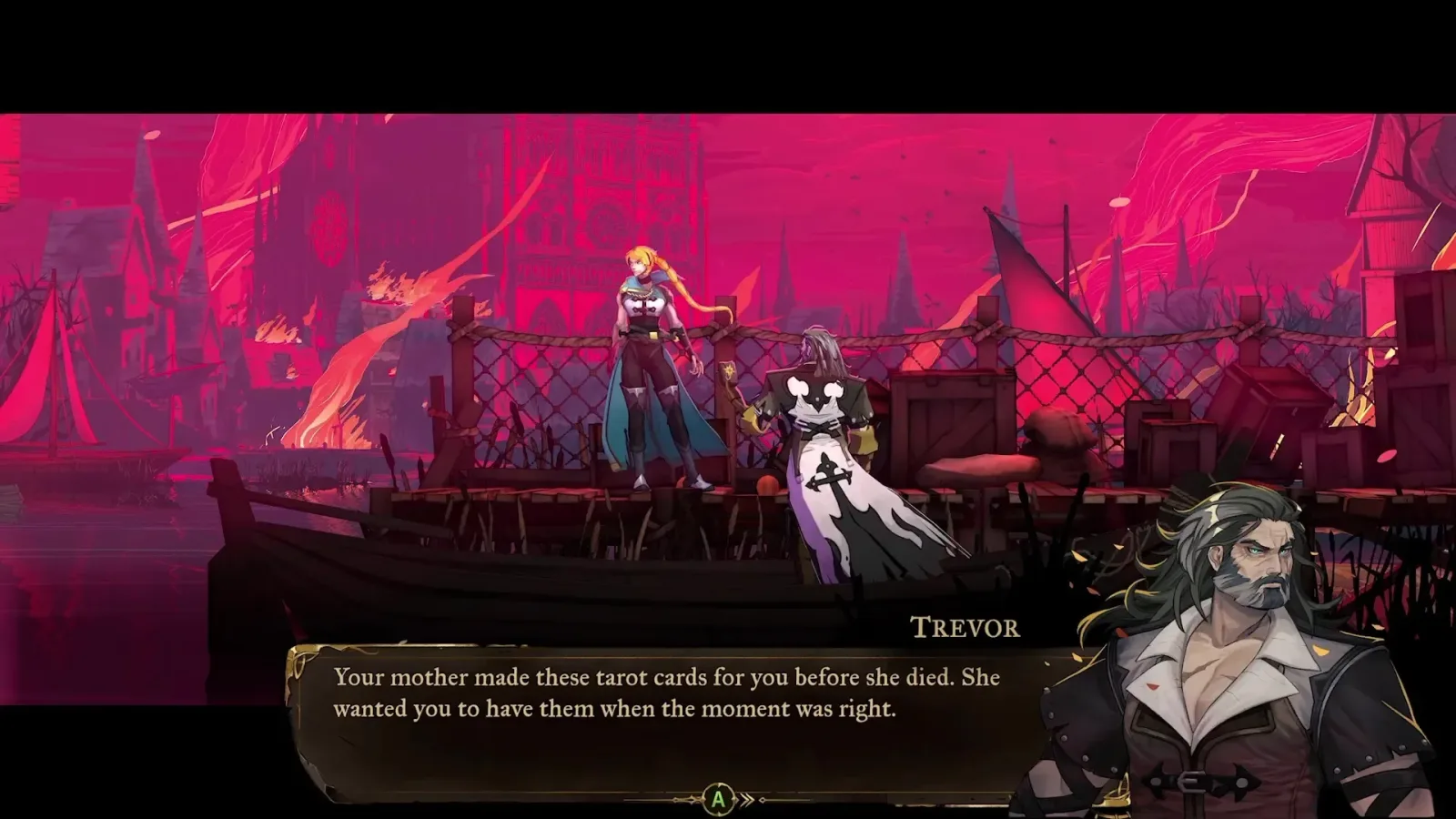
Belmont's Curse takes place 23 years after Trevor Belmont killed Dracula. Trevor and his daughter Rose are summoned to Paris, where supernatural forces have taken hold of the city. Rose has more than duty driving her forward. One of her arms has been bewitched by a curse tied to Dracula and passed down from her late mother, Sypha. She wants answers, revenge, and the chance to establish herself in the shadow of a legendary father.
The setup gives the adventure a personal foundation without requiring extensive knowledge of prior Castlevania stories. It functions well as a standalone game for newcomers, even though it is technically connected to Castlevania III. Its visual approach and character designs lean into anime-inspired sensibilities, and familiar characters receive a presentation that echoes the animated adaptation of Castlevania. Trevor's presence is especially meaningful because the story uses him not merely as a returning hero, but as part of a generational handoff to Rose.
For useful background on this topic, read Xbox Labs Launches to Explore Emerging Game Technology as AI Goes Unnamed.
The narrative is not a dense political fantasy or an especially intricate mystery. It follows a comparatively direct path, and the broad strokes of its conflict are clear. Still, Rose's arc has enough emotional weight to stand out. Her need for validation, her anger over the curse, and her evolving relationship with the family legacy give the plot a worthwhile center. The story is strongest when it allows Rose to become more than the next person to wield a Belmont weapon.
Tarot Cards Turn Progression Into a Conversation
The standout system is Rose's deck of tarot cards, a gift from Sypha. These cards are vessels capable of holding the power of Paris' most formidable inhabitants, whether they are allies, enemies, or something more complicated. Rose pursues these figures through investigations, defeats or otherwise confronts them, and absorbs their souls into her deck. The result is a progression mechanic with much more personality than a simple ability menu.
Every card opens up a new spell. The available magic includes familiar genre pleasures such as fireballs and magical crosses, alongside more unusual effects, including a blast that petrifies foes. Since each card represents a distinct character, the deck also becomes a way to populate Rose's journey. What begins as a lonely hunt gradually turns into an oddly intimate traveling party, with companions and antagonists commenting when the situation calls for it. This gives the adventure a welcome sense of camaraderie and makes its many collectible powers feel connected to the world rather than detached rewards.
The investigative side of the tarot hunts evolves notably over the course of the game. Early cases can be fairly linear and only moderately engaging, directing Rose through a prescribed sequence of clues. Later pursuits become much more ambitious, involving cryptic objectives and map-spanning searches. These late-game hunts are among Belmont's Curse's best ideas, demanding that players interpret clues, revisit prior regions, and think about the layout of Paris as a connected space. The progression from straightforward searches to broader investigations helps the game's final stretch feel more creative rather than simply more difficult.
Each card also has a set of Works of Mercy, achievement-like tasks that improve its associated spell. Objectives may ask players to use a spell a certain number of times, defeat a specific number of enemies, or fully explore a location such as the Clock Tower. This is a smart answer to the common problem of ability bloat in large action adventures. With so many spells available later on, there is a real chance that players would settle on a few reliable favorites and ignore the rest. Works of Mercy encourage experimentation, often revealing that an overlooked spell has greater value once its upgrades are unlocked.
Combat With Room to Experiment
Rose is agile from the start, and she becomes dramatically more mobile as her arsenal expands. By the closing hours, she can move through encounters with the speed and aggression expected from a Belmont protagonist while retaining the freedom to tailor her approach. The game offers six weapon categories, a collection of relics that grant useful perks, and the tarot deck's magical powers. Together, those systems offer an impressive amount of build variety.
The important part is that the choices are not merely decorative. Different enemy types and encounter layouts invite adjustments, and changing weapons, relics, or spells during a fight can be a meaningful response to a developing threat. A loadout that excels against one swarm of enemies may be less effective against another, making experimentation a practical part of combat rather than an optional distraction.
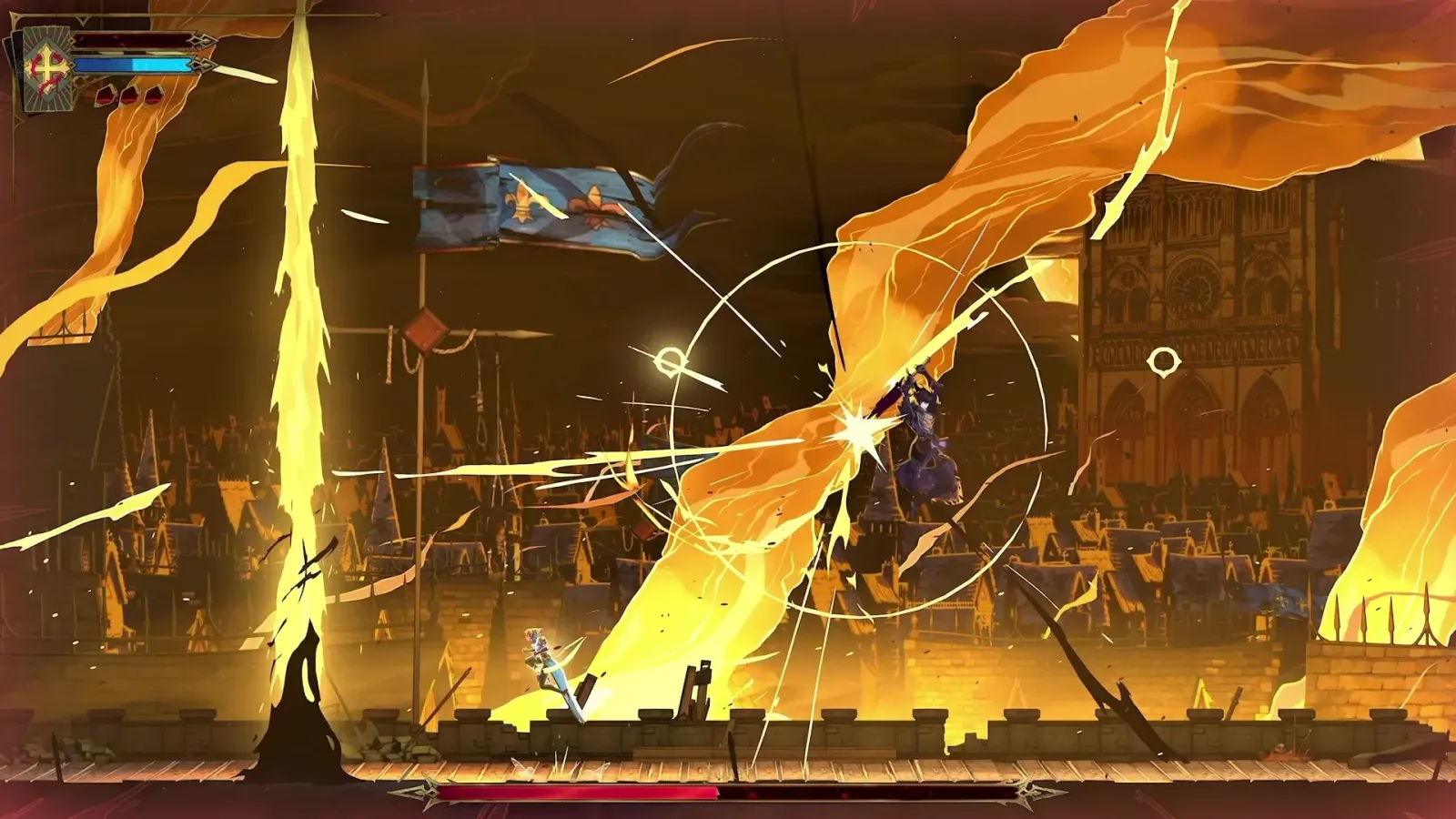
The challenge level strikes an appealing balance. Fights are tough enough to demand awareness, positioning, and sensible use of Rose's expanding toolkit, but they rarely feel insurmountable. A forgiving checkpoint system prevents repeated deaths from becoming exhausting, allowing the game to maintain pressure without turning every setback into an extended retrace through previously cleared rooms. It is a particularly effective approach for a game built around exploration, since the desire to check one more side route remains strong even after a difficult battle.
Boss encounters are another major highlight. Dracula's collection of minions provides the foundation for intense, inventive confrontations that ask players to recognize patterns while making smart use of their chosen tools. These are not merely oversized versions of ordinary enemies. The best bosses have distinct concepts and enough danger to make victory feel earned, reinforcing the game's central marriage of sharp action and gothic spectacle.
A Map That Rewards Curiosity
Belmont's Curse understands the essential rhythm of exploration-based action games. New traversal powers do not just move Rose forward; they recontextualize areas already visited. Platforms once out of reach, passageways previously blocked off, and suspicious corners of earlier zones become invitations to return. That loop remains satisfying throughout the adventure because the rewards are substantial.
There are roughly two dozen weapons to discover, as well as health and mana upgrades, secrets, and even large optional regions. The world regularly justifies backtracking with meaningful finds rather than minor filler. A playthrough lasting around 16 hours can still leave significant room for further exploration, with 92 percent completion suggesting just how much content is tucked into the map for players willing to pursue every lead.
This density is a major reason the game feels so compelling. The adventure does not treat completion as a chore performed after the credits; it makes the path toward 100 percent feel like a continuation of the core experience. New movement options repeatedly turn familiar spaces into fresh opportunities, while the tarot investigations give players additional reasons to scrutinize the world closely.
Xbox Series X/S Context and Who Should Play
On Xbox Series X/S, Belmont's Curse is positioned as a substantial action adventure rather than a brief nostalgia exercise. Its approximately 16-hour route to the ending provides a satisfying full-length campaign, while the extensive secrets, optional spaces, weapon collection, spell upgrades, and revisit-friendly structure offer considerably more for completion-minded players. No specific technical shortcomings are a defining part of this release; the focus remains firmly on the quality of the game's action, design, and world.
This is an easy recommendation for fans of exploratory action games, gothic fantasy, and the Castlevania tradition of gradually expanding power. Players who enjoy adjusting builds and testing different weapons will find plenty to work with, while explorers who want every newly gained movement ability to unlock another layer of the world will be especially well served. Newcomers can jump in without extensive franchise knowledge, though longtime fans will appreciate the continuity and the care given to the Belmont legacy.
Those looking for an elaborate, heavily branching narrative may find the story simpler than the game's systems. Similarly, the earliest tarot investigations do not immediately show the creativity that the later quests achieve. But those are modest limitations in an adventure whose strongest elements keep improving as Rose's journey unfolds.
Final Takeaway
Castlevania: Belmont's Curse is a superb revival built around the strengths that made the series matter in the first place. It offers tense battles, excellent bosses, a secret-rich world, and progression that constantly motivates players to try new tactics. Rose Belmont is an effective new lead, and the tarot deck gives the adventure a distinctive mechanical and narrative hook. Although its story is relatively straightforward and its opening investigations are less inspired than its best late-game quests, the overall package is consistently rewarding.
By honoring the past while granting Rose, Paris, and its tarot-powered systems room to stand on their own, Belmont's Curse makes a persuasive case for Castlevania's future. This is not simply a return to familiar territory. It is a reinvigoration of the hunt.

Community
Discussion
Start the conversation.
No comments have been posted yet.