


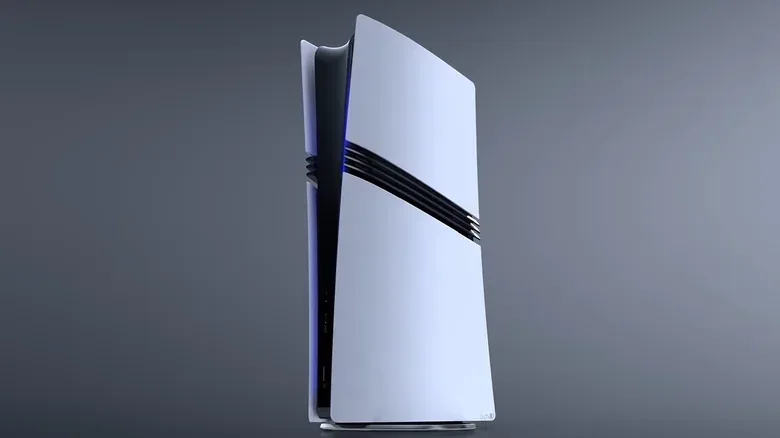
Finding a PlayStation 5 Pro is becoming an increasingly expensive proposition, and the latest used-console pricing is likely to make even enthusiastic PlayStation fans pause. GameStop is currently listing a used PS5 Pro for $1,399.99, placing the system $500 above its current $899.99 MSRP and close to double its original 2024 launch price.
The striking price reflects a wider squeeze around Sony's premium console. Reports indicate that PS5 Pro availability has been hit by a global component shortage, with supply pressure expected to continue into early 2027 at minimum. As buyers look for high-end hardware ahead of Grand Theft Auto 6, retailers, marketplace sellers, and resellers appear to be responding to scarce inventory with substantial markups.
For shoppers, the bigger question is not simply whether the PS5 Pro is more capable than the base PS5. It is whether its visual upgrades can justify paying hundreds of dollars above a price that had already climbed sharply since the console's debut.
A used console at a premium price
GameStop's $1,399.99 listing is especially notable because it applies to a used PS5 Pro rather than a sealed new unit. Sony's advanced console launched in 2024 at a lower asking price, but the manufacturer now lists it at $899.99, a reported $200 increase from its original price. The GameStop price therefore represents a steep premium over both the current official price and the product's launch-era cost.
For useful background on this topic, read GTA 6 Leak Account Claims Story-Focused Build Could Be Released Amid Memecoin Push.
The retailer is not alone in presenting buyers with unusually expensive PS5 Pro options. Best Buy is said to have listings above $1,500, while Walmart has offered an open-box console around $1,200. On peer-to-peer resale sites, completed and active prices have regularly exceeded $1,100.
Those figures suggest that the elevated GameStop listing is part of a larger market response rather than an isolated anomaly. Still, a retailer charging $1,399.99 for used hardware is a clear sign of how far the situation has moved beyond an ordinary console refresh cycle.
Availability problems have historically created opportunities for resellers, especially when a major game release or holiday shopping period gives prospective buyers a reason to secure hardware immediately. The PS5 family already experienced severe supply issues around the original console's launch. In this case, though, the PS5 Pro's high base price means every additional markup is more dramatic in absolute dollars.
Memory constraints are reportedly affecting PS5 Pro supply
The reported shortage has been linked to an increasingly competitive market for memory components. Data-center expansion and the wider rush to build AI infrastructure have increased demand for high-bandwidth memory and other components needed to move data quickly through advanced systems. The knock-on effect is said to be reduced availability of dynamic random-access memory, or DRAM, for consumer electronics.
That matters for console manufacturing because components are not interchangeable at will. Even when a platform holder has established manufacturing partners and long-term supply plans, shortages in a critical part can limit how many systems can be built and delivered to retailers. A supply interruption in one area can ripple outward across manufacturing, shipping, regional allocations, and store stock.
An August 2026 financial-industry report projected that worldwide DRAM prices could be 400 percent higher by the end of the year than they were when the PS5 Pro arrived in 2024. Such forecasts should be treated cautiously, particularly in a volatile component market, but they illustrate why hardware pricing and supply may remain under pressure.
Separate reporting in September cited communications between Sony and distribution partners that allegedly pointed to PS5 Pro constraints lasting through early 2027 at the earliest. Other forecasts have been even more pessimistic, suggesting the broader RAM crunch could remain a concern for years. None of that guarantees that every retailer will remain out of stock, but it does help explain why sellers with systems in hand are testing unusually high prices.
Sony has reportedly tried to limit reseller activity in Japan
Manufacturers have limited tools when resellers acquire available stock and relist it at premiums, but Sony has reportedly taken a more direct approach in Japan. A lottery system tied to minimum game-time requirements has been introduced there, seemingly intended to give active players a better chance of buying the hardware while reducing opportunities for bulk speculative purchases.
Systems like this do not create more consoles, and they can also be inconvenient for new customers entering the PlayStation ecosystem. But they show how seriously the resale problem is being treated in markets where demand has become detached from official prices.
The situation also arrives during a difficult period for the wider hardware business. Video game hardware sales reportedly fell to a 13-year low this month, even as the cost of buying into premium hardware has risen. A September consumer-price analysis found that the category covering computer software and accessories had increased by 31 percent, while standard PlayStation 5 prices have reportedly risen by about $150, or roughly 30 percent.
When consoles cost more, accessories cost more, and marquee games encourage players to consider an upgrade, the barrier to entry grows quickly. That could be particularly damaging for the industry if consumers decide to delay purchases, stick with existing systems, or spend their money on software and subscriptions instead of new hardware.
What the PS5 Pro actually offers
There is a reason the PS5 Pro attracts demand beyond its scarcity. Sony's higher-end system offers a more powerful GPU, 2TB of storage, ray-tracing improvements, and the ability to better target demanding visual settings. On a high-end 4K display, the promise is often to reduce the usual compromise between image quality and smooth performance, with supported games aiming for sharp visuals at 60 frames per second.
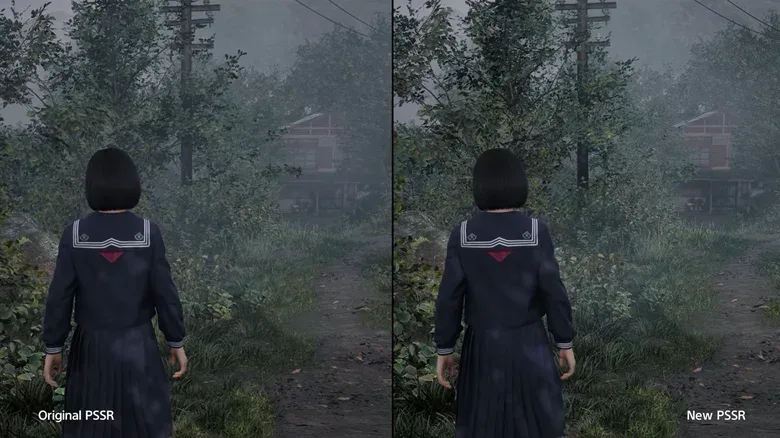
The console's centerpiece feature is PlayStation Spectral Super Resolution, or PSSR. It is an AI-based image-upscaling technology designed to reconstruct and enhance an image from lower-resolution source data. PSSR received a mixed reception around the PS5 Pro's launch, but Sony later introduced an upgraded version called PSSR Enhanced, which is now the default option on the console.
Its limitations are important. The best results depend on games receiving PS5 Pro Enhanced support, and the feature set varies from title to title. Grand Theft Auto 6 is among the games promoted as PS5 Pro Enhanced, making it a major point of interest for players eager to experience the next Rockstar release with the strongest available console hardware.
Yet the number of titles that take full native advantage of the newer PSSR technology remains limited. That makes the value calculation less straightforward than it would be if every PS5 game received the same substantial improvement. A player focused on a small group of enhanced releases may see a meaningful benefit; someone with a broad library of older or unsupported games may see far less reason to upgrade.
The standard PS5 may narrow the gap
Sony is also working to improve the experience on the base PS5. In an October 2026 blog post, the company said it would bring Quick Spectral Super Resolution, or QSSR, to the standard console. Sony has not positioned QSSR as identical to PSSR or as the company's highest-end image-upscaling solution, but it is intended to deliver improvements to image quality and stability.
That development may further complicate a PS5 Pro purchase at inflated prices. The Pro will retain advantages in raw performance and enhanced features, but the standard model gaining a related upscaling option could reduce the perceived visual distance between the two machines for some players.
It is also worth remembering that the PS5 Pro is an upgrade, not a separate software generation. The standard PS5 remains the baseline platform for the PlayStation ecosystem. Unless a player specifically wants the strongest console presentation for supported games, already owns a premium television, and is comfortable paying Sony's official price, patience may be the most practical option.
Is $1,399.99 ever worth paying?
The PS5 Pro can deliver genuine technical improvements. Better ray tracing, enhanced upscaling, stronger graphics performance, larger internal storage, and more ambitious quality-and-performance targets are real benefits. For players with compatible displays and a strong interest in PS5 Pro Enhanced games, it is not difficult to understand the appeal.
But the system's value becomes much harder to defend once the price rises to $1,399.99 for a used unit. At that point, buyers are paying not just for Sony's premium hardware, but for limited supply, retailer pricing strategy, and the urgency surrounding upcoming releases. The same money could cover a standard PS5, a television upgrade, several games, and still leave room for other purchases depending on local pricing.
For most prospective buyers, paying $500 above MSRP for a used PS5 Pro is difficult to recommend. The shortage may persist, and prices may not normalize quickly. Even so, scarcity does not change the fact that the console's best features are tied to a select set of supported games, while the standard PS5 continues to receive new software and its own image-quality improvements.
Players determined to have the PS5 Pro before the end of the year may find that the market leaves them with few comfortable choices. Everyone else may be better served by waiting for official inventory, watching for a more reasonable listing, or reconsidering whether the jump from a standard PS5 is truly worth the premium.

Community
Discussion
Start the conversation.
No comments have been posted yet.