

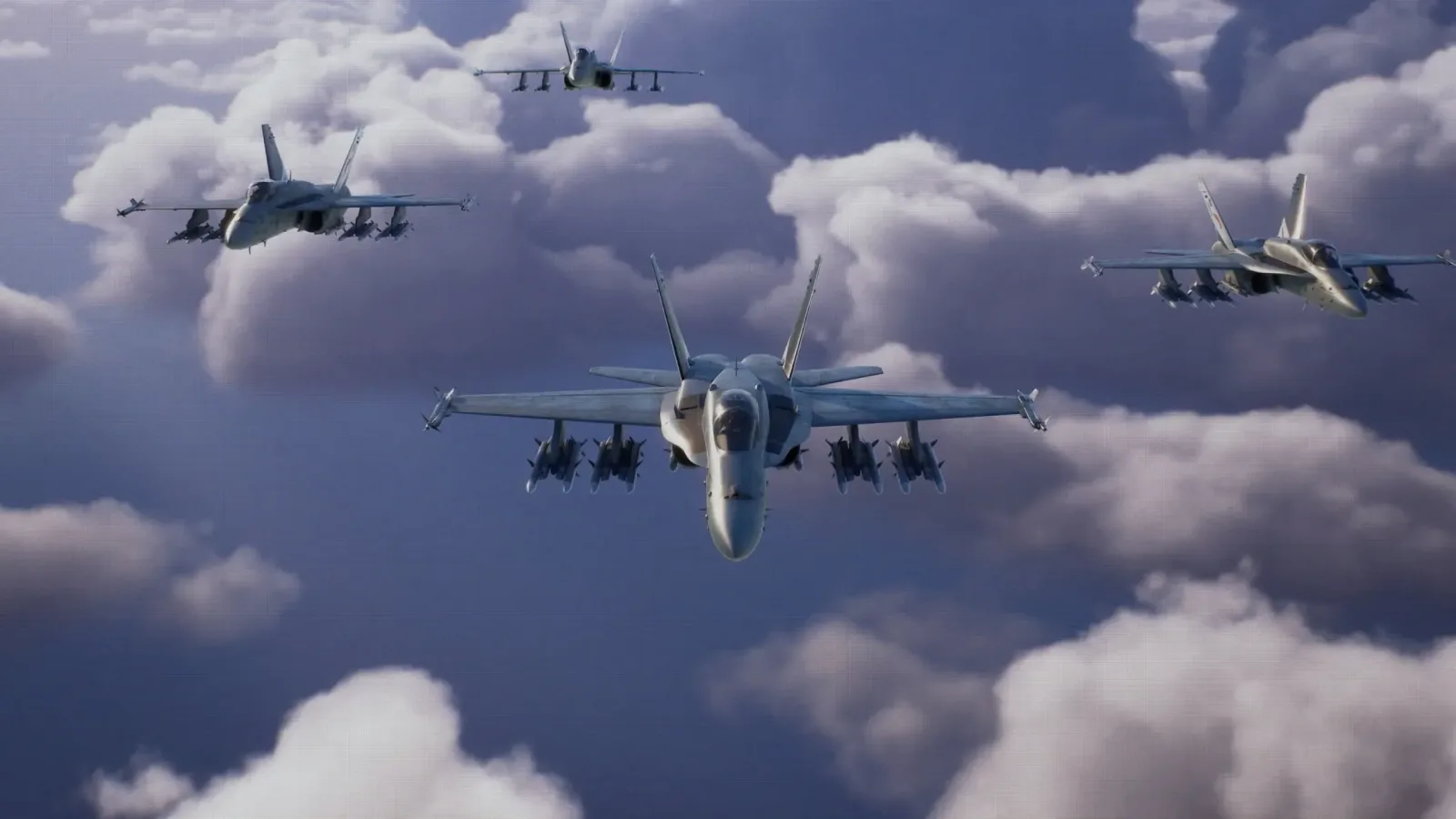
Ace Combat 8: Wings of Theve is a triumphant aerial-action game that understands exactly why this series has endured. Its campaign combines explosive dogfights, large-scale battlefield objectives, imposing enemy hardware, and a cast that gives its escalating conflict an unexpectedly personal core. The result is a sequel that does not merely revisit familiar ideas such as elite rival squadrons, carrier crews, and enormous mission spaces. It refines them into one of the strongest and most consistently exciting entries in the franchise.
Set after an invasion of the protagonist's homeland, Wings of Theve begins with a disastrous clash against Sotoa's feared Shadow squadron. The conflict leaves the original Wings of Theve--a folk hero of the FCU--more myth than active participant. Taking on that identity becomes a crucial act of morale and resistance, turning the player into the new symbol around which a battered military force can rally. It is a familiar kind of larger-than-life premise for Ace Combat, but the game earns its drama by concentrating on the people who must survive beneath that legend.
A campaign with altitude, scale, and heart
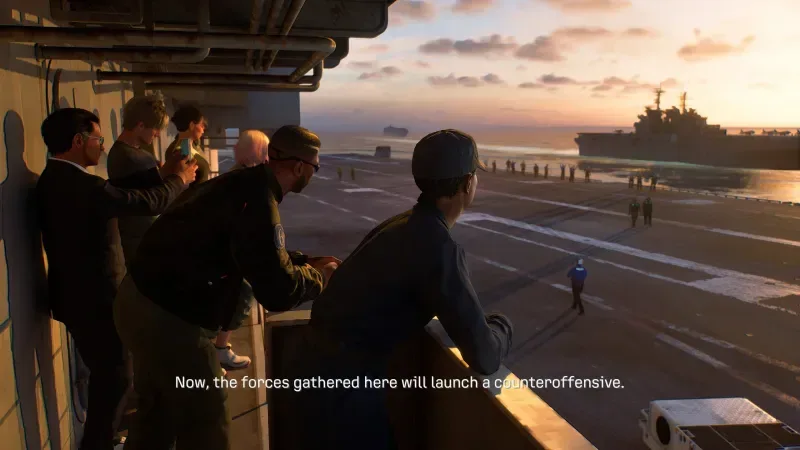
Across more than 30 missions, the crew aboard the carrier Endurance gradually becomes the emotional backbone of the war. Joker Squadron, its sister unit Queen Squadron, the carrier personnel, and the enemy aces all receive enough attention to become more than voices delivering radio chatter during combat. The campaign is crowded with characters, yet it makes the most important relationships feel tangible. Their setbacks and victories carry forward, giving later missions more impact than another detached list of targets ever could.
The first-person framing is especially important to that effect. By placing more emphasis on the pilots and crew surrounding the action, Wings of Theve makes its major confrontations feel less abstract. A desperate battle has added tension when it involves characters whose anxieties, loyalties, and losses have been established beforehand. It remains a grand story about warfare and politics, but it is also about a small group of survivors trying to bring their damaged fleet through the conflict.
For useful background on this topic, read Biddy Blas Becomes Star Wars: Galactic Racer's Unexpected Fan Favorite.
Not every narrative decision lands with equal force. Certain scenes oddly require an arbitrary button press before they can continue, interrupting the natural flow of what should be straightforward dramatic exchanges. The recurring voice of former Wings pilot Cope, speaking from beyond, also feels overly emphatic early on. Those quirks are noticeable, but they do not prevent the campaign from finding a powerful rhythm as its squadron dynamics and escalating stakes take center stage.
Mission design that rarely repeats itself
The campaign's greatest achievement may be how effectively it transforms its broad airborne playgrounds into distinct tactical challenges. Each assignment is built as a dense box of objectives, threats, opportunities, and changing priorities. Rather than relying on the same dogfight structure with a new backdrop, Wings of Theve continually asks pilots to reconsider their approach.
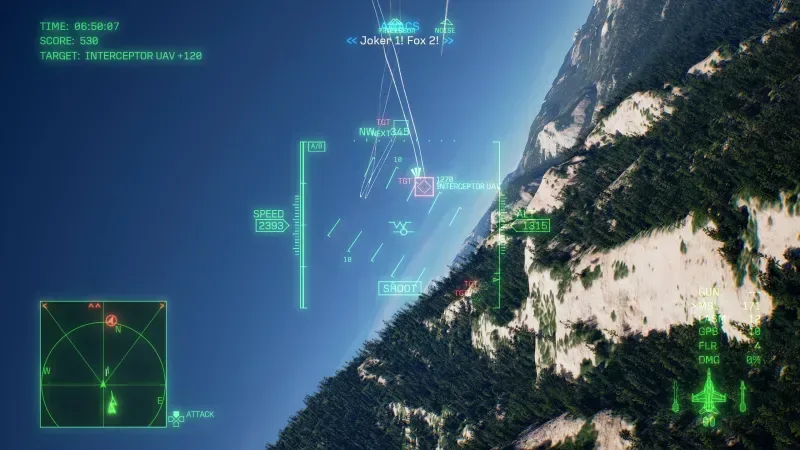
One mission sends aircraft sweeping across an enormous desert to dismantle an invasion force piece by piece. Strategic power supplies, ammunition reserves, hangars, and aircraft all become potential targets as the battle is gradually tipped in the player's favor. Another operation turns speed and terrain-hugging flight into the central mechanic, requiring a low-altitude sprint toward an island while avoiding radar detection. Later, radar jamming forces pilots to track massive cargo planes by their contrails instead of reliable targeting data.
These scenarios do more than add variety. They reinforce the sensation that combat is taking place inside a wider war, where a fighter jet might be called upon to conduct stealthy approach runs, demolish logistics networks, intercept high-value aircraft, or simply survive a maelstrom of hostile missiles. Even when a mission becomes a familiar airborne brawl, the surrounding objectives and terrain tend to give it its own identity.
The structure also makes the campaign highly replayable. Missions have the kind of momentum that invites another attempt with a different aircraft, a revised special-weapon loadout, or a better plan for maximizing score and efficiency. There is a thrill in learning an operation's geography and then returning with the confidence to carve through it more cleanly.
Weighty aircraft and exceptional dogfights
Flying remains the foundation of Ace Combat 8, and the handling strikes a satisfying balance between accessibility and physical presence. Aircraft feel somewhat heavier than they did in Ace Combat 7, but that additional heft works in the game's favor. High-G turns feel like a genuine struggle to wrestle a huge machine through the sky at extreme speed. The jets are still responsive and exhilarating, yet they have enough mass to make aggressive maneuvers feel consequential.
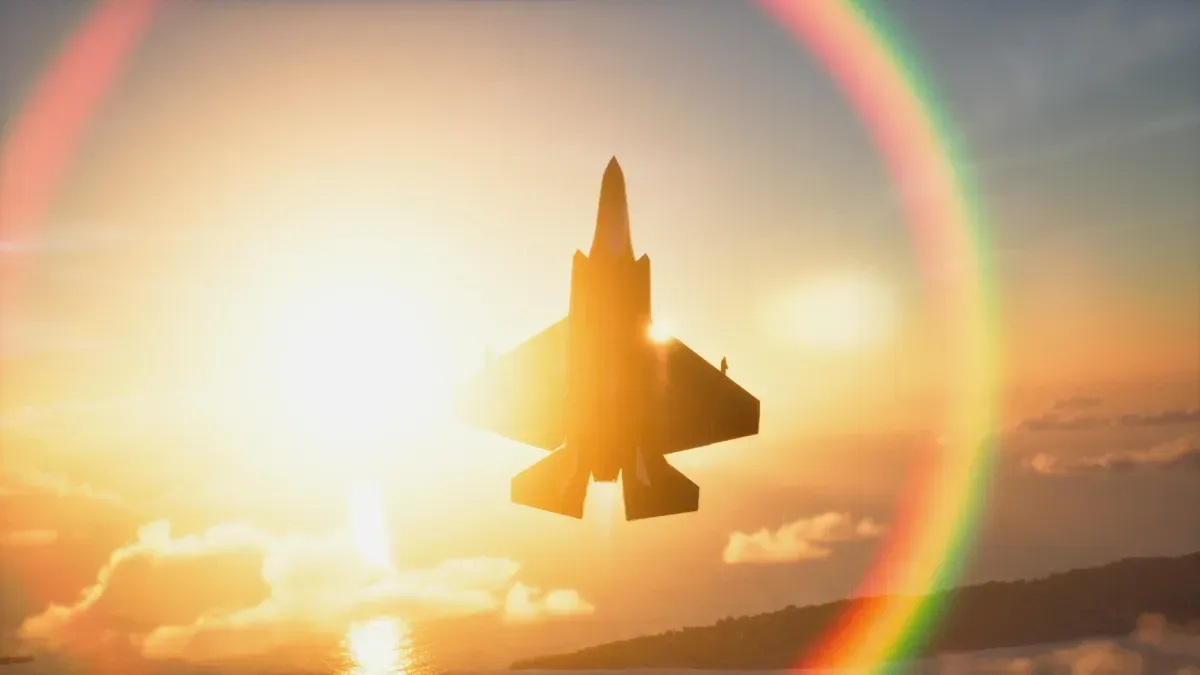
A broad selection of planes and weapons supports different approaches to the campaign. The F-35C remains an appealing all-purpose choice, but the roster offers substantial reasons to experiment. An A-10-focused sequence in particular provides a welcome change of pace from the rapid, disorienting missile exchanges that define many other missions. It is a reminder that aerial combat can feel very different when the task is built around a slower, heavier platform with a specialized role.
The ability to equip two special weapons at once is another meaningful improvement. This creates more room for specialization before a sortie begins and reduces the sense that a pilot must commit to one narrow function. A loadout can be tailored for air superiority while retaining a useful answer to ground targets, or configured more aggressively around the demands of a specific mission. That flexibility makes the hangar feel like a strategic tool rather than a simple aircraft selection screen.
Enemies are equipped to ensure those advantages never become too comfortable. Sotoa's land battleships and other terra-naval weapons make ground forces unusually dangerous, while repeated rail-gun alerts turn low-level attack runs into nerve-racking exercises in timing and awareness. The game's best moments often emerge from this pressure: attempting to line up a decisive strike while hostile fighters crowd the radar, missiles flood the air, and a devastating weapon system threatens to punish any predictable path.
The Shadows give the war a face
Sotoa's Lux Lunae, known by the player's squadron as the Shadows, provide the campaign with a formidable and stylish opposition. Their sleek black aircraft, open-channel chanting, and extreme mid-air maneuvers give them an intimidating theatricality whenever they arrive. They are not simply recurring targets; they are a persistent test of improvement.
Each major encounter with these ace pilots pushes combat skill further, demanding sharper positioning, better missile discipline, and more confident control in close aerial engagements. Defeating them becomes a satisfying measure of growth over the course of the campaign. Their presence helps Wings of Theve deliver on one of Ace Combat's enduring pleasures: meeting a rival force that feels dangerous enough to elevate every victory.
Multiplayer has strong ideas, with avoidable drag
Multiplayer expands the package with options for both score-chasing pilots and those looking for direct competition. Four-player squadron modes form much of the experience, with teams competing for points either alongside or against an opposing squadron. These modes fit the series well, translating its emphasis on rapid target selection, route planning, and aerial dominance into a competitive setting.
The standout feature is emergency sorties, special events that activate periodically and bring players together against recognizable Ace Combat superweapons such as the Arsenal Bird. These encounters give multiplayer a larger cooperative spectacle and suggest considerable potential for future support.
Still, the online component introduces several frustrating speed bumps. Too much menu navigation separates players from the action, and obtaining particular aircraft upgrades can require focused grinding. Cosmetic monetization also feels like an unwelcome distraction in a game whose best qualities are its clean, immediate rush of taking off and entering combat. None of these issues erase the appeal of multiplayer, but they make the experience feel less streamlined than the campaign.
Who should fly with the Wings of Theve?
Wings of Theve is an easy recommendation for established Ace Combat fans, especially anyone seeking a campaign full of replayable missions, memorable rival pilots, and a stronger focus on squadron relationships. It is equally well suited to action-game players who want spectacular set pieces without sacrificing mechanical satisfaction. The controls provide the instant excitement expected from arcade-leaning flight action, while mission structure and loadout choices offer enough depth to reward mastery.
Players interested only in frictionless competitive progression may be more cautious, as multiplayer's menus and upgrade requirements can feel cumbersome. Those concerns are secondary to the main attraction, however: a lengthy single-player campaign that repeatedly finds fresh ways to make high-speed aerial combat feel urgent.
Final takeaway
Ace Combat 8: Wings of Theve earns its place among the series' best flights. Its campaign is packed with inventive objectives, explosive confrontations, formidable enemy aces, and a cast that makes the war's biggest moments resonate. The aircraft feel excellent, the two-special-weapon system strengthens preparation and experimentation, and the Shadows deliver the kind of recurring rivalry that turns victories into personal milestones.
Some storytelling flourishes are awkward, and multiplayer's progression systems add unnecessary friction. But when the mission begins, the concerns fall away beneath the roar of engines, warning tones, contrails, and missiles. This is a confident, thrilling aerial epic that makes a compelling case for returning to the cockpit again and again.
Community
Discussion
Start the conversation.
No comments have been posted yet.