

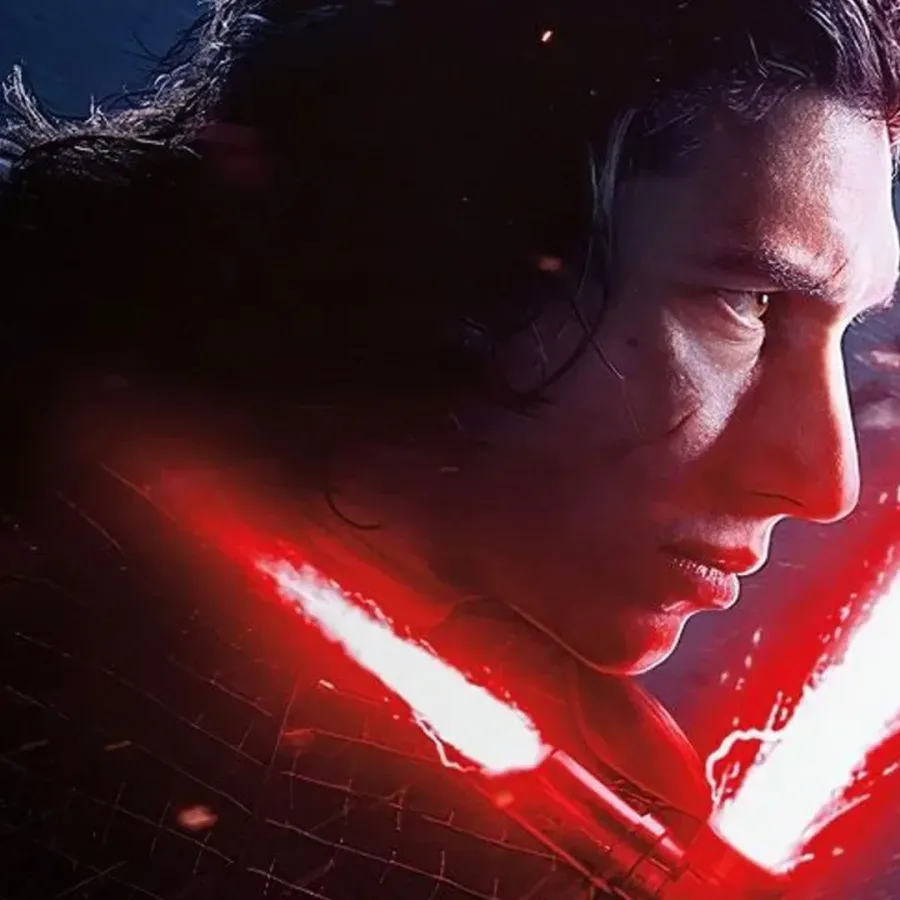
Adam Driver has once again expressed disbelief that The Hunt for Ben Solo, the proposed Star Wars film built around his return as Kylo Ren/Ben Solo, never moved forward. The actor's latest comments are among his strongest yet: reflecting on the project and director Steven Soderbergh's involvement, Driver said the decision to stop it "felt criminal."
The reaction speaks to an unusual situation for a franchise as large as Star Wars. This was not simply an actor expressing a vague desire to revisit an old role. Driver, Soderbergh, and their collaborators had spent years developing a specific follow-up concept for Ben Solo after the events of 2019's Star Wars: The Rise of Skywalker. By the time the public learned of the project, Driver had described the screenplay as one of the coolest scripts he had ever been involved with. That enthusiasm made the project's fate especially disappointing for viewers who wanted to see Ben's story continue.
For Driver, the central question remains difficult to understand. He framed the situation around Soderbergh's interest in making a Star Wars movie, suggesting that the filmmaker's participation alone made the prospect feel self-evidently worthwhile. Instead, the project was ultimately shelved, with Disney leadership reportedly unable to see how Ben Solo could still be alive following the character's apparent death in The Rise of Skywalker.
A sequel idea built around an apparent ending
Ben Solo's fate is the key obstacle hanging over The Hunt for Ben Solo. In the final film of the Skywalker Saga, Ben returns to the light after his long period as Kylo Ren. He helps Rey confront Emperor Palpatine, uses his life force to save her, and then disappears in the familiar manner associated with deceased Force users in the saga. The scene was structured as a sacrifice and a conclusion to the character's redemption arc.
For useful background on this topic, read Super Meat Boy Again+ Brings Team Meat Back to the Original's Brutal 2D Formula.
Yet Star Wars has never been a setting where an apparent death automatically ends discussion. The franchise has a long history of characters returning after presumed fatal moments, whether through survival, Force-related storytelling, visions, alternate perspectives, or other science-fiction mechanisms. That does not mean a continuation would have been simple, nor does it prove that any particular story decision would have worked. It does explain why the question of Ben Solo's status became such a major point of fan debate.
Driver's account indicates that the project's backers had a story worth telling despite that challenge. The exact plot has not been publicly detailed, so there is no basis for claiming how Ben's survival would have been explained, where the story would have taken place, or which familiar characters might have appeared. What is known is that it was intended as a Skywalker Saga follow-up focused on the title character, and that Driver was deeply impressed by the script.
That combination matters. Ben Solo remains one of the sequel trilogy's most discussed figures because he contains several competing identities: the son of Leia Organa and Han Solo, the nephew of Luke Skywalker, the heir to the Skywalker family's legacy, the enforcer known as Kylo Ren, and finally a redeemed Ben. A standalone continuation could have explored the consequences of those identities without having to carry the entire burden of introducing a new trilogy at once.
Years of development, then an abrupt stop
The disappointment around the film is not only about its premise. The project had already consumed substantial creative effort. Soderbergh later characterized the decision to abandon it after roughly two and a half years of work as "insane." Driver's new remarks show that the frustration has not faded simply because the team has moved on professionally.
Creative development frequently ends without a finished movie. That is especially true in a franchise environment, where concepts can be evaluated against release schedules, continuity concerns, budgets, shifting executives, and larger brand plans. Plenty of promising pitches never reach production. Still, the public response to The Hunt for Ben Solo illustrates why this cancellation landed differently. It involved a prominent returning actor, a director with a distinct filmography, a character with a major fan following, and a concept that appeared to offer closure--or a new beginning--for a divisive but popular era of the saga.
There is also a tension between the project's apparent creative momentum and the reason it was reportedly rejected. If the primary concern was whether Ben could be alive, then fans are left imagining that the issue may have been less about a lack of interest and more about a disagreement over one foundational storytelling choice. Without the screenplay, it is impossible to judge the proposal itself. But Driver's confidence and Soderbergh's frustration have made the unmade movie feel more tangible than most abandoned productions.
"For me it was: Steven Soderbergh wants to make a Star Wars film. What are we debating?" Driver said while revisiting the cancellation.
His wording captures the broader feeling among supporters: that the opportunity to pair Driver's Ben Solo with Soderbergh's direction was rare enough to justify finding a path forward. Whether that view would have translated into a successful finished film can never be known, but the appeal is easy to see. Soderbergh's presence suggested a potentially different texture for a galaxy-spanning blockbuster, while Driver's return would have given the project a clear emotional anchor.
Fan campaigns became part of the story
One of the most striking aspects of the situation has been the fan response. Driver said he was overwhelmed by the support for the project, including billboards in Times Square. He described the reaction as moving and likened it to a shared conversation about the kinds of films fans wanted to see.
That response has turned the canceled movie into more than a behind-the-scenes curiosity. Fan organizing cannot guarantee that a major studio will reverse a decision, and it would be misleading to treat it as proof that a film will eventually happen. But campaigns can demonstrate sustained interest, create visibility, and preserve a project in public discussion long after a standard development cancellation might have disappeared.
For fans of Ben Solo, the campaign also reflects a wish to see a character's redemption handled with more room to breathe. The sequel trilogy ended on a dramatic final gesture, but its compressed timeline left many viewers eager for stories that could spend more time with the aftermath of Ben's choices. Others may be skeptical of undoing a sacrifice that was designed as a conclusion. Both reactions point to the same reality: Ben Solo's ending still has emotional weight years later.
The fan movement is therefore not merely nostalgia for another lightsaber appearance. It is an argument that the character and the creative team had unfinished potential. Driver's response suggests that he recognizes how personal that support has been, even as he acknowledges that everyone involved must keep moving forward.
Is there any route back for Ben Solo?
At present, there is no indication that The Hunt for Ben Solo is actively being developed. As of August 2026, Lucasfilm president Dave Filoni said it was not something the company was working on. Driver has also indicated that he is likely finished with the character, though he has left a narrow opening should Disney revisit this specific project.
That distinction is important. An actor saying a door is not entirely locked is not a production announcement. There is no confirmed revival, no announced creative team, no release window, and no evidence that the shelved screenplay has re-entered development. Soderbergh, meanwhile, ruled out returning to the project in April 2026 and is currently assisting with The Batman Part 2. Any eventual version of the idea would therefore face questions not only about Ben Solo's story, but also about whether the same team could or would reunite.
The wider film slate remains fluid as well. Taika Waititi's long-discussed Star Wars movie was officially put on ice last month, joining the Ben Solo project among the franchise's high-profile unrealized films. At the same time, several Star Wars movies and series are confirmed to arrive over the next year, demonstrating that Lucasfilm's screen plans are continuing even while individual projects change direction.
An unmade movie with a lasting presence
The Hunt for Ben Solo now occupies a peculiar place in modern franchise history. It has no trailer, no completed footage, no disclosed plot breakdown, and no announced release date. Yet the comments from Driver and Soderbergh, together with the scale of the fan campaign, have given it an identity that many canceled projects never gain.
Driver's "criminal" description is not a promise that the film will be rescued. It is a candid measure of how strongly he believed in the work and in the opportunity represented by Soderbergh's involvement. For audiences, it keeps a simple but persistent question alive: what might a character-driven, post-Skywalker Saga Ben Solo movie have looked like?
Until Disney changes course, that question has no official answer. The film remains an abandoned proposal rather than an upcoming chapter of Star Wars. But the continued attention around it shows that, for a meaningful portion of the franchise's audience, Ben Solo's story--and the possibility of seeing Driver return--has not vanished as cleanly as the ending of The Rise of Skywalker may have suggested.
Community
Discussion
Start the conversation.
No comments have been posted yet.