

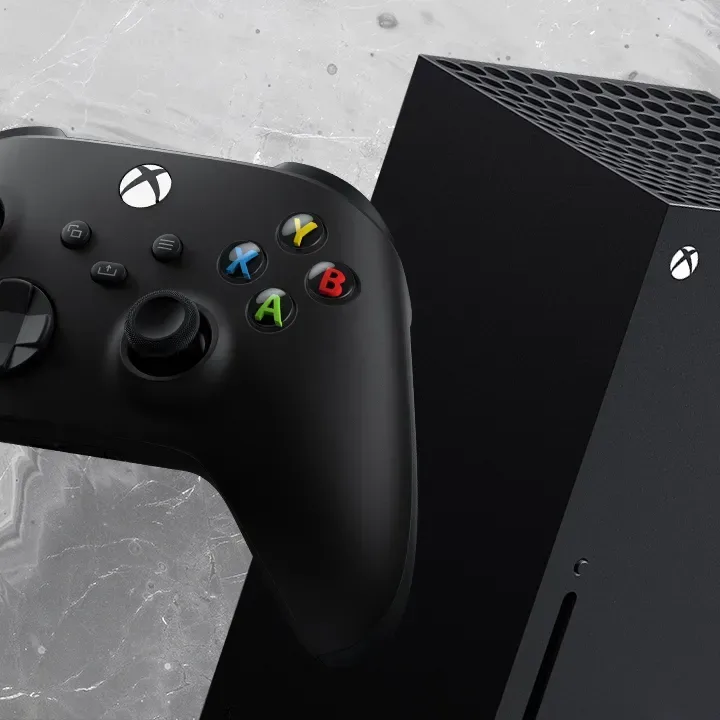
AMD is expanding the reach of its FSR 4.1 image-upscaling technology, with Xbox Series X now set to receive the AI-assisted feature through a future update. The announcement is notable not only for Microsoft's current console, but also for PC players using older Radeon hardware and for owners of Z2-powered handheld devices. Until now, FSR 4.1's more advanced model had been associated with newer Radeon 7000- and 9000-series graphics cards.
The broader rollout is possible because AMD has reduced the demands of the model, aiming to make its newer upscaling approach practical on hardware that does not offer the same level of dedicated AI acceleration as its latest GPUs. AMD has described the Xbox Series X implementation as "coming soon," though it has not provided a specific release window or identified which games will be first to support it.
For Xbox Series X owners, the change could be especially important in games where developers must balance image clarity, ray tracing, visual complexity and frame rate. Upscaling is already a central part of modern console rendering, but the quality of the reconstruction method can make a major difference in how clean fine detail, foliage, movement and distant geometry look on a 4K display.
What FSR 4.1 Does Differently
FidelityFX Super Resolution, or FSR, is AMD's family of rendering technologies designed to let games render internally at a lower resolution and then reconstruct the picture at a higher output resolution. The potential payoff is straightforward: rendering fewer pixels can free up performance, allowing a game to pursue a steadier frame rate, higher settings, or more demanding effects.
For useful background on this topic, read Kingdom Hearts Was Stronger When Final Fantasy Shared the Spotlight.
Earlier forms of upscaling could produce useful performance gains, but image reconstruction remains difficult. Fast-moving objects, particle effects, thin details and transparent surfaces can expose issues such as shimmering, ghosting, instability or softness. FSR 4.1 uses an AI-driven approach intended to improve the final image while retaining the performance benefits of a lower-resolution starting point.
The concept is comparable in broad terms to Nvidia's DLSS: both use AI-based processing to reconstruct a higher-resolution image from a lower-resolution input. However, the hardware requirements and implementation details differ. FSR 4.1 initially had limited availability because its more sophisticated processing was harder to run efficiently on less capable chips.
That limitation matters on consoles and handhelds, where developers cannot simply assume access to the newest desktop-class accelerators. If the upscaler consumes too much of the graphics budget, the benefit of rendering at a lower native resolution can shrink or disappear. AMD's latest work is focused on avoiding that trade-off.
A Smaller Model Opens the Door to RDNA 2
AMD senior vice president of Gaming and Graphics Jack Huynh said the company was able to slim down the FSR 4.1 model so it could work efficiently on lower-powered devices. This includes RDNA 2-based graphics cards such as the Radeon RX 6800 XT, as well as hardware using AMD's Z2 platform.
RDNA 2 remains a significant architecture for gaming. It powers a large portion of AMD's PC graphics lineup from its generation and is also the foundation of the Xbox Series X console. Bringing the updated upscaler to that class of hardware potentially gives developers another option for extracting better image quality and performance without requiring players to own the newest Radeon cards.
AMD also named Z2-powered handhelds, including the Xbox Ally X20, among the devices that will benefit from the expanded support. Handheld PCs face a particularly demanding technical equation: they operate within limited power envelopes, their compact displays can make artifacts more apparent in motion, and they often target performance levels that require aggressive use of resolution scaling. A more capable and efficient reconstruction method could therefore be meaningful even when games are not attempting to render at very high output resolutions.
There is an important caveat. Support for an upscaling technology does not automatically improve every existing game overnight. Individual titles need developer integration and tuning, and the results will vary based on a game's engine, its chosen internal resolution, motion-vector quality, anti-aliasing implementation and performance targets. Still, the availability of a more advanced option on Xbox Series X gives developers more flexibility for future patches and releases.
Xbox Series X and the Console Upscaling Race
The FSR 4.1 news arrives shortly after AMD and Sony applied a similar strategy to PlayStation's image reconstruction technology. A streamlined version of PSSR 2, called QSSR, was created for the base PlayStation 5. That technology is positioned as an improvement over the FSR 2-based solution previously available on the system.
The parallel is revealing. Console makers are increasingly treating upscaling as a long-term platform feature rather than a niche graphics setting. As game worlds grow more detailed and lighting techniques become more expensive, reconstruction technology can determine whether developers are able to hit their preferred balance between resolution, visual features and responsive performance.
For Xbox Series X, an efficient FSR 4.1 model could offer a comparable generational step over older FSR-based approaches. It should not be seen as a universal solution to every technical challenge, and AMD has not promised any particular frame-rate modes or image-quality outcomes for specific games. But stronger reconstruction can give teams more room to make difficult rendering decisions.
That prospect has prompted particular interest around Grand Theft Auto 6, which is scheduled to launch next month. Rockstar's next open-world crime game is expected to be a major technical showcase, and there have been questions about how demanding it may prove for the current base consoles. A better upscaler could help developers preserve image quality when performance constraints require lower internal resolutions, though there has been no confirmation that FSR 4.1 will arrive on Xbox Series X before the game or be used by Rockstar.
AMD's wording leaves the immediate timing open. "Coming soon" indicates that work is progressing, but it does not establish whether the technology will appear in a system-level update, in game-specific patches, or through another deployment route. Microsoft and AMD have not detailed the first Xbox Series X titles expected to use the revised model.
AMD and Xbox Are Also Looking Beyond the Current Generation
The announcement was not limited to FSR 4.1. Xbox chief technology officer Scott Van Vliet confirmed that AMD's next-generation upscaling technology, known as FSR "Diamond," is planned for Project Helix. That is a longer-range commitment and suggests that AI-based reconstruction will remain a core component of the two companies' hardware strategy.
Xbox CEO Asha Sharma has described Helix as a "family of devices," rather than a single product. That phrasing leaves plenty of unanswered questions about the project's eventual hardware lineup, capabilities and launch timing. However, it also makes scalable upscaling technology especially valuable. A shared family that includes devices with different levels of performance would benefit from rendering tools that can be adapted to each machine's power budget.
AMD's efforts to bring FSR 4.1 to RDNA 2 and portable Z2 hardware appear to be an early example of that scalability. Rather than reserving the company's best reconstruction methods solely for its newest and most powerful graphics products, the goal is increasingly to create versions that can operate across a wider range of devices.
What Players Should Watch For Next
The biggest outstanding question is implementation. Players should watch for confirmation of the first Xbox Series X games receiving FSR 4.1 support, as well as technical comparisons showing how the trimmed-down model performs against older console upscaling solutions. Resolution alone will not tell the full story; stability during motion, fine-detail reconstruction, handling of difficult effects and frame-time consistency will all matter.
PC users with RDNA 2 cards and handheld owners will also need to wait for software support. The expansion is promising because it extends a newer AI upscaling technique to hardware previously left outside the initial FSR 4.1 availability range, but the real impact will be measured game by game.
For now, AMD's message is clear: FSR 4.1 is no longer being positioned only as a feature for the company's newest Radeon products. With Xbox Series X, older RDNA 2 GPUs and Z2 handhelds on the roadmap, the company is attempting to make higher-quality AI upscaling a more broadly available tool across PC, console and portable gaming.
Community
Discussion
Start the conversation.
No comments have been posted yet.