

Kingdom Hearts has always been easy to describe in the broadest possible terms: it is the series where Disney characters and Square Enix-style role-playing game drama collide. Yet that description has become less precise over time. Disney remains an unmistakable part of the franchise's identity, while Kingdom Hearts' own expanding mythology has increasingly occupied the center of the stage. Final Fantasy, despite being one of the crossover's founding ingredients, has often been pushed to the margins.
Revisiting the first Kingdom Hearts makes that shift especially noticeable. The game does not merely place a few recognizable Final Fantasy faces in a hub area for nostalgic decoration. Its early hours use those characters to establish the tone, the stakes, and the strange possibility of this universe. Sora's path from Destiny Islands to Traverse Town feels like an actual meeting point between two distinct traditions: Disney adventure and Final Fantasy melancholy.
That balance is something later Kingdom Hearts games have rarely recaptured. The series does not necessarily need to turn every new Final Fantasy protagonist into a party member, but it would benefit from treating the franchise as more than a cameo reservoir. The original game demonstrates why.
Destiny Islands makes the crossover feel immediate
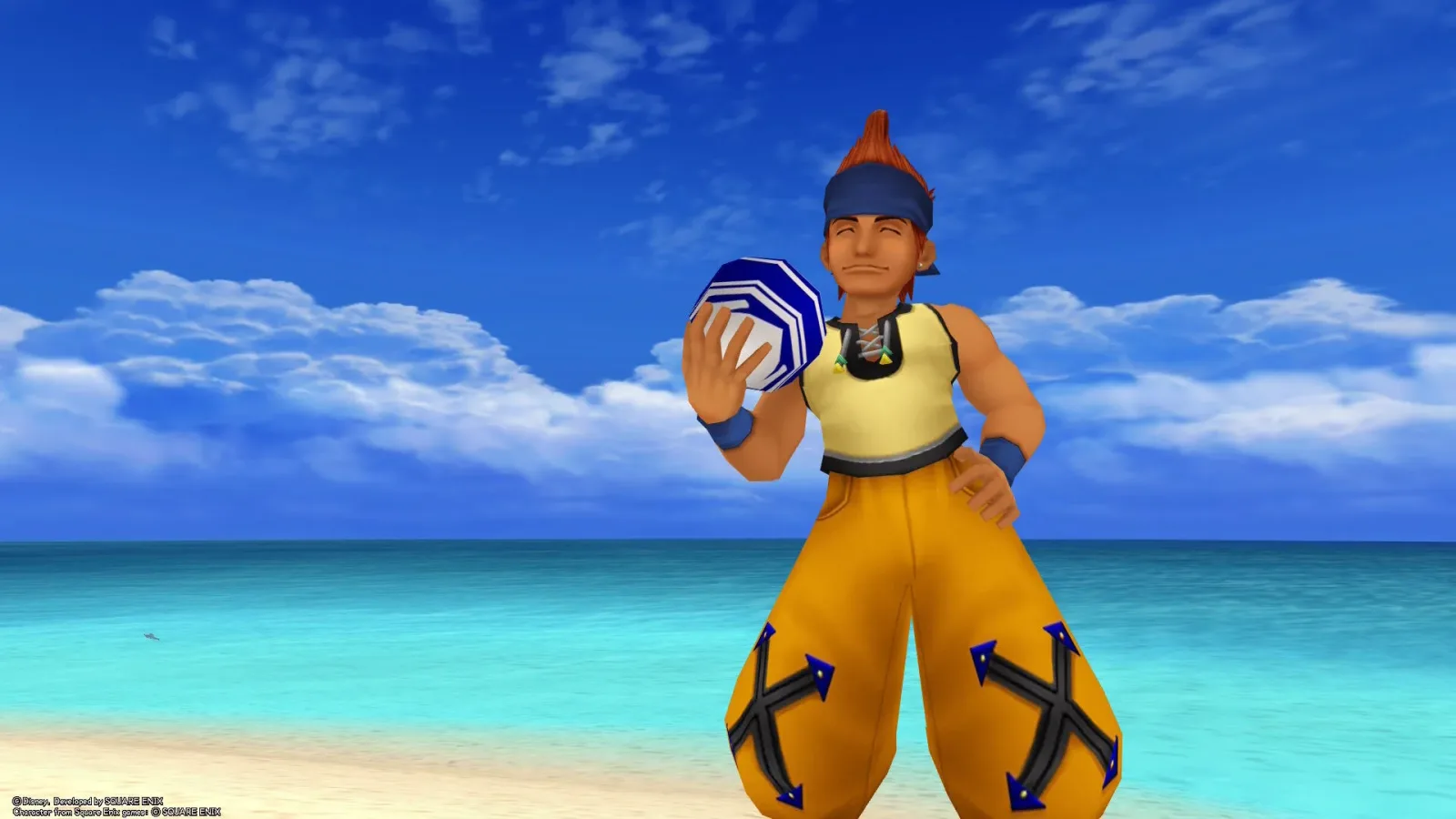
Before Sora ever reaches Traverse Town, Final Fantasy is already embedded in his home life. Tidus and Wakka from Final Fantasy X, along with Selphie from Final Fantasy VIII, are part of the Destiny Islands cast. They are younger, softer versions of the characters players may know elsewhere, and their roles are brief. Still, their presence is important because it makes Final Fantasy feel native to Kingdom Hearts rather than imported into it.
For useful background on this topic, read Xbox Game Pass Reportedly Could Move to Add-On Pricing for Multiplayer and Cloud Gaming.
The game does not pause to explain Spira, Balamb Garden, or the histories that define these characters in their original stories. It instead reshapes them to fit a setting of island kids building rafts, racing on beaches, and sparring with improvised gear. Tidus has a training sword rather than a lethal weapon. Selphie's combat accessory is a jump rope in place of the nunchucks associated with her original incarnation. Wakka is present without the more troubling traits and rhetoric attached to his role in Final Fantasy X.
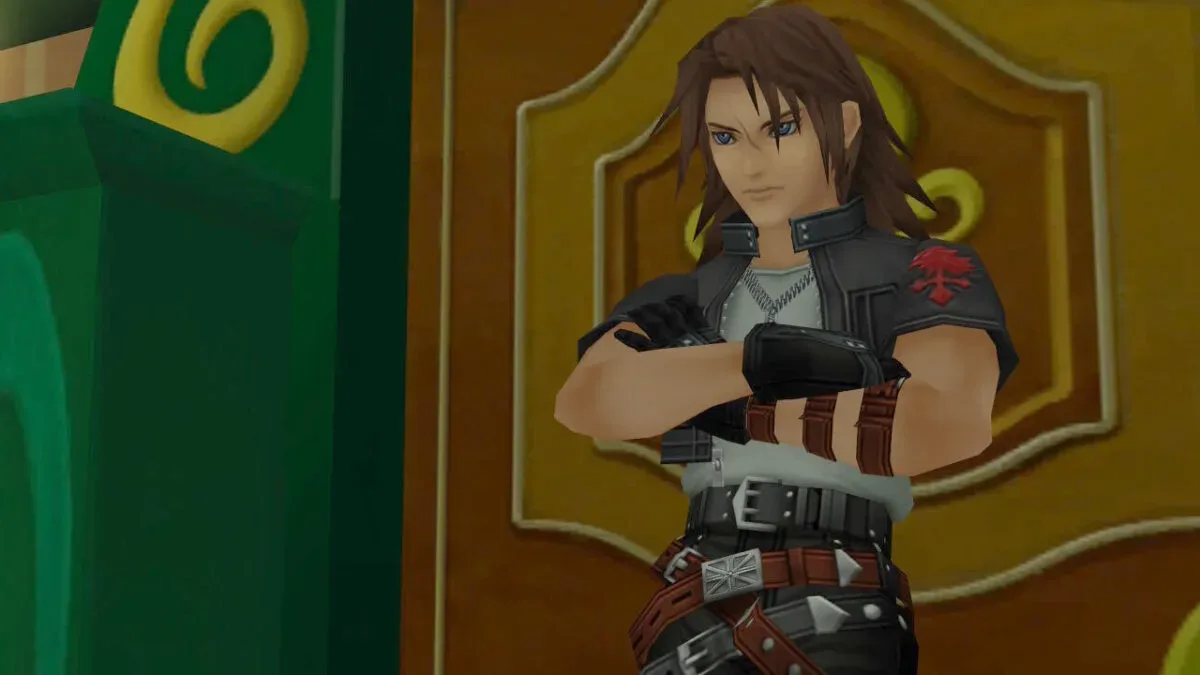
Those changes can look odd when viewed through the lens of continuity. Selphie is a child while Leon, formerly Squall Leonhart, appears much closer to his Final Fantasy VIII age. The Kingdom Hearts versions are not designed to fit together as though their original worlds coexist on one clean timeline. But that looseness is part of the appeal. Kingdom Hearts is not asking players to solve a continuity puzzle; it is using familiar characters as building blocks for a new fantasy setting.
For younger players who encountered Kingdom Hearts before Final Fantasy, these appearances could serve as an introduction. A player might not initially understand why Tidus, Wakka, or Selphie are notable, only to later recognize them as connections to an enormous RPG legacy. For longtime Final Fantasy fans, their presence signaled that the crossover was serious about merging Square Enix's history with Disney's.
Traverse Town delivers on that promise
Traverse Town is where the first game makes the Final Fantasy side feel truly consequential. Sora arrives in a refuge for people whose worlds have disappeared, a premise with enough loneliness and uncertainty to fit comfortably beside the most dramatic Final Fantasy setups. Its music mixes an adventurous warmth with a tinge of sadness, matching Sora's excitement at finding new allies and his pain at being separated from Riku and Kairi.
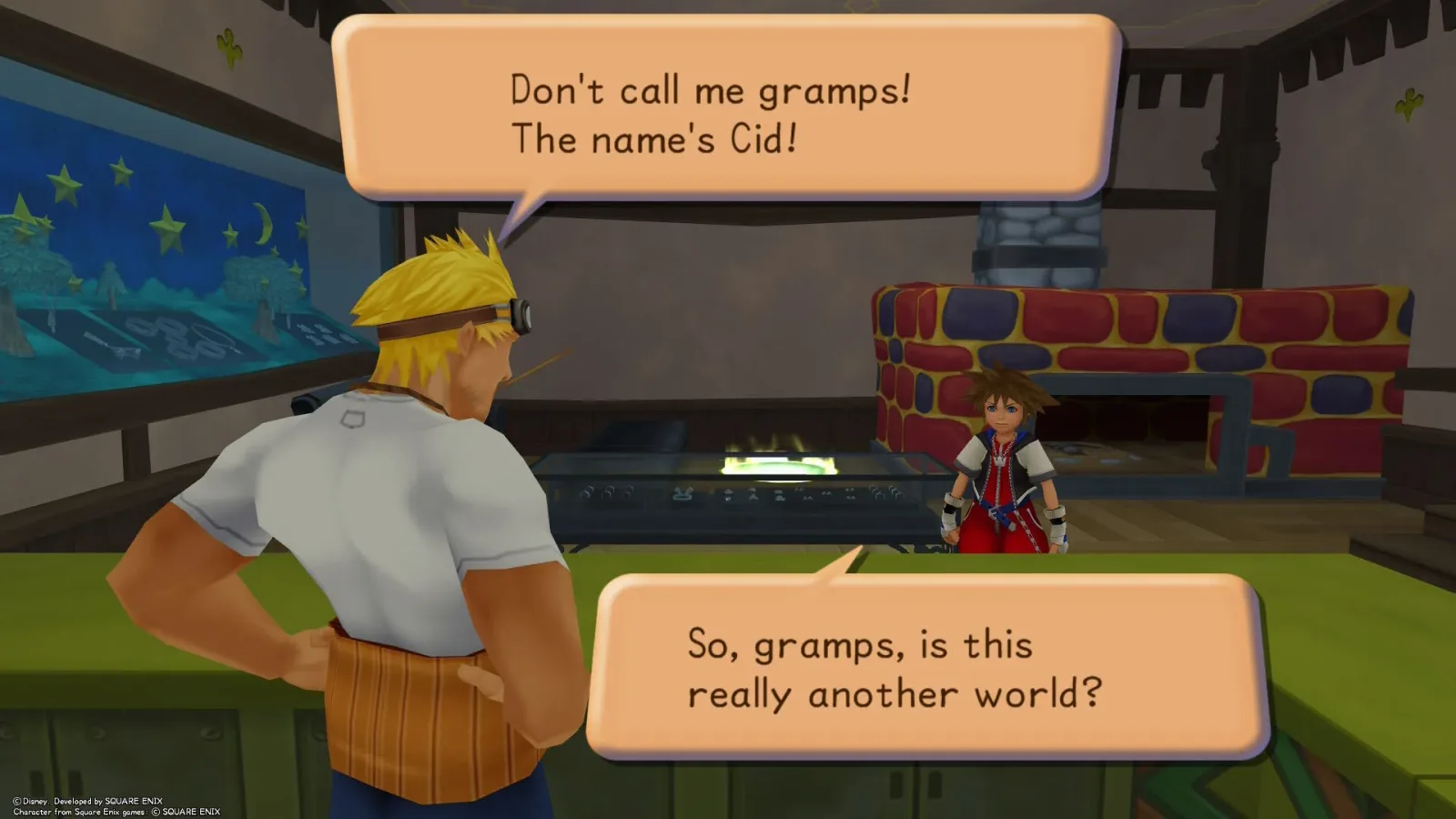
Donald and Goofy bring energy and comedy to Sora's introduction to this new place. But Leon, Yuffie, Aerith, and Cid make Traverse Town feel like more than a Disney intermission. They are survivors, mentors, mechanics, and protectors. They know about the Heartless, understand the dangers surrounding the Keyblade, and help orient Sora in a world that has become frighteningly unfamiliar.
Most of these characters remain recognizable even after their transition into Kingdom Hearts. Leon's decision to use a different name carries a specific emotional weight, reflecting shame and defeat connected to the loss of his home. Aerith remains composed and compassionate. Yuffie preserves her quick, lively personality. Cid is still gruff and practical, even though the Disney-friendly setting removes the harsher language and habits that help define his original portrayal. Notably, Cid communicates through text rather than voiced dialogue in the first game, but his characterization still comes through.
These are not one-note references. They are supporting characters with functions in the plot, and their inclusion makes the central conflict feel broader. Sora is not simply joining Donald and Goofy on a royal Disney mission. He is entering a scattered community of people from broken worlds, including recognizable heroes who have already endured loss.
A crossover should allow both halves to matter
The first Kingdom Hearts does not divide its identity into separate compartments. Its Disney worlds deliver the immediately recognizable locations and personalities, while its Final Fantasy characters lend the game another emotional texture. That relationship is not perfectly equal, but it feels purposeful. The early cast suggests that Sora's story sits between Disney's accessible charm and Final Fantasy's heavier feelings of displacement, regret, and perseverance.
As the franchise continued, the balance changed. Kingdom Hearts developed an increasingly elaborate original mythology, with its own organizations, vessels, replicas, ancient Keyblade conflicts, and interlocking mysteries. Disney worlds remained essential as destinations, though their connection to the overarching plot could vary from game to game. Final Fantasy characters, meanwhile, became far less central.
The clearest example is Kingdom Hearts III. Its base game did not include Final Fantasy characters at all, an absence that stood out precisely because the crossover once treated them as core pieces of its identity. The Re:Mind downloadable content eventually brought back familiar faces, but the fact that their return was delayed made the original omission feel even more pronounced.
That absence was striking in another way: the Final Fantasy series had gained many major protagonists by that point. Lightning of Final Fantasy XIII and Noctis of Final Fantasy XV were obvious possibilities for even a brief Kingdom Hearts appearance, yet neither entered the game. Their exclusion did not damage the main plot of Kingdom Hearts III, but it reinforced the impression that Final Fantasy had become optional to a franchise once marketed around the meeting of these worlds.
The case for a more selective, meaningful return
A renewed Final Fantasy presence does not mean Kingdom Hearts should overwhelm every Disney world with guest characters. The original game worked because it used its Final Fantasy cast carefully. Traverse Town did not need dozens of heroes from every numbered entry. It needed a small group who could plausibly become part of the town's community and guide Sora through a crisis.
That model could still work now. A few characters from more recent Final Fantasy games could be integrated into a hub, an original Kingdom Hearts location, or a story thread that benefits from their particular perspective. The important part would be giving them reasons to exist beyond recognition. Let them mentor, challenge, investigate, rebuild, or even complicate the heroes' goals. A crossover is most exciting when its guests change the texture of the world around them.
There is also room for Kingdom Hearts to embrace its own playful reinterpretations again. The Destiny Islands versions of Tidus, Wakka, and Selphie were not strict adaptations, and that was fine. The franchise's best crossover material has never depended on canon accuracy alone. It depends on seeing how familiar personalities react when placed somewhere unexpected.
Of course, not every past Final Fantasy appearance has landed equally well. The Gullwings, adapted from Final Fantasy X-2, remain a particularly divisive example of the series leaning hard into a gag-like use of its guests. That does not mean humorous reinterpretations have no place, but it does show the difference between a cameo that feels integrated and one that feels disposable.
What Kingdom Hearts IV could learn from its beginning
Kingdom Hearts IV has been described as focusing on fewer worlds at a larger scale, though the full shape of the game remains unclear. That approach could create an opportunity for Final Fantasy characters to matter again. Bigger worlds and more concentrated storytelling may leave more room for supporting casts to recur, develop relationships with Sora, and affect events outside a single scene.
There is no confirmation that Final Fantasy characters will have a major role in Kingdom Hearts IV, and hopes for appearances by newer heroes remain speculation. Still, the opening of the original Kingdom Hearts offers a useful reminder of what made the crossover compelling in the first place. Final Fantasy did not have to dominate the adventure. It simply had to feel like an active, valued half of the strange universe Sora was stepping into.
That is the version of Kingdom Hearts worth revisiting: a series confident enough to let Disney wonder, Final Fantasy emotion, and its own original mythology stand together. The franchise has grown far beyond its 2002 beginnings, but it should not forget how effectively those beginnings made its impossible premise feel real.
Community
Discussion
Start the conversation.
No comments have been posted yet.