

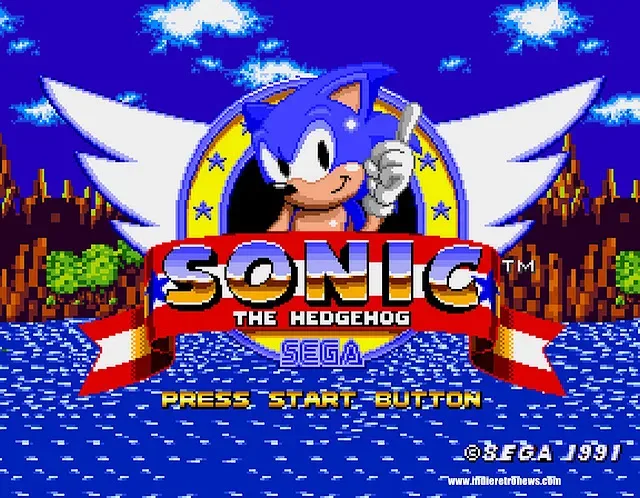
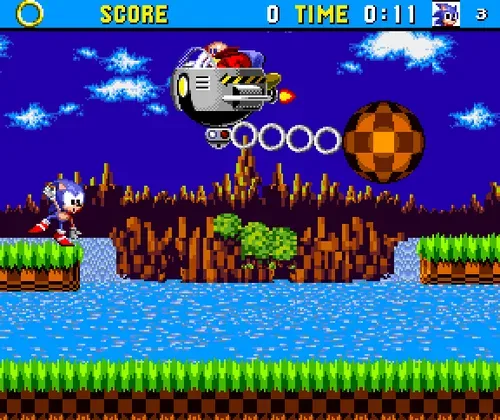
Sonic the Hedgehog has made an unexpected appearance on Commodore Amiga hardware through Aonic, an early work-in-progress demo for the Amiga 1200. Developed by reassembler, the project takes Sega's landmark 1991 Mega Drive game and adapts it for a machine with a very different graphics and memory architecture, despite the two platforms sharing roots in the Motorola 68000 processor family.
The demo is notable not simply because it puts Sega's blue mascot on an Amiga, but because of the route taken to get there. Aonic uses the original Mega Drive game's source-level foundations through the extensive Sonic the Hedgehog disassembly published by the Sonic Retro team. That shared basis is intended to retain the details that made the original game feel distinctive: Sonic's acceleration, inertia, momentum, movement response and high-speed platforming behavior.
It is still an unfinished conversion. The broader game remains under implementation, and the project's current performance, presentation and design choices should be treated as provisional rather than representative of a completed release. Even so, the early demo offers a compelling technical look at what is possible when a console classic is carefully reworked for the Amiga 1200.
More than a simple character swap
Porting Sonic the Hedgehog is a particularly demanding proposition because the game's identity is tied closely to how it runs. The original Mega Drive release was not merely a collection of levels, sprites and music. Its appeal came from the way those elements supported rapid movement: slopes feed velocity into Sonic's roll, loops depend on momentum, enemies and hazards are placed around changing speeds, and the camera needs to communicate a stage's vertical and horizontal flow without losing the player.
For useful background on this topic, read Playable PokéPark Fishing Rally DS Cartridge Surfaces More Than 20 Years After Its Japan-Only Event.
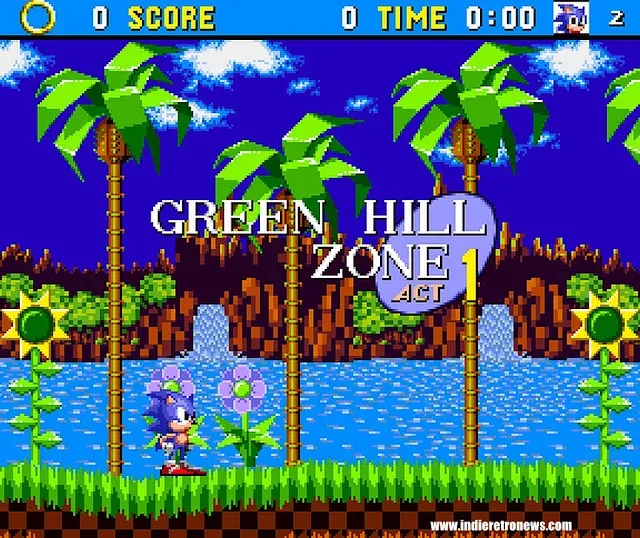
That makes an adaptation more complicated than recreating familiar Green Hill Zone imagery. A version can resemble Sonic from a distance while still feeling wrong if its movement has been rebuilt with different timing or simplified collision behavior. Aonic's connection to the published disassembly matters because it provides a path toward preserving the logic underneath the game, rather than only approximating its look.
The stated aim is that the Amiga version plays identically to the Mega Drive counterpart. For enthusiasts of the original release, that is likely the central promise of the project. Sonic's early games are especially sensitive to small mechanical differences, and the original's handling is one of the qualities fans often expect a faithful conversion to reproduce.
Similar processors, very different systems
On paper, the Mega Drive and Amiga 1200 have a point of commonality in their 68000-based lineage. In practice, that does not make one system's game code immediately suited to the other. Hardware design, graphics handling, memory access and the movement of visual data all shape what a game can do efficiently. A program built around one machine's strengths can encounter major bottlenecks on another, even where the central processor architecture is related.
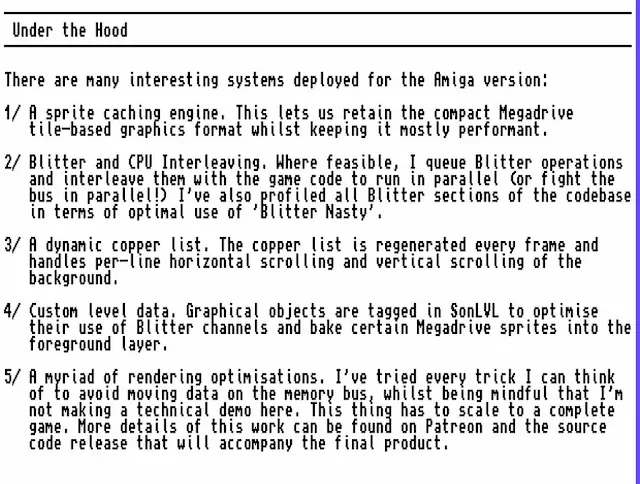
Aonic has had to confront precisely that problem. The Amiga 1200 can struggle with bus contention when significant quantities of data are being moved. That is an especially important concern for a fast-scrolling action game where the screen is constantly changing and the renderer must keep pace with player movement, animated scenery and gameplay objects.
For an original Amiga game, developers can plan around the system's limitations from the beginning. They can construct art pipelines, screen layouts and rendering techniques specifically for the hardware. An adaptation of an existing game comes with a different challenge: it is attempting to retain an established design while translating the technical work that originally supported it. In Sonic's case, the target is unusually high because the Mega Drive game is built around a strong sense of speed and fluidity.
A rewritten renderer at the center of the project
To make that translation viable, Aonic's rendering engine has been extensively optimized and rewritten for the Amiga. This is the key technical adjustment behind the demo. Rather than assuming that the Mega Drive's original visual approach can be transferred unchanged, the project adapts the rendering work to suit the Amiga 1200's needs.
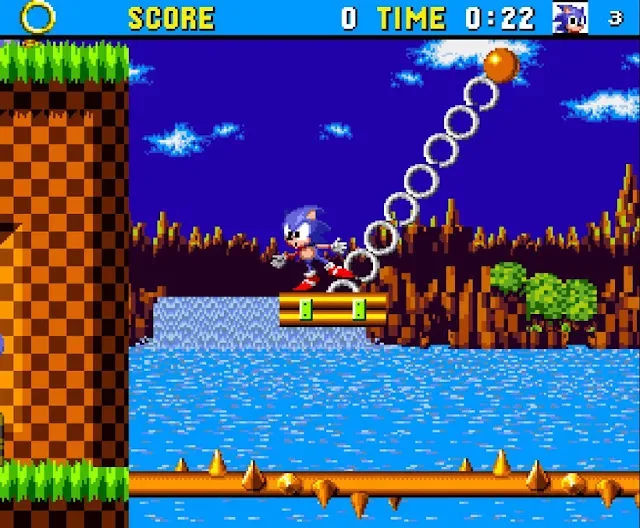
That process has resulted in visual differences from the Mega Drive edition. Those deviations are a necessary part of the conversion's engineering rather than an indication that the goal is to abandon the original game's play style. The project's apparent priority is to keep the gameplay behavior intact while making practical changes where Amiga hardware requires them.
That trade-off is familiar territory in retro development. A faithful port is not always one that matches every pixel or technical method of its original platform. In many cases, fidelity means identifying what must remain consistent for the game to retain its character, then altering other components to make that possible on new hardware. For Aonic, the emphasis is on the physical feel of Sonic's movement and the broader gameplay logic, with the renderer doing the work necessary to express those systems on the Amiga.
Aonic's early state is important: the conversion is not finished, and its current visual and performance characteristics may change as development continues.
Why the Amiga 1200 version is interesting
Sonic the Hedgehog is inseparable from the Mega Drive in the minds of many players. Sega's platformer was designed as a showcase for that console's brisk action and colorful visual style, and it became one of the most recognizable games of its generation. Seeing it running in adapted form on an Amiga 1200 therefore carries an obvious novelty factor, but the project is more interesting than novelty alone.
It demonstrates the value of preserved and studied game code. The Sonic Retro disassembly provides a detailed foundation for understanding how the original game works, and Aonic builds upon that foundation rather than treating the 1991 release as a black box. That does not remove the difficult platform-specific work required for an Amiga conversion, but it gives the developer a much stronger basis for retaining the original game's behavior.
It also highlights a continuing appeal of retro hardware projects: revisiting familiar software through the constraints of a different machine. The Amiga has a long history of ambitious games and technically inventive programming. Bringing a Mega Drive icon to the platform creates a direct comparison between two celebrated systems of the era, while also making clear that their design philosophies and hardware capabilities are not interchangeable.
What remains uncertain
The available demo should be viewed as a progress report rather than a final product. There is no confirmed completion date, final feature list or indication that the entire game is presently available. The remaining portions of Sonic the Hedgehog are still being implemented, so the scope and polish of a future finished version remain uncertain.
Performance may also improve, change or potentially regress as more of the game is integrated. A limited early build can demonstrate a renderer or core movement system effectively, but a full game has additional demands: more stages, more objects, different environmental arrangements, menus, transitions and all the other elements required for a complete experience. Development will determine how Aonic balances those demands on the Amiga 1200.
The current visual differences likewise should not be read as fixed. Because the rendering engine has been reworked and optimized specifically for the platform, further adjustments are possible as the conversion evolves. What can be said now is that the project is pursuing gameplay faithfulness while accepting that the underlying hardware requires a different visual implementation.
An ambitious retro conversion to watch
Aonic stands out because it tackles one of the 16-bit era's most famous platformers with an approach focused on its underlying mechanics. The project is not simply placing Sonic imagery on Amiga hardware; it is working from the original game's disassembled code base and adapting the technical systems needed to make that game function on the Amiga 1200.
For now, it remains an early demonstration of that work. But the combination of preserved Mega Drive logic, a heavily re-engineered Amiga renderer and a focus on Sonic's recognizable momentum makes it a fascinating development for Amiga and classic Sega fans alike. The conversion still has substantial work ahead, yet the demo already illustrates how much care and low-level technical effort goes into making a cross-platform retro project feel authentic.
Community
Discussion
Start the conversation.
No comments have been posted yet.