

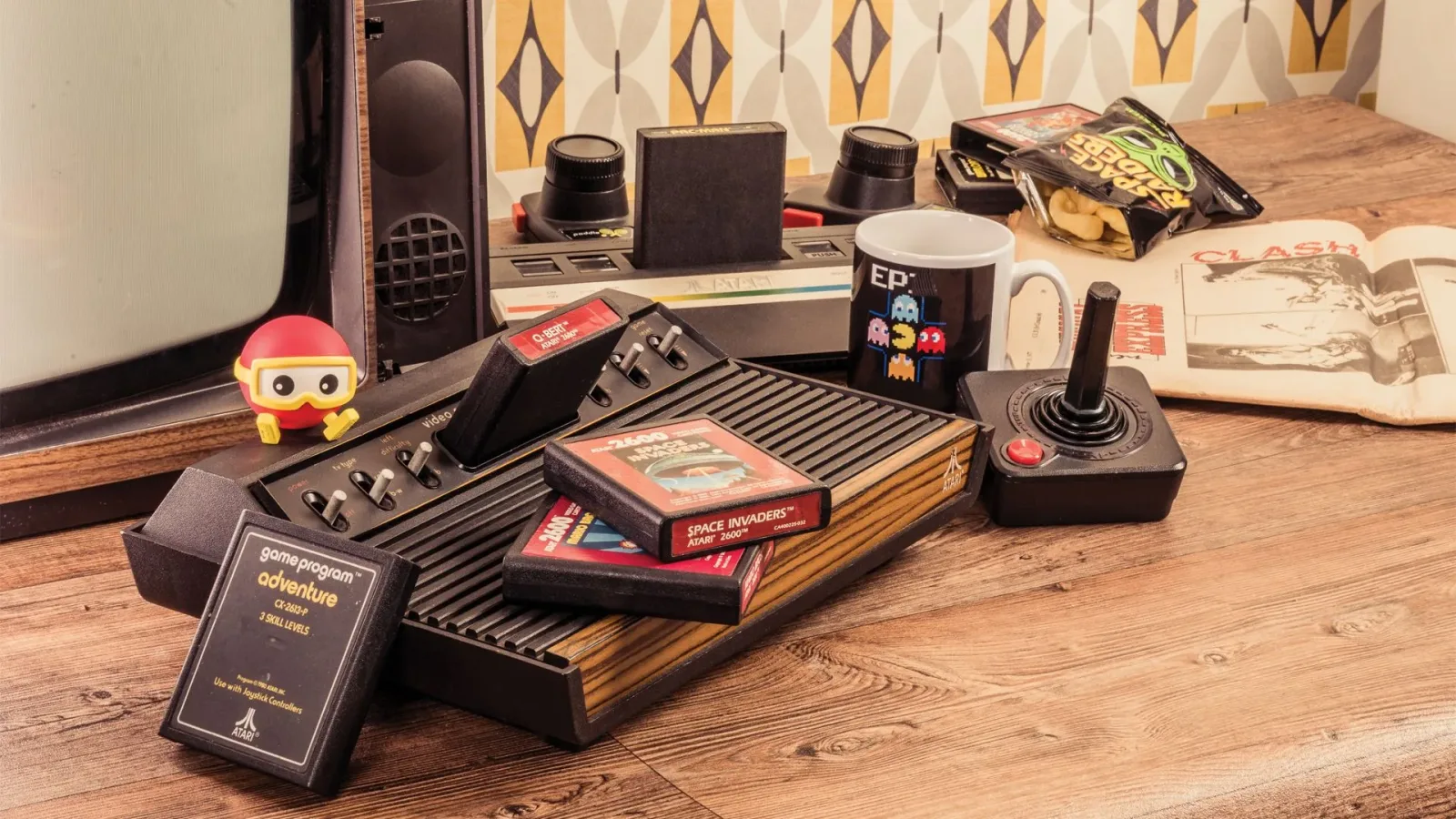
The Atari Homebrew Awards, a long-running celebration of new games created for classic Atari hardware, have been suspended for 2026. The decision means the event's ninth annual edition will not go ahead as planned, with organizer James, known in the community as ZeroPage Homebrew, citing a growing number of AI-assisted projects and the lack of a workable way to judge them fairly.
For retro enthusiasts, homebrew development is more than a niche hobby. It is a continuation of hardware that, in many cases, was commercially retired decades ago. Programmers, artists, musicians, designers, publishers, and collectors have kept platforms such as the Atari 2600 alive by making entirely new cartridges and software. The awards have provided one of the scene's most visible annual chances to recognize that work.
But the accelerating availability of generative AI tools has introduced a problem that is both practical and philosophical. If a game uses AI-generated code, AI-produced art, AI-assisted testing, or some combination of those elements, how should it be categorized? More importantly, how can an event distinguish between projects when there is no consistent disclosure standard for AI involvement?
A Competition Paused Rather Than a Community Ended
James explained the decision in a post on the AtariAge forums, where he said it had become increasingly hard to keep pace with the volume of AI-assisted releases over the course of the year. Some developers, he noted, were putting out multiple games in a single week with AI support. That influx prompted a reconsideration of how entries would be qualified and evaluated for the upcoming awards.
For useful background on this topic, read GTA 6 PC recompilation Efforts Expose the Limits of AI-Driven Coding.
The stated goal was not to hand awards to output generated by large language models. The complication was determining exactly where a reasonable line could be drawn. A competition can ban work it considers fully AI-generated in principle, but applying that rule to real submissions is much more difficult.
A developer might use an AI tool to generate a few lines of code, then heavily edit and integrate that material into a larger original project. Another might use it as a debugging companion, for documentation help, or to brainstorm approaches to a technical problem. Someone else could rely on it for most of a game's programming, audio, graphics, writing, or design. These are clearly different situations, yet they do not fit neatly into a simple yes-or-no declaration.
James said there is no standard system for reporting or calculating how much AI was used in each game. Even if every entrant made a full disclosure, the awards would still need to decide what level and what type of assistance would be acceptable. That is not merely an administrative obstacle; it is a question about what the event is intended to honor.
Why Retro Homebrew Makes the Debate Especially Sensitive
Homebrew scenes have traditionally celebrated craftsmanship under unusual technical limits. Developing for vintage hardware often requires learning obscure architectures, working around very small memory budgets, optimizing code, and creating art and sound within strict constraints. The appeal is partly historical preservation, but it is also about the challenge of making something new with old tools.
That does not mean every homebrew creator works in exactly the same way. Communities have always included people with varying levels of programming experience, collaborators with different specialties, tools that simplify development, and engines or frameworks that lower barriers to entry. Accessibility can be valuable: more creators experimenting with an aging platform can result in more games, ideas, and support for the hardware.
AI-assisted development changes the conversation because it can affect the volume and apparent authorship of work at a speed older tools generally could not match. A person who has limited experience with an Atari platform may now be able to ask a generative system for routines, code explanations, game concepts, dialogue, art prompts, or production assistance. The output may still need substantial work before it functions on real hardware, but the development process can look very different from the traditional image of a single hobbyist laboring over every routine.
For an awards program, that difference matters. Recognition is finite. Categories, judges, and organizers have limited time. A sudden rise in submissions--especially submissions whose creation process is difficult to verify--can overwhelm an event designed around a much smaller and more conventional pool of entrants.
The Disclosure Problem Has No Easy Technical Fix
One obvious response would be a mandatory AI-use declaration. Entrants could be asked to identify every tool used and describe whether it contributed to code, visuals, sound, writing, testing, or other parts of production. Such a policy might improve transparency, but it would not settle the central issue.
First, organizers would have to trust that disclosures were complete and accurate. Second, they would need to define the terminology. Does autocomplete count as AI assistance? What about a tool that flags errors, translates technical documentation, or suggests code completion? Would generated placeholder assets count if they were later replaced? If a developer asks an AI for an explanation and independently writes the final code, should that affect eligibility?
There is also the matter of enforcement. Examining source code or development histories can be time-consuming, and no reliable universal test can prove whether a particular section of code was generated by AI. AI detectors are themselves imperfect and can create false positives. A rule that cannot be applied consistently may create further resentment rather than confidence.
The organizer's decision to suspend the awards acknowledges that these concerns cannot simply be solved by adding a checkbox to an entry form. Rather than introducing a policy that might exclude legitimate developers, reward incomplete disclosure, or invite endless disputes, the event has been put on hold while the community's practices continue to evolve.
A Difficult Outcome for Creators
The suspension is disappointing for developers who spent the year completing games through conventional homebrew workflows. The Atari Homebrew Awards have been a way to shine a light on projects that might otherwise receive little attention outside dedicated retro circles. An award can help a small physical release reach collectors, give a first-time creator encouragement, and preserve a record of a year's notable work on legacy hardware.
James described the outcome as extremely upsetting, emphasizing that recognizing the community's effort has been a personal highlight each year. That response reflects the significance of the event beyond a list of winners. The awards are also a gathering point for a scene built around shared technical knowledge, enthusiasm for old machines, and appreciation for people who keep making new experiences on them.
Suspending a single year does not erase those games or the work behind them. Homebrew developers can still release projects, exchange tools and advice, and find audiences through the community. Yet the absence of a major annual showcase will be felt, particularly by creators whose games might have been entered for recognition in 2026.
What a Future "New Normal" Could Look Like
No replacement format or return date has been announced. James expressed hope that the tradition can continue once conditions settle into a new normal. That leaves several possible paths open, although each would involve trade-offs.
- Full disclosure categories: Awards could separate games based on declared levels or types of AI use, giving entrants a way to be transparent without forcing all projects into one pool.
- Human-authored eligibility rules: An event could focus on games whose code and creative assets are principally made by their credited creators, though defining "principally" would remain challenging.
- Craft-focused awards: Categories could recognize specific achievements, such as technical programming, music, artwork, physical packaging, or design, potentially making the judging criteria clearer.
- Community standards: Homebrew groups may eventually develop shared expectations about crediting AI tools, documenting development, and describing a project's production process.
None of these approaches is guaranteed to satisfy everyone. Some creators will see AI as another tool, comparable in broad terms to compilers, editors, asset software, or online documentation. Others will argue that generative systems represent a fundamentally different kind of contribution, especially when they produce code or assets that are presented as a developer's own work. The important point is that the Atari Homebrew Awards cannot resolve that wider cultural debate alone.
Still, the pause makes the issue visible in a particularly clear setting. Retro homebrew is a community where authorship, persistence, and technical accomplishment have long been closely connected. When those values become hard to assess, even a small volunteer-driven awards event can feel the impact immediately.
For now, the ninth Atari Homebrew Awards will remain on hold. The games made for Atari platforms this year will not disappear, nor will the desire to celebrate them. But before that celebration can resume in its familiar form, organizers and participants will need a fairer answer to a question that is becoming unavoidable across game development: when AI contributes to a project, what exactly is an award recognizing?
Community
Discussion
Start the conversation.
No comments have been posted yet.