

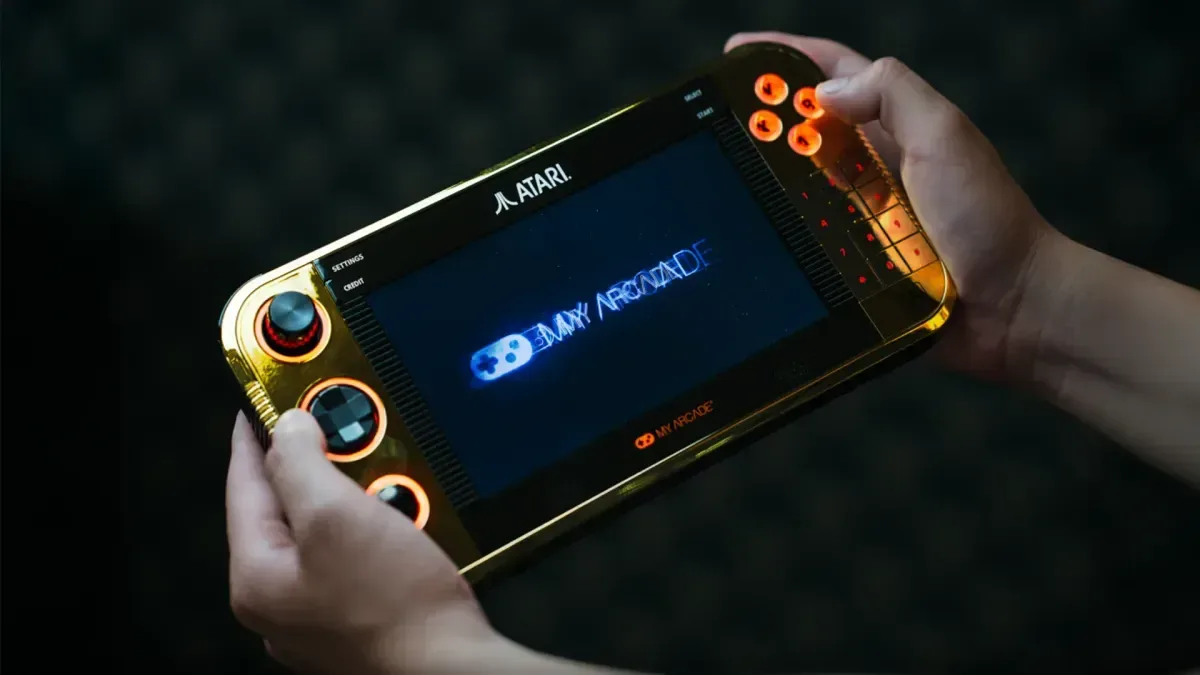
Atari is marking its 55th anniversary with another version of the GameStation Go, a dedicated retro-gaming handheld created in collaboration with My Arcade. The newly announced Gold bundle gives the portable system a striking gold-colored finish and expands the package with a matching Atari Gamepad and a protective travel case.
The bundle is set to be sold exclusively through Costco. Atari has not announced a price for the package, and the available product information does not establish a broader retail release or confirm availability beyond the Costco arrangement. For collectors, longtime Atari followers, and players interested in a purpose-built device for the company's classic catalog, the gold edition is a new alternative to the standard GameStation Go rather than an entirely new handheld platform.
A celebratory finish for a specialized handheld
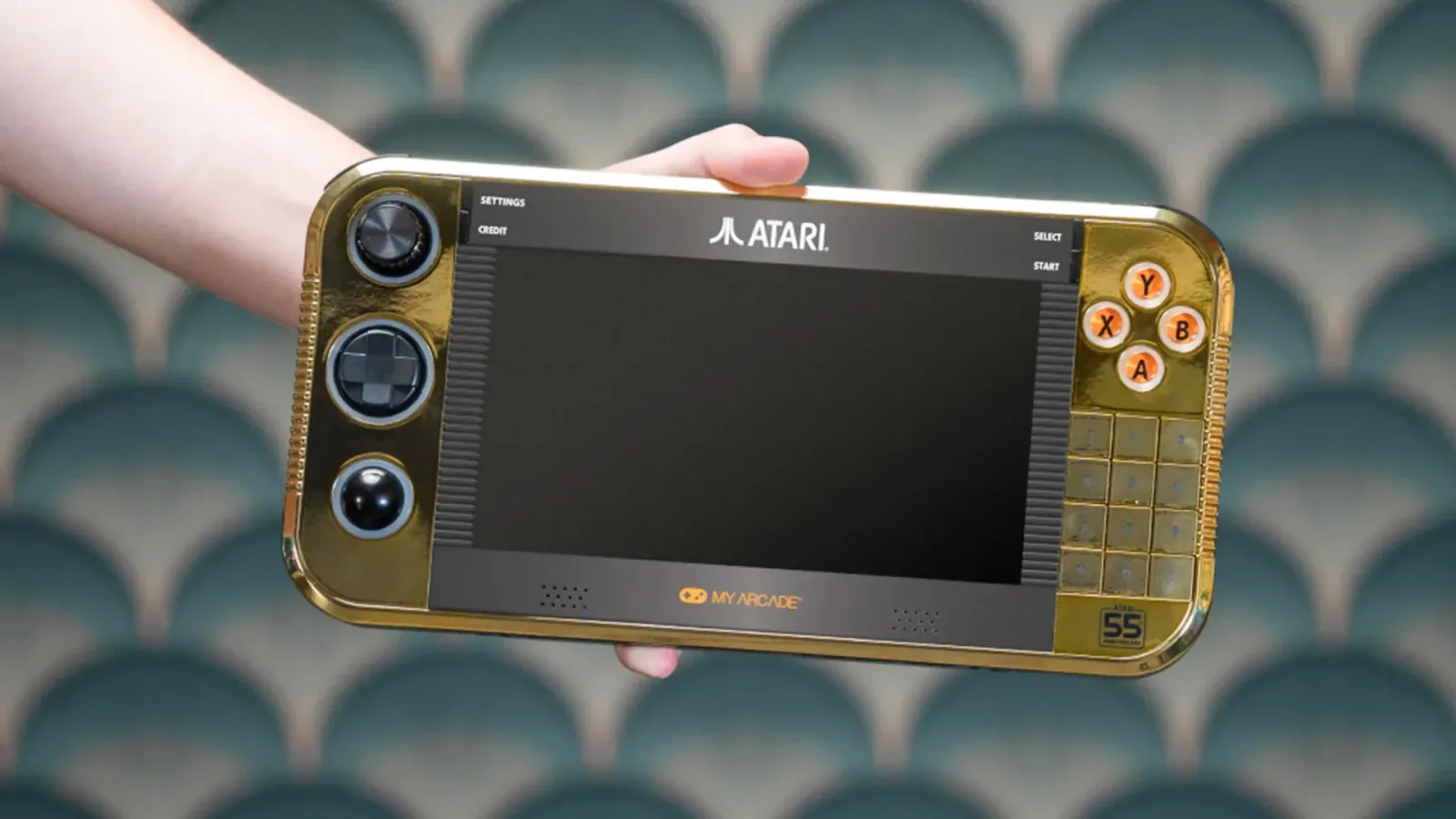
The central attraction is the finish. Both the GameStation Go and the included controller are presented in gold paint, intended as an anniversary-themed visual treatment. It is important to note that the devices are not made from real gold; the premium appearance comes from the paint job rather than precious-metal construction.
That distinction does not make the bundle any less notable for the audience it is aimed at. Retro hardware is often as much about presentation as it is about functionality, particularly when a system is tied to a major brand anniversary. The Gold bundle turns the GameStation Go into a more display-friendly collector package while retaining the handheld's defining game library and input layout.
For useful background on this topic, read Pokémon Team Rocket Jessie & James English Translation Arrives This Week.
Atari's current approach with GameStation Go is centered on convenience and authenticity of control rather than open-ended emulation. The device comes loaded with more than 200 licensed Atari games, offering a single portable place for a substantial slice of the company's history. That official licensing is a significant part of its appeal: buyers are getting a curated library designed for the hardware, not a blank handheld that requires them to source and configure their own software.
Why the GameStation Go uses unusual controls
What separates the GameStation Go from many compact retro handhelds is its set of dedicated inputs. Alongside more familiar buttons and controls, it includes an integrated paddle, a trak-ball, and a number pad. Those features matter because Atari's back catalog was built during an era when games often relied on hardware unlike the standard modern gamepad.
A paddle is especially relevant to games designed around fast, precise rotary movement. A trak-ball recreates the rolling control style associated with arcade cabinets and home versions of games that were not originally conceived for a directional pad. The number pad similarly reflects the conventions of older Atari systems, where keypad overlays and numerical inputs could be part of the experience.
In practical terms, this makes the GameStation Go a more specialized proposition than a general-purpose portable emulator. Rather than asking every title to fit the same sticks, face buttons, and shoulder buttons, the hardware attempts to provide appropriate input options on the device itself. For players who value the physical character of vintage games, that is potentially more compelling than simply having access to a large list of ROM-compatible systems.
The gold edition does not appear to alter that core philosophy. It is still a handheld built around the existing GameStation Go concept, now paired with an external Atari Gamepad. The controller broadens the ways the included library can be played, while the travel case adds a practical storage and carrying option for a device designed to leave the television setup behind.
What is included in the Gold bundle
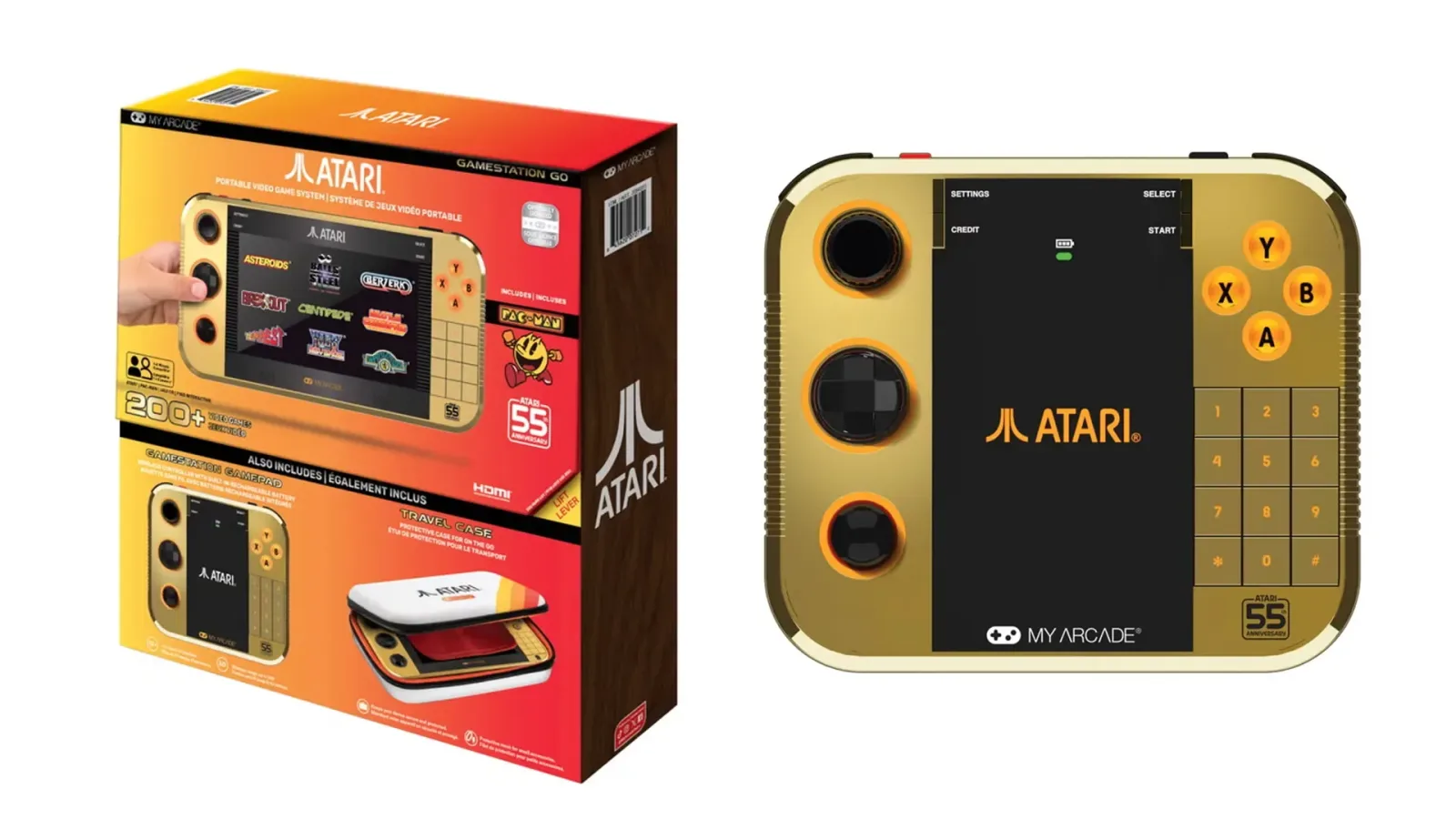
- A gold-finished Atari GameStation Go handheld.
- A matching gold-finished Atari Gamepad.
- A protective travel case.
- More than 200 built-in licensed Atari games on the GameStation Go.
- The handheld's integrated paddle, trak-ball, and number pad controls.
It is a straightforward package, but it offers more than a color swap by including accessories that are useful to owners. The gamepad gives the bundle an added sense of completeness, particularly for anyone who wants a separate controller available alongside the handheld. The case is also a natural inclusion for a portable device, helping protect the system when it is packed for travel or stored as part of a collection.
A fixed library, not an expandable retro device
Potential buyers should also understand the limits of the GameStation Go format. The system is locked to its included selection of games, with no stated option to expand the library beyond what comes installed. That makes it fundamentally different from many modern emulation handhelds, which are often chosen for their ability to support multiple platforms and let users add more software.
There are benefits and trade-offs to that closed design. On the positive side, a fixed, officially licensed library can make the system easier to use. There is no need to navigate file formats, storage cards, firmware tools, compatibility settings, or the legal and technical questions that frequently accompany hobbyist emulation setups. It can be switched on as a self-contained Atari machine with a predetermined catalog.
The compromise is longevity for players whose interests extend well beyond the built-in lineup. Someone hoping to use one handheld for a wide range of consoles, computers, arcade boards, and personal collections will not find that flexibility here. The Gold bundle should therefore be viewed as a branded Atari experience with collector appeal, not as a replacement for an open portable emulation platform.
Display remains an important consideration
The GameStation Go's distinctive controls and official game selection give it a clear identity, but the screen has been identified as one of the device's weaker areas. Anyone considering the Gold bundle primarily for everyday play should keep that in mind. A special finish and extra accessories can increase the appeal of the package, yet they do not necessarily change the underlying viewing experience of the original hardware.
That does not mean the system has no audience. Display expectations vary considerably in the retro market. Some players may prioritize the novelty of dedicated inputs and a licensed Atari collection over screen quality, while others may place modern display characteristics at the top of their buying criteria. The decision is likely to come down to whether the GameStation Go's controls, curated software, and anniversary presentation outweigh its limitations for an individual buyer.
The GameStation Go is designed around an all-in-one Atari library and control layout, not around unlimited expansion or universal retro compatibility.
Costco exclusivity leaves key details unanswered
Costco exclusivity is one of the more consequential details of the announcement. Retailer-specific bundles can be attractive because they package accessories together, but they can also make purchasing more complicated for people who do not have access to the retailer or who are located outside the regions it serves. In this case, the lack of a publicly confirmed price adds another unanswered question.
Atari has not provided a recommended retail price in its announcement materials. The price is also not broadly visible through the available Costco-facing information without going through the retailer's membership area. Until that changes, it is difficult to assess how the Gold bundle compares in value with the existing GameStation Go or with other retro handheld options.
Availability is equally worth watching. An exclusive anniversary product can be positioned either as a regularly stocked alternative or as a more limited collector-oriented release, and no specific production quantity has been confirmed. Prospective buyers should avoid assuming that the gold finish means a numbered or limited-edition run unless Atari provides those details directly.
Who the Gold GameStation Go is for
The Gold GameStation Go bundle is most naturally aimed at two overlapping groups: Atari enthusiasts who want a visually distinctive anniversary item, and retro players who appreciate controls tailored to classic Atari software. The matching handheld and gamepad make the package more appealing as a gift or display piece, while the included case supports the portable use suggested by the GameStation Go name.
It may be less persuasive for buyers who already own the standard unit and only care about functional upgrades. Based on the announced information, the Gold bundle does not promise an expanded game library, new display technology, or a newly open software ecosystem. Its value is in the finish, the matching accessories, and the convenience of receiving them in one package.
Still, Atari's decision to revisit the GameStation Go shows continued interest in the handheld as a vehicle for its legacy. The original hardware already stands apart from much of the portable retro market because of its paddle, trak-ball, and number pad. With the Gold bundle, that unusual design is being reframed as an anniversary collectible without losing the practical features that define it.
For now, the biggest remaining details are price and the precise scope of Costco availability. The hardware itself is familiar: a portable, officially licensed Atari library of more than 200 games with controls designed to better suit the eras those games came from. The new gold paint, controller, and case simply give that premise a more celebratory package for Atari's 55th anniversary.
Community
Discussion
Start the conversation.
No comments have been posted yet.