

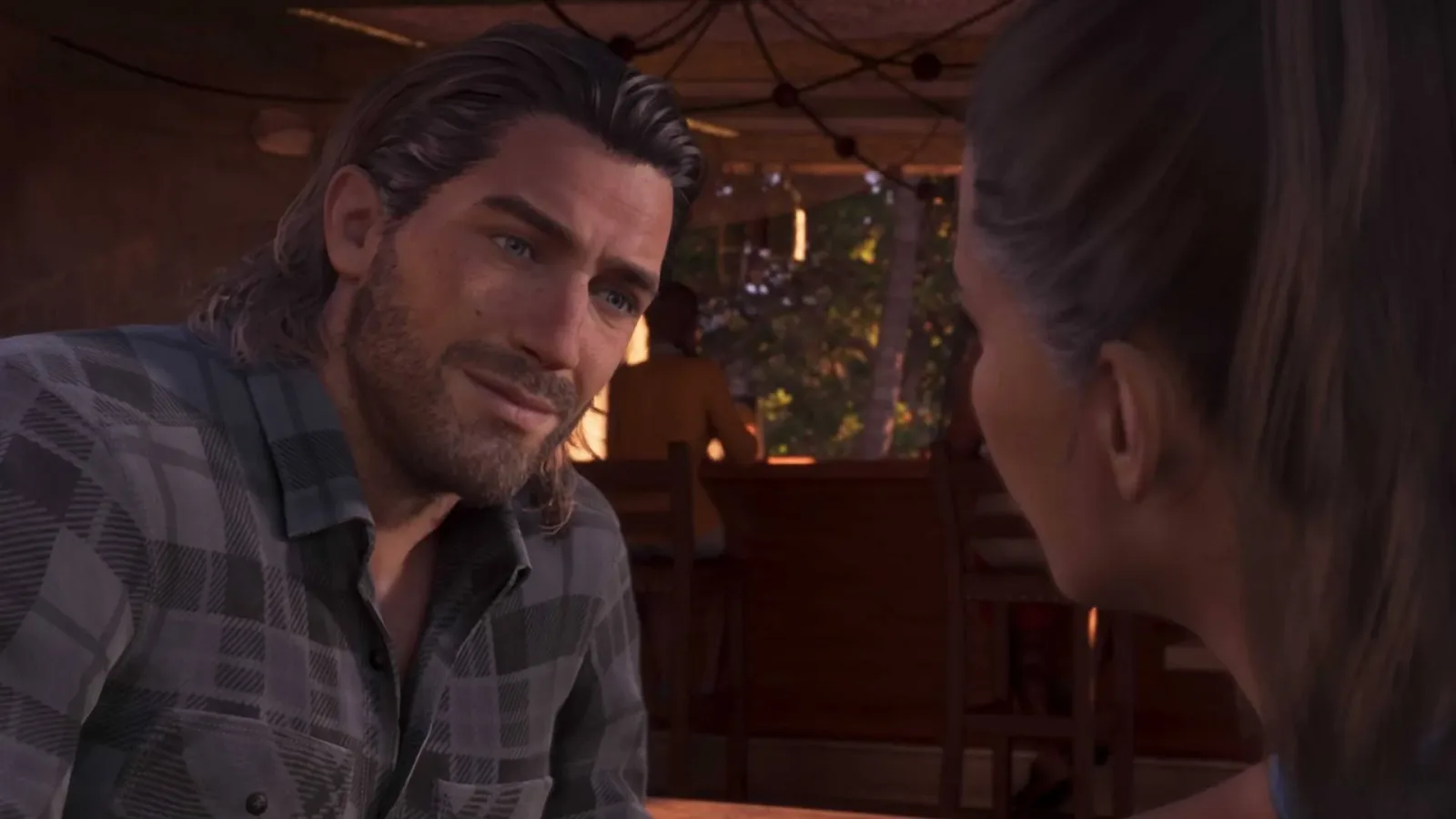
Grand Theft Auto 6 has arrived with enormous expectations behind it, and the discussion around its opening hours has been nearly as large as the game's commercial impact. Some players have embraced the slower, more character-focused opening in Leonida. Others have argued that the first chapter is too restrictive for a series long associated with immediately available mayhem, wide-open exploration, and player-driven stories.
Obbe Vermeij, a former Rockstar Games technical director who worked at the studio from 1995 to 2009, thinks both reactions have merit. In comments shared on Twitter, Vermeij called GTA 6 "very good," while also agreeing that the first portion of the campaign can create a misleading impression of what the wider game will become.
His central point is straightforward: GTA 6 initially spends substantial time teaching its systems, introducing its characters, and directing players through mandatory narrative beats. But, in his view, the game begins to offer the kind of choice players expect from Grand Theft Auto once Chapter 2 starts.
Why GTA 6's First Chapter Has Divided Players
Vermeij's perspective carries some historical context, even if he had left Rockstar well before GTA 6 entered development. During his time at the company, he served as technical director on several defining entries in the series, including Grand Theft Auto 3, Vice City, San Andreas, and Grand Theft Auto 4. He is therefore approaching the new game as a player, rather than as someone involved in its creation, but he also understands the franchise's evolution from the inside.
For useful background on this topic, read Robo the Cat's Gaming Life Became a 12-Year Chronicle of Play, Work and Comfort.
He said the first chapter, which he estimated at roughly eight hours, gives players limited agency. Tutorials, cutscenes, introductory missions, and basic objectives take priority over the freeform structure many players associate with the series. That design choice has fueled complaints that the game emphasizes realism and relationship management ahead of the classic sandbox appeal.
One recurring criticism has jokingly labeled the early game a "girlfriend simulator." That response is tied in part to optional activities involving Lucia, such as grocery shopping or buying flowers. For some players, these smaller domestic moments establish a more intimate tone and make the protagonists feel grounded. For others, they are an unexpected use of time in a game they entered hoping to immediately cause chaos across a huge open world.
It is important that these activities are optional, rather than mandatory progression requirements. Still, their presence is emblematic of the opening's priorities. GTA 6 appears willing to linger on the day-to-day texture of its central relationship before fully unleashing the player across Leonida. That approach will not suit every player, especially those whose idea of a GTA opening involves stealing a vehicle, finding a side activity, and heading in a completely different direction from the story.
Chapter 2 Is Where Vermeij Says the Freedom Arrives
Vermeij does not dismiss those early complaints. Instead, he argues that they describe a real limitation of the opening chapter, not necessarily a limitation of the game as a whole. His advice is effectively to continue beyond that structured introduction before deciding whether GTA 6 has lost its sandbox identity.
Once Chapter 2 begins, Vermeij said the game "backs off" and presents players with multiple missions to choose from. That change, he believes, is where the familiar Grand Theft Auto formula begins to show itself in full. The series' magic has often come from the tension between authored missions and unscripted detours: selecting an objective, getting distracted by the city on the way there, and emerging several hours later after a chain of entirely self-made incidents.
A more open mission selection structure does not automatically mean every system is available without restrictions. Nor does it mean GTA 6 abandons its character-driven direction. But it does suggest that its opening is designed as a deliberate ramp rather than a permanent model for the campaign. Players who find the first hours overly managed may discover a significantly different rhythm after reaching the second chapter.
Vermeij said he had reached Chapter 3 and was 46% through the story at the time of his comments. At that point, he said he was having "loads of fun." He also praised the game's production values, describing them as extraordinary. That assessment aligns with the overwhelming attention GTA 6 has received for the scale and polish of its world, presentation, and blockbuster ambition.
A Slow Start Can Be a Risk for an Open-World Giant
The disagreement surrounding GTA 6's early structure raises a broader issue for open-world games. Developers often need to balance onboarding with freedom. Modern games are mechanically dense, and a massive world can be overwhelming if players are handed every activity, system, and vehicle at once. Tutorials and curated missions can provide context, establish emotional stakes, and ensure players understand fundamental mechanics.
At the same time, GTA occupies a unique place in gaming culture. Its reputation is not built only on long campaigns or cinematic missions. It is also built on a sense that the world is there to be tested, disrupted, explored, and occasionally ignored. Even players who eventually follow the main plot may expect to feel that possibility from the outset.
That makes the first eight or so hours especially consequential. A player who only samples the opening may come away believing that GTA 6 is substantially more linear than it really is. Conversely, players who enjoy the relationship-focused scenes and more grounded role-playing elements may see the opening as a welcome expansion of what Grand Theft Auto can be.
Neither audience is necessarily wrong. The debate is really about pacing and expectations. GTA 6 seemingly asks players to accept a more controlled beginning in exchange for a later increase in mission choice and open-ended momentum. Whether that trade works will depend on how much patience each player has for its opening and how compelling they find the story's early character work.
An Enormous Launch Does Not End the Conversation
Whatever the disagreement over Chapter 1, GTA 6 has launched at a scale that is difficult to overstate. The game reportedly sold 32.5 million copies through pre-orders and generated $3.79 billion on its first day. Those figures gave it the biggest entertainment launch in history, underlining the extraordinary level of anticipation surrounding Rockstar's return to the series.
Commercial success, however, does not eliminate discussion about design choices. If anything, a launch of this size ensures that every aspect of the game will be scrutinized by millions of players with very different histories with the franchise. Veteran fans may compare Leonida's opening hours with earlier games. Newcomers may have no expectation that freedom should arrive immediately. Some will value the more simulation-like optional interactions, while others will skip them and wait for the campaign to widen.
Vermeij's comments offer a useful middle position amid those competing reactions. He does not argue that players are imagining the early restrictions. He agrees that the first chapter can feel constrained, tutorial-heavy, and less sandbox-driven than expected. But he also believes that judgement should be revisited once GTA 6 reaches Chapter 2, when its mission structure becomes less rigid and the wider appeal of Grand Theft Auto begins to emerge.
For players still in the opening stretch, the takeaway is not that they must enjoy every grocery run, cutscene, or guided objective. It is that the first chapter may be an introduction rather than the definitive statement of GTA 6's open-world design. By Vermeij's account, the freedom many players are waiting for is not absent. It simply arrives later than they may have anticipated.

Community
Discussion
Start the conversation.
No comments have been posted yet.