

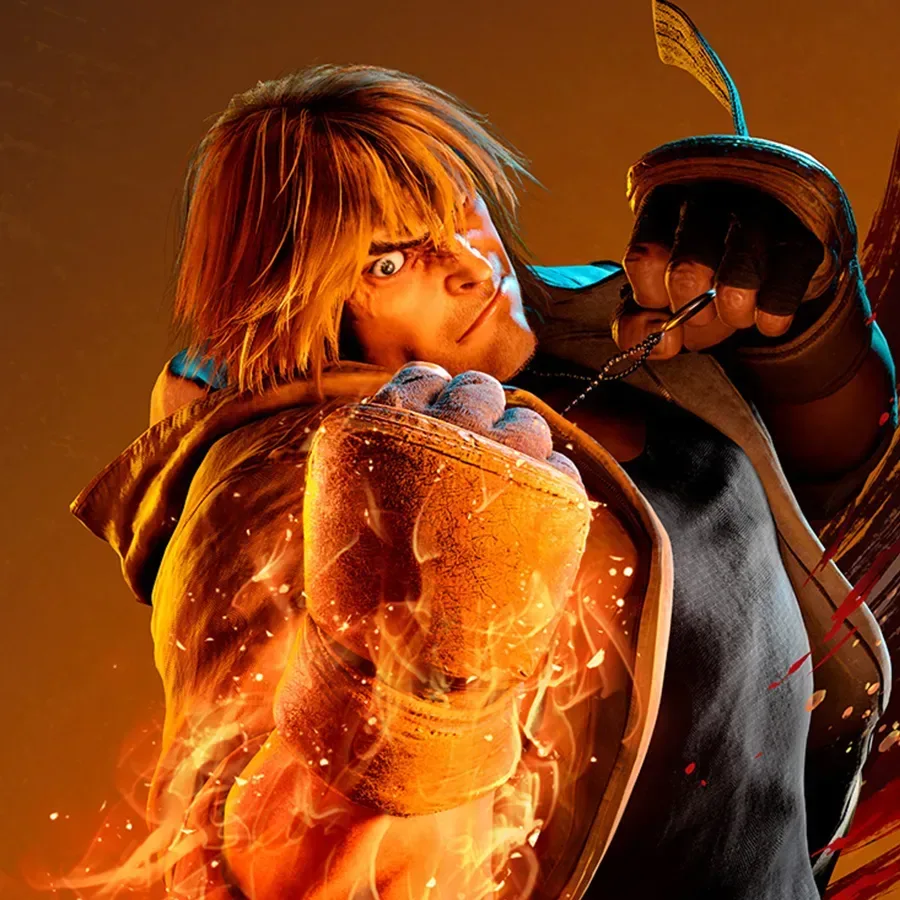
Austin Creed delivered one of the weekend's most memorable gaming crossovers at AEW Full Gear on November 14, turning a wrestling spot involving the Nintendo Entertainment System's Power Glove into a spectacular real-life Street Fighter-style Shoryuken.
The moment came during a chaotic six-man Texas Death Match, where Creed teamed with Kofi Kingston and Swerve Strickland against Brody King, Hangman Page and the masked Bandido. With the match format allowing the wrestlers to employ props and weapons, the bout had already created an environment where something unusually theatrical could happen. Creed and company took that opportunity to bring an unmistakably retro gaming artifact into the ring.
What followed was more than a quick visual gag. The sequence was staged like a fighting game comeback: Creed was knocked down, appeared vulnerable, then instantly answered with an explosive uppercut as he rose. Wrestling audiences got a dramatic reversal. Fighting game players saw a wakeup Dragon Punch.
Embedded X/Twitter post
The Power Glove Returns to the Spotlight
The key prop was the Nintendo Power Glove, the distinctive NES accessory first released in 1989. Although it became a famous symbol of late-1980s gaming culture, its legacy has often been tied as much to its bold futuristic appearance as to its practical use. In an AEW ring, however, it was reimagined as a piece of supernatural--or at least wrestling-enhanced--equipment.
For useful background on this topic, read Super Mario Bros. Gets an Unofficial Commodore Amiga Port Built for 512 KB Systems.
Creed pulled the glove from a bag and began putting it on during an exchange with Brody King. The timing initially seemed to work against him. Before he could finish his setup, King hit him in the head and sent Creed down to his knees. King struck again, seemingly stopping the glove-powered plan before it could begin.
Instead, Creed popped back up and fired off the signature rising punch. Sparks erupted from his fist as he connected, and King was launched backward in a visual designed to evoke one of fighting games' most recognizable special moves. The combination of the Power Glove, pyrotechnic effect and dramatic sell transformed a wrestling strike into a direct gaming reference with immediate impact.
It did not take long for clips of the sequence to spread through wrestling circles and the fighting game community. Fans quickly moved past simply calling it a Shoryuken and began describing the spot in the language of competitive fighting games.
Why Fans Called It a Wakeup DP
For viewers outside the fighting game scene, the jokes around Creed's move can require a little translation. "DP" is shorthand for Dragon Punch, a broad fighting-game term for an uppercut-style special attack. The name is rooted in Street Fighter terminology, where the Shoryuken is among the genre's defining moves.
In fighting games, a Dragon Punch is typically valued because of its ability to stop an opponent's advance. Many versions of the move have invincibility at the start of their animation, meaning they can blow through an incoming attack if the defending player performs the move at exactly the right moment. It is powerful, dangerous and, if anticipated, punishable.
"Wakeup" refers to the brief moment when a character is getting back to their feet after being knocked down. This is a crucial situation in competitive play. The standing player generally tries to maintain pressure, while the recovering player must decide whether to block, attack, throw out a risky special move or use another defensive option.
A "reversal," meanwhile, describes an immediate response performed at the first available moment after recovering from hitstun, knockdown or another disadvantaged state. Put all that together and Creed's spot was easy for fighting game fans to read: King had knocked him down, remained close and then got caught by an instant rising attack as Creed recovered.
In other words, Creed landed a wakeup reversal DP. The sparks made the move look even more like an especially powerful version of the technique, while King's reaction supplied the kind of dramatic knockback that fighting games communicate with a launching hit effect.
Fighting Game Community Embraces the Bit
The response leaned heavily into competitive-game terminology. Players joked that King had failed to block while standing over a knocked-down opponent and therefore deserved to be hit by the reversal. Others quipped that Creed's attack was invincible during its opening frames, a nod to the frame data discussions that are central to high-level fighting games.
Veteran competitive player Justin Wong compared the sequence to Daigo Umehara's famous "Umeshoryus," invoking another long-running fighting game reference. The term is associated with Umehara's celebrated use of the Shoryuken and carries a particular weight among fans familiar with decades of Street Fighter tournament history.
The humor worked because the wrestling spot had clear mechanical logic. Creed did not merely pose with a gaming prop and throw a generic punch. The timing followed a recognizable fighting-game scenario: he had been pressured after a knockdown, seemed beaten, and then used a high-risk answer to seize momentum. The visual language of the sequence made the reference accessible even for anyone who did not know the jargon.
That blend is why the moment traveled so quickly. Wrestling is built around exaggerated action, character work and audience recognition, while fighting games are built around readable animations, momentum shifts and iconic moves. A Shoryuken is already theatrical in its original form. Giving it sparks and performing it in front of a live wrestling crowd simply made its theatricality literal.
Gaming References Have a Home in the Ring
Creed's Power Glove sequence also joins a growing history of pro wrestling drawing openly from video games. The connection is natural: both forms thrive on rivalries, larger-than-life personalities, visual signatures and moments that can be understood at a glance.
Kenny Omega has been particularly associated with gaming references in wrestling, including the use of moves inspired by Street Fighter V's V-Trigger. His relationship with the series goes beyond ring homages as well, having contributed to Alex's moveset in Street Fighter 6. Those appearances have helped establish that fighting-game-inspired offense can be more than a costume-level nod; it can become part of how a wrestler presents their style.
Cody Rhodes has also made the connection visible. After portraying Guile in the 2026 Street Fighter movie, Rhodes appeared at WWE SummerSlam dressed in Guile-inspired gear, complete with the character's unmistakable flat-top hairstyle. For fans, the appeal of such references is not simply seeing a familiar game on wrestling television. It is seeing performers commit to the details well enough that the reference becomes part of the show.
Creed's Full Gear moment succeeds on that same level. The Power Glove is instantly recognizable to retro game fans, but the spot did not depend entirely on nostalgia. Its rhythm gave it the payoff. Creed took punishment while trying to equip the glove, creating suspense around whether he would even get the chance to use it. Then, at the exact point that King appeared to have control, Creed answered with the explosive uppercut.
A Retro Prop Meets a Timeless Special Move
There is also a pleasing contrast at the center of the sequence. The Power Glove represents one of the most recognizable pieces of NES-era hardware, while the Shoryuken is a move whose popularity has endured across multiple generations of fighting games. One evokes the experimental ambition of 1989 gaming accessories; the other remains a foundational image of arcade competition and Street Fighter history.
AEW's Texas Death Match rules gave the wrestlers room to combine those ideas in a way that would not fit an ordinary match. Props are often used to amplify the chaos of stipulation bouts, but the Power Glove had a built-in story. Once it appeared, the audience understood that it was not merely an object to be swung or discarded. It was a promise that some kind of gaming-powered payoff was coming.
Creed delivered that payoff with a move that required no lengthy explanation. Even without knowing the term "reversal DP," viewers could understand the sudden comeback. For those who did know the reference, the details made the spot even better: King stayed near Creed's wakeup, Creed mashed out the answer, and the imaginary frame data apparently worked in his favor.
That is the charm of the viral clip. It is a clean wrestling moment, a retro gaming callback and a fighting game in-joke all at once. Austin Creed's explosive Shoryuken may have happened in an AEW ring rather than on an arcade cabinet or tournament stage, but it captured the same feeling as a perfectly timed comeback special: one opening, one decisive input and one opponent sent flying.
Community
Discussion
Start the conversation.
No comments have been posted yet.