

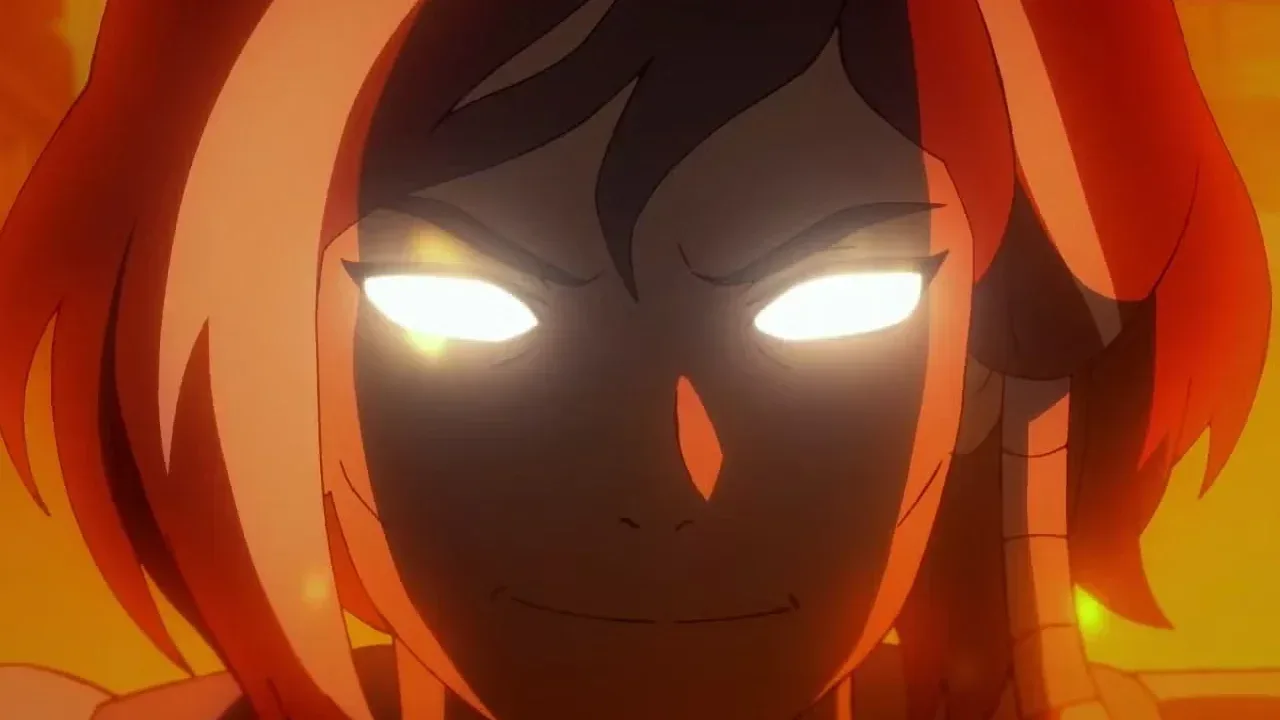
Avatar: Seven Havens has arrived with a startling premise for longtime fans of the franchise: in the centuries following The Legend of Korra, the world remembers Korra not as a hero, but as a figure blamed for its ruin. The first three episodes of the animated sequel series are now rolling out on Paramount+, and the show has immediately made the former Avatar's reputation one of its central mysteries.
Set more than 200 years after the conclusion of The Legend of Korra, Seven Havens follows a world reshaped by an enormous disaster known as the Cataclysm. Civilization has been broken apart into the titular Seven Havens, while clear records of the catastrophe and the people who lived through it have become scarce. What remains is a historical narrative that places a large share of responsibility on Korra herself.
That setup means Korra is not simply a revered past Avatar whose accomplishments inspire the next generation. Instead, her name has become loaded with fear, resentment, and public mockery. The new show's early episodes depict people celebrating her death and putting on performances that ridicule her. For fans accustomed to Korra being remembered for preserving the world through political upheaval, spiritual crises, and open conflict, it is an intentionally harsh reversal.
A world built on the ashes of the Cataclysm
The Cataclysm is still not fully explained in the opening episodes, and that uncertainty is crucial to the story. Much of the information available in this far-future era has apparently been lost, distorted, or passed down through incomplete accounts. The people living in the Seven Havens may believe that Korra helped destroy the world, but viewers have not yet been given the full chain of events that led to the disaster.
For useful background on this topic, read Kaz Hirai Explains the Independent Streak That Defined His PlayStation Leadership.
That leaves considerable room for the series to complicate the accepted version of history. Korra may have been made into a convenient scapegoat, whether through deliberate propaganda, unreliable retellings, or a society trying to make sense of devastation long after direct witnesses disappeared. On the other hand, the show has not yet revealed enough to rule out the possibility that some terrible decision or impossible sacrifice tied to Korra truly helped cause the Cataclysm.
For now, Seven Havens is allowing the accusation to hang over the narrative. It is not treating the hostility toward Korra as a minor misunderstanding that is instantly corrected for the audience. That choice creates tension around the legacy of a protagonist fans already know intimately, while also giving the new leads a world whose assumptions may be fundamentally wrong.
Pavi and Nisha inherit more than the Avatar mantle
The series centers on twin sisters Pavi and Nisha, the new Avatars in this distant era. Their place in the cycle comes with the usual enormous responsibility associated with mastering the elements, but they also inherit the complicated shadow cast by Korra. In a society where the previous Avatar is treated as a destroyer, becoming the Avatar is not automatically a position of trust or admiration.
That premise offers a major departure from the more familiar Avatar framework. Aang and Korra both faced skepticism, political pressure, and enemies who challenged their authority, but they existed in eras that still broadly understood the Avatar as a necessary force for balance. Pavi and Nisha begin in a world where the office itself may be haunted by one of the worst disasters in recorded memory.
Their investigation of the past can therefore function on multiple levels. It is likely to be an effort to understand the Cataclysm and Korra's role in it, but it is also an opportunity for the twins to define what being the Avatar means after public faith in that role has been badly damaged. If the story eventually overturns the version of events taught in the Seven Havens, uncovering the truth could become central to restoring Korra's reputation as well as shaping Pavi and Nisha's own future.
An old fandom argument finds new material
Korra has long been one of the most debated figures in the Avatar fan community. Some criticism of The Legend of Korra has focused on its storytelling choices, including its darker tone, more politically charged conflicts, and willingness to take risks that differed from Avatar: The Last Airbender. Other reactions have been plainly rooted in hostility toward a queer woman taking the lead in a franchise previously fronted by a male hero.
Seven Havens has stepped directly into that existing divide by showing a future population that is openly glad Korra is gone. It is easy to see why those scenes have become a flashpoint only three episodes into the season. Some viewers are treating the show's setting as evidence that Korra was always a failure, while others see it as a narrative challenge designed to expose how history can be manipulated.
Series creators Bryan Konietzko and Michael Dante DiMartino have acknowledged that Korra remains divisive among parts of the audience. They have also pointed to the possibility that she is judged by a different standard as a queer woman hero. Asked about the idea that Seven Havens was somehow an indirect statement that its creators dislike Korra, the pair rejected that interpretation and encouraged viewers to keep watching the series unfold.
The early episodes present an accusation against Korra, not a final answer to what happened during the Cataclysm.
That distinction is especially important in a franchise that has repeatedly dealt with contested history, propaganda, colonialism, and the limits of official narratives. The original animated series showed how the Fire Nation shaped information during its century-long war. The Legend of Korra explored how governments, movements, and powerful individuals could weaponize fear and public sentiment. A world that has spent 200 years blaming its destruction on one person fits naturally within those themes, even if the exact truth remains unknown.
Janet Varney reacts to Korra's treatment
The reaction is not limited to fans. Janet Varney, the actor who voiced Korra in The Legend of Korra, has said that seeing people treat the character this way in the first episode brought out an emotional response. That feeling makes sense given the unusual relationship audiences develop with long-running animated protagonists. Korra's failures and triumphs were both part of her story, but the new series introduces a future in which even her heroism has been obscured by a devastating accusation.
There is also a difference between criticizing a character's decisions and watching a fictional society turn that person into a villainous symbol for generations. The opening of Seven Havens is designed to make that discomfort felt. It asks viewers to consider what happens when history reduces a complicated hero to a single, hateful conclusion.
For defenders of Korra, the next episodes will be an anxious wait for context. The show's initial material offers plenty of reason to suspect that the official story is incomplete, but it has not yet supplied the evidence needed to clear her name. Until the Cataclysm is explored in greater detail, every celebration of Korra's death and every cruel retelling of her legacy will remain part of the deliberate mystery.
There is time for the mystery to grow
The first season of Avatar: Seven Havens is planned to run for 13 episodes, meaning the opening trio represents only the start of Pavi and Nisha's story. The series has also already secured renewals for a third and fourth season, giving the creative team room to develop the Seven Havens era beyond the immediate questions raised by the Cataclysm.
That longer runway matters. The truth behind Korra's fall from hero to alleged destroyer is large enough to affect the entire setting, and resolving it too quickly would undercut the premise. More importantly, the mystery is not only about providing a shocking revelation for established fans. It is about the world Pavi and Nisha must navigate: a fractured society with incomplete memories, entrenched beliefs, and an Avatar legacy that has become a warning rather than a promise.
Whether Korra is ultimately revealed to be innocent, partly responsible, or caught in circumstances no Avatar could have fully controlled, Seven Havens has made one thing clear from its opening episodes. The battle over her legacy is now part of the new generation's story. And with the truth of the Cataclysm still buried under two centuries of fear and myth, the most important fight may be over who gets to decide what history remembers.
Community
Discussion
Start the conversation.
No comments have been posted yet.