

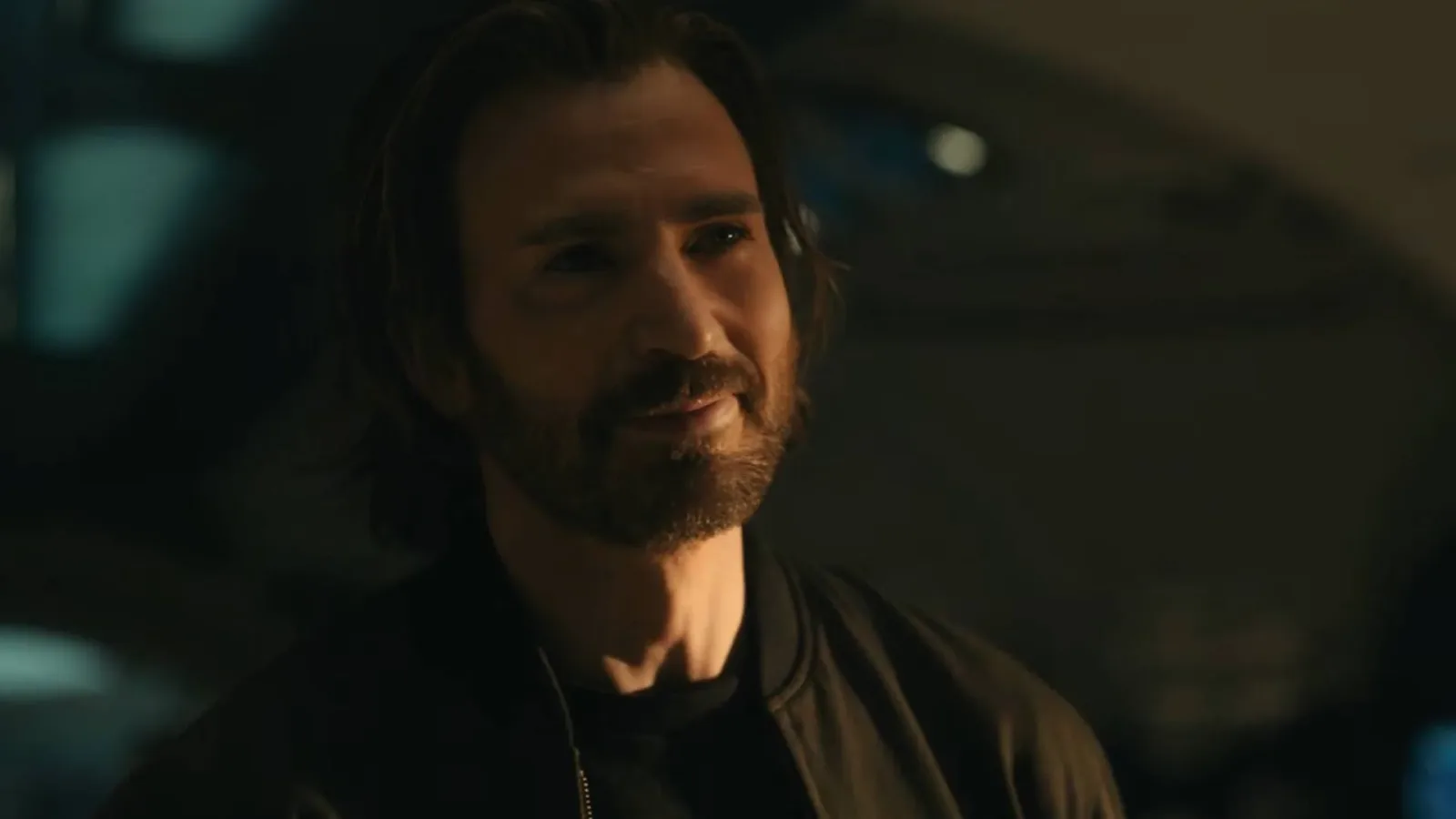
The latest Avengers: Doomsday trailer has put Steve Rogers back at the center of the Marvel Cinematic Universe's biggest unresolved time-travel debate. Its key revelation is that Steve's decision to return to the past and live with Peggy Carter after Avengers: Endgame is not simply a peaceful closing chapter for the former Captain America. It is an event that helps kick off the conflict of the new movie.
That immediately makes the ending of Endgame feel more complicated. In that film, Steve returns the Infinity Stones to their proper places in history, then makes a personal detour: instead of promptly coming back, he chooses a life with Peggy. Much later, an elderly Steve appears on a bench in the present day and gives Sam Wilson the shield. It is one of the MCU's most sentimental scenes, seemingly confirming that Steve found the ordinary life he had always been denied.
But if Doomsday pulls the younger, time-traveling Steve into a universe-threatening crisis involving Doctor Doom, what exactly does that mean for the elderly man who later hands that shield to Sam?
Embedded X/Twitter post
The central issue: did Old Steve already live through Doomsday?
The apparent setup creates a straightforward but thorny question. If the Steve who went back to Peggy is drawn into the events of Avengers: Doomsday, and if he eventually grows old before meeting Sam, then Old Steve may have already experienced the entire upcoming movie. Depending on the larger story, he could even have knowledge of events leading into Avengers: Secret Wars.
For useful background on this topic, read Ubisoft Called Skull and Bones' "AAAA" Label Classic Puffery in Consumer Lawsuit Defense.
That reading has a certain dramatic appeal. Old Steve's brief, calm appearance at the end of Endgame would gain an additional layer on a rewatch. He would not merely be a retired hero passing on a symbol. He would be someone who had survived another monumental Avengers crisis, understood more about the future than he could safely disclose, and still chose to let Sam forge his own path.
It could also make Steve's silence meaningful. Marvel's own time-travel logic has repeatedly emphasized that interfering with past events can create branches rather than rewrite a settled present. If Old Steve knew that offering warnings would only cause a divergent timeline, he may have accepted that he could not give Sam a shortcut around the challenges ahead.
There are obvious complications, though. The more Old Steve knows, the harder it becomes to explain why he would not tell Sam, Bucky Barnes, or the rest of his closest allies that an even larger catastrophe was on the horizon. A story could portray that restraint as a burden he carries, but it would need to establish clearly why he believed silence was necessary.
Endgame's branching-timeline rules still matter
The opposing interpretation is rooted in the time-travel explanation given in Avengers: Endgame. Bruce Banner, the Ancient One, and the Avengers all establish variations of the same principle: traveling into the past does not simply overwrite the traveler's original history. Actions taken there create, or occur within, a separate branch.
Under that model, the Steve involved in Doomsday could be a version whose life diverges from the Steve who becomes the old man on the bench. Both would share the same history up to Steve's decision to remain with Peggy, but a new intervention could send their futures in separate directions.
This is especially relevant because the trailer appears to involve more than one disturbance to Steve and Peggy's life. One timeline seems to include Loki visiting them in the past, while another has the Fantastic Four arriving to speak with them. Those moments suggest that Steve and Peggy may be seen across distinct branches rather than in one continuous, easily mapped history.
If that is the case, Old Steve may not have undergone the events of Doomsday at all. Instead, he would be the version who lived out the quieter timeline implied by Endgame, eventually returning to the main MCU reality to give the shield to Sam. The Steve facing Doctor Doom, Loki, or the Fantastic Four could be a separate variant whose existence begins from that same emotional choice.
That approach would preserve the original impact of the Endgame ending while still allowing Marvel to revisit Chris Evans' character in a high-stakes multiversal story. It would also fit an MCU that has increasingly treated variants as characters who can share a past without sharing the same fate.
Why the answer may be deliberately ambiguous for now
The trailer's purpose is to create anticipation, not necessarily to provide a technical diagram of the MCU timeline. It is possible that the film will withhold a definitive answer for a substantial portion of its runtime. Doctor Doom's involvement raises the prospect of realities being altered, connected, threatened, or reshaped in ways that go beyond the relatively limited time-heist mechanics of Endgame.
That is important because the franchise's recent multiverse stories have not always treated timeline concepts as a single neat system. Loki explored branching realities, the Time Variance Authority, and the dangerous consequences of uncontrolled temporal proliferation. Spider-Man: No Way Home brought characters across universes. Doctor Strange in the Multiverse of Madness dealt with travel between realities and incursions. The Fantastic Four's arrival further expands the number of moving parts around the Avengers.
In other words, asking whether Old Steve is the exact same person as Doomsday Steve may not have a single answer until the movie defines which kind of disruption is occurring. A trip to the past, a split timeline, a cross-universe incursion, and a reality rewritten by Doom can all look similar from a distance while operating under different rules.
The movie could also use that uncertainty as part of Steve's emotional conflict. The version seen with Peggy may be confronting the possibility that the life he fought to protect was never as insulated from his former responsibilities as he believed. Being approached by Loki in one branch and the Fantastic Four in another would turn his private ending into a focal point for the multiverse.
Sam Wilson remains a crucial part of the equation
The question is not just about continuity. It affects Sam Wilson, who has become Captain America following Steve's decision to give him the shield. If Old Steve truly knew that Sam would survive and continue leading a new generation of Avengers, that could make their final Endgame exchange more reassuring. Steve may have had confidence in Sam not only because of his character, but because he had seen evidence of what Sam would become.
On the other hand, a branch-based explanation protects Sam's story from being treated as a predetermined outcome. Old Steve's confidence in him would remain a personal judgment rather than the result of future knowledge. Sam's leadership would matter because he earned it, not because an older Steve had already watched the path unfold.
Either route can work, but they offer different meanings. The first turns the shield handoff into a scene loaded with secrets and destiny. The second keeps it grounded in trust, with Steve choosing Sam because he believes in him without needing certainty about what comes next.
Doctor Doom may be the reason the past cannot stay settled
Avengers: Doomsday arrives on December 18 and will pit Earth's Mightiest Heroes against Doctor Doom, played by Robert Downey Jr. The choice to tie the story to Steve's past suggests Doom's threat reaches beyond a conventional attack on the present-day Avengers. Whether he is exploiting temporal fractures, multiversal instability, or some other force, the trailer indicates that Steve and Peggy's life becomes directly relevant.
That connection gives the new film a way to make its multiverse premise personal. The fate of realities can be an abstract idea; Steve's choice to live with Peggy is one of the most intimate decisions in MCU history. Putting pressure on that decision gives the looming conflict an emotional anchor that audiences already understand.
For now, the largest unanswered question remains whether the man who sat on that bench had already endured the battle ahead. If he did, Doomsday could retroactively transform one of Marvel's quietest farewell scenes into an extraordinarily restrained moment of foreknowledge. If he did not, the film may instead reveal how a single choice created multiple Steve Rogerses, each carrying the same hope for a life with Peggy but facing radically different futures.
Either way, the trailer has ensured that the end of Avengers: Endgame is no longer simply an ending. It is now a possible doorway into the MCU's next major crisis.
Community
Discussion
Start the conversation.
No comments have been posted yet.