

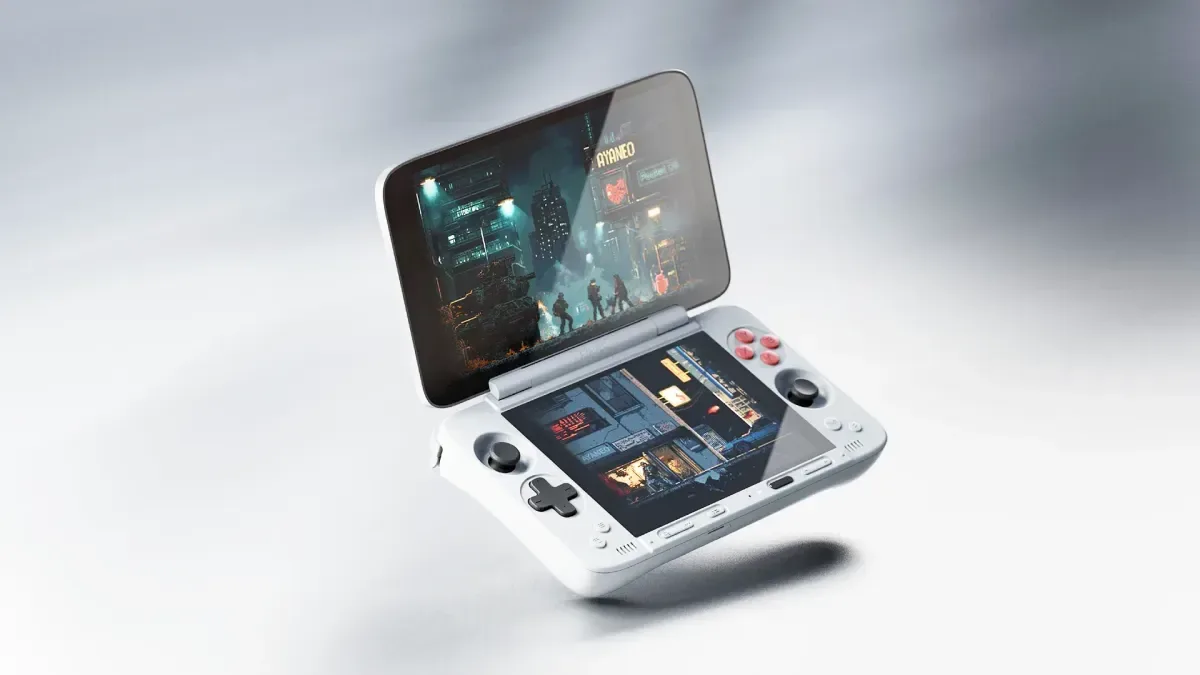
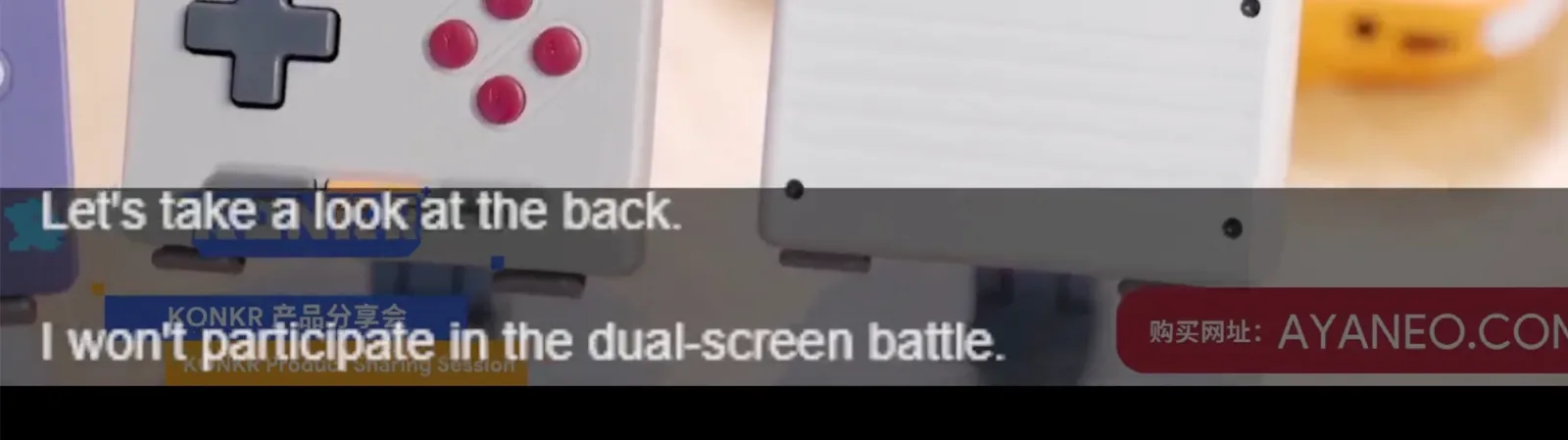
AYANEO appears unlikely to enter the growing wave of dual-screen handhelds in the immediate future. During a product-sharing livestream on September 28, CEO Arthur was asked whether the company was developing a dual-screen device. His answer was short and direct: "I won't participate in the dual-screen battle."
The remark arrived amid a busy day for the company, which used the stream to discuss its newly released KONKR Pocket Block. That Android-based vertical handheld is positioned as a lower-cost option in AYANEO's broader portable lineup, with an early-bird price of $79. The company says it can handle PSP emulation without difficulty, and orders are available now with shipping targeted for the end of October.
While Arthur did not expand on the dual-screen comment or outline a longer-term product roadmap, the response is notable because dual-display devices have become one of the more closely watched niches in the retro and Android handheld space. For enthusiasts hoping that AYANEO might bring its design approach to a more affordable two-screen system, the livestream response points in the opposite direction--at least for now.
A clear answer during a broader product presentation
The question arose while AYANEO was covering the Pocket Block and its hardware decisions. Rather than teasing future plans or leaving the possibility open, Arthur quickly rejected the idea of joining the "dual-screen battle" before the presentation returned to discussion of the Pocket Block's processor.
For useful background on this topic, read AYANEO Confirms KONKR Pocket Block Specs, $79 Starting Price and October Shipping.
That brevity leaves important details unanswered. It is not clear whether AYANEO is ruling out every future dual-screen product, declining to pursue the current crop of budget and mid-range designs, or simply choosing not to engage in the category at this particular moment. No specific technical, financial, or supply-chain reason was given during the exchange.
Still, the wording matters in a market where companies frequently use livestreams, crowdfunding campaigns, and teaser material to test interest in potential hardware. A firm public dismissal is different from a vague "no news to share" response. It suggests that dual-screen hardware is not presently where AYANEO wants to concentrate its efforts.
For buyers, the practical takeaway is straightforward: anyone waiting for an imminent AYANEO alternative in this category should not treat one as confirmed. The company's current visible focus is on other form factors, including the affordable vertical Android handheld introduced during the same presentation.
The KONKR Pocket Block takes a different route
The KONKR Pocket Block is central to why the timing of the comment stands out. Rather than unveiling an experimental or premium multi-display system, AYANEO is introducing a compact vertical Android device designed around accessibility. The early-bird $79 price puts it far below the cost associated with much of AYANEO's better-known premium hardware.
AYANEO has stated that the Pocket Block can emulate PSP games "no problem." That claim places the device in a familiar part of the retro handheld conversation: portable Android systems intended to cover a broad range of older platforms while remaining small and relatively inexpensive. As always with emulation-focused hardware, real-world results can vary by game, emulator configuration, resolution settings, and the demands of individual systems. The company's statement is a performance target, rather than a complete compatibility guarantee.
The announced end-of-October shipping window is also significant. Portable hardware campaigns and launches can be subject to changes, so prospective customers will want to watch for fulfillment updates as that period approaches. At present, the important point is that AYANEO is putting a budget-oriented Android handheld into the market now, while declining to add another dual-screen contender to the near-term calendar.
Why dual-screen devices have become a competitive category
Dual-screen handhelds draw attention because they can better accommodate games designed around two displays, especially software originally made for systems such as the Nintendo DS and Nintendo 3DS. Although emulation can be used on many conventional single-screen devices, arranging two displays on one panel often requires compromises involving screen size, orientation, touch controls, readability, or frequent layout changes.
A dedicated two-screen design can make that experience feel more natural, but it also adds complications. Manufacturers have to account for two displays, hinges or alternative chassis arrangements, touch input, power use, software behavior, component sourcing, thermal management, and build quality. Those factors can increase cost and create more points of failure than a standard single-screen handheld.
The category has nevertheless attracted several companies. AYN's Thor has established a prominent presence in the market. Retroid's Pocket Duo Lite is another entry, although its performance has drawn criticism. ANBERNIC's RG DS Plus takes a Linux-based approach and has faced concerns about build quality. Meanwhile, Yoniq has a Duo planned for next year, though some prospective buyers remain cautious about committing before its upcoming Kickstarter campaign.
Those devices illustrate both the opportunity and the uncertainty. There is obvious demand for hardware that handles dual-screen gaming gracefully, but there is not yet a universally accepted formula for price, operating system, hardware power, durability, and software polish. A company deciding to sit out the current contest may see that as restraint rather than surrender.
AYANEO's history makes the comment more interesting
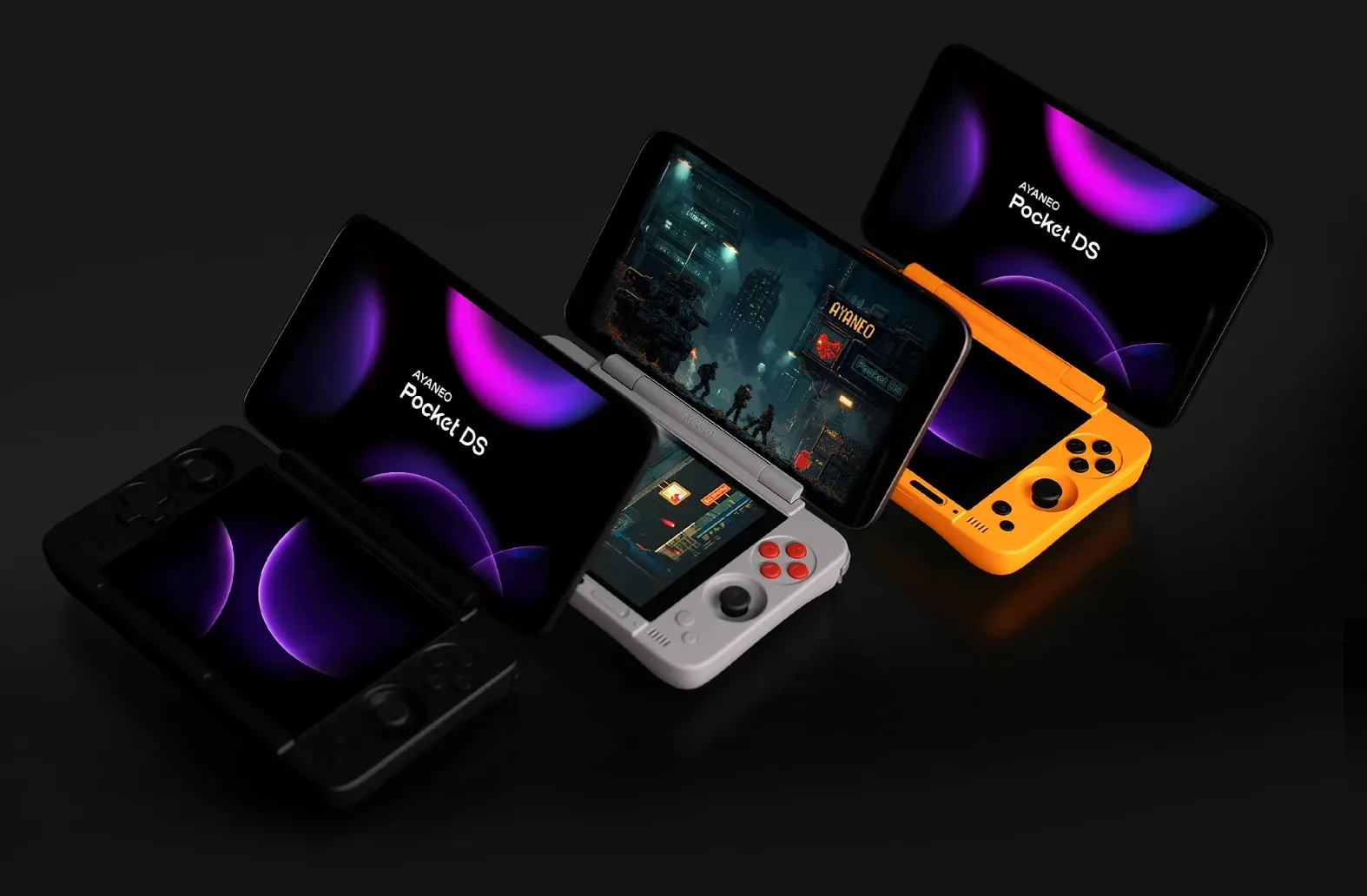
AYANEO is not unfamiliar with dual-screen hardware. The company has previously produced a dual-screen device, but it occupied a far more expensive segment of the market. That earlier product began at $550 and could rise beyond $1,700 depending on configuration.
Those prices place it well outside the range being targeted by devices such as the KONKR Pocket Block. They also help explain why some handheld fans may have hoped for a new AYANEO dual-screen machine designed for the budget or mid-range market. The company has already shown it can work with the form factor; the unresolved question was whether it would attempt to make that form factor more accessible.
Arthur's livestream answer suggests that such a move is not currently planned. That does not erase AYANEO's prior work in the category, nor does it prove that the company can never revisit it. Product plans can change as component costs, display supply, manufacturing capacity, and consumer demand shift. But no future dual-screen project was announced, teased, or promised.
Component pressure may shape the decision
One possible backdrop is the current pressure surrounding smaller displays and memory. Demand for those components is high, which can make compact multi-screen devices harder to price competitively. A dual-screen handheld has a more difficult bill of materials from the outset, and the challenge becomes greater when manufacturers are also trying to meet aggressive price targets.
That context could make a single-screen budget product more appealing for AYANEO at present. The Pocket Block's $79 early-bird offer demonstrates a push toward a lower entry point, while a dual-screen system would likely require different compromises. Without a detailed explanation from the company, however, any connection between component conditions and the CEO's comment remains inference rather than confirmed policy.
There is also the question of timing. The dual-screen market is still being defined by competing designs with varying strengths and weaknesses. Waiting could allow a manufacturer to assess what buyers actually prioritize: a clamshell body, stacked displays, Android flexibility, Linux simplicity, stronger performance, improved ergonomics, or a lower price. It could also allow component costs to change before a new model is considered.
What it means for handheld fans
For the moment, AYANEO's message is less about the death of dual-screen handhelds than about its own priorities. The company is not presenting itself as a participant in the current contest. Consumers specifically seeking a two-screen device will need to evaluate the options already announced or available, along with their differing operating systems, performance profiles, construction quality, and purchasing models.
Fans interested in AYANEO's newest lower-cost direction have a more immediate product to consider in the KONKR Pocket Block. Its vertical Android layout, early-bird pricing, and stated PSP capability make it a separate proposition from the dual-screen machines competing for DS- and 3DS-focused audiences.
As for whether AYANEO's position could change in a year or two, that remains unknown. Arthur's statement is the clearest indication yet that the company is not planning to chase the present dual-screen trend, but it was not accompanied by a permanent prohibition on future experimentation. Until AYANEO says otherwise, though, the safest conclusion is that the company's next moves will be elsewhere in the handheld market.
Community
Discussion
Start the conversation.
No comments have been posted yet.